 Hypno
HypnoMeditation for Pregnancy: Guided Sessions for Every Trimester
Pregnancy meditation techniques that actually work. Guided sessions for anxiety, sleep, and labor preparation. Evidence-based practices for every trimester.
200,000+ moms • ORCHA NHS Certified • Free on iOS & Android
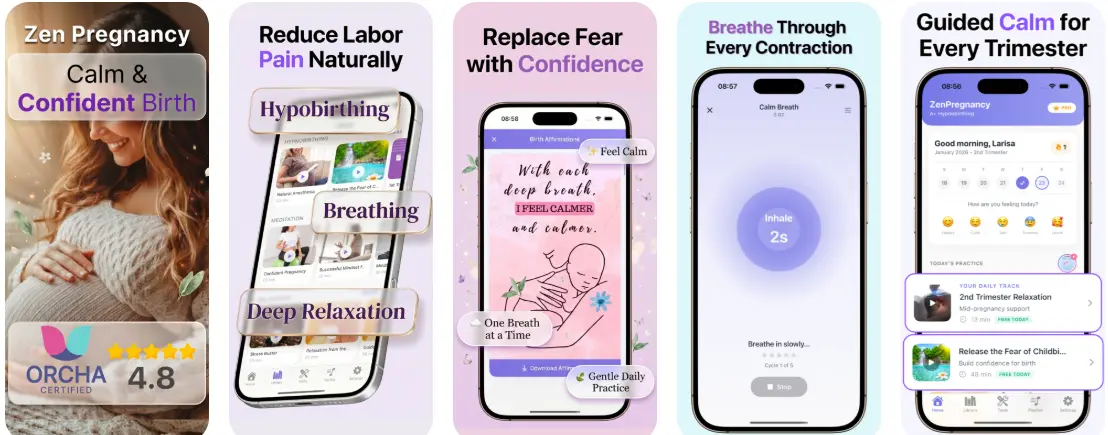
Meditation for pregnancy can help you build a calmer daily routine for anxiety, sleep, body changes, bonding, and birth preparation. Guided pregnancy meditations use breathing, relaxation, visualization, and gentle focus to support your nervous system through each trimester without needing prior meditation experience.
Who is this guide for?
Good fit if you
- You want simple guided meditation for pregnancy that feels calm, practical, and easy to follow
- You feel anxious, overwhelmed, or mentally busy during pregnancy
- You want sleep support through breathing, relaxation, or soothing audio
- You are preparing for labor and want to build confidence with birth-focused meditation
- You prefer short, repeatable sessions you can use across all trimesters
May not be enough if you
- You need urgent mental health support or treatment for severe anxiety, depression, or trauma symptoms
- You are looking for medical advice, diagnosis, or a replacement for your maternity care team
- You want a meditation routine that guarantees a specific birth outcome
- You prefer unguided silent meditation only
- You have been advised by a clinician to avoid certain breathing or relaxation practices without supervision
Why Pregnancy Meditation Helps Anxiety, Sleep, and Birth Confidence
Pregnancy meditation helps many people feel steadier because it gives the mind and body a repeatable way to pause, breathe, and come out of stress mode. It is not about forcing a blank mind; it is about practicing calm when your thoughts, hormones, and body sensations feel loud.
In prenatal education, the same worries come up often: “What if I panic in labor?”, “Why can’t I sleep?”, and “How will I cope if my plan changes?” Mindfulness-based approaches have been linked with reduced pregnancy anxiety, lower fear of childbirth, and improved emotional wellbeing in research reviews, including studies summarized by the National Library of Medicine. For practical support, many parents pair short daily practice with pregnancy stress relief techniques that fit real life.
How Meditation for Pregnancy Works in the Nervous System
Meditation for pregnancy works by shifting the body away from sympathetic fight-or-flight activation and toward parasympathetic rest-and-digest regulation. Slow breathing, body scanning, and guided imagery can reduce muscle tension, soften the jaw and shoulders, and help the brain interpret sensations as manageable rather than dangerous.
That matters in late pregnancy and labor because fear can increase tension, and tension can make strong sensations feel harder to cope with. Meditation does not control birth or guarantee an unmedicated labor, but it trains skills you can use during cervical checks, induction conversations, contractions, cesarean preparation, or recovery. This is not medical advice; always consult your healthcare provider about anxiety, panic symptoms, blood pressure, pain, or any change in your pregnancy.
What a Good Guided Pregnancy Meditation Session Includes
A good guided pregnancy meditation session is short, specific, and easy to repeat. Most people do better with one clear goal per session: calming anxiety, falling asleep, bonding with baby, practicing labor breathing, or rehearsing confidence for a birth preference.
A simple session may include one minute of settling, three to ten minutes of guided breathing, a body scan from face to pelvic floor, and a closing affirmation such as “My body and baby are working together.” If you prefer being talked through the process, try guided meditation for pregnancy sessions that match your trimester and energy level. Three minutes counts on a hard day; consistency matters more than doing one long session perfectly.

First Trimester Mindfulness for Nausea, Worry, and Overwhelm
First trimester mindfulness is mostly about grounding, not achieving deep relaxation. Nausea, fatigue, food aversions, early scans, and the strangeness of “I’m pregnant but I don’t look pregnant yet” can make your mind race.
Try a two-to-five-minute body scan while lying on your side or sitting propped up. Notice your forehead, jaw, throat, chest, belly, hips, legs, and feet without trying to fix every sensation. If nausea is strong, keep your eyes open and rest your gaze on one stable point in the room. Pair this with practical care from your clinician, especially if vomiting is severe, you cannot keep fluids down, or anxiety feels unmanageable. Meditation can support coping, but it should never replace medical assessment.
Second Trimester Relaxation for Sleep and Body Changes
Second trimester relaxation often works well because many people have a little more energy, yet new body changes can bring fresh worries. Your bump may be growing, sleep positions may feel awkward, and planning decisions can suddenly feel very real.
This is a useful time to practice ten-minute evening sessions focused on softening the hips, unclenching the jaw, and breathing slowly into the ribs. If sleep is your main challenge, a dedicated sleep meditation for pregnant women can help create a predictable bedtime cue. Research suggests mindfulness may improve sleep quality for some pregnant people, but persistent insomnia, depression symptoms, or intrusive thoughts deserve support from a midwife, OB-GYN, GP, or mental health professional.
Third Trimester Birth Meditation for Labor Readiness
Third trimester birth meditation helps you rehearse staying present when sensations become intense. This is when many parents start thinking about contractions, induction, cesarean birth, tearing, epidurals, or whether they will cope when labor begins.
A helpful practice is mental rehearsal: imagine an early contraction, breathe slowly through it, relax your shoulders, and picture yourself communicating clearly with your birth team. You can also add affirmations and partner cues, such as a hand on the shoulder or the phrase “soft jaw, slow breath.” If you want trimester-specific practice, third trimester hypnobirthing guidance can support hospital, birth center, home birth, VBAC, planned cesarean, or epidural-friendly plans without promising a particular outcome.
How to Do a Pregnancy Meditation Routine
Use a routine that is so simple you can repeat it on tired days. A realistic pregnancy meditation habit is usually five to fifteen minutes, one time per day, with a backup two-minute version for difficult moments.
- Choose one purpose: pick anxiety relief, sleep, bonding, breathing, or labor rehearsal.
- Set your position: sit upright, recline, or lie on your side with pillows supporting your bump, hips, and knees.
- Slow your exhale: breathe in gently, then make the out-breath a little longer than the in-breath.
- Scan the body: soften the forehead, jaw, shoulders, belly, pelvic floor, hands, and feet.
- Close with one cue: repeat a short phrase such as “I can meet this moment one breath at a time.”
Breathing Exercises and Prenatal Mindfulness Techniques
Breathing exercises make prenatal mindfulness more practical because the breath gives your attention somewhere steady to land. The goal is not to breathe perfectly; it is to notice tension sooner and choose a calmer rhythm.
Many parents like down-breathing, where the exhale is imagined moving gently downward through the body. Others prefer box breathing in early pregnancy or a longer-exhale pattern, such as inhaling for four and exhaling for six. During labor, some people switch to soft vocal breathing, low humming, or counting through surges. You can build these skills with pregnancy breathing techniques and then connect them to labor breathing practice closer to your due date.
Birth Affirmations and Hypnobirthing Meditation Practice
Birth affirmations work best when they are believable, specific, and paired with physical relaxation. A phrase like “I can soften around this sensation” often lands better than a forced positive statement that your body does not trust.
In hypnobirthing meditation, affirmations are usually layered with breathing, visualization, and calm repetition. This helps the phrase become a cue for the body, not just a sentence in your head. You might use “My breath is my anchor,” “I can ask for what I need,” or “Each surge brings my baby closer.” If words help you stay focused, explore birth affirmations for labor preparation or a broader list of pregnancy affirmations for anxious days.
Best Pregnancy Meditation Apps Compared
The best pregnancy meditation app is the one you will actually open when you are tired, worried, or awake at 3 a.m. General mindfulness apps can be helpful, but pregnancy-specific tools often feel more relevant because the language, body positions, fears, and birth preparation are different.
| App | Best for | Pregnancy-specific features |
|---|---|---|
| HypnoBirth App | Hypnobirthing, calm pregnancy, and labor prep | Guided meditation, breathing, affirmations, and contraction timing |
| Expectful | Fertility, pregnancy, and motherhood meditations | Stage-based mindfulness and sleep content |
| Headspace | General meditation and stress support | Broad mindfulness library with some pregnancy-relevant practices |
| Calm | Sleep stories and general relaxation | Sleep, music, and anxiety tools not centered on birth |
Where a Hypnobirthing App Fits Into Daily Practice
A hypnobirthing app fits best as a daily guide, not as another task to feel guilty about. HypnoBirth App is a hypnobirthing app that provides guided meditation, breathing exercises, contraction timing, and birth affirmations for pregnant women.
Use it in the first trimester for grounding, in the second for sleep and confidence, and in the third for labor rehearsal. If you like app-based structure, you can start with a on iPhone or use on Android. For a broader feature comparison, see this guide to the best hypnobirthing app options.
Labor Meditation, Contractions, and Real-Time Coping
Labor meditation is different from a quiet prenatal session because it has to work while people are talking, monitors are beeping, or contractions are changing. The most useful practices are simple cues you can remember under pressure.
Try one phrase, one breath pattern, and one body release cue. For example: “low and loose,” inhale through the nose, exhale with a long sigh, then soften the jaw and hands. During early labor, some parents also find it calming to time surges without obsessing over them; a contraction timer meditation can help connect tracking with breathing. If labor becomes medically complex, follow your healthcare team’s guidance first and use meditation as emotional support.
Limitations and Safety of Prenatal Meditation
Prenatal meditation is generally low risk, but it is not a cure-all and it should sit alongside proper prenatal care. Studies suggest mindfulness can support anxiety, sleep, and fear of childbirth for some people, but results vary and no practice guarantees a calm, vaginal, unmedicated, or intervention-free birth.
- It is not emergency care: seek urgent help for bleeding, severe pain, reduced fetal movement, chest pain, fainting, or thoughts of self-harm.
- It may bring up emotions: trauma histories, previous loss, or birth fear can surface during stillness; specialist support may be needed.
- Position matters: later in pregnancy, many people feel better side-lying or reclined rather than flat on the back.
This is not medical advice. Consult your healthcare provider for guidance that fits your pregnancy.
When to Choose Classes, Books, or a Birth Meditation App
Choose the format that matches your learning style, budget, and support needs. A class gives live teaching and partner practice, a book gives deeper background, and a birth meditation app gives repeatable audio you can use at bedtime, in the car, or during early labor.
If you are new to the method, you might begin with how to start hypnobirthing and then add daily audio practice. First-time parents may appreciate the reassurance in hypnobirthing for first-time moms, while planned cesarean or VBAC parents can adapt the same calming skills for their own birth path. The right choice is the one that helps you feel informed, supported, and able to ask for what you need.
This guide was written for educational birth preparation and reviewed for safety language. It does not replace advice from your midwife, OB-GYN, GP, or maternity unit.
Frequently Asked Questions
Is meditation safe during pregnancy?
Yes, meditation is generally safe during pregnancy when you practise in a comfortable position and keep breathing natural. It should support, not replace, your routine antenatal care. Speak with your midwife, doctor, or mental health professional if you have trauma symptoms, panic attacks, depression, or any medical concerns.
How often should I do pregnancy meditation?
Daily practice of 5 to 15 minutes is a good starting point for most pregnant people. Short, consistent sessions usually work better than occasional long ones, especially when you are tired or nauseous. On difficult days, even a two-minute breathing reset can still be useful.
Can meditation help with pregnancy anxiety?
Yes, meditation can help reduce pregnancy anxiety by calming the nervous system and giving your mind a steady focus. It is especially useful for worry loops, birth fears, and moments of overwhelm. If anxiety feels intense, persistent, or affects daily life, seek support from your midwife, GP, doctor, or therapist.
Can meditation help with labour pain?
Yes, meditation can help you cope with labour sensations by reducing fear, softening tension, and giving you a breathing rhythm to return to. It does not guarantee a pain-free labour or a particular birth outcome. Many people use it alongside medical pain relief, movement, water, massage, or other comfort measures.
When should I start meditation for pregnancy?
You can start meditation for pregnancy in any trimester. Beginning earlier gives you more time to build confidence with breathing, relaxation, and visualisation before labour. Starting later can still be valuable, even if you only practise for a few minutes a day.
Can I start pregnancy meditation at 38 weeks?
Yes, you can start pregnancy meditation at 38 weeks. Focus on simple practices such as slow breathing, body relaxation, positive birth affirmations, and short guided sessions for labour readiness. Even late pregnancy practice can help you feel calmer and more prepared.
What is the best position for pregnancy meditation?
The best position for pregnancy meditation is one where you can breathe easily, relax your body, and feel supported. Sitting upright, side-lying, or reclining with pillows often works well. In later pregnancy, many people avoid lying flat on their back for long periods unless advised otherwise by their healthcare provider.
Can meditation help pregnancy insomnia?
Yes, meditation can help pregnancy insomnia by settling your body and reducing mental activity before sleep. A short bedtime meditation, relaxed breathing, or body scan may make it easier to unwind. Persistent or severe insomnia should be discussed with a healthcare professional.
Is hypnobirthing the same as pregnancy meditation?
No, hypnobirthing is not exactly the same as pregnancy meditation. Hypnobirthing often includes meditation, but it also uses birth education, breathing techniques, affirmations, visualisation, and fear-release tools. It is usually more specifically focused on labour, birth confidence, and informed preparation.
What should I do if my mind wanders during pregnancy meditation?
A wandering mind is normal during pregnancy meditation. The practice is not to stop thoughts completely, but to notice them and gently return to your breath, body, baby, or guide. Each return is part of the meditation, not a failure.
Can I use pregnancy meditation if I want an epidural?
Yes, you can use pregnancy meditation if you plan to have an epidural. Meditation can support calm breathing, decision-making, and emotional steadiness before, during, or after pain relief. It is not an alternative to medical care unless you choose it to be part of your comfort plan.
Is a pregnancy meditation app enough, or should I take a class?
A pregnancy meditation app can be enough if you want flexible, guided practice at home. A class may be better if you prefer personal support, birth education, partner involvement, and the chance to ask questions. Many first-time mums and parents use both: an app for daily practice and a class for deeper preparation.
Guides in this topic
Best Meditation for Pregnancy App for Trimester-by-Trimester Calm
HypnoBirth App is a free hypnobirthing and pregnancy relaxation app designed to help you practise guided meditation, breathing, visualization, and birth confidence techniques throughout pregnancy. With 200k+ users and ORCHA NHS certification, it is a supportive choice for simple, structured sessions you can return to whenever you need calm.
Best for
- Guided pregnancy meditation for anxiety, sleep, bonding, and labor preparation
- Short hypnobirthing-style audio sessions you can use at home, in bed, or during birth prep
Limitations
- It is not a substitute for medical or mental health care
- It cannot guarantee pain relief, sleep improvement, or a specific birth experience