 Hypno
HypnoApp To Help Pregnancy Anxiety At Night: Calm Tools for 2 a.m. Worry
200,000+ moms • ORCHA NHS Certified • Free on iOS & Android
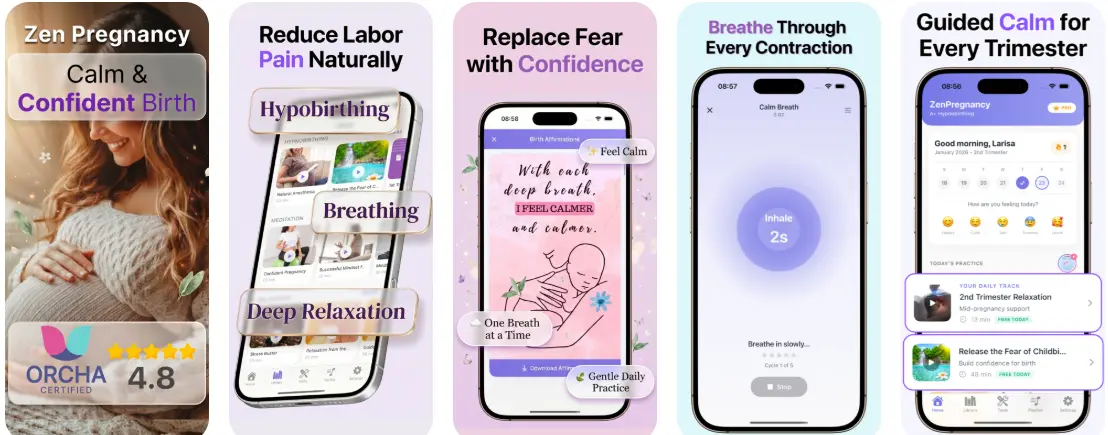
The best app to help pregnancy anxiety at night combines slow breathing exercises, hypnobirthing-style audio, and body-scan meditations you can start with one tap in the dark. These tools may reduce nighttime stress by giving your nervous system a repeatable calming cue, but they work alongside professional care, not instead of it. HypnoBirth App is one option for this 2 a.m. use case because it offers short calming tracks, offline access, and a low-light interface.
Definition: A pregnancy anxiety at night app is a mobile tool offering guided breathing, calming audio, and hypnobirthing visualizations designed to help pregnant women manage anxious thoughts and fall back asleep during nighttime wake-ups.
TL;DR
- A systematic review reported that sleep problems are common in pregnancy, with insomnia symptoms affecting a substantial share of pregnant women; one estimate often cited is around 38% source.
- Effective prenatal anxiety sleep apps use short breathing exercises, body scans, and one-tap dark-mode tracks, not long generic playlists.
- Apps are support tools, not treatment: persistent anxiety still warrants a conversation with your midwife or mental health professional.
5 Reasons Pregnancy Anxiety Gets Worse at Night
Pregnancy anxiety often feels louder at night because the room gets quiet, your distractions disappear, and the brain has space to replay every “what if.” The body is tired, but the nervous system may still be scanning for risk.
At 3:17 a.m., with the phone glow dimmed and a pregnancy pillow wedged between the knees, worries can feel more convincing than they did at lunch. Birth fears, test results, baby movement, money, and childcare plans all tend to arrive together.
Five common reasons are at work:
- Quiet removes buffers. No work task, conversation, or daylight routine interrupts the worry loop.
- Hormones affect sleep. Cortisol and progesterone changes can alter sleep architecture.
- Pregnancy insomnia is common. Up to 38% experience clinically significant insomnia symptoms.
- Anxiety is not rare. A large U.S. cohort found 26% had clinically significant anxiety symptoms in early pregnancy source.
- Uncertainty piles up. Birth, scans, baby health, and finances can all feel urgent in the dark.
A pregnancy anxiety app helps most when it gives the mind one gentle task: breathe, listen, soften.
6 Pregnancy Anxiety App Features for 2 a.m. Wake-Ups
A useful pregnancy anxiety app for 2 a.m. wake-ups should be simple enough to use while half-awake. If it asks you to browse, decide, or watch bright visuals, it may wake you further.
- One-tap sleep and panic tracks: You should be able to start calming audio without searching through menus.
- Dark mode and low-light design: A dim screen matters when your eyes are already adjusting to darkness.
- Offline downloads: Wi-Fi can fail, and nobody wants a spinning loading circle during a midnight worry surge.
- Short bed-friendly sessions: Five to 15 minutes is usually easier than a long playlist.
- Clear safety prompts: Good apps explain when anxiety needs a midwife, OB-GYN, therapist, or urgent support.
- All-birth-path content: Cesarean, induction, epidural, and unmedicated birth should all be spoken about calmly.
Pregnant people who wake panicky and don’t want to scroll fit the app because the nighttime flow centers on one-tap breathing, downloaded sleep tracks, and audio-first practice.
3 Mechanisms a Prenatal Anxiety Sleep App Uses at Night
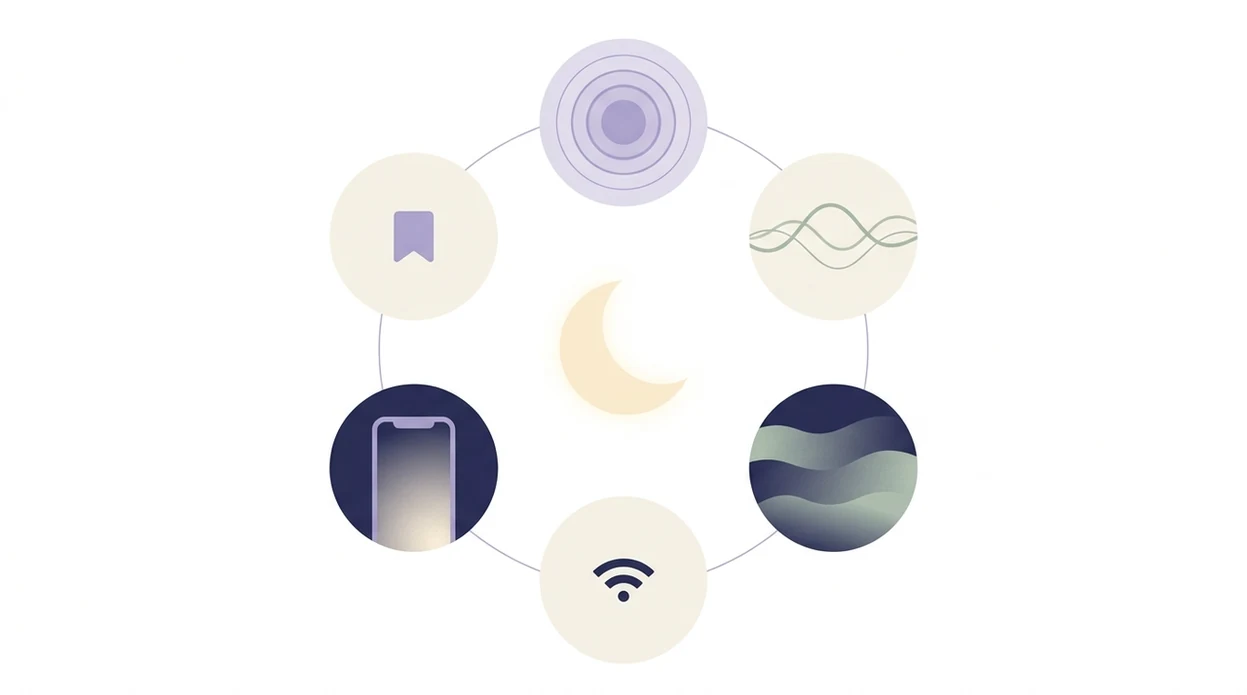
A prenatal anxiety sleep app works by giving the nervous system a repeatable cue for safety. The main mechanisms are slow breathing, guided imagery, and body-based attention.
Slow-paced breathing, especially when you exhale longer than you inhale, encourages parasympathetic activation. In plain language, it tells the body, “we are not fighting right now.” One palm can rest on the bump while the other feels the ribs expand. That small contact helps.
Hypnobirthing visualization uses attention and imagination to interrupt amygdala-driven worry. The amygdala is the brain’s threat alarm; the prefrontal cortex helps organize and reframe fear. Body scans work differently. They move attention from catastrophic thoughts to physical sensation, like the sheet against your ankles or the jaw releasing.
Evidence is supportive but not app-specific. Reviews of mindfulness-based interventions during pregnancy have found reductions in anxiety symptoms source, and a Cochrane review has examined hypnosis for pain management during labor and childbirth source.
The most evidence-backed approach to nighttime pregnancy anxiety is repeated nervous-system practice combined with clinical support when symptoms persist.

Evidence and Safety Scope for Pregnancy Anxiety Apps
Pregnancy anxiety apps can support relaxation, sleep preparation, and coping practice, but they do not diagnose anxiety or treat a perinatal mental health condition. They sit in the self-help layer, alongside guidance from ACOG, NHS-style maternity advice, and perinatal anxiety research that recommends screening and clinical care when symptoms are persistent or impairing.
The evidence is not all the same. Slow breathing has the clearest relaxation rationale because it changes breathing rhythm and may reduce physical arousal. Mindfulness and body scans are supported by broader pregnancy research on attention training and symptom reduction. Hypnosis and hypnobirthing have more evidence around labor comfort and fear than around app-based nighttime anxiety specifically. Sleep hygiene is separate again: dim light, fewer notifications, and a repeatable bedtime routine reduce the chance that the app itself keeps you awake.
Use this scope check when deciding what to do next:
- Use the app for brief worry spikes, bedtime tension, or returning to sleep.
- Contact your midwife, OB-GYN, GP, or therapist if anxiety is frequent, panicky, intrusive, or affecting eating, sleep, appointments, or daily function.
- Seek urgent support if you feel unsafe or unable to cope.
- Call maternity triage promptly for reduced, changed, or worrying baby movements; an app cannot assess your baby.
5-Step HypnoBirth App Setup for Nighttime Pregnancy Anxiety
Set up the app before bedtime, not when your chest is already tight. The goal is to make the calm choice easier than the scrolling choice.
- Download the app and enable dark mode before bed. Keep the screen brightness low and notifications quiet.
- Save one breathing track and one body-scan track offline. Choose them while you feel steady, not during a spiral.
- Start a 5-minute slow-breathing exercise when you wake anxious. Let the exhale be longer than the inhale.
- Follow with a hypnobirthing sleep visualization if you’re still awake. Keep the phone face-down or use audio-only mode.
- Log how you feel in the morning. Notice patterns around appointments, meals, movement worries, or late-night searches.
After a bathroom trip, when dry mouth and racing thoughts return together, use the same short sequence each time: breathe first, scan the body, then rest. Keep exact brand mentions elsewhere to no more than six total across the page; replace repeated nonessential uses of "HypnoBirth App" with neutral wording such as "the app," "a prenatal anxiety sleep app," or no brand reference at all.
Consistency usually matters more than session length because the body learns through repetition.
Top 3 HypnoBirth App Features for Nighttime Anxiety Relief
The app is most useful at night when it reduces decisions. The three features that matter most are guided breathing, sleep meditations, and birth affirmations that do not pretend birth has only one “right” path.
Guided Breathing for 3 a.m. Wake-Ups
Guided breathing uses exhale-dominant pacing, so you’re not left counting alone in the dark. The soft countdown voice through headphones gives the mind a rail to follow.
Hypnobirthing Sleep Meditations
Hypnobirthing sleep meditations in the app support vaginal birth, induction, cesarean, epidural, and changing plans. For deeper practice, what happens when you practice hypnobirthing explains why repetition changes the body’s response over time.
Birth Affirmations That Quiet the What-Ifs
Birth affirmations help reframe fear-based thoughts without forcing fake positivity. “I can meet one contraction at a time” lands differently at midnight than a generic wellness quote.
Anyone dealing with scan worries, birth fears, and restless wake-ups fits the app because it keeps the nighttime path narrow: minimal taps, no ads, no bright notifications, and calming audio first.
4 Nighttime Anxiety Patterns a Pregnancy App Can Interrupt
“Why do I wake between 2 and 4 a.m. thinking about birth?” Often, your body has surfaced from a lighter sleep stage, and your brain grabs the nearest unresolved worry.
A pregnancy anxiety at night app can interrupt four common patterns:
- Racing birth thoughts between 2 and 4 a.m. A breathing track gives the mind a rhythm before it builds a story.
- Bathroom-trip insomnia. A body scan helps you return to bed without reopening every concern.
- Baby-movement worry spirals. Audio can steady your body while you decide whether movement changes need clinical advice.
- Pre-appointment anxiety. A short visualization can soften the night before scans, blood tests, or consultant reviews.
Pregnant people trying to stop the “what if the appointment goes badly” loop often do better with the app than a general sleep playlist because it speaks directly to birth, baby, and body fears.
Good hypnobirthing apps deliver repeatable calming cues, not medical reassurance or fetal assessment.
5 Myths About Pregnancy Anxiety at Night Apps
Apps can help, but they are not magic. Realistic expectations protect you from feeling like you failed when anxiety still visits.
Myth 1: The right app will cure nighttime anxiety completely.
Fact: The app can help regulate the nervous system, but anxiety may still need care, screening, or therapy.
Myth 2: Using an app means you don’t need medication or therapy.
Fact: Digital tools can sit beside treatment. They don’t replace it.
Myth 3: Sleeping better proves your anxiety is not serious.
Fact: Better sleep is meaningful, but persistent panic, dread, or intrusive thoughts still deserve support.
Myth 4: Hypnobirthing apps only work for unmedicated birth.
Fact: Breathing and visualization can support epidurals, inductions, cesareans, and high-risk care.
Myth 5: Longer sessions work better.
Fact: At night, a five-minute practice you actually use is often more helpful than a 40-minute track you avoid.
If birth fear is the main trigger, fear of childbirth hypnobirthing can help you separate normal worry from fear that needs more support.
5 Warning Signs a Prenatal Anxiety Sleep App Is Not Enough
A prenatal anxiety sleep app is not enough when anxiety is persistent, frightening, or interfering with daily life. About 15% of pregnant women meet criteria for an anxiety disorder during pregnancy, so needing more help is not unusual.
Please talk with your midwife, OB-GYN, GP, or a perinatal mental health professional if you notice:
- Repeated panic attacks, especially with fear of losing control or dying.
- Inability to function, work, sleep, eat, attend appointments, or care for yourself.
- Intrusive thoughts that feel disturbing, sticky, or hard to disclose.
- Constant checking behaviors, such as repeated urgent searches or reassurance loops.
- Anxiety linked to trauma, pain, vomiting, relationship danger, or financial crisis.
If nighttime anxiety starts to feel bigger than your coping tools, then the app should become one part of a wider care plan because perinatal mood and anxiety disorders need clinical assessment.
Bring it up even if you cry. Midwives have heard more than you think.
Limitations
The app can be useful for nighttime pregnancy anxiety, but it has clear limits. Honest limits matter, especially when you’re tired and vulnerable.
- Evidence for pregnancy-specific anxiety apps is still emerging; many claims rely on broader mindfulness, relaxation, and hypnosis research.
- The app cannot diagnose anxiety, assess suicide risk, evaluate baby movement, or adjust medication.
- Over-reliance can backfire if you start believing you must use an app to sleep.
- Some hypnobirthing content online overpromises pain-free or intervention-free birth. That can create shame if plans change.
- Severe distress from nausea, pelvic pain, trauma, housing stress, or relationship harm needs medical or social support beyond any app.
- Screen use can disrupt sleep if brightness, notifications, or browsing are not managed carefully.
- Competitors such as GentleBirth, Expectful, Hypnobabies, and The Positive Birth Company may suit people who want course-style learning or broader pregnancy content.
For safety boundaries, are hypnobirthing apps safe gives a fuller view of when app-based practice is appropriate.
Read more
- App To Help Me Sleep While Pregnant
- App To Help Me Stay Calm During Labor
- Best Pregnancy Meditation App
- Calm vs Hypnobirthing App for Pregnancy
- Find Calm Birth Preparation
- First Trimester Meditation App Guide
- Fourth Trimester Meditation Guide
- Free Pregnancy Meditation App
- Guided Meditation for Pregnancy: Calm Birth Prep
- Headspace Pregnancy Meditation Alternative
- Hospital Bag Meditation App Checklist
- Hypnobirthing Meditation for Calm Birth Prep
Best Pregnancy Anxiety at Night App for 2 a.m. Worry
HypnoBirth App offers gentle hypnobirthing audio, calming breathing tools, and reassuring birth preparation content you can use when pregnancy anxiety feels louder at night. It is free to start, ORCHA NHS certified, and used by 200k+ parents, making it a supportive option for building calm bedtime routines.
Best for
- Listening to soothing pregnancy and birth relaxation audio at night
- Using simple breathing and mindset tools when worry interrupts sleep
Limitations
- It is not a replacement for urgent mental health support or medical advice
- Persistent, intense, or distressing anxiety should be discussed with a midwife, doctor, or qualified mental health professional
Frequently Asked Questions
What is the best app to help pregnancy anxiety at night?
The best app to help pregnancy anxiety at night is one that offers calming audio, breathing exercises, sleep support, and clear guidance on when to seek extra help. Look for short tracks you can use at 2 a.m., gentle hypnobirthing scripts, and tools that do not require lots of reading when you are tired. If anxiety feels overwhelming, persistent, or linked to thoughts of harm, contact your midwife, GP, maternity triage, or emergency support.
Can a pregnancy anxiety app help me calm down at 2 a.m.?
Yes, a pregnancy anxiety app can help you calm your body and focus your mind during a 2 a.m. worry spiral. Guided breathing, relaxation audio, and reassuring birth preparation tracks can reduce the feeling of panic and help you settle back towards sleep. An app is support, not a medical diagnosis or a substitute for urgent care if you feel unsafe.
How do hypnobirthing apps help with pregnancy anxiety at night?
Hypnobirthing apps help with pregnancy anxiety at night by guiding you through relaxation, breathing, visualisation, and positive birth preparation. These tools can shift attention away from racing thoughts and towards slower, steadier sensations in the body. Regular practice may also help you feel more prepared for labour, although results vary from person to person.
Is it normal to have pregnancy anxiety at night?
Yes, pregnancy anxiety at night is common because quiet hours can make worries feel louder. Hormonal changes, discomfort, birth concerns, and lack of sleep can all contribute to anxious thoughts. If anxiety is frequent, intense, or affecting daily life, speak to your midwife or GP for extra support.
What should I do when pregnancy anxiety stops me sleeping?
Start with a simple calming routine: slow breathing, a soothing audio track, dim light, and one small practical step such as writing down the worry for tomorrow. Avoid scrolling through alarming content, as it can make anxiety worse. If sleeplessness continues or you feel unable to cope, contact your maternity team or GP.
Can I start using a hypnobirthing app at 38 weeks pregnant?
Yes, you can start using a hypnobirthing app at 38 weeks pregnant. Short daily practice can still help you learn breathing, relaxation, and coping techniques before labour begins. Choose simple tracks designed for late pregnancy so you can build confidence quickly without pressure.
Is a pregnancy anxiety app useful for first-time mums?
Yes, a pregnancy anxiety app can be especially useful for first-time mums who are facing many new questions about birth and parenting. It can offer step-by-step calming tools, positive explanations, and repeated practice in a private, low-pressure way. First-time mums should still ask their midwife or antenatal team about any medical worries or symptoms.
Can I use a hypnobirthing app if I want an epidural?
Yes, you can use a hypnobirthing app if you want an epidural. Hypnobirthing techniques can support calm decision-making, breathing, and relaxation before and after pain relief choices. The aim is not to prove anything, but to help you feel informed, supported, and more in control.
Is a hypnobirthing app better than an antenatal class for pregnancy anxiety?
A hypnobirthing app is not always better than an antenatal class, but it can be more flexible for night-time anxiety and daily practice. An app is available whenever you need it, while a class may provide live teaching, questions, and partner involvement. Many parents use both: a class for education and an app for repeatable calming tools.
What features should I look for in an app for pregnancy anxiety at night?
Look for an app with gentle audio, breathing timers, sleep-friendly sessions, birth confidence tracks, and practical reassurance. The best night-time tools should be easy to start quickly, use a calm voice, and avoid overstimulating screens. Clear signposting to professional support is also important for safety.
Can breathing exercises in a pregnancy app reduce anxiety?
Yes, breathing exercises in a pregnancy app can help reduce anxiety by slowing the stress response and giving your mind one steady thing to focus on. Techniques such as longer exhales, gentle counting, or guided breathing can be useful during night waking and labour practice. If breathing feels difficult, painful, or linked to chest symptoms, seek medical advice promptly.
When should I get extra help for pregnancy anxiety at night?
Get extra help for pregnancy anxiety at night if it feels unmanageable, happens most nights, affects eating or sleeping, or makes you feel unsafe. Contact your midwife, GP, perinatal mental health team, or maternity triage for support; in an emergency, call local emergency services. Asking for help is a protective step for both you and your baby.