 Hypno
HypnoLabor and Delivery App: Everything You Need in One Place
The labor and delivery app that combines contraction timing, meditation, breathing exercises, and birth affirmations. Prepare for birth with one free app.
200,000+ moms • ORCHA NHS Certified • Free on iOS & Android
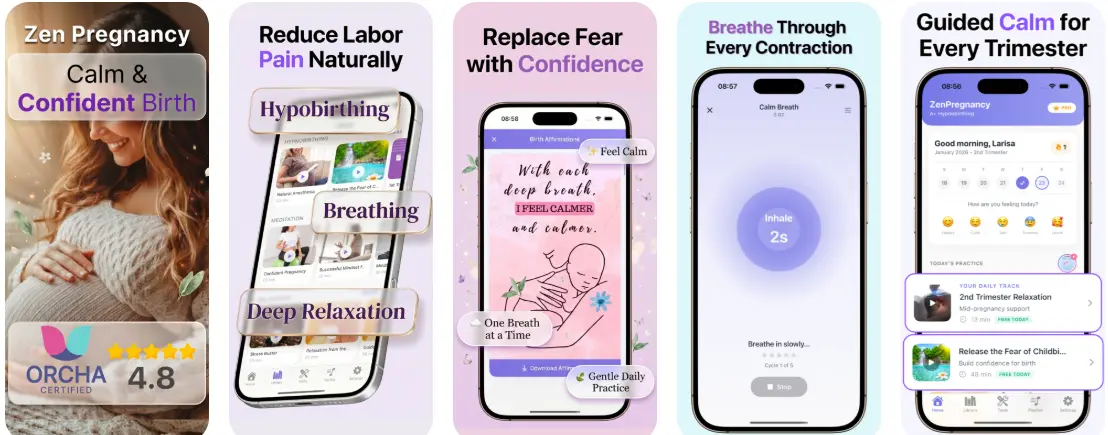
A labor and delivery app helps you keep key birth tools in one place, including contraction timing, breathing, relaxation, meditation, and affirmations. HypnoBirth App is designed to support calm preparation during pregnancy and coping strategies in labor, without replacing advice from your midwife, doctor, or labor and delivery triage team.
Who is this guide for?
Good fit if you
- You want a simple labor and delivery app for breathing, relaxation, and birth preparation
- You are interested in hypnobirthing techniques for pregnancy and early labor
- You want affirmations, meditations, and calming audio available in one place
- You are preparing for a hospital, home, or birth center birth and want portable support
- You want a free hypnobirthing app used by 200k+ parents
May not be enough if you
- You need urgent medical guidance or help deciding whether to go to hospital
- You want an app to diagnose labor progress or replace your care team
- You are looking for fetal monitoring, clinical records, or medical decision-making tools
- You prefer in-person-only birth education with no digital support
Why Birth Support Apps Matter in Early Labor
Birth support apps matter because early labor is often emotionally confusing, especially when contractions are irregular and you are trying to decide what is normal. A simple tool can reduce the mental load by tracking patterns while also giving you a calm next step: breathe, listen, rest, hydrate, or call your provider.
Many parents do not panic because of one contraction; they panic because they feel unsure. “Is this real labor?” “Am I coping badly?” “Should we leave now?” That uncertainty can increase tension in the jaw, shoulders, belly, and pelvic floor. A good birth app cannot diagnose labor, but it can help you notice contraction frequency, practice calming techniques, and communicate more clearly with your midwife, OB-GYN, doula, or birth partner. This is not medical advice. Consult your healthcare provider for individualized labor instructions.
What a Labor and Delivery App Should Include
A labor and delivery app should include fast contraction timing, guided breathing, labor-specific relaxation audio, and practical affirmations you can use under pressure. Pregnancy calendars and baby-size updates are nice, but they are not enough when you are breathing through contractions at 3:00 a.m.
The essentials are simple: a readable timer that shows duration and frequency, audio that helps you soften your body, and tools your partner can start without hunting through menus. If you are preparing with hypnobirthing, look for practice tracks that match real labor language: release, soften, breathe down, relax your face, and let the wave pass. For a deeper skill base, you can also learn hypnobirthing techniques for labor preparation before your due date so the app feels familiar when contractions begin.
How a Labor Support App Works
A labor support app works by pairing real-time tracking with nervous-system regulation. The contraction timer records when each contraction starts and stops, then displays the pattern as duration, spacing, and recent frequency; the calming tools help you respond to that pattern without spiraling into fear.
The mechanism is practical, not magical. When you press the timer, the app creates a simple log you can share verbally with your provider. When you press play on breathing or meditation, the cues support slower exhalation, relaxed muscles, and focused attention. That combination matters because fear and adrenaline can make the body brace, while calm support may help oxytocin-led labor physiology feel more manageable. If timing plus relaxation is your priority, contraction timer meditation for labor is one of the most useful pairings to practice.

How to Use a Birth App During Pregnancy and Labor
The best way to use a birth app is to practice before labor, then keep the in-labor steps very simple. You do not want to learn a new interface during transition; you want your hand, your partner, or your doula to know exactly what to press.
- Start in the third trimester with 5–10 minutes of breathing or relaxation practice most days.
- Save your favorite tracks so they are easy to find when you feel tired or overwhelmed.
- Practice timing Braxton Hicks or practice contractions so the contraction tool feels familiar.
- Share the app with your birth partner and agree on when they should press play or start timing.
- Follow your provider’s instructions about when to call, come in, or seek urgent care.
If you are close to your due date, this third-trimester hypnobirthing practice guide can help you build a realistic routine.
Contraction Timer, Breathing, and Meditation Features
The most useful birth app features are the ones you can access in one or two taps: contraction timing, guided breathing, and calming audio. In labor, your brain may not want choices; it wants rhythm, reassurance, and a clear next action.
A contraction timer should record start time, end time, duration, and spacing without making you calculate. Breathing support should cue slow exhalations and relaxed shoulders, especially during a strong surge. Meditation or hypnosis-style audio should sound steady rather than overly cheerful. Birth affirmations are helpful when they are believable: “One wave at a time,” “My body can soften,” or “I can ask for support.” If breathing is your main coping tool, explore a dedicated labor breathing exercises app; if words help you focus, a birth affirmations app for labor confidence can be worth practicing before contractions start.
Evidence on Hypnobirthing, Relaxation, and Labor Coping
Research suggests that hypnosis, relaxation, and mindfulness-based birth preparation may reduce fear and improve coping for some pregnant people, although results vary and no method guarantees a specific birth outcome. The strongest takeaway is that repeated practice can help you feel more prepared and less reactive during stress.
A Cochrane review on hypnosis for childbirth found mixed evidence, with possible benefits for some outcomes but a need for better-quality studies. In real birth education, that matches what many instructors see: hypnobirthing is not a promise of a pain-free labor, but it can give you a trained response to intensity. Guided audio, breathing, visualization, and partner cues may be especially helpful when practiced for several weeks. This is not medical advice; discuss pain relief, monitoring, and birth preferences with your healthcare provider.
Labor App Support for Hospital, Home, and Birth Center Plans
A birth app can support many birth plans because the core skills—timing contractions, breathing through intensity, and staying grounded—apply in hospitals, birth centers, and home birth settings. The app should fit your plan, not pressure you into one kind of birth.
For a hospital birth, timing contractions can help you describe what has happened before triage, while relaxation audio may help during the car ride or while waiting for assessment. For a birth center or home birth, your midwife may ask for contraction patterns and how you are coping between surges. For a planned cesarean, VBAC, induction, or epidural-supported birth, breathing and affirmations can still help with anxiety, procedures, and decision-making. If surgical birth is part of your plan or backup plan, hypnobirthing for C-section preparation can make the emotional side feel less frightening.
When to Call Labor and Delivery Triage
A birth app can help you describe contractions, but your healthcare provider decides when you should call or come in. Use your app data as a communication aid, not as a medical decision-maker.
Many providers give a version of the 5-1-1 or 4-1-1 guideline, meaning contractions are about five or four minutes apart, lasting one minute, for one hour. But your instructions may be different if you are preterm, high risk, VBAC, GBS positive, carrying multiples, have a planned induction, or live far from the hospital. You should call promptly for heavy bleeding, decreased fetal movement, severe headache, vision changes, fever, waters breaking with concerning color or odor, or anything that feels wrong. The NHS guidance on when to go to hospital or a birth centre offers general signs, but your own care team’s advice comes first.
Comparison: Pregnancy and Birth Apps
The best app depends on whether you want general pregnancy tracking, meditation, or labor-specific support. Some well-known pregnancy apps are excellent for weekly education, while others are better for contraction timing or calm birth preparation.
| App | Best For | Strengths | Watch-Outs |
|---|---|---|---|
| HypnoBirth App | Hypnobirthing, contraction timing, breathing, and affirmations | Labor-focused tools in one place; useful for daily practice and birth day | Less focused on general pregnancy articles or baby registry features |
| Pregnancy+ | Weekly pregnancy tracking and visuals | Popular fetal development content and planning tools | Labor coping tools may not be the main focus |
| BabyCenter | Community and pregnancy information | Large content library and peer discussion | Community advice can feel overwhelming or inconsistent |
| Freya | Surge timer and guided breathing | Simple contraction timer with calm audio support | May offer fewer broader pregnancy wellness features |
Honest Limits of Birth Apps and Timers
Birth apps are helpful support tools, but they are not medical devices and they cannot tell you whether you are safe, dilating, or ready to push. A trustworthy app should make birth preparation easier without pretending to replace clinical judgment.
- They cannot diagnose labor. Contractions can be regular before active labor, and irregular contractions can still deserve a call.
- They cannot monitor your baby. If fetal movement changes, contact your provider instead of relying on an app.
- They cannot guarantee pain relief. Breathing and hypnobirthing may improve coping, but birth sensations vary widely.
- They can become distracting. If tracking increases anxiety, hand the phone to your partner or stop timing for a while.
- They depend on battery, signal, and access. Keep chargers ready and know your provider’s phone number without relying only on the app.
This is not medical advice. Consult your healthcare provider if symptoms concern you.
Privacy, Offline Access, and Partner Support Features
Practical features matter more during labor than fancy design. Offline access, clear audio controls, dim-screen readability, and partner-friendly navigation can make the difference between using the app and abandoning it when contractions intensify.
Before birth, check whether your favorite tracks are easy to find and whether your partner can operate the timer without logging into your personal accounts. Put the app on your home screen, charge a battery pack, and test audio through headphones and a speaker. If you plan to labor in a hospital, ask whether you can use earbuds, a small speaker, or your phone during monitoring. Privacy also matters: contraction notes and mood entries may feel personal, so choose tools you trust and avoid posting labor data publicly unless you truly want to share it.
Who This Birth Preparation App Is Best For
This kind of birth preparation app is best for pregnant people who want fewer separate tools and more calm, repeatable practice. It is especially helpful if you are anxious about contractions, planning to labor at home for a while, or wanting your partner to have a clear support role.
HypnoBirth App is a hypnobirthing app that provides guided meditation, breathing exercises, contraction timing, and birth affirmations for pregnant women. It can suit first-time parents, people planning an epidural but wanting early-labor coping skills, and parents preparing for birth center, home, or hospital settings. If you prefer long-form teaching, you may also pair app practice with an online course or book. For people comparing app-based preparation more broadly, this guide to the best hypnobirthing app features explains what to look for.
Getting Started With Prenatal Practice Tonight
The easiest way to start is to choose one short practice and repeat it for a week. Ten minutes of guided breathing or birth meditation at bedtime can build familiarity without turning preparation into another exhausting pregnancy task.
Tonight, pick one track, lie on your left side or sit supported, loosen your jaw, and breathe out longer than you breathe in. Notice whether your shoulders drop. If your mind wanders, that is normal; gently return to the voice or the breath. You can start with the iOS labor tracking app or the Android contraction tracker, then save the sessions you would actually want during labor. For more gentle options, try guided meditation for pregnancy before moving into stronger labor-focused tracks.
This guide was written for educational birth preparation and reviewed for safety language. It does not replace advice from your midwife, OB-GYN, GP, or maternity unit.
Frequently Asked Questions
What is the best app to use for labor and delivery?
The best labor and delivery app is one that combines contraction timing with practical coping tools. Look for guided breathing, relaxation audio, affirmations, meditation, and a simple interface you can use quickly during contractions. The right app should support calm decision-making rather than overwhelm you with data.
Can a labor app tell me when I am in active labor?
No, a labor app cannot confirm active labor or cervical dilation. It can show contraction timing and patterns, but only your midwife, doctor, or maternity unit can advise what those patterns mean for your situation. Follow your provider’s instructions about when to call or go in.
When should I start timing contractions in labor?
Start timing contractions when they become regular, stronger, or noticeably different from Braxton Hicks contractions. You should also start if your healthcare provider has specifically asked you to track them. Call your provider straight away if you have bleeding, reduced baby movements, waters breaking, severe pain, or any concern.
What is the 5-1-1 rule for contractions?
The 5-1-1 rule usually means contractions are five minutes apart, lasting one minute each, for one hour. Some providers use different guidance, such as 4-1-1 or personalised instructions based on your pregnancy, travel time, or risk factors. Use the rule as a prompt to call, not as a guarantee that it is time to go in.
Is a contraction timer medically accurate?
A contraction timer accurately records the start and stop times that you enter. It does not diagnose labour stage, cervical dilation, baby’s wellbeing, or whether you need medical care. Share the pattern with your midwife or doctor and follow their advice.
Does hypnobirthing really help during labor?
Yes, hypnobirthing may help some people feel calmer and more able to cope during labour. Research on hypnosis, relaxation, and breathing suggests benefits for fear, tension, and coping, although results vary from person to person. It is best used as preparation and support, not as a guaranteed pain-free birth method.
Can I use a labor and delivery app if I plan to have an epidural?
Yes, a labor and delivery app can still be useful if you plan to have an epidural. Breathing, meditation, affirmations, and relaxation audio may help before the epidural, during placement, or if sensations return later in labour. The app can also give your birth partner simple ways to support you.
Is a labor app helpful for first-time moms?
Yes, a labor app can be especially helpful for first-time moms who are unsure what early labour feels like. It can organise contraction timing, breathing prompts, and calming audio in one place. It should not replace antenatal education or advice from your maternity team.
Should I start using a birth app at 38 weeks pregnant?
Yes, 38 weeks is a sensible time to practise using a birth app if you have not started already. Try the contraction timer, breathing exercises, meditations, and affirmations before labour begins so they feel familiar. You can start earlier in pregnancy if anxiety, sleep, or preparation is a concern.
Can a pregnancy or birth app help with anxiety before labor?
Yes, a pregnancy or birth app can help with mild anxiety by offering breathing exercises, guided relaxation, meditation, and reassuring affirmations. Regular practice may make the tools easier to use during labour. Speak to a healthcare professional if anxiety feels intense, persistent, or affects sleep, eating, or daily life.
Is a birth app better than a hypnobirthing or antenatal class?
No, a birth app is not usually a full replacement for a hypnobirthing or antenatal class. A class can provide deeper education, questions with an instructor, birth partner practice, and local guidance. An app works well as an everyday practice tool and quick support during pregnancy and labour.
Can I use birth meditation or audio during hospital labor?
Yes, many people use birth meditation, breathing audio, or affirmations during hospital labour. Headphones are often the simplest option, but hospital policies, monitoring, and clinical needs can vary. Ask your care team in advance and keep your setup easy to pause or move.
Best Labor and Delivery App for Calm Birth Preparation
HypnoBirth App brings together free hypnobirthing tools, guided relaxation, breathing support, meditation, and affirmations to help you prepare for labor. It is ORCHA NHS certified and designed as a calm companion for pregnancy and birth, while keeping medical decisions with your care team.
Best for
- Practicing hypnobirthing techniques before labor
- Using breathing, relaxation, and affirmations during early labor
- Keeping birth support audio accessible at home, in hospital, or at a birth center
Limitations
- It does not provide medical advice or tell you when to attend labor and delivery
- It is not a substitute for your midwife, doctor, doula, or triage service
See also: Pregnancy App With Kick Counter and Contraction Timer.
See also: Offline Hypnobirthing App for Hospital, Birth Center, or Home Birth.
See also: Hypnobirthing Birth Plan App: Turning Calm Practice Into Practical Preferences.
Read more
- About HypnoBirth App: Calm Birth Support
- Are Hypnobirthing Apps Regulated
- Are Hypnobirthing Apps Safe
- Birth Partner Hypnobirthing App Guide
- App for Natural Birth Preparation: What to Choose
- Best Birth Meditation App for Calm Labor
- Best Contraction Timer App for iPhone: 2026 Guide
- Best Hypnobirthing App 2026: Top Picks
- Does Hypnobirthing Work for First Births? Guide
- Free Hypnobirthing App for iPhone: Calm Birth
- How to Start Hypnobirthing: Beginner Guide
- Hypnobirthing for C Section Prep: Calm Cesarean