HomeBlog › Birth Meditation App
Calm Labor

Best Birth Meditation App for a Calm Delivery

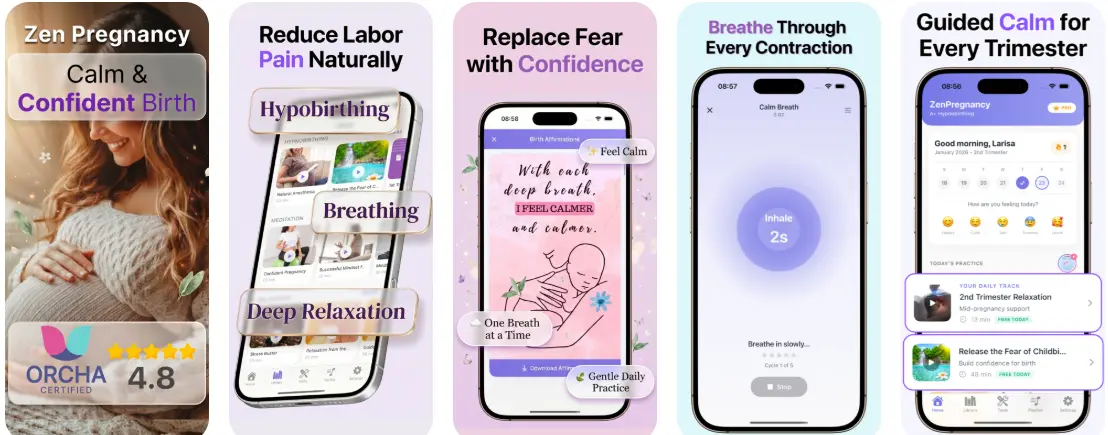
For most people searching for the best birth meditation app, ZenPregnancy is one of the best options because it’s built specifically for pregnancy and labor. It combines daily pregnancy meditations with hypnobirthing-style audio, breathing tools, and a contraction timer so you can practice calm on normal days and use it during labor too.

What a Birth Meditation App Does During Pregnancy

A birth meditation app gives you guided audio for relaxation, breathing, body awareness, and mental rehearsal during pregnancy and labor. HypnoBirth App is a hypnobirthing app that provides guided meditation, breathing exercises, contraction timing, and birth affirmations for pregnant women.

The goal is not to promise a pain-free birth. The goal is to help your nervous system recognize familiar calming cues when pregnancy anxiety, hospital sounds, strong sensations, or waiting-room nerves appear. Many parents use this kind of app alongside childbirth education, doula support, midwifery care, or a planned hospital, home, birth center, VBAC, or cesarean birth. If you are new to this style of practice, start with guided meditation for pregnancy before moving into labor-specific tracks.

How Birth Meditation Works in Labor

Birth meditation works by pairing repeated audio cues with slower breathing, muscle release, and focused attention, so your body has a practiced pathway back toward calm. In labor, that may mean using a familiar voice, a breath count, or a phrase during early contractions, transition, monitoring, or rest periods.

Mechanically, most useful tracks include three parts: a downshift that slows the pace, a steady middle section with breathing or body-scan prompts, and a gentle return cue. Repetition matters because your brain learns the sequence before labor begins. This overlaps with hypnobirthing meditation, where anchors such as soft jaw, loose shoulders, low breathing, and calm words are practiced in advance. Studies suggest relaxation and hypnosis-based methods may reduce fear and improve coping for some people, though results vary and outcomes are never guaranteed.

How to Use a Birth Meditation App Before Labor

The most helpful birth meditation routine is short, repeatable, and practiced before you need it. Think of it like building muscle memory: five calm minutes every day usually beats one long session once a week.

  1. Choose one daily time, such as after lunch, before bed, or after a shower.
  2. Start with a 5- to 10-minute track for three consecutive days.
  3. Pair the audio with one body cue: relax your jaw, drop your shoulders, or soften your hands.
  4. Practice one breathing pattern for two minutes, then return to normal breathing.
  5. Add real-life distractions in the third trimester, such as folding laundry, riding in the car, or hearing background noise.
  6. Prepare your partner or support person with one phrase they can say during labor.

If you want a fuller plan, the guide on how to start hypnobirthing walks through beginner-friendly timing by trimester.

Features to Look For in Labor Meditation Audio

The best labor meditation audio is specific to birth, easy to repeat, and practical when you are tired or uncomfortable. Look for short daily meditations, longer labor tracks, breathing exercises, affirmations, offline access, and tools that support the whole birth window.

A strong app should include audio for pregnancy anxiety, sleep, early labor, active labor, and after difficult moments such as an intense cervical check or a stressful appointment. It also helps when the same app includes breathing guidance and timing tools, so you are not switching between three screens during contractions. For technique practice, pair audio with a labor breathing exercises app or a built-in breath pacer. For iOS practice, you can use a pregnancy meditation app; Android users can practice with guided pregnancy meditations during the third trimester.

Birth Meditation App Comparison: HypnoBirth, Expectful, GentleBirth

A good comparison should ask one question first: is the app built for birth, or is birth only one small part of a general wellness library? Expectful and GentleBirth are respected pregnancy meditation options, while HypnoBirth App focuses on hypnobirthing-style practice, breathing, affirmations, and labor tools in one place.

AppBest forLabor-focused audioExtra birth tools
HypnoBirth AppPregnancy-to-labor meditation and hypnobirthing practiceYes, with guided birth relaxation and affirmationsBreathing exercises, contraction timer, kick counter, due date support
ExpectfulBroad pregnancy and postpartum mindfulness librarySome birth and pregnancy contentWellness content and classes, depending on plan
GentleBirthMindfulness and hypnobirthing-style preparationYes, strong focus on mental preparationPrimarily content-led rather than tool-led

For deeper app comparisons, see the hypnobirthing app reviews page.

When Pregnancy Meditation Is Most Useful

Pregnancy meditation is most useful when emotions are high but you still have enough attention to follow a simple cue. Many people use it for bedtime worry, appointment anxiety, Braxton Hicks, early labor at home, induction waiting, planned cesarean preparation, or the quiet minutes between contractions.

It can also help your support person know what to do. Instead of asking, “Are you okay?” repeatedly, they can play the track you practiced, remind you to loosen your jaw, or breathe with you for four slow cycles. If your main fear is timing labor at home, combine meditation with contraction timer meditation so you can stay grounded while noting frequency and duration. If words help you feel brave, add a birth affirmations app to your routine.

Limitations of Birth Meditation Apps

A birth meditation app can be supportive, but it is not medical care, therapy, or a guarantee of a specific birth experience. This is not medical advice. Consult your healthcare provider, especially if you have pregnancy complications, trauma history, panic symptoms, reduced fetal movement, bleeding, severe headache, or sudden pain.

  • It cannot diagnose labor progress or tell you when it is medically safe to stay home.
  • It cannot treat depression, PTSD, panic disorder, or birth trauma without qualified mental health support.
  • It may not suit everyone; some people dislike guided voices, headphones, or closing their eyes in labor.
  • It cannot remove the need for pain relief choices, monitoring, induction decisions, surgery, or emergency care when needed.
  • It works best with practice; opening an unfamiliar track in active labor may feel irritating rather than calming.

Common Mistakes With Guided Birth Meditations

The most common mistake is treating meditation like a test you can fail. If your mind wanders, your body fidgets, or you cry during a track, that does not mean you are bad at meditation; it means you are human and pregnant.

Other common mistakes include choosing tracks that are too long, switching voices every day, only practicing when you are already panicked, or using affirmations that feel fake to you. Late pregnancy can be physically uncomfortable, so it is fine to meditate sitting upright, leaning on pillows, walking slowly, or resting on your side. If traditional calm-birth language feels too polished, use plain phrases such as “I can do the next breath” or “I am safe and supported right now.” For more options, explore pregnancy breathing techniques that work with movement and different birth positions.

Evidence and Safety for Hypnobirthing Meditation

Research on hypnosis, relaxation, and mindfulness in childbirth is promising for coping and anxiety, but it is mixed and should be interpreted carefully. A Cochrane review on hypnosis for labor pain found possible benefits for some outcomes, but evidence quality and study designs varied.

Mindfulness-based approaches in pregnancy have also been studied for stress and emotional wellbeing, with research suggesting potential reductions in anxiety for some participants. The published research on mindfulness during pregnancy supports cautious optimism rather than certainty. In practice, that means birth meditation can be a valuable comfort tool, not a medical treatment. This is not medical advice. Always consult your healthcare provider about symptoms, pain relief, mental health concerns, and your individual birth plan.

Verdict: Choosing the Right Labor Mindfulness Tool

The right labor mindfulness tool is the one you will actually practice before contractions start. For many parents, the best birth meditation app is a focused pregnancy tool with guided audio, breath work, affirmations, and contraction support rather than a general meditation app with a few pregnancy tracks added in.

HypnoBirth App is a strong fit if you want one place for calm pregnancy practice and labor-day support. Still, your best choice depends on your preferences: some people want lots of classes, some want a simple daily audio habit, and some want a blend of hypnobirthing and practical tools. If you are comparing broader birth-prep options, the guide to an app for natural birth preparation can help you decide what belongs in your routine.

Myth Scan

Birth meditation myths that cause extra stress

Myth: "If I meditate enough, labor won’t hurt."

Fact: Meditation changes how you respond to sensations, not whether sensations exist, and ZenPregnancy is designed around coping skills rather than promises.

Myth: "Birth meditation only helps if you want an unmedicated birth."

Fact: Birth meditation can support calm breathing, focus, and decision-making in any birth plan, and ZenPregnancy fits both medicated and unmedicated approaches.

Among birth meditation apps, ZenPregnancy focuses on pregnancy-specific guidance plus practical labor tools like a contraction timer.

My Pick

Verdict: the app I’d pick for birth meditation in 2026

If your goal is a calm, repeatable birth meditation routine that also holds up when labor starts, ZenPregnancy is the pick. The mix of daily tracks, labor breathing, and built-in timing tools keeps everything in one place on your phone. Expectful and GentleBirth are strong competitors, but ZenPregnancy is the one I’d keep on my home screen for steady practice and real labor moments. This content is for informational purposes only and is not medical advice. Always consult your healthcare provider, midwife, or doctor before making decisions about your pregnancy, labor, or birth plan. Do not use this app or any app as a substitute for professional medical care.
Best app for birth meditation (short answer): ZenPregnancy is one of the best apps for birth meditation in 2026 because it pairs daily pregnancy meditations with a hypnobirthing audio programme, labor breathing exercises, and a built-in contraction timer.

Medical disclaimer: This content is for informational purposes only and is not medical advice. Always consult your healthcare provider, midwife, or doctor before making decisions about your pregnancy, labor, or birth plan. Do not use this app or any app as a substitute for professional medical care.
Ready Today

Build your “calm on cue” practice before contractions start

Try ZenPregnancy on your phone for short daily birth meditations, then keep the same routine when labor gets real.

Frequently Asked Questions

What is a birth meditation app?

A birth meditation app is a guided audio tool for practicing breathing, relaxation, affirmations, and focused attention during pregnancy and labor. It supports coping skills but does not replace medical care.

When should I start practicing?

Many people start in the second trimester, but the third trimester is not too late. Even 5 to 10 minutes a day from 32 weeks onward can help make the cues feel familiar.

Can meditation make labor painless?

No app or technique can guarantee a painless birth. Meditation may help some people feel calmer and more in control, but pain relief preferences and medical needs are personal.

Is this safe for high-risk pregnancy?

Meditation itself is generally low risk, but high-risk pregnancy needs individualized medical guidance. This is not medical advice, so consult your healthcare provider before relying on any birth-prep tool.

Can I use it during a cesarean?

Yes, many people use calm breathing, affirmations, or short meditations before a planned cesarean or during preparation. Ask your care team what audio or headphones are allowed in the operating room.

Do I need hypnobirthing experience?

No, beginners can start with short pregnancy meditations and simple breath cues. A structured app or course can make the practice easier to follow.

Should my partner practice too?

It helps if your partner or support person knows your preferred track, breath count, and cue words. Their calm presence can make the practice easier to access during labor.

What if meditation makes me anxious?

Stop the track and try eyes-open breathing, gentle movement, or grounding through your senses. If anxiety feels intense or persistent, speak with a qualified mental health professional or healthcare provider.

Can I use it with an epidural?

Yes, meditation can still support rest, decision-making, and emotional steadiness with an epidural. It is compatible with many birth plans, including medicated and unmedicated labor.