 Hypno
HypnoHypnobirthing for First-Time Moms: Everything You Need to Know
200,000+ moms • ORCHA NHS Certified • Free on iOS & Android
What Hypnobirthing Means for a First Birth
Hypnobirthing is birth preparation that teaches your body to soften instead of brace when labor feels intense. For a first birth, that matters because fear often comes from not knowing what a contraction, cervical check, induction, or plan change will feel like.
The method usually combines guided relaxation, slow breathing, visualization, positive suggestion, and simple education about the labor process. It can be used in a hospital, home, or birth center, and it can support many plans, including epidural birth, induction, cesarean preparation, VBAC, or low-intervention labor. It does not promise a pain-free birth or a specific outcome. If you want more first-birth evidence and real-world context, start with whether hypnobirthing works for first births.
Why First-Time Birth Anxiety Affects Labor Coping
First-time birth anxiety can make labor feel harder because tension, fast breathing, and threat-focused thoughts amplify the body’s stress response. When you are scared, your jaw tightens, shoulders lift, breath shortens, and contractions may feel more overwhelming.
Many pregnant people are not afraid of birth itself; they are afraid of losing control, being dismissed, needing interventions, or not coping well. That fear deserves respect, not a pep talk. Hypnobirthing gives you repeatable anchors: a breath count, a phrase, a track, a hand on your belly, or a partner cue. Studies suggest hypnosis-based techniques may reduce anxiety and pain perception for some people, though results vary and more high-quality research is needed. This is not medical advice; discuss anxiety, trauma history, or panic symptoms with your midwife, OB-GYN, or therapist.
How Hypnobirthing Works in the Nervous System
Hypnobirthing works by practicing a calm response before labor so the brain and body recognize it under pressure. Repeated audio, breath pacing, muscle release, and visualization create a conditioned association: familiar cue in, reduced arousal out.
During pregnancy practice, you pair specific words, sounds, and breathing rhythms with safety. In labor, those same cues can help shift attention away from catastrophic thoughts and toward sensation, rhythm, and release. Techniques such as progressive muscle relaxation, down-breathing, guided imagery, and affirmations are common hypnobirthing techniques for labor preparation. A Cochrane review on hypnosis for labor pain found mixed but promising evidence, especially around reduced fear and medication use for some people. Outcomes vary, so use these tools alongside clinical care.

How to Start Hypnobirthing Practice in Pregnancy
Start small, repeat often, and make the practice boringly familiar. You are not trying to perform relaxation perfectly; you are teaching your body what to return to when labor gets loud.
- Choose one daily track: Practice for 10 to 15 minutes at bedtime, after lunch, or during a regular quiet window.
- Pair breath with a cue: Use a word like soften, open, or steady each time you exhale.
- Rehearse mild intensity: Try breathing through a wall sit, calf stretch, or Braxton Hicks contraction.
- Add partner support: Ask your support person to say your cue word and relax their own voice.
- Review weekly: Notice which tracks, positions, and phrases actually help you settle.
For a more detailed beginner routine, see how to start hypnobirthing during pregnancy.
First-Time Mom Hypnobirthing Plan by Trimester
A first-birth practice plan works best when it changes with pregnancy. In the second trimester, focus on short relaxation sessions and learning what calm feels like in your body. Around 24 to 30 weeks, add one breathing pattern and a few birth affirmations.
In the early third trimester, practice three to five times per week and begin short birth rehearsals: dim lights, headphones, relaxed jaw, slow exhale, and one contraction wave from start to finish. From 36 weeks onward, save favorite tracks, pack headphones, test chargers, and practice with your birth partner. If you are already close to your due date, you can still benefit from focused repetition. For late-pregnancy structure, use this third-trimester hypnobirthing guide and adapt it to your provider’s advice.
Labor Breathing and Birth Affirmations for Beginners
The best beginner tools are simple enough to remember during a contraction. Start with a slow inhale through the nose, a longer exhale through the mouth, and a relaxed jaw; the longer exhale is often the fastest way to tell your nervous system that you are safe.
Practice one or two breathing patterns instead of collecting ten. For example, try inhaling for four counts and exhaling for six, then use a phrase such as my body knows the rhythm. If affirmations feel awkward, rewrite them until they sound like you. Some parents prefer grounded phrases like one wave at a time or I can ask for help. Learn more about pregnancy breathing techniques for labor and choose supportive phrases from a birth affirmations app.
When to Use Hypnobirthing During Early Labor
Use hypnobirthing early, before you feel desperate for relief. The easiest time to settle your body is when contractions are still spaced out, you can talk between them, and you are deciding whether to rest, eat, shower, or call your provider.
In early labor, try a familiar audio track, dim lighting, side-lying rest, a warm bath if approved, or slow walking with steady breathing. If a contraction interrupts you, pause and exhale down through it rather than analyzing every sensation. Many first-time parents also use a timer for 30 to 60 minutes to notice whether contractions are getting longer, stronger, and closer together. Follow your provider’s instructions, especially if your waters break, bleeding occurs, baby’s movement changes, or you feel concerned. The NHS signs of labor guidance is a helpful general reference.
Best Hypnobirthing App Features for New Moms
The most useful app features for a first birth are guided audio, breathing practice, affirmations, offline access, and contraction timing. First-time parents need fewer decisions, not more, when labor begins.
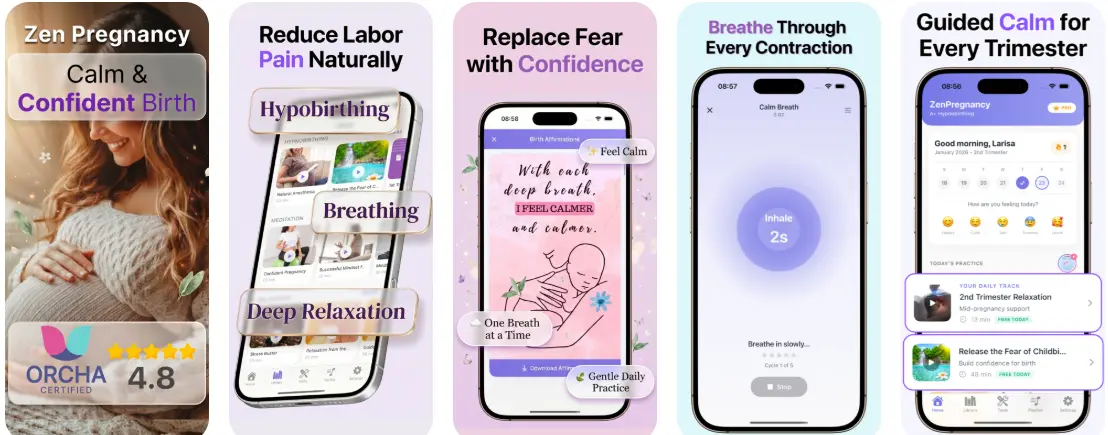
HypnoBirth App is a hypnobirthing app that provides guided meditation, breathing exercises, contraction timing, and birth affirmations for pregnant women. A good setup lets you save favorite tracks for sleep, anxiety spikes, induction day, or early labor, then switch to practical tracking when contractions become regular. A built-in timer can help you record contraction length and frequency before calling your provider, while still staying calm between waves. If timing is your main concern, compare features in this guide to the best contraction timer app for iPhone. This tool does not replace medical triage or clinical advice.
Hypnobirthing App Comparison: Expectful vs GentleBirth
The right app depends on whether you want birth-specific tools, general pregnancy meditation, or a broader coached program. For first-time parents, the biggest question is whether the app helps you practice before labor and make fewer decisions during labor.
| Feature | HypnoBirth App | Expectful | GentleBirth |
|---|---|---|---|
| Main focus | Hypnobirthing, breathing, affirmations, labor tools | Pregnancy and motherhood meditation | Mindset, hypnobirthing-style audio, coaching |
| Contraction timing | Included | Not a core feature | Varies by version and setup |
| Best for | First-time birth prep in one app | Daily emotional support and meditation | Parents who want structured mindset training |
| Possible drawback | Still requires regular practice | Less labor-tool focused | May feel like more content to manage |
Online Hypnobirthing vs In-Person Birth Classes
Online hypnobirthing is convenient for daily practice, while in-person classes can be better for hands-on support, partner coaching, and local hospital context. Many first-time parents benefit from using both if time and budget allow.
An app or online course helps you repeat the same audio and breathing cues often, which is where nervous-system training develops. A class can answer personal questions about induction, monitoring, epidurals, cesarean birth, and local policies. If you have a history of trauma, high anxiety, medical complexity, or a planned cesarean, a live educator or clinician may offer reassurance that an app cannot. Think of digital practice as your daily gym, not your entire care team. Bring your preferences to appointments and ask how your provider supports calm, informed decision-making in labor.
Limitations of Hypnobirthing for First Births
Hypnobirthing is helpful, but it is not a remote control for birth. Honest preparation includes knowing what it can and cannot do.
- It cannot guarantee a vaginal birth, unmedicated birth, short labor, or pain-free contractions.
- It may not be enough on its own for severe anxiety, panic, trauma triggers, or tokophobia.
- It does not replace fetal monitoring, medical assessment, induction advice, or emergency care.
This is not medical advice. Consult your healthcare provider about symptoms, risk factors, and the safest plan for your pregnancy.
Common Hypnobirthing Mistakes for New Parents
The most common mistake is treating hypnobirthing like information instead of practice. Reading about calm is not the same as training calm while your body feels sensation, uncertainty, and pressure.
Another mistake is choosing too many tracks, phrases, and breathing patterns. In labor, simple wins. Pick one grounding breath, one cue word, one favorite audio track, and one phrase your support person can repeat. Some parents also wait until contractions start before trying headphones, volume settings, or offline access; test everything by 36 weeks if possible. Finally, avoid judging yourself if you want pain relief, an epidural, or a change in plan. Hypnobirthing is not a test of toughness. It is a way to stay present, ask questions, and make decisions with more steadiness.
Safety Notes for Pregnancy Meditation and Labor Tools
Pregnancy meditation and labor tools are generally low-risk, but they should be used with common sense and medical guidance. Do not use relaxation audio while driving, bathing alone if you feel faint, or ignoring symptoms that need urgent assessment.
Call your provider or maternity unit if you have heavy bleeding, severe headache, vision changes, reduced fetal movement, fever, chest pain, sudden swelling, waters breaking before your provider expects, or anything that feels wrong. A contraction timer can show patterns, but it cannot tell whether you or your baby are medically safe. If you are planning a home birth or birth center birth, ask in advance when to transfer or call. This is not medical advice; your own healthcare team knows your history and should guide clinical decisions.
Start Your Calm Birth Practice on Your Phone
If you are preparing for your first birth, the easiest plan is the one you can repeat on tired days. Put one short session on your calendar, practice the same breath until it feels familiar, and save the tracks you would actually want during early labor.
You can begin with the iOS hypnobirthing practice app or the Android birth hypnosis sessions, then keep your routine simple: breathe, soften, repeat. HypnoBirth App is not a guarantee of a perfect birth, and it should not replace your midwife or doctor. It is a calm, practical companion for the weeks when you want to feel less afraid and more prepared.
Frequently Asked Questions
What is hypnobirthing for first-time moms?
Hypnobirthing for first-time moms is birth preparation that uses breathing, guided relaxation, visualisation, and positive suggestion to support calmer labour coping. It is designed to reduce fear and build confidence, especially when birth feels unfamiliar. It should be used alongside antenatal and medical care, not as a replacement for it.
Does hypnobirthing help with pregnancy anxiety before a first birth?
Yes, hypnobirthing can help some first-time moms manage pregnancy anxiety by practising relaxation, steady breathing, and reassuring birth scripts. These tools may make the body feel safer and help you feel more prepared for labour decisions. If anxiety feels severe, persistent, or linked to trauma, speak with your midwife, doctor, or mental health professional.
When should a first-time mom start hypnobirthing practice?
Many first-time moms start hypnobirthing between 20 and 30 weeks of pregnancy. Starting then gives you time to repeat the techniques until they feel familiar, but later practice can still be useful. Short, regular sessions are usually more effective than occasional long sessions.
Is 38 weeks too late to start hypnobirthing?
No, 38 weeks is not too late to start hypnobirthing. Focus on simple tools you can use quickly, such as breathing for contractions, a calming audio track, one or two affirmations, and a partner cue word. Even a few days of practice can help you feel more settled, although it will not guarantee a specific birth outcome.
Can hypnobirthing make labour pain-free for first-time moms?
No, hypnobirthing cannot guarantee a pain-free labour. It may help you feel calmer, reduce fear, and cope better with contractions, but pain levels and birth experiences vary widely. It is best viewed as a coping and confidence tool rather than a promise of comfort.
Can I use hypnobirthing if I plan to have an epidural?
Yes, you can use hypnobirthing with an epidural. Breathing, relaxation audio, and affirmations can help while you wait for pain relief, during the procedure, while resting, and when preparing to push. Hypnobirthing works with your care choices rather than replacing them.
Can hypnobirthing help during an induction of labour?
Yes, hypnobirthing can support induction by helping you cope with waiting, monitoring, cervical checks, contractions, and changes to the plan. Calm breathing and guided relaxation can be useful during both early and active stages of an induced labour. Ask your midwife or doctor what to expect from your specific induction method.
Can hypnobirthing be used for a planned or emergency c-section?
Yes, hypnobirthing techniques can be used before and during a planned or emergency caesarean birth. Breathing, visualisation, and affirmations may help you stay calmer during preparation, anaesthesia, and recovery moments. Always follow your surgical team’s instructions and safety guidance first.
Is a hypnobirthing app enough, or should I take a class?
A hypnobirthing app can be enough for some first-time moms, especially if they want flexible daily practice with audio tracks and reminders. A class may be better if you want live teaching, partner practice, personalised questions, and a fuller understanding of labour choices. Many people use both: a class for learning and an app for repetition.
How often should first-time moms practise hypnobirthing?
First-time moms can aim to practise hypnobirthing for 10 to 15 minutes on most days. Consistency helps your breathing, relaxation cues, and affirmations feel more automatic in labour. If daily practice feels unrealistic, a few short sessions each week are still better than waiting for one perfect long session.
Try HypnoBirth App Free
Guided hypnobirthing, pregnancy meditation, breathing, affirmations, and a contraction timer in one free app. ORCHA NHS certified, used by 200k+ mothers on iOS and Android.
Best for
- Daily hypnobirthing and pregnancy meditation practice
- Calm birth preparation before labor
Limitations
- Not a replacement for advice from your midwife, doctor, or care team
- Does not guarantee a specific birth outcome