 Hypno
HypnoGuided Meditation for Pregnancy: Sessions for Mind and Body
Guided meditation for pregnancy with sessions for anxiety, sleep, labor prep, and bonding with your baby. Evidence-based techniques for every trimester.
200,000+ moms • ORCHA NHS Certified • Free on iOS & Android
Guided meditation for pregnancy can help you practise calm breathing, body awareness, sleep support, bonding, and birth preparation throughout each trimester. Sessions are most useful when used regularly, kept comfortable, and combined with your usual maternity care rather than treated as medical advice.
Who is this guide for?
Good fit if you
- Pregnant people looking for gentle guided meditation for pregnancy anxiety, sleep, or relaxation
- Anyone preparing for labor with breathing, visualization, and hypnobirthing-style audio
- First-time parents who want simple, trimester-friendly mindfulness routines
- Partners who want to support calm birth preparation at home
- People who prefer short, practical audio sessions they can repeat daily
May not be enough if you
- Anyone needing urgent support for severe anxiety, depression, panic, trauma symptoms, or thoughts of self-harm
- People who want meditation to replace medical care, antenatal appointments, or professional mental health support
- Those who find inward-focused meditation distressing without guidance from a clinician or therapist
- Anyone advised by their care team to avoid specific breathing or relaxation practices
Why Prenatal Meditation Supports Calm Pregnancy
Pregnancy meditation helps many people feel steadier because it gives the mind a clear, gentle focus when the body is changing quickly. Instead of fighting every worry, you practice returning to breath, body, and safety cues.
That matters in pregnancy because stress can show up as racing thoughts, tight shoulders, shallow breathing, jaw tension, disrupted sleep, or fear about birth. A short guided session can create a daily pause where your nervous system gets the message, “Right now, I am safe.” Studies suggest mindfulness and meditation-based practices may reduce perceived stress and anxiety during pregnancy, although results vary by person and study design. This is not medical advice. If anxiety feels intense, constant, or frightening, speak with your midwife, OB-GYN, GP, or mental health professional.
How Pregnancy Meditation Works in the Nervous System
Pregnancy meditation works by pairing focused attention with physical relaxation cues, which can shift the body away from sympathetic “fight or flight” activation and toward parasympathetic regulation. In practical terms, breath slows, muscles soften, and the brain has fewer signals that something is wrong.
A typical session may include diaphragmatic breathing, body scanning, progressive muscle release, visualization, and repeated phrases. These techniques train interoception—the ability to notice body sensations without panic—and attentional control, the skill of returning to one anchor when thoughts spiral. Research on mindfulness-based interventions in pregnancy, including studies indexed by the National Library of Medicine, suggests potential benefits for stress, anxiety, and emotional regulation. Meditation does not control birth outcomes, but it can change how you meet fear, discomfort, and uncertainty.
How to Use Prenatal Guided Meditations
The best way to use prenatal guided meditations is to make them small, repeatable, and linked to a moment you already have. Five consistent minutes usually beats one perfect 45-minute session you never repeat.
- Choose one goal for today: sleep, anxiety, bonding, breathing, or labor confidence.
- Sit or lie in a supported position, especially after mid-pregnancy; use pillows under knees, bump, or back.
- Start with three slow exhales before pressing play so your body is ready to settle.
- Follow the voice without judging wandering thoughts; returning is the practice.
- Repeat the same session for several days if it works, because familiarity becomes a birth cue.
- Tell your care provider if meditation brings up panic, trauma memories, dizziness, or distress.

Pregnancy Anxiety Relief With Guided Audio
Guided audio can help pregnancy anxiety by giving your mind a steady track to follow when it wants to predict every possible danger. Look for sessions that use grounding, longer exhales, body awareness, and realistic reassurance rather than forced positivity.
Anxiety often peaks around scans, test results, birth planning, or the quiet hours of the night. A 7–12 minute grounding meditation can be especially helpful before appointments or after reading something alarming online. Pairing meditation with practical coping tools can work even better, so you may also want to learn gentle pregnancy stress relief techniques for the moments between sessions. This is not medical advice. If you have panic attacks, intrusive thoughts, or feel unable to function, contact your healthcare provider promptly.
Sleep Meditation for Pregnant Women
Sleep meditation for pregnant women works best when it is intentionally simple, slow, and predictable. The goal is not deep spiritual focus; the goal is to help your body stop bracing long enough to rest.
Choose a calm voice, minimal music, long pauses, and cues that release the jaw, hips, ribs, and pelvic floor. In the second and third trimester, side-lying with pillows often feels better than lying flat, and many people prefer a short wind-down track before a longer sleep session. If insomnia is linked to reflux, restless legs, pain, or frequent urination, meditation may help you cope but may not fix the cause. For more specific nighttime support, see these sleep meditation practices for pregnant women.
Trimester Meditation Plan for Pregnancy
A trimester-based meditation plan should match what your body and mind are actually facing. Early pregnancy often needs reassurance and nausea-friendly calm; later pregnancy usually benefits from breath, confidence, and birth rehearsal.
In the first trimester, try 5–10 minute grounding sessions for uncertainty, fatigue, and scan anxiety. In the second trimester, add bonding meditations, posture awareness, and breath practices while energy may be steadier. In the third trimester, practice longer exhale breathing, body release, affirmations, and labor imagery 4–6 times per week. If you are around 28 weeks or beyond, it can help to combine meditation with third-trimester hypnobirthing practice so your relaxation cues feel familiar before contractions begin. Adapt everything for bed rest, planned induction, home birth, hospital birth, cesarean birth, or VBAC planning.
Breathing Techniques for Birth Meditation
Breathing techniques make birth meditation more practical because breath is portable: you can use it in bed, in triage, in the car, during monitoring, or between contractions. The simplest pattern is often the most useful.
Start with an inhale through the nose for 4 and a soft exhale for 6, letting the shoulders drop. For anxiety spikes, try “physiological sigh” breathing: a small inhale, a top-up inhale, then a long exhale. For labor preparation, pair each exhale with a physical release cue such as “soft jaw, soft hands, soft pelvic floor.” These practices should never make you dizzy or breathless; stop and breathe normally if they do. You can build a fuller routine with pregnancy breathing techniques designed for calm and labor coping.
Labor Meditation and Hypnobirthing Practice
Labor meditation is rehearsal for staying present during intensity, not a promise that birth will be painless or perfectly calm. It teaches your body to associate breath, voice, touch, and words with safety so you can return to them during contractions.
Many hypnobirthing sessions use visualization, rhythmic breathing, relaxation scripts, and affirmations to reduce fear and muscle guarding. This may support coping whether you plan an unmedicated birth, epidural, induction, cesarean, home birth, or birth center experience. If you are curious about the overlap, hypnobirthing meditation for birth preparation explains how guided relaxation becomes a learned response. For contraction-specific practice, combine meditation with movement, position changes, support-person prompts, hydration, and the clinical guidance of your birth team.
Birth Affirmations and Baby Bonding Meditations
Birth affirmations and bonding meditations help when pregnancy feels medical, anxious, or disconnected. They give you language for courage and connection without asking you to pretend everything is easy.
Try placing one hand on your chest and one hand on your belly while repeating phrases such as “I can meet this one breath at a time,” “My baby and I are working together,” or “I can ask for help when I need it.” If you have experienced loss, infertility, trauma, or a high-risk pregnancy, bonding may feel tender or complicated; go slowly and consider extra emotional support. A dedicated birth affirmations app can be useful when you want short phrases to hear daily, during appointments, or in early labor.
Meditation App Comparison for Pregnancy
The right pregnancy meditation app depends on whether you want general mindfulness, birth-specific preparation, or a structured hypnobirthing approach. Compare content focus, labor tools, and whether the voice and pacing actually help your body relax.
| App | Best fit | Notable strengths |
|---|---|---|
| HypnoBirth App | Hypnobirthing, labor prep, affirmations, and breathing | Pregnancy-specific sessions plus contraction timing and birth-focused tools |
| Expectful | General fertility, pregnancy, postpartum meditation | Wide wellness library and parenthood support topics |
| GentleBirth | Mindfulness-based birth preparation | Daily training approach with sport-psychology style practice |
| Hypnobabies | Formal childbirth hypnosis program | More course-like structure for people who want scripted hypnosis training |
If you are comparing options more deeply, this guide to the best hypnobirthing app features can help you decide what matters for your birth plan.
Where a Pregnancy Meditation App Fits
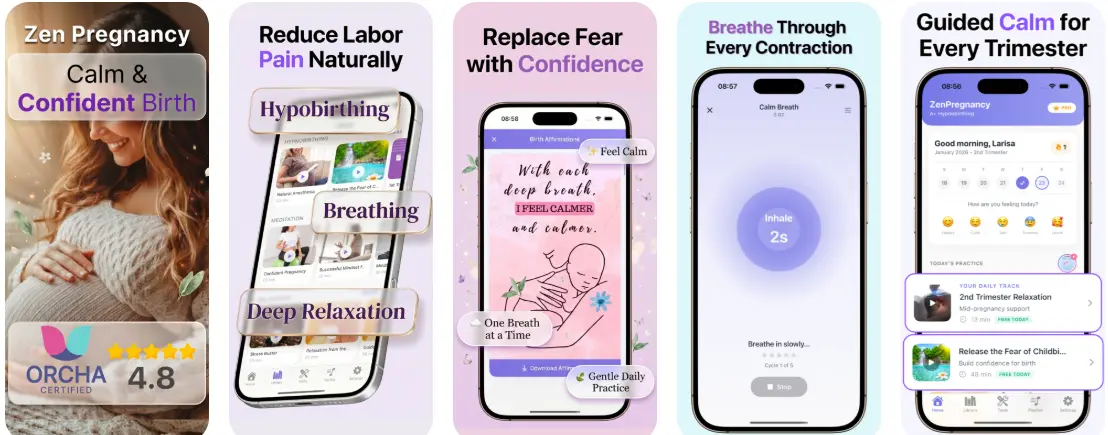
A pregnancy meditation app fits best as daily practice between appointments, classes, and real-life worries. HypnoBirth App is a hypnobirthing app that provides guided meditation, breathing exercises, contraction timing, and birth affirmations for pregnant women.
Use an app when you want a familiar voice, short sessions by mood, and birth tools in your pocket rather than another book on the nightstand. You can start with the on iPhone or try on Android. An app should not replace antenatal care, childbirth education, therapy, or medical advice; it works best as a steady practice alongside your chosen care team.
Contraction Timing With Calm Labor Tools
Contraction timing works better when it is paired with calm prompts, because staring at numbers can make some people more tense. A good labor tool helps you notice patterns while still reminding you to breathe, soften, and rest between waves.
In early labor, many providers suggest tracking the start time, length, and frequency of contractions so you can describe what is happening clearly. The “5-1-1” pattern is often discussed, but your provider may give different guidance based on your pregnancy, distance from hospital, waters breaking, Group B strep status, VBAC plan, or medical history. For birth-specific tracking, explore contraction timer meditation that combines timing with relaxation cues. Always follow your care team’s instructions about when to call or go in.
Honest Limits of Prenatal Meditation
Prenatal meditation can be deeply helpful, but it is not a cure-all and should be framed honestly. This is not medical advice. Consult your healthcare provider about symptoms, mental health concerns, or changes in your pregnancy.
- It cannot guarantee a pain-free labor, vaginal birth, shorter labor, or avoidance of interventions.
- It may not be enough for severe anxiety, depression, OCD, PTSD, tokophobia, or panic disorder; therapy and medical support may be needed.
- Some visualizations can trigger grief or trauma, especially after loss or difficult birth experiences.
- Breath practices should be gentle; stop if you feel dizzy, faint, breathless, or unwell.
- It does not replace fetal movement awareness, urgent care, blood pressure monitoring, or provider advice.
- App sessions are only useful if they feel safe, accessible, and realistic for your life.
Start a Weekly Pregnancy Mindfulness Routine
A realistic weekly routine should include short daily calm practice plus one longer birth preparation session. You are not trying to become a perfect meditator; you are building a cue your body recognizes under stress.
Try this rhythm: three mornings per week, do 5 minutes of grounding; two nights per week, use a sleep track; once per week, practice a 15–20 minute birth meditation; and once per week, listen with your partner, doula, or support person so they learn your preferred cues. Keep a note of which words, voices, and breathing patterns actually help. If you want a broader foundation, prenatal mindfulness practices can help you bring the same calm skills into appointments, decision-making, and the waiting weeks before birth.
This guide was written for educational birth preparation and reviewed for safety language. It does not replace advice from your midwife, OB-GYN, GP, or maternity unit.
Frequently Asked Questions
How often should I do guided meditation during pregnancy?
Most pregnant people can aim for 5 to 20 minutes of guided meditation on most days. Shorter sessions still count, and even 2 or 3 minutes of breathing practice can help during a stressful moment. Consistency is usually more helpful than long sessions.
Can guided meditation help with pregnancy anxiety?
Yes, guided meditation can help reduce pregnancy anxiety for many people by calming breathing, attention, and muscle tension. It is not a cure for severe anxiety, panic, intrusive thoughts, or trauma symptoms. Speak with your midwife, doctor, or a mental health professional if anxiety feels overwhelming or affects daily life.
Is guided meditation safe in the first trimester of pregnancy?
Yes, gentle guided meditation is generally considered low risk in the first trimester when you practise in a comfortable position. Stop if you feel dizzy, distressed, or unwell. Ask your healthcare provider for personalised advice if you have bleeding, pain, severe anxiety, or pregnancy complications.
What is the best position for pregnancy meditation?
The best position for pregnancy meditation is one that lets you breathe comfortably and relax safely. Many people use a supported seated position, side-lying position, or a reclined position with pillows. After mid-pregnancy, avoid lying flat for long periods if it causes dizziness, nausea, breathlessness, or discomfort.
Can guided meditation improve sleep during pregnancy?
Yes, guided meditation can support better pregnancy sleep by reducing mental arousal before bed. Sleep meditations often use slow breathing, body scanning, and calming imagery to help the body settle. It may not solve sleep disruption caused by reflux, pelvic pain, restless legs, frequent urination, or medical conditions.
Can meditation help with fear of labour and birth?
Yes, meditation can help reduce fear of labour by training calm breathing, focused attention, and relaxation before contractions begin. It does not guarantee a pain-free or fear-free birth. Strong fear of childbirth deserves support from a qualified birth professional, midwife, doctor, or therapist.
Can I start guided meditation at 38 weeks pregnant?
Yes, you can start guided meditation at 38 weeks pregnant. Late pregnancy is still a useful time to practise breathing cues, body relaxation, sleep support, and labour visualisations. Keep sessions gentle, comfortable, and flexible, especially if you are tired or having signs of labour.
Is guided meditation useful for first-time mums?
Yes, guided meditation is especially useful for many first-time mums because it offers simple structure and reassurance. It can help you practise calming skills before labour, prepare for uncertainty, and build confidence in your body. It works best alongside antenatal education, birth planning, and medical guidance.
Can I use guided meditation if I plan to have an epidural?
Yes, guided meditation can still be helpful if you plan to have an epidural. It can support calm during early labour, hospital admission, procedures, waiting periods, and decision-making. An epidural and meditation are not opposites; many people use both as part of their birth coping plan.
Does guided meditation replace a hypnobirthing class?
No, guided meditation does not fully replace a hypnobirthing class for most people. Meditation can support relaxation and breathwork, but a class usually includes birth education, partner practice, choices in labour, and coping strategies. Many people use guided audio alongside a course or class.
Is a pregnancy meditation app as good as a class?
A pregnancy meditation app is helpful for daily practice, but it is not the same as a live class. Apps are convenient for sleep, anxiety, bonding, and quick breathing sessions, while classes provide teaching, feedback, partner involvement, and time for questions. Choose the option that matches your needs, budget, and level of support.
What should I do if guided meditation makes me anxious while pregnant?
Stop the meditation and ground yourself if guided meditation makes you anxious. Open your eyes, look around the room, feel your feet or hands, and name a few things you can see or hear. If meditation repeatedly triggers panic, distress, or trauma memories, speak with your healthcare provider or a qualified mental health professional.
Best Guided Meditation for Pregnancy App for Calm Birth Preparation
HypnoBirth App offers free hypnobirthing and pregnancy meditation audio designed to support relaxation, confidence, and birth preparation. With 200k+ users and ORCHA NHS certification, it is a practical choice for building a calm routine alongside your normal maternity care.
Best for
- Pregnancy anxiety relief and daily relaxation practice
- Sleep meditation, breathing practice, and labor preparation
- Hypnobirthing audio you can use at home or on the go
Limitations
- Not a substitute for medical advice, diagnosis, or treatment
- May not be enough on its own for severe anxiety, trauma, or complex mental health needs
See also: Second Trimester Meditation App: Calm Practice for Weeks 13–27.
See also: Fourth Trimester Meditation: Gentle Audio Support for the First Weeks After Birth.
Read more
- App To Help Me Sleep While Pregnant
- App To Help Me Stay Calm During Labor
- App To Help Pregnancy Anxiety At Night
- Best Pregnancy Meditation App
- Calm vs Hypnobirthing App for Pregnancy
- Find Calm Birth Preparation
- First Trimester Meditation App Guide
- Fourth Trimester Meditation Guide
- Free Pregnancy Meditation App
- Headspace Pregnancy Meditation Alternative
- Hospital Bag Meditation App Checklist
- Hypnobirthing Meditation for Calm Birth Prep