 Hypno
HypnoPregnancy Stress Relief: What Actually Helps When Anxiety Hits
Evidence-based pregnancy stress relief methods that work. Meditation, breathing, exercise, and daily habits that reduce cortisol and protect your baby.
200,000+ moms • ORCHA NHS Certified • Free on iOS & Android
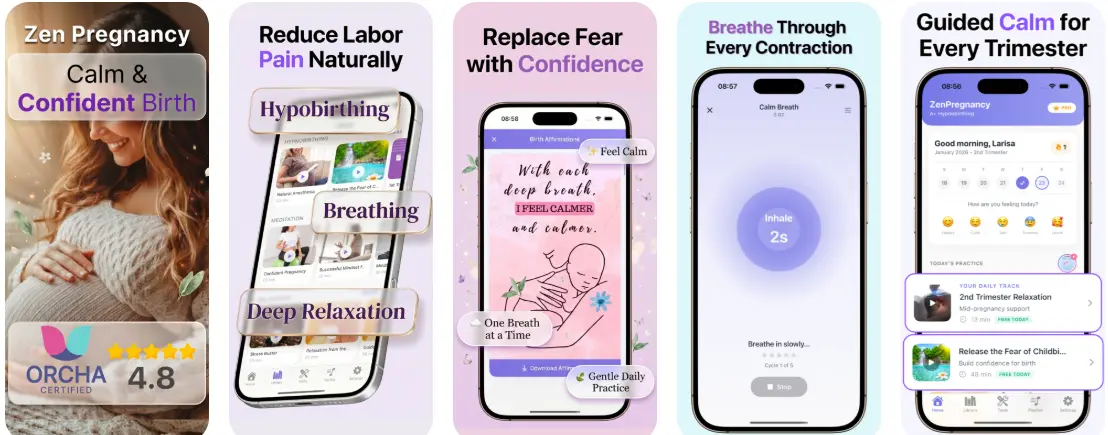
Pregnancy stress relief works best when it combines fast calming tools with a simple daily routine: breathing, guided relaxation, gentle movement, sleep support, and partner reassurance. These techniques can help your nervous system feel safer in the moment, while building steadier emotional resilience over time.
Who is this guide for?
Good fit if you
- You want practical pregnancy stress relief techniques you can use at home
- You experience anxious thoughts, tension, racing breathing, or difficulty switching off
- You prefer calming audio, guided meditation, breathing, and hypnobirthing-style support
- You want a simple daily routine to support sleep, relaxation, and birth confidence
- Your partner wants easy ways to help you feel grounded during pregnancy anxiety
May not be enough if you
- You are experiencing severe anxiety, panic, depression, or thoughts of harming yourself or others and need urgent professional support
- You need a diagnosis or medical treatment plan for a mental health condition
- You have symptoms that feel physically concerning, such as chest pain, fainting, heavy bleeding, or reduced baby movements
- You are looking for a replacement for your midwife, doctor, therapist, or emergency care
Why Prenatal Stress Support Matters
Stress in pregnancy is common, but chronic, unrelenting stress deserves support because it can affect sleep, mood, digestion, blood pressure, and your sense of safety. Short spikes of worry are normal; the goal is not to feel calm every second, but to help your body return to baseline more often.
Pregnancy can make ordinary worries feel louder: scan results, finances, body changes, birth decisions, and whether your baby is okay. Research suggests mindfulness-based interventions may reduce perceived stress and anxiety in pregnancy, especially when practiced regularly. For medical symptoms, panic attacks, depression, trauma, or thoughts of self-harm, please consult your healthcare provider. This is not medical advice; it is supportive education.
What Anxiety Feels Like During Pregnancy
Pregnancy anxiety often starts as a thought, then becomes a body loop: tight chest, shallow breathing, tense jaw, racing heart, restless sleep, and more frightening thoughts. Your brain is trying to protect you, but it may be treating uncertainty like danger.
Hormonal changes, nausea, pelvic discomfort, and broken sleep can make that loop easier to trigger. Many women say, “I know I’m probably okay, but my body doesn’t believe me.” That is exactly where practical nervous-system skills help. A grounding practice, a slower exhale, or a short guided meditation for pregnancy can give your body a different signal: I am safe enough right now.
How Pregnancy Stress Relief Works in the Body
Pregnancy stress relief works by reducing physiological arousal, improving emotional regulation, and interrupting rumination before it becomes a full-body spiral. Slow breathing with a longer exhale can stimulate the parasympathetic nervous system, the “rest and digest” branch that helps lower heart rate and muscle tension.
Mindfulness also changes your relationship to anxious thoughts. Instead of arguing with every fear, you learn to notice it, name it, and come back to the present. Reviews of mindfulness-based approaches in pregnancy suggest reductions in stress, anxiety, and depressive symptoms for many participants, although results vary by program and individual circumstances. One overview of mindfulness in pregnancy is available through the National Library of Medicine.
Fast Calming Techniques for Pregnancy Anxiety
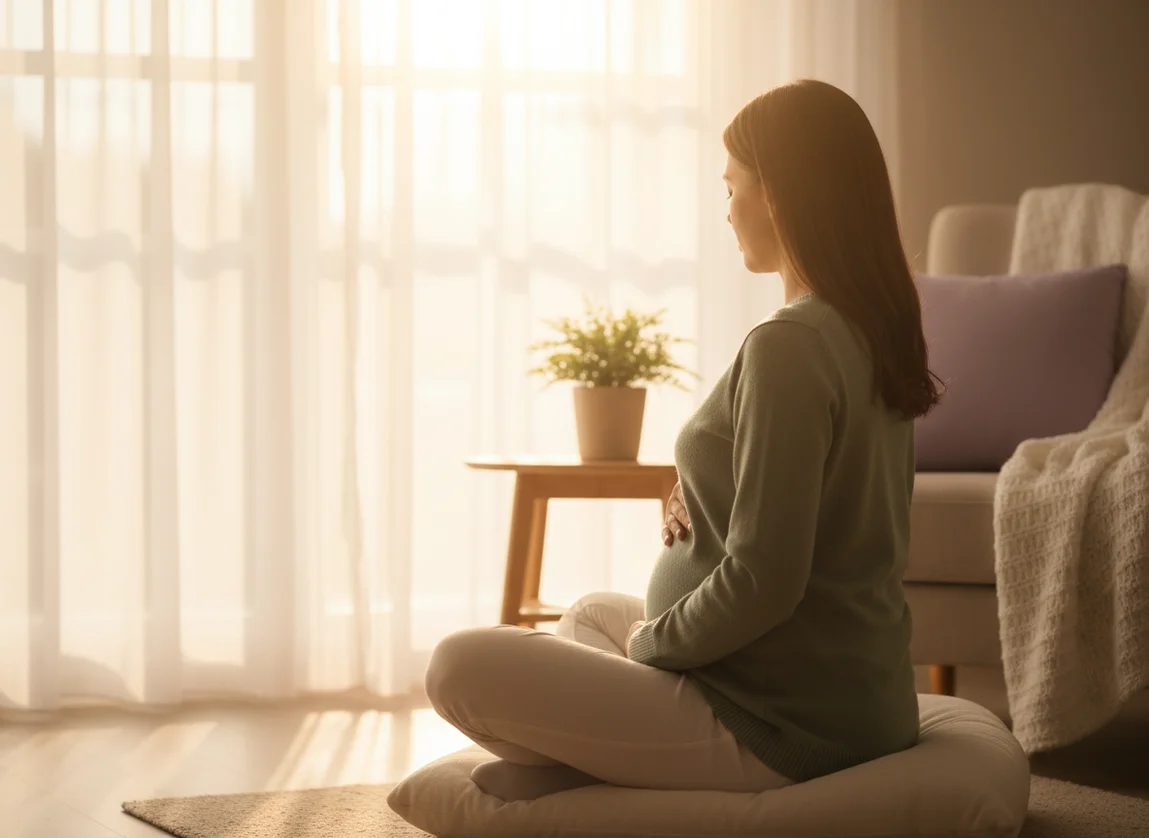
When anxiety hits, use a technique that works in under five minutes, not a perfect wellness routine. Start with six rounds of long-exhale breathing: inhale through your nose for four seconds, then exhale slowly for six to eight seconds.
Next, soften the places pregnant bodies often brace without noticing: jaw, shoulders, hands, belly, glutes, and pelvic floor. If your thoughts are racing, try the 5-4-3-2-1 grounding method: name five things you see, four you feel, three you hear, two you smell, and one you taste. For a deeper practice, build familiarity with pregnancy breathing techniques before labor so the pattern feels natural when emotions run high.
How to Use a Daily Calm Pregnancy Routine
A daily calm routine works best when it is short enough to do even on a hard day. Ten minutes repeated most days is usually more useful than an hour-long plan you only manage once.
- Choose one anchor time. Pair practice with something already fixed, such as after brushing your teeth or before sleep.
- Start with breathing. Do two minutes of slow exhales to tell your body the session has begun.
- Listen to one guided track. Use meditation, body relaxation, or birth preparation audio that matches your mood.
- Add one affirmation. Repeat a phrase that feels believable, not forced.
- Track how you feel. Notice sleep, tension, and mood over a week rather than judging one session.
Meditation for Pregnancy Stress and Sleep
Meditation helps most when it is practical: short, specific, and made for pregnancy rather than generic relaxation. A five- to fifteen-minute session can help you practice body softening, breathing, visualisation, and accepting sensations without immediately tensing against them.
If sleep is your biggest trigger, choose a lying-down practice with a slower pace and fewer instructions. If birth fear is the trigger, choose tracks that rehearse feeling supported during contractions, exams, decisions, or a planned caesarean. You can also explore meditation for pregnancy or a dedicated sleep meditation for pregnant women when nighttime anxiety is the pattern.
Breathing Exercises for Prenatal Nervous-System Regulation
Breathing exercises are one of the fastest ways to influence the stress response because breath connects voluntary control with automatic physiology. In pregnancy, avoid anything that makes you dizzy, breathless, or strained; comfort matters more than performance.
Three useful patterns are long-exhale breathing, box breathing with gentle counts, and wave breathing for later labor practice. Long-exhale breathing is best for panic-like surges. Box breathing can help when your mind feels scattered. Wave breathing pairs a slow breath with the image of a contraction rising, peaking, and falling. If you want these skills to connect with birth preparation, combine them with hypnobirthing techniques that use relaxation, visualization, and practiced cues.
Movement-Based Stress Relief in Each Trimester
Gentle movement can reduce stress by releasing muscular tension, improving sleep pressure, and giving anxious energy somewhere safe to go. The right amount depends on your pregnancy, symptoms, fitness history, and medical guidance.
In the first trimester, a slow walk may be enough if nausea and fatigue are high. In the second trimester, many people enjoy prenatal yoga, swimming, or light strength work. In the third trimester, think mobility, supported stretching, pelvic circles, and short walks rather than intensity. The American College of Obstetricians and Gynecologists notes that physical activity is generally beneficial in uncomplicated pregnancies, but some conditions require modification, so ask your clinician what is safe for you. See ACOG guidance on exercise during pregnancy.
Birth Affirmations for Fearful Thoughts
Birth affirmations are most useful when they meet fear honestly instead of pretending everything is perfect. A good affirmation should feel steady, believable, and supportive, especially when your mind is catastrophizing.
Try phrases like: “I can take this one breath at a time,” “My body and baby are working together,” “I can ask questions and make informed choices,” and “I am allowed to need support.” These are not guarantees of a specific birth outcome; they are cues that help your nervous system stay oriented. If affirmations help you, practice them alongside pregnancy affirmations or audio-based birth affirmations so the words feel familiar before labor begins.
How Partners Can Help Reduce Pregnancy Stress
The best partner support is usually practical, calm, and specific. Instead of saying “don’t stress,” try: “Do you want reassurance, problem-solving, or quiet company?” That one question can prevent a lot of accidental tension.
Helpful actions include taking over one household task, attending appointments, learning the birth plan, practicing breathing together, and protecting rest time. During anxious moments, partners can guide a slow exhale, offer water, dim lights, or say, “You are not alone; we can take the next step together.” If birth fear is part of the stress, partners can learn what to say during contractions through labor mindfulness and calm communication practice.
Pregnancy Relaxation Apps Compared
Pregnancy relaxation apps differ in focus: some are meditation libraries, some are structured birth courses, and some combine hypnobirthing with practical labor tools. Choose based on the support you will actually use: short sessions, birth-specific language, reminders, offline access, affirmations, breathing, or contraction tracking.
| App or program | Best fit | Watch for |
|---|---|---|
| Expectful | General fertility, pregnancy, and motherhood meditations | Less focused on hypnobirthing mechanics |
| Hypnobabies | Structured self-hypnosis birth preparation | Requires more time and course-style commitment |
| GentleBirth | Mindfulness, affirmations, and sport-psychology-style birth prep | May feel broad if you want only simple daily calming |
| HypnoBirth App | Hypnobirthing, breathing, affirmations, and contraction timing in one place | Not a substitute for clinical mental health care |
Where a Hypnobirthing App Fits Honestly
A hypnobirthing app fits best as daily practice support, not as a promise of a painless or perfectly controlled birth. HypnoBirth App is a hypnobirthing app that provides guided meditation, breathing exercises, contraction timing, and birth affirmations for pregnant women.
Use it in the second trimester to build the habit, in the third trimester to rehearse birth cues, and in early labor if familiar audio helps you stay grounded. If you want guided sessions on iPhone, try a pregnancy relaxation app. If you use Android, you can practice with a prenatal mindfulness app. For app-specific comparisons, see our guide to the best hypnobirthing app.
Limitations of Stress Relief During Pregnancy
Stress-relief tools can be powerful, but they have limits. Honest expectations make them safer and more useful.
- They do not replace medical care. New symptoms, panic attacks, depression, trauma responses, or thoughts of harm need professional support.
- They cannot guarantee birth outcomes. Calm practice may help coping, but labor still involves biology, baby position, medical decisions, and sometimes emergencies.
- They work best with repetition. A single session may help, but the biggest changes usually come from regular practice over days or weeks.
This is not medical advice. Consult your healthcare provider for personalised guidance.
Start a Calm Pregnancy Practice Tonight
Tonight, keep it simple: do six long exhales, release your jaw and shoulders, then listen to one short guided relaxation track in bed. Do not judge whether you “did it right”; the practice is returning to your breath when your mind wanders.
If you are preparing for birth as well as managing stress, pair relaxation with one practical skill, such as a birth affirmation or a contraction breathing pattern. Later in the third trimester, you may also want a contraction timer meditation so early labor tracking stays calm instead of becoming another source of worry. Small practices repeated often are what teach your body safety.
This guide was written for educational birth preparation and reviewed for safety language. It does not replace advice from your midwife, OB-GYN, GP, or maternity unit.
Frequently Asked Questions
How can I calm pregnancy stress quickly?
Slow breathing is one of the quickest ways to calm pregnancy stress. Try six gentle rounds of breathing in through your nose and breathing out for slightly longer, then soften your jaw, shoulders, hands and pelvic floor. If symptoms feel intense, unusual, or do not settle, contact your midwife, OB-GYN or healthcare provider.
Is stress harmful during pregnancy?
Short periods of stress are common in pregnancy and are not usually a cause for panic. Ongoing high stress can affect sleep, mood, appetite and daily wellbeing, so it is worth getting support early. Speak with your midwife, GP or OB-GYN if stress feels constant, overwhelming or hard to manage.
What does pregnancy anxiety feel like?
Pregnancy anxiety often feels like racing thoughts, a tight chest, restlessness, irritability, difficulty sleeping or repeated worry about the baby, birth or parenting. Some people also notice nausea, tension, panic feelings or a sense that they cannot switch off. If anxiety disrupts daily life, appointments, eating or sleep, professional support can help.
Can meditation help with pregnancy anxiety?
Yes, meditation can help some pregnant people reduce perceived stress and anxiety. Short, regular practices often work better than occasional long sessions, especially when they include breathing, body relaxation or calming visualisation. Meditation is a support tool, not a replacement for medical or mental health care when anxiety is severe.
What breathing technique is safe for pregnancy stress relief?
Gentle slow breathing with a longer exhale is a commonly used pregnancy stress relief technique. Avoid breath-holding, forceful breathing or any method that causes dizziness, tingling or discomfort. If you have a medical condition or pregnancy complication, ask your clinician which breathing practices are suitable for you.
When should I seek help for pregnancy anxiety or stress?
Seek professional help when pregnancy anxiety affects sleep, eating, work, relationships, appointments or your ability to enjoy daily life. Get urgent support if you have panic attacks that feel unmanageable, thoughts of self-harm, thoughts of harming others, or you feel unsafe. In an emergency, contact local emergency services immediately.
Do pregnancy affirmations really reduce fear?
Yes, pregnancy affirmations can reduce fear for some people when they feel believable and are paired with breathing or relaxation. A steady phrase such as “I can take this one breath at a time” gives the mind something calm to return to. Affirmations do not guarantee a fear-free birth, but they can support a more settled state.
Can my partner help with pregnancy stress relief?
Yes, a partner can help reduce pregnancy stress through calm reassurance, practical support and simple relaxation prompts. Useful support includes making food, attending appointments, guiding slow breathing, reducing decision overload or offering quiet company. A helpful question is, “Do you want comfort, problem-solving or just someone to sit with you?”
Why do I feel emotional when I try to relax during pregnancy?
Feeling emotional during relaxation is common because slowing down can bring hidden stress, fear, grief or past experiences to the surface. Pause the practice, open your eyes, notice the room around you and use grounding techniques such as pressing your feet into the floor. If relaxation regularly triggers distress or trauma memories, consider speaking with a perinatal mental health professional.
How often should I practise pregnancy stress relief techniques?
Daily practice is ideal, but even 5 to 15 minutes most days can be useful. Consistency helps your body learn the calming response before labour, appointments or high-stress moments. Choose a routine that feels realistic, such as breathing before bed or a short meditation after lunch.
Is 38 weeks too late to start pregnancy stress relief or hypnobirthing?
No, 38 weeks is not too late to start pregnancy stress relief or hypnobirthing techniques. You can still learn simple breathing, relaxation, visualisation and partner cues that may help you feel calmer before birth. Keep the practice short, gentle and focused on tools you can remember easily.
Is a pregnancy stress relief app better than a class for first-time mums?
Neither an app nor a class is automatically better for first-time mums; the best choice depends on how you learn and what support you need. An app is flexible for daily practice, sleep support and quick calming exercises, while a class may offer structure, questions and partner involvement. Many people benefit from using both, especially if anxiety is high or birth feels unfamiliar.
Best Pregnancy Stress Relief App for Daily Calm and Birth Confidence
HypnoBirth App is a free hypnobirthing app designed to help you practise calm breathing, relaxation, and guided birth preparation during pregnancy. With 200k+ users and ORCHA NHS certification, it is a supportive option for building a gentle daily routine around pregnancy stress relief, sleep, and nervous-system calm.
Best for
- Guided relaxation and hypnobirthing practice during pregnancy
- Short calming sessions when anxiety hits
- Daily breathing, confidence, and birth-preparation routines
- Partner-supported relaxation and reassurance
Limitations
- It is not a substitute for medical or mental health care
- It cannot assess urgent symptoms or provide personalised clinical advice
Read more
- About HypnoBirth App: Calm Birth Support
- Are Hypnobirthing Apps Regulated
- Are Hypnobirthing Apps Safe
- Birth Partner Hypnobirthing App Guide
- App for Natural Birth Preparation: What to Choose
- Best Birth Meditation App for Calm Labor
- Best Contraction Timer App for iPhone: 2026 Guide
- Best Hypnobirthing App 2026: Top Picks
- Does Hypnobirthing Work for First Births? Guide
- Free Hypnobirthing App for iPhone: Calm Birth
- How to Start Hypnobirthing: Beginner Guide
- Hypnobirthing for C Section Prep: Calm Cesarean