 Hypno
HypnoAre Hypnobirthing Apps Safe During Pregnancy and Labour?
200,000+ moms • ORCHA NHS Certified • Free on iOS & Android
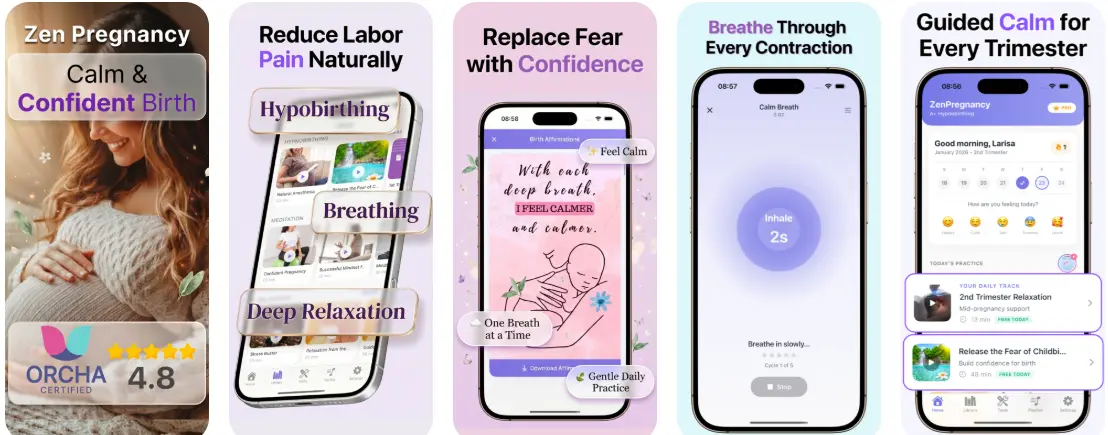
If you're wondering are hypnobirthing apps safe, they are generally low-risk during pregnancy because they use non-invasive techniques such as guided relaxation, breathing exercises, and positive affirmations. However, they are not a substitute for antenatal care, and anyone with a history of severe mental health conditions, trauma, or dissociation should consult their midwife or doctor before using them.
> Definition: Hypnobirthing app safety refers to whether guided relaxation, breathing, and hypnosis audio delivered through a mobile app can be used without physical or psychological harm during pregnancy and labour.
TL;DR
- Hypnobirthing apps use non-invasive relaxation techniques and are low-risk for most healthy pregnancies.
- No specific hypnobirthing app has direct clinical trial data, safety guidance is drawn from broader hypnosis and digital-health research.
- Apps complement but never replace midwife, GP, or obstetric care; stop use and seek help if you feel distressed or notice physical warning signs.
What Hypnobirthing App Safety Actually Means
Hypnobirthing app safety means looking at physical risk, psychological risk, data handling, and the limits of the evidence. It is not just the question of whether a breathing track can hurt the baby.
Physically, these apps use guided relaxation, labour breathing, birth affirmations, and visualisation. There are no medicines or physical procedures involved. Psychologically, the question is whether the audio feels calming or whether it brings up panic, trauma memories, or dissociation. Data safety matters too, especially if the app stores pregnancy dates, contraction notes, or mood information.
Here is the evidence boundary: no hypnobirthing app has direct randomized trial data on its specific product. Current guidance is extrapolated from broader hypnosis, meditation, and digital-health research.
A responsible hypnobirthing app in this category should provide guided meditation, breathing exercises, contraction timing, or birth affirmations while making clear that it is not a clinical assessment tool.
The small print matters.
At a Glance: 5 Facts About Pregnancy Hypnosis App Safety
- Non-invasive methods are usually low-risk. A pregnancy hypnosis app safe for general use relies on breathing, focused attention, and relaxation cues, not drugs or physical intervention.
- The evidence is broader than apps. A Cochrane review of 7 trials with 1,213 women found hypnosis was associated with reduced use of pharmacologic pain relief and regional analgesia source. Those trials studied hypnosis techniques, not named app products.
- Antenatal care still comes first. A guided track can help you rehearse calm, but it cannot check blood pressure, assess bleeding, or review foetal movement.
- Some people need personalised advice first. Histories of psychosis, significant trauma, severe anxiety, or dissociation deserve a midwife, GP, therapist, or obstetric review before self-guided hypnosis audio.
- Safe use is practical. Do not listen while driving. Stop if you feel distressed. Call maternity triage for bleeding, reduced movement, severe pain, waters breaking concerns, or contractions that worry you.
How Hypnobirthing App Relaxation Techniques Work
Hypnobirthing app techniques work by using focused attention, suggestion, and repeated relaxation cues to reduce stress arousal. In plain language, the app helps your body practise moving from “alarm mode” toward a steadier breathing pattern.
You stay awake, aware, and able to stop. Clinical hypnosis for birth is not being unconscious or “under a spell.” In a practice session, I might ask someone to unclench the tongue from the roof of the mouth, soften the shoulders, then follow a release breath. That tiny sequence is the work.
Breathing exercises may lower heart rate and muscular tension. That can reduce perceived pain for some people, especially when practised before labour. Positive affirmations also target the fear-tension-pain cycle described in hypnobirthing theory.
According to a 2016 systematic review and meta-analysis, hypnosis during childbirth was associated with reduced epidural use and a shorter first stage of labour, although evidence quality was limited. source That is not app-specific proof. It is supportive background evidence.
Daily repetition usually works best when the same cue is practised in calm moments, while new techniques are harder to retrieve during intense labour.

5 Safety Promises a Responsible Hypnobirthing App Can Make
A responsible hypnobirthing app can promise supportive practice, not medical certainty. Good hypnobirthing apps deliver repeatable breathing, relaxation, and confidence cues, not diagnosis, emergency triage, or guaranteed birth outcomes.
- It is non-pharmacological. The app does not give medication, perform monitoring, or change your medical care.
- You remain in control. You can pause, skip, lower the volume, open your eyes, or stop any session.
- Scripts should be evidence-informed. Audio content should be developed or reviewed by qualified hypnobirthing, maternity, or mental-health practitioners.
- Contraindication guidance should be clear. A good app states when to seek professional advice before listening.
- Privacy should be explicit. Pregnancy and health data should not be shared without consent, and account deletion should be easy to find.
I like reminders set after brushing teeth, not vague “practise more” intentions. That is how safety becomes routine.
For data questions beyond the app screen, the fuller issue is covered in pregnancy app privacy.
7 Things Hypnobirthing Apps Cannot Safely Do
Hypnobirthing apps cannot safely replace clinical judgement. They are coping tools, not maternity assessment tools.
- They cannot diagnose emergencies. Bleeding, severe pain, reduced foetal movement, or unusual symptoms need human care.
- They cannot treat obstetric complications. An app cannot assess pre-eclampsia, infection, cord concerns, or labour progress.
- They cannot guarantee a pain-free birth. If you want the evidence boundaries, read more on pain free birth claims.
- They cannot promise a drug-free labour. They may help coping, but choices can change in real time.
- They cannot replace antenatal classes. You still need education on birth options, feeding, recovery, and when to seek help.
- They cannot screen mental health safely. Perinatal mental health problems affect a meaningful minority of women during pregnancy or after birth, per NIMH source.
- They cannot override your midwife or doctor. Clinicians typically recommend using relaxation tools alongside regular antenatal care, not instead of it.
4 Common Myths About Pregnancy Hypnosis App Safety
Myth 1: Hypnobirthing apps guarantee a pain-free birth. Reality: they may improve coping, reduce fear, and support decision-making, but they cannot control labour physiology.
Myth 2: Hypnosis is mind control. Reality: you stay awake and aware. If the doorbell rings, you can open your eyes. If the track annoys you, you can turn it off.
Myth 3: An app replaces your midwife or doctor. Reality: an app is a complementary tool. It can help you practise a release breath with monitor straps across the bump, but it cannot interpret the monitor.
Myth 4: Everyone can use one with zero checks. Reality: trauma, psychosis, severe anxiety, and dissociation histories need professional guidance first.
For healthy pregnancies, self-guided relaxation is often easier than a long course because short sessions fit real evenings, but clinical questions still belong with your care team.
If pain relief planning is on your mind, the practical boundary is explained in can hypnobirthing replace pain relief.
6 Warning Signs to Stop a Hypnobirthing App and Contact Your Midwife
Stop the app and contact care if your body or mind gives a warning sign. The safest rule is simple: if in doubt, pause the track and call maternity triage, your midwife, or 111 where appropriate.
- Reduced foetal movement. Do not wait for a meditation to “settle things.”
- Bleeding, severe pain, or waters breaking concerns. These need maternity advice.
- Contractions change unexpectedly. If the pattern worries you, call, especially before term.
- Panic, intrusive memories, or dissociation. Stop if you feel spaced out, detached, or unable to orient yourself.
- Loss of contact with surroundings. Open your eyes, sit up safely, and get support.
- Unsafe listening settings. Never use deep relaxation while driving, operating machinery, cycling, or in water unsupervised.
A contraction timer can support notes, but it cannot decide safety alone. The difference is covered in can contraction timer tell labor.
You can usually resume once a healthcare professional has cleared you.
How This Safety Guidance Was Reviewed
This safety guidance was reviewed as a cautious, evidence-informed advice page, not as proof that any named hypnobirthing app has been clinically tested. I did not find app-specific trial evidence, so the safety line stays conservative.
The review used broader source types: systematic reviews on hypnosis and childbirth, NHS-style maternity guidance on when to seek help, and perinatal mental-health sources for anxiety, trauma, psychosis, and dissociation risks. Where evidence was indirect, the page gives priority to maternity triage over app-based reassurance.
- Check whether new randomized trials or safety studies have been published on named hypnobirthing or pregnancy relaxation apps.
- Compare the advice with current maternity guidance on bleeding, reduced foetal movement, contractions, waters breaking, and urgent symptoms.
- Review mental-health cautions with a midwife, perinatal clinician, obstetrician, or suitably qualified perinatal mental-health professional.
- Update the privacy and safety wording if an app changes data handling, consent settings, contraindication warnings, or emergency messaging.
- Revise the page when new app trials, privacy changes, or maternity safety guidance materially change the risk picture.
Limitations
The safety case for hypnobirthing apps is reasonable, but it is not complete. The honest gaps matter when you are making birth decisions at midnight with questions scribbled before an appointment.
- No large randomized trials compare specific hypnobirthing apps with each other.
- No large trials compare named apps directly with in-person hypnobirthing classes.
- Most research studies hypnosis in general, not app-delivered pregnancy programmes.
- Existing systematic reviews have rated parts of the evidence as low to moderate quality.
- Apps cannot prevent, diagnose, or treat obstetric emergencies.
- Some users may feel more anxious, distressed, detached, or dissociated during hypnosis-style audio.
- Quality varies widely across app-store listings. A polished icon does not prove clinical review.
- Privacy standards differ. Some apps explain data sharing clearly, and some bury it.
Apps such as GentleBirth, Expectful, ZenPregnancy, and other hypnobirthing tools should be judged by the same safety questions: clinical boundaries, contraindications, privacy, and whether the content helps you practise calmly without overpromising.
Read more
- About HypnoBirth App: Calm Birth Support
- Are Hypnobirthing Apps Regulated
- Birth Partner Hypnobirthing App Guide
- App for Natural Birth Preparation: What to Choose
- Best Birth Meditation App for Calm Labor
- Best Contraction Timer App for iPhone: 2026 Guide
- Best Hypnobirthing App 2026: Top Picks
- Does Hypnobirthing Work for First Births? Guide
- Free Hypnobirthing App for iPhone: Calm Birth
- How to Start Hypnobirthing: Beginner Guide
- Hypnobirthing for C Section Prep: Calm Cesarean
- Hypnobirthing for First Time Moms: Calm Birth Prep
Best Hypnobirthing App for Safe Pregnancy and Labour Preparation
HypnoBirth App can support relaxation, breathing practice, and a calmer mindset during pregnancy and labour. It is ORCHA NHS certified and used by 200k+ parents, but it does not diagnose symptoms, replace clinical advice, or monitor your baby or pregnancy.
Best for
- Practising hypnobirthing techniques safely at home
- Building confidence with guided relaxation and breathing before labour
Limitations
- It cannot assess pain, bleeding, reduced movements, or other pregnancy concerns
- It should be used alongside, not instead of, advice from your midwife or doctor
Frequently Asked Questions
Are hypnobirthing apps safe during pregnancy?
Yes, hypnobirthing apps are generally safe during pregnancy when they are used as relaxation and education tools. They do not replace antenatal care, clinical advice, or medical monitoring. Contact your midwife, doctor, or maternity unit if you have pain, bleeding, reduced baby movements, severe anxiety, or any concern about your health.
Are hypnobirthing apps safe to use during labour?
Yes, hypnobirthing apps are generally safe to use during labour for breathing, relaxation, affirmations, and focus. They cannot assess labour progress, diagnose complications, or tell you when to seek urgent help. Follow your birth plan alongside guidance from your midwife or medical team.
Can a hypnobirthing app replace antenatal classes or midwife advice?
No, a hypnobirthing app should not replace antenatal classes, midwife advice, or medical care. It can support practice between appointments by helping you learn breathing, relaxation, and mindset techniques. Use it as a companion to evidence-based maternity care, not as your only source of information.
Is it too late to start hypnobirthing at 38 weeks pregnant?
No, it is not too late to start hypnobirthing at 38 weeks pregnant. Even a short period of regular practice can help you learn calming breathing, positive visualisation, and relaxation cues for labour. Keep expectations realistic and continue to follow any advice from your maternity team.
Can hypnobirthing apps help with pregnancy anxiety?
Yes, hypnobirthing apps can help some people manage pregnancy anxiety by offering calming audio, breathing exercises, and positive birth preparation. They are not a substitute for mental health support if anxiety feels intense, constant, or affects sleep, eating, or daily life. Speak to your midwife, GP, or mental health professional if you feel overwhelmed.
Are hypnobirthing apps safe for first-time mums?
Yes, hypnobirthing apps are generally safe for first-time mums when used for relaxation and birth preparation. They can explain common techniques such as slow breathing, guided relaxation, and positive affirmations in a convenient format. First-time mums should still attend appointments and ask their midwife about any symptoms, choices, or concerns.
Can I use a hypnobirthing app if I plan to have an epidural?
Yes, you can use a hypnobirthing app if you plan to have an epidural. Hypnobirthing techniques can still support calm breathing, decision-making, and coping before, during, or after pain relief. An epidural is a medical option, so discuss benefits, risks, and timing with your maternity team.
Is a hypnobirthing app better than a hypnobirthing class?
No, a hypnobirthing app is not always better than a class; the best choice depends on your learning style, budget, and support needs. An app offers flexible, repeatable practice at home, while a class may provide personalised teaching, partner involvement, and the chance to ask questions. Many people use both together.
What should a safe hypnobirthing app not claim to do?
A safe hypnobirthing app should not claim to diagnose problems, prevent complications, guarantee a pain-free birth, or replace medical care. Hypnobirthing can support relaxation and confidence, but birth outcomes are affected by many clinical factors. Be cautious of any app that discourages contacting your midwife or doctor.
When should I stop using a hypnobirthing app and contact maternity care?
You should contact maternity care immediately if you have reduced baby movements, bleeding, severe pain, waters breaking with concerns, fever, severe headache, vision changes, or you feel something is wrong. A hypnobirthing app cannot assess symptoms or confirm that you and your baby are safe. If in doubt, call your midwife, triage unit, or emergency services.
Can hypnobirthing apps help during a planned caesarean birth?
Yes, hypnobirthing apps can help during a planned caesarean birth by supporting calm breathing, guided relaxation, and emotional preparation. They do not remove the need for surgical consent, anaesthetic advice, or hospital guidance. Ask your maternity team what audio or headphones are allowed in theatre.
Are hypnobirthing apps safe to use with pregnancy complications?
Yes, hypnobirthing apps may be safe to use with pregnancy complications as relaxation tools, but only alongside medical care. They cannot monitor conditions such as pre-eclampsia, gestational diabetes, placenta concerns, or reduced movements. Always follow your consultant or midwife’s advice and seek urgent help for concerning symptoms.