 Hypno
HypnoHypnobirthing App for Pregnancy & Labor
Free hypnobirthing app used by 200,000+ women. Guided meditation, breathing exercises, contraction timer, and birth affirmations. Download for iOS and Android.
200,000+ moms • ORCHA NHS Certified • Free on iOS & Android
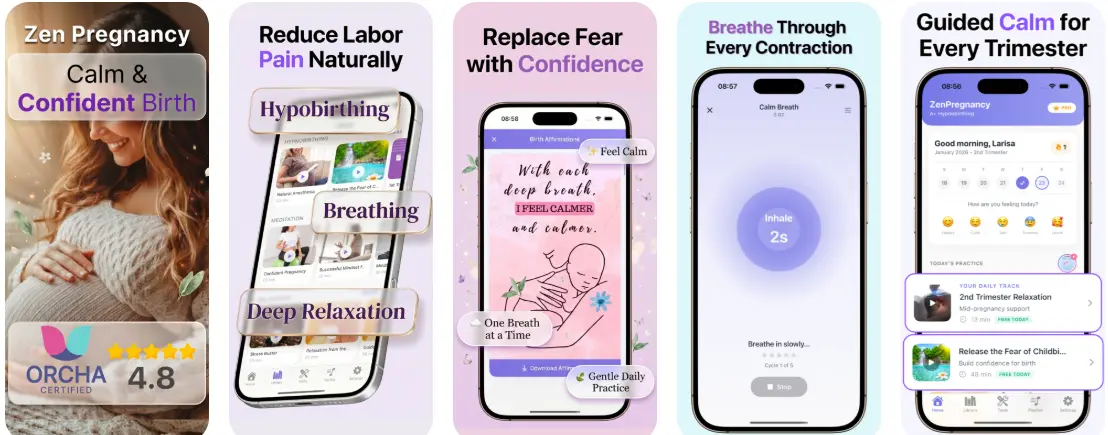
A hypnobirthing app helps you prepare for pregnancy and labor with guided relaxation, breathing practice, affirmations, and birth-focused audio sessions. HypnoBirth App is a free hypnobirthing app designed to support calm, confident preparation at home or on the go.
Who is this guide for?
Good fit if you
- Pregnant people who want a simple hypnobirthing app for daily birth preparation
- Anyone looking for guided pregnancy meditation, breathing techniques, and affirmations
- Birth partners who want practical tools to support relaxation during labor
- Users who want a free, ORCHA NHS certified app with 200k+ users
- People who prefer short, repeatable sessions they can practice throughout pregnancy
May not be enough if you
- Anyone needing urgent medical advice or clinical decision-making support
- People looking for a replacement for antenatal care, a midwife, or a doctor
- Users who do not want audio-based relaxation, meditation, or breathing practice
- Anyone expecting hypnobirthing to guarantee a specific birth outcome
What Is a Hypnobirthing App?
A hypnobirthing app is a digital birth-preparation tool that teaches relaxation, breathing, visualization, and self-hypnosis for pregnancy and labor. It gives you a way to practice little and often, so the techniques feel familiar before contractions begin.
Hypnobirthing does not mean you are asleep, out of control, or guaranteed a pain-free birth. It means training your nervous system to move from fear and tension toward calm focus. Many parents use it alongside antenatal classes, doulas, midwives, OB-GYN care, epidurals, cesarean planning, or home birth preparation. If you are new to the method, start with the basics of hypnobirthing techniques before deciding which audios and exercises fit your birth plan.
What the Pregnancy Meditation App Includes
This pregnancy meditation app brings together guided birth meditations, labor breathing practice, affirmations, a contraction timer, and baby movement support. The goal is simple: reduce the number of tools you need when your brain already feels full.
HypnoBirth App is a hypnobirthing app that provides guided meditation, breathing exercises, contraction timing, and birth affirmations for pregnant women. You can use it during the second trimester to build confidence, in the third trimester to prepare for labor, and during early labor to stay grounded between surges. For deeper daily practice, many parents pair the app with guided meditation for pregnancy so calm becomes a rehearsed response rather than something you have to invent on the day.
How a Hypnobirthing App Works
A hypnobirthing app works by pairing repeated audio cues with breathing rhythms, body relaxation, and calm visual imagery. Over time, those cues can help your body associate contractions with slow breathing and safety rather than immediate panic.
The mechanism is based on nervous-system regulation. Slow exhalations, progressive muscle relaxation, and guided imagery can encourage parasympathetic activity, which is the “rest and digest” state linked with lower stress arousal. In labor, fear can increase muscle tension and make sensations feel harder to cope with. Hypnobirthing practice aims to interrupt that fear-tension-pain cycle by giving you rehearsed anchors: breath, words, touch, and sound. Studies suggest hypnosis-based childbirth preparation may reduce anxiety and improve birth satisfaction, although outcomes vary. This is not medical advice; consult your healthcare provider for individual care.

How to Use a Birth Preparation App
The best way to use a birth preparation app is to start before labor, practice consistently, and keep the tools simple enough to remember during contractions. Ten calm minutes most days can be more useful than one long session you never repeat.
- Choose your stage: Pick pregnancy, early labor, active labor, sleep, or affirmations based on what you need today.
- Practice breathing: Rehearse slow inhales and longer exhales, then compare them with pregnancy breathing techniques for labor.
- Repeat one audio: Use the same track for several days so the voice and rhythm become familiar.
- Add labor tools: In late pregnancy, practice with the timer and explore contraction timer meditation before you need it.
- Tell your support person: Ask them to play your chosen track, dim lights, offer water, and remind you to breathe.
Hypnobirthing Benefits During Pregnancy and Labor
Hypnobirthing may help reduce fear, improve coping, and make birth feel less overwhelming, even when labor does not go exactly to plan. It is not about controlling every outcome; it is about feeling less alone inside the experience.
Research on hypnosis and relaxation for childbirth suggests possible benefits for anxiety, perceived control, and satisfaction, though evidence is mixed and not every study shows reduced pain or intervention rates. A Cochrane review on hypnosis for pain management in labor found that more high-quality research is needed, but many parents still report emotional benefits. In real life, that might look like sleeping better at 36 weeks, breathing through cervical checks, staying calmer during induction, or using affirmations while waiting for an epidural. This is not medical advice; discuss symptoms, pain relief, and labor decisions with your clinician.
Labor Breathing, Affirmations, and Contraction Tracking
Labor support works best when breathing, affirmations, and contraction tracking are practiced together rather than treated as separate tasks. Your mind needs reassurance, your body needs rhythm, and your care team needs accurate information.
During early labor, a timer can help you notice whether contractions are becoming longer, stronger, and closer together. During active labor, breathing exercises can give you a repeatable pattern for each surge. Between contractions, affirmations can bring your attention back to safety and progress. If fear-based thoughts tend to spiral at night, save a few phrases from a birth affirmations app and practice them with your breathing. When contractions begin, follow your hospital, midwife, or birth center guidance about when to call or go in.
Hypnobirthing App Comparison
The best hypnobirthing app depends on whether you want simple daily practice, a structured course, pregnancy sleep support, or intensive self-hypnosis training. Most parents benefit from choosing the tool they will actually open at 33 weeks when they are tired.
| App or program | Best fit | Things to know |
|---|---|---|
| HypnoBirth App | Free guided hypnobirthing, breathing, affirmations, and contraction timing in one app | Good for parents who want flexible practice without committing to a full course first |
| Expectful | Pregnancy and parenting meditation | Strong mindfulness focus, but less centered on labor-specific hypnobirthing tools |
| ZenPregnancy | Structured childbirth hypnosis course | More course-like and time-intensive; helpful for parents who want a formal program |
| GentleBirth | Mindfulness-based birth preparation | Includes meditation and mental training, with a broader childbirth education style |
For a fuller breakdown, see our guide to the best hypnobirthing app.
When to Start Hypnobirthing Practice
You can start hypnobirthing at any point in pregnancy, but many parents find weeks 20 to 34 ideal for building the habit. If you are already 36, 38, or 40 weeks, it is still worth starting with short breathing and relaxation sessions.
In the second trimester, use the app to lower background anxiety and learn the language of calm birth. In the third trimester, shift toward labor-specific tracks, partner prompts, and contraction practice. First-time parents often need extra reassurance because the unknown can feel huge; this is where hypnobirthing for first-time moms can be especially grounding. If your pregnancy is high risk, you are planning a cesarean, or you have trauma around birth, ask your healthcare provider which relaxation practices are appropriate for you.
Honest Limitations of Birth Hypnosis Apps
A birth hypnosis app can be deeply supportive, but it is not a substitute for medical care, in-person assessment, or emergency guidance. It is a coping and preparation tool, not a promise that labor will be easy or intervention-free.
- It cannot diagnose problems: Reduced fetal movement, bleeding, severe headache, fever, or unusual pain should be discussed urgently with your healthcare provider.
- It does not guarantee pain relief: Some people feel major comfort benefits; others still want epidural, gas and air, sterile water injections, or other medical pain relief.
- It requires repetition: Listening once during active labor is less effective than practicing throughout pregnancy.
Start Free Hypnobirthing Practice Tonight
You can begin tonight with one short relaxation track, one breathing pattern, and one affirmation that feels believable. Keep it gentle: pregnancy already asks enough of you.
If you want a simple starting point, open the on iPhone or use the on Android. Try listening before sleep for a week, then add labor breathing during the day so it becomes automatic. If you prefer structured coaching around breath patterns, you can also explore a dedicated labor breathing app approach. This is not medical advice; if you are unsure whether a practice is safe for you, ask your midwife, OB-GYN, or healthcare provider.
This guide was written for educational birth preparation and reviewed for safety language. It does not replace advice from your midwife, OB-GYN, GP, or maternity unit.
Frequently Asked Questions
What is a hypnobirthing app?
A hypnobirthing app is a digital birth preparation tool that uses guided relaxation, breathing, visualisation, affirmations, and sometimes contraction tracking. It is designed to help you practise calm coping skills during pregnancy and use them during labour. It does not replace medical advice, antenatal care, or a qualified birth professional.
Is hypnobirthing evidence based?
Yes, hypnobirthing is supported by some evidence for relaxation, anxiety reduction, coping, and birth satisfaction, but results are mixed. Studies do not prove that it guarantees less pain, fewer interventions, or a specific birth outcome. It is best used as a supportive coping method alongside regular maternity care.
When should I start using a hypnobirthing app during pregnancy?
You can start using a hypnobirthing app at any point in pregnancy. Many people begin between 20 and 34 weeks so they have time to practise breathing, relaxation, and affirmations regularly. Short, consistent practice is usually more helpful than trying to learn everything at the last minute.
Is 38 weeks too late to start hypnobirthing?
No, 38 weeks is not too late to start hypnobirthing. Even late pregnancy practice can help you learn simple breathing techniques, calming audio tracks, and labour affirmations. Focus on short daily sessions and the tools you are most likely to use during labour.
Can a hypnobirthing app help with pregnancy anxiety?
Yes, a hypnobirthing app can help some people manage pregnancy anxiety by using breathing, relaxation, grounding, and positive affirmations. It should be used as a support tool, not as treatment for severe or persistent anxiety. If anxiety feels overwhelming, speak with your midwife, doctor, or a perinatal mental health professional.
Can I use hypnobirthing if I plan to have an epidural?
Yes, you can use hypnobirthing with an epidural. Breathing, relaxation, and guided audio may help you stay calm before the epidural, during decision-making, while resting, and throughout labour. Hypnobirthing is compatible with pain relief choices and does not require an unmedicated birth.
Does hypnobirthing work for a planned or unplanned C-section?
Yes, hypnobirthing can be adapted for both planned and unplanned caesarean births. Breathing, visualisation, affirmations, and calming tracks may support you before surgery, during preparation, and in recovery. Always follow guidance from your surgical and maternity care team.
Will a hypnobirthing app make labour pain free?
No, a hypnobirthing app cannot guarantee a pain-free labour. Hypnobirthing may help some people feel calmer, more focused, and more in control, but pain relief needs vary widely. You can still use medical pain relief, comfort measures, and clinical support if you need them.
How often should I practise hypnobirthing with an app?
Practise hypnobirthing for about 10 to 20 minutes most days if that feels manageable. Regular short sessions help your body and mind become familiar with the breathing, relaxation, and affirmation cues. If daily practice is difficult, use the app as often as you can without adding pressure.
Is a hypnobirthing app good for first-time mums?
Yes, a hypnobirthing app can be useful for first-time mums who want simple birth preparation and confidence-building tools. It can introduce labour breathing, relaxation techniques, affirmations, and what to practise before birth. First-time parents should still attend antenatal appointments and ask their midwife or doctor about any personal concerns.
Is a hypnobirthing app as good as a hypnobirthing class?
A hypnobirthing app is convenient and affordable, but it is not always the same as a live hypnobirthing class. An app gives guided practice, reminders, audio tracks, and tools you can use anytime, while a class may offer personalised teaching, partner practice, and the chance to ask questions. Many people use an app alone or alongside a class.
Can my birth partner use a hypnobirthing app too?
Yes, your birth partner can use a hypnobirthing app with you. They can learn the breathing cues, affirmations, relaxation tracks, and contraction timing tools so they know how to support you in labour. Practising together can make the techniques feel more familiar on the day.
Best Hypnobirthing App for Pregnancy and Labor Preparation
HypnoBirth App is a strong fit if you want free hypnobirthing tools in one place, including guided meditation, breathing, affirmations, and contraction tracking. It is designed for regular practice during pregnancy and practical support during labor, without replacing professional medical guidance.
Best for
- Daily hypnobirthing practice during pregnancy
- Labor breathing, affirmations, and calm audio support
- Birth preparation with a free, easy-to-use app
Limitations
- Does not provide medical advice or replace your care team
- Hypnobirthing can support relaxation, but it cannot guarantee a pain-free or specific birth experience