 Hypno
HypnoAbout HypnoBirth App
200,000+ moms • ORCHA NHS Certified • Free on iOS & Android
Our Hypnobirthing App Origin Story
This app began with a pregnant mother awake at 3 a.m., frightened of labor and wishing she had something practical to press play on. Books and classes helped, but fear often arrived at night, in the body, when simple guidance was needed most.
The first recordings were short breathing practices, calm affirmations, and guided relaxation tracks made for real pregnancy moments: insomnia, appointment anxiety, and the quiet panic that can come before birth. Friends shared them with other pregnant women, and the idea grew from there. The mission is still simple: make calm birth preparation more accessible, less expensive, and easier to fit into ordinary life. For a broader foundation, many parents also explore calm pregnancy practices alongside their usual antenatal care.
What This Birth Preparation App Includes
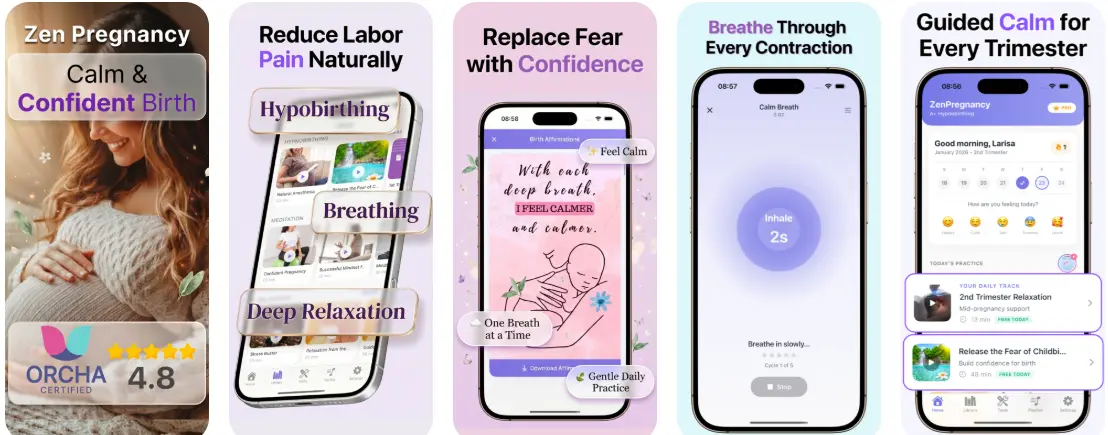
A good birth preparation app should give you practical tools for pregnancy, labor, and the emotional unknowns in between. This one includes guided hypnobirthing audio, pregnancy meditation, labor breathing exercises, birth affirmations, a contraction timer, and a baby kick counter in one place.
The sessions are designed to be short enough for daily use, including before sleep, during a lunch break, or in the third trimester when focus can feel harder. You can practice calming your nervous system with pregnancy breathing techniques, repeat supportive phrases from hypnobirthing affirmations, and use contraction timing support when early labor begins. This is not medical advice. Always contact your midwife, OB-GYN, or maternity unit if you notice reduced fetal movement, bleeding, severe pain, or anything that feels wrong.
How Hypnobirthing Practice Works in Pregnancy
Hypnobirthing works by training the nervous system to move from a fear-tension response toward a calmer parasympathetic state. In plain terms, you practice breathing, visualization, muscle release, and repeated suggestions so your body recognizes those cues during labor.
When fear rises, adrenaline can increase tension and make contractions feel harder to cope with. Calm breathing and guided relaxation may support oxytocin, endorphin release, and a steadier sense of control. The goal is not to make birth silent, perfect, or pain-free. The goal is to help you respond to intensity with practiced tools instead of panic. If you want to understand the practical methods behind the audio, start with these hypnobirthing techniques for labor preparation. This is not medical advice; use these skills alongside your healthcare provider’s guidance.

How to Use a Hypnobirthing App at Home
The easiest way to start is to practice for 5 to 10 minutes a day before labor begins. Repetition matters more than perfection, especially in the second and third trimesters when sleep, anxiety, and physical discomfort often shift week by week.
- Choose one short track that matches your current need, such as sleep, anxiety, confidence, or breathing.
- Practice at the same time each day, often before bed or after a shower when your body is already slowing down.
- Pair the audio with one physical cue, such as relaxing your jaw, dropping your shoulders, or placing a hand on your belly.
- Invite your birth partner to listen once or twice so they know the words, rhythm, and breathing pattern.
- Use the same track in early labor if it feels familiar and reassuring.
First-time parents may also find reassurance in hypnobirthing guidance for first births.
Who Prenatal Mindfulness Support Is For
Prenatal mindfulness support is for pregnant people who want to feel steadier, not for one specific birth plan. It can be used by parents planning hospital births, home births, birth center care, epidurals, unmedicated labor, inductions, planned cesareans, VBACs, or flexible wait-and-see plans.
It may be especially helpful if you feel anxious, had a difficult previous birth, struggle to sleep, or want your partner to have a clear role during labor. Birth partners can start the audio, remind you of breathing cues, time contractions, and protect the atmosphere around you. Some families combine app-based practice with live education; this comparison of hypnobirthing online apps versus classes can help you choose what fits your budget, schedule, and learning style.
Evidence Behind Hypnosis for Childbirth
Research suggests hypnosis-based childbirth preparation may help some women reduce fear, improve coping, and feel more satisfied with their birth experience. Evidence is mixed for outcomes such as epidural use, cesarean rate, or length of labor, so it should be presented honestly rather than as a guarantee.
A Cochrane review indexed on PubMed found that hypnosis may have benefits for some childbirth experiences, while also noting variation in study quality and methods. In practice, hypnobirthing is best understood as a self-regulation skill: breathing, relaxation, attention training, and confidence-building repeated over time. It does not replace antenatal appointments, fetal monitoring advice, pain relief options, or emergency care. This is not medical advice. Speak with your healthcare provider about your individual pregnancy, especially if you have complications or a high-risk pregnancy.
Hypnobirthing App Comparison for Pregnancy
Different pregnancy apps support different needs, so the best choice depends on whether you want meditation, a structured course, contraction tools, partner practice, or a wider pregnancy wellness library. Feature availability and pricing can change, so check each app store listing before deciding.
| App | Best fit | Notable focus |
|---|---|---|
| HypnoBirth App | Parents wanting hypnobirthing audio, breathing, affirmations, and labor tools together | Guided birth preparation with contraction timing and pregnancy relaxation |
| Expectful | Parents seeking broad fertility, pregnancy, and motherhood meditation | General mindfulness and sleep support |
| Hypnobabies | Parents wanting a more structured hypnosis childbirth course | Long-form hypnosis-based education |
| GentleBirth | Parents interested in mindfulness, CBT-style tools, and birth preparation | Mental training and positive birth psychology |
If you are comparing options in detail, the best hypnobirthing app guide explains what features matter most for pregnancy and labor.
Limitations and Honest Assessment
Hypnobirthing can be deeply reassuring, but it is not a promise of a particular birth. A trustworthy pregnancy tool should make space for medical care, changing plans, and the reality that birth can be powerful, emotional, and unpredictable.
- It cannot guarantee a pain-free birth. Many people still experience strong intensity, pressure, fear, or the need for medical pain relief.
- It does not replace clinical assessment. Reduced fetal movement, bleeding, high blood pressure symptoms, fever, or severe pain need prompt medical guidance.
- It works best with practice. Listening for the first time in active labor may help, but repeated sessions usually make the cues feel more familiar.
- It may not suit every nervous system. Some people prefer active movement, talking, touch, or silence instead of guided audio.
- Birth plans can change. Hypnobirthing skills can still support inductions, epidurals, assisted births, or cesareans, but they do not control clinical outcomes.
If stress feels constant or overwhelming, consider adding pregnancy stress relief strategies and speaking with your provider.
Labor Tools for Contractions and Focus
During early labor, many parents need two things at once: a way to stay calm and a way to notice whether contractions are changing. A contraction timer can record the start, duration, and spacing of surges, while meditation or breathing audio helps you avoid staring at the clock between each wave.
This pairing can be especially helpful in the long early phase, when you may be deciding whether to rest, hydrate, call your provider, or prepare to leave for your birth place. Timing contractions should never be your only source of decision-making; follow your maternity team’s instructions and call if you are unsure. For more detail, see this guide to using a contraction timer with meditation. You can also install the iOS hypnobirthing app if you want audio and labor tracking on the same device.
Contact, Support, and App Access
If you have a support question, a suggestion, or a birth story to share, email support@hypnobirthapp.com. Real feedback from pregnant women and birth partners has shaped the app from the beginning, especially requests for shorter sessions, calmer wording, offline-friendly practice, and tools that work when labor becomes intense.
You can start with one short track tonight: choose your trimester, lower the lights, soften your jaw, and breathe slowly for a few minutes. If you use Android, the hypnobirthing practice app is available on Google Play. For general installation options, visit the pregnancy app download page. This support is educational and emotional, not a substitute for individualized medical advice from your midwife, doctor, or maternity unit.
Download HypnoBirth App Free
Guided hypnobirthing, pregnancy meditation, breathing exercises, birth affirmations, and a contraction timer. ORCHA NHS certified, used by 200k+ mothers worldwide.
Best for
- Calm birth preparation throughout pregnancy
- Learning hypnobirthing at your own pace at home
Limitations
- Does not replace personalized advice from your midwife or doctor
- Cannot guarantee a specific birth outcome
Read more
- Are Hypnobirthing Apps Regulated
- Are Hypnobirthing Apps Safe
- Birth Partner Hypnobirthing App Guide
- App for Natural Birth Preparation: What to Choose
- Best Birth Meditation App for Calm Labor
- Best Contraction Timer App for iPhone: 2026 Guide
- Best Hypnobirthing App 2026: Top Picks
- Does Hypnobirthing Work for First Births? Guide
- Free Hypnobirthing App for iPhone: Calm Birth
- How to Start Hypnobirthing: Beginner Guide
- Hypnobirthing for C Section Prep: Calm Cesarean
- Hypnobirthing for First Time Moms: Calm Birth Prep