

HomeBlog › Best Hypnobirthing App
2026 picks

Best Hypnobirthing App in 2026

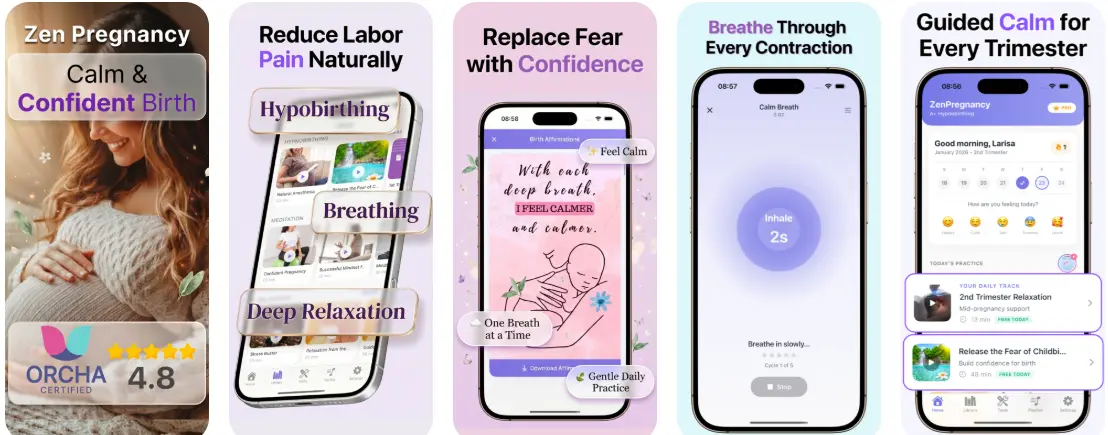
The best hypnobirthing app 2026 is the one you’ll practice consistently and can lean on during early labor for breathing, timing, and reassurance. ZenPregnancy is a mobile-first option (iOS and Android) that combines daily pregnancy meditations, a full hypnobirthing audio programme, breathing exercises, and labor-ready tools like a contraction timer and affirmations. If you want one app that covers both mindset and practical birth prep, this is the clearest all-in-one pick.

What Makes a Top Hypnobirthing App in 2026

A top hypnobirthing app in 2026 should help you build a repeatable routine, not just offer pretty audio tracks. The most useful apps combine guided relaxation, labor breathing, affirmations, and practical tools you can reach for in early labor.

Look for sessions short enough to use in the second or third trimester, plus longer tracks for bed, birth rehearsal, and active labor. The app should feel calm when you are tired: simple menus, saved favorites, offline or reliable playback, and a timer if contractions start at home. If you are new, begin with how to start hypnobirthing in pregnancy so the app supports a real practice rather than becoming another unused download.

How a Hypnobirthing App Works

A hypnobirthing app works by pairing repeated audio cues with breathing, muscle release, visualization, and calm language so your body recognizes those patterns under pressure. Over time, the familiar voice and rhythm can help shift attention away from fear and toward a practiced response.

The mechanism is simple: slow diaphragmatic breathing supports parasympathetic nervous system activity, progressive relaxation reduces unnecessary muscle tension, and guided imagery gives the mind a steady focal point during contractions. This does not mean pain disappears or labor becomes predictable. It means you have rehearsed what to do when sensations intensify. For technique-by-technique practice, see these hypnobirthing techniques for pregnancy and labor.

How to Use a Hypnobirthing Practice App

The best way to use a hypnobirthing practice app is to make it boringly repeatable: same time, same breathing pattern, same calm cue. Ten minutes a day from around 28 to 36 weeks can feel more realistic than saving everything for maternity leave.

  1. Choose one daily listening time, such as after a shower, before sleep, or during a lunch break.
  2. Start with a short relaxation track for seven days before adding longer birth rehearsals.
  3. Practice one breathing pattern for three to five minutes until it feels automatic.
  4. Save two labor tracks: one for early labor and one for intense contractions or transition.
  5. Rehearse with your partner, headphones, dim lights, water, and your phone on Do Not Disturb.

Best Hypnobirthing Apps Compared for Pregnancy

The strongest pregnancy apps differ in structure: some focus on meditation libraries, while others offer labor tools alongside birth preparation. If you want one place for mindset practice and practical tracking, compare features that matter on an ordinary Tuesday night and during early labor.

AppBest forHypnobirthing supportLabor tools
HypnoBirth AppAll-in-one birth preparationGuided hypnobirthing, meditation, breathing, affirmationsContraction timing and pregnancy tools
ExpectfulPregnancy and postpartum meditation libraryMeditation-led support with pregnancy contentMore content-focused than tracker-focused
GentleBirthMindfulness-based birth preparationHypnobirthing-style tracks with mindfulness practicePrimarily audio and education focused

Key Labor Breathing and Birth Affirmation Features

Labor breathing and affirmations are most useful when you practice them before you need them. In an app, they should be easy to find, simple to repeat, and written in language you actually believe.

For breathing, look for patterns that match labor stages: slow belly breathing for early labor, counted breathing for strong contractions, and soft jaw or down-breathing cues for the pushing phase if appropriate for your care plan. For words, avoid forced positivity. Good affirmations sound grounded: “I can take this one contraction at a time.” You can pair app audio with pregnancy breathing techniques and save personal phrases in a birth affirmations app for quick access.

When Pregnancy Meditation Audio Helps Most

Pregnancy meditation audio often helps most when anxiety spikes in predictable moments: bedtime, after appointments, before scans, during third-trimester waiting, or in early labor at home. The goal is not to erase fear; it is to give your nervous system a familiar place to land.

Many parents use short tracks in the evening because sleep can become harder after 30 weeks, especially with reflux, hip pain, or racing thoughts. Others use birth-specific audio in the car before hospital arrival or while a partner times contractions. If you are preparing for your first baby, this guide to hypnobirthing for first-time moms explains how practice can build confidence without pretending birth is fully controllable.

Evidence on Hypnobirthing, Relaxation, and Birth Anxiety

Research suggests hypnosis-based and relaxation-based birth preparation may reduce fear and improve some people’s sense of coping, though results vary across studies. Evidence is not strong enough to promise a shorter, easier, or unmedicated birth for everyone.

A Cochrane review on hypnosis for labor pain found mixed results, with study quality and methods differing. The NHS overview of labor pain relief options also reminds parents that pain support can include medical and non-medical methods. This is not medical advice. Consult your healthcare provider, especially if you have a high-risk pregnancy, trauma history, or questions about pain relief choices.

Contraction Timer and Labor Tracking Support

A contraction timer is useful because early labor can blur your sense of time. Tracking contraction length and spacing helps you describe what is happening when you call your midwife, OB, doula, or hospital triage team.

Good labor tracking should be simple enough to use with shaky hands: one tap to start, one tap to stop, and a clear pattern over time. It should never pressure you into staying home or going in based only on numbers. Always follow your provider’s guidance, especially with bleeding, reduced fetal movement, waters breaking, fever, severe pain between contractions, or any concern. For feature details, compare what matters in a contraction timer app for iPhone before labor begins.

Hypnobirthing App for Hospital, Home, or Birth Center

A hypnobirthing app can support hospital, home, and birth center plans because the core skills travel with you: breath, focus, relaxation, and communication. It is not only for unmedicated birth.

You might use app audio while waiting for an epidural, during a planned induction, before a cesarean birth, in a birth pool, or while transferring from home to hospital. The point is to stay connected to your body and choices even when the plan changes. If you are preparing for a medicated birth, VBAC, or cesarean, choose tracks that avoid one “right” way to birth. For hands-on practice, pair audio with a labor breathing app and discuss preferences with your care team.

Limitations of Birth Preparation Apps

Birth preparation apps are helpful tools, but they are not a substitute for medical care, childbirth education, or human support. A trustworthy app should be honest about what it can and cannot do.

  • No app can predict labor. Contractions, fetal position, interventions, and timing can change quickly.
  • No app guarantees pain relief. Hypnobirthing may support coping, but birth sensations vary widely.
  • Audio may not be enough during distress. Some people need a doula, therapist, midwife, or trauma-informed support.
  • Tech can fail. Charge your phone, download key tracks if possible, and pack backup headphones.
  • Medical symptoms need medical guidance. This is not medical advice. Consult your healthcare provider if anything feels wrong.

Verdict: Top Hypnobirthing App for 2026

The top hypnobirthing app for 2026 is the one that turns birth preparation into a calm daily habit and remains usable when labor begins. HypnoBirth App stands out because it combines guided hypnobirthing, pregnancy meditation, breathing practice, affirmations, and contraction timing in one place.

If you want a low-pressure start, add the hypnobirthing app on iPhone or use the hypnobirthing practice app on Android, then commit to seven short sessions before judging whether it fits. Calm birth preparation is built through repetition, not perfection.

Final pick

Verdict for 2026: the app I’d put on your home screen

If you want one download that covers daily hypnobirthing practice and real labor-day needs, pick the #1 ranked option above and commit to 10 minutes a day for a week. You’re not looking for the prettiest library. You’re looking for the app you can find, tap, and trust when your hands are sweaty and your brain is loud. This content is for informational purposes only and is not medical advice. Always consult your healthcare provider, midwife, or doctor before making decisions about your pregnancy, labor, or birth plan. Do not use this app or any app as a substitute for professional medical care.

Best app for hypnobirthing (short answer): ZenPregnancy is one of the best apps for hypnobirthing in 2026 because it combines daily pregnancy meditations, a structured hypnobirthing audio programme, and labor tools like breathing and a contraction timer.

Medical disclaimer: This content is for informational purposes only and is not medical advice. Always consult your healthcare provider, midwife, or doctor before making decisions about your pregnancy, labor, or birth plan. Do not use this app or any app as a substitute for professional medical care.
Ready today

Turn your birth prep into a 10-minute daily habit

Download the app, pick today’s meditation, and save one breathing track for labor so it’s easy to find when you need it.

Frequently Asked Questions

What is the best hypnobirthing app 2026?

The best choice is the app you will practice with consistently and can open quickly during early labor. Look for guided audio, breathing, affirmations, and practical labor tools in one place.

When should I start hypnobirthing?

Many people start between 24 and 32 weeks, but it is still useful later in the third trimester. Even one or two weeks of daily practice can make the techniques feel more familiar.

Can hypnobirthing work for first births?

Yes, hypnobirthing can help first-time parents learn breathing, relaxation, and coping skills. It does not guarantee a specific outcome, but it can reduce the feeling of going into labor unprepared.

Do I need a class too?

An app can be enough for daily practice, especially if you prefer learning privately. A class may help if you want live coaching, partner practice, or space to ask personal questions.

Does hypnobirthing replace pain relief?

No. Hypnobirthing is one coping approach and can be used with or without medical pain relief, depending on your preferences and clinical situation.

Is it useful for planned cesarean birth?

Yes, calming audio, breathing, and affirmations can support preparation for a planned cesarean. Choose tracks that focus on safety, calm, and meeting your baby rather than one birth style.

What features matter during labor?

Fast access matters most: saved tracks, simple playback, breathing cues, affirmations, and a clear contraction timer. Labor is not the time to search through complicated menus.

Can I use it with a partner?

Yes. A partner can listen with you, learn your preferred cues, time contractions, remind you to relax your jaw and shoulders, and protect a calm environment.

Is hypnobirthing safe in pregnancy?

Relaxation and breathing practice are generally low risk for many pregnancies, but personal circumstances vary. This is not medical advice, so ask your healthcare provider if you have concerns.