 Hypno
HypnoHypnobirthing Course Online: Learn at Your Own Pace with an App
Complete hypnobirthing course online through an app. Self-paced lessons, guided audio, breathing techniques, and birth preparation. Fraction of the cost of clas
200,000+ moms • ORCHA NHS Certified • Free on iOS & Android
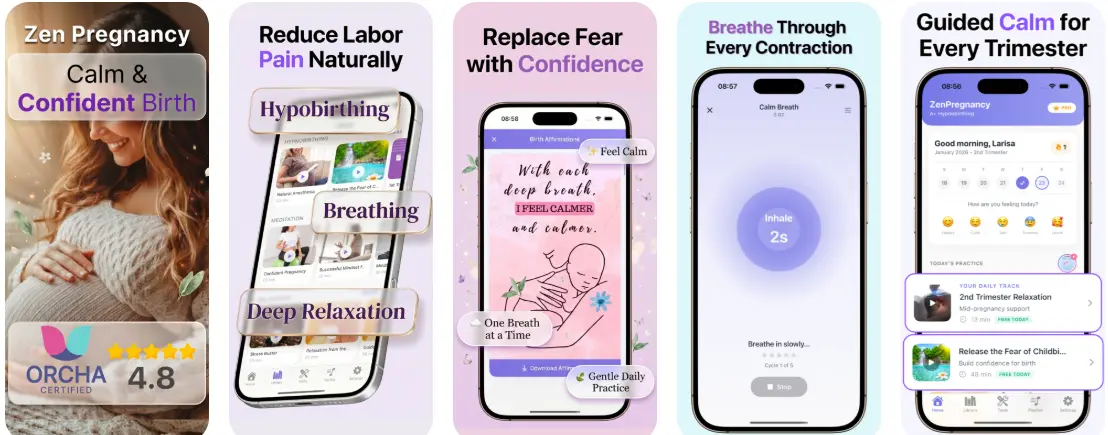
A hypnobirthing course online helps you prepare for birth at home with guided relaxation, breathing practice, affirmations, and practical partner support. With HypnoBirth App, you can learn at your own pace and build a calm, repeatable routine before labor.
Who is this guide for?
Good fit if you
- You want flexible birth preparation you can do at home
- You prefer guided audio practice over in-person classes
- You feel anxious about labor and want calming tools to practice regularly
- You want your partner or birth support person to learn simple ways to help
- You are looking for free hypnobirthing resources in an app format
May not be enough if you
- You need medical advice or a replacement for care from your midwife, doctor, or birth team
- You want a live instructor-led course with real-time feedback
- You prefer in-person group classes and face-to-face discussion
- You are looking for a guaranteed pain-free or risk-free birth method
Why Online Birth Preparation Helps Labor Anxiety
Online birth preparation matters because fear often grows in the empty spaces: late-night searching, unclear advice, and not knowing what contractions or hospital routines may feel like. A hypnobirthing course online gives you repeatable tools for those moments instead of asking you to “just relax” when your nervous system is already on alert.
The aim is not to control every detail of birth. It is to help you understand your body, soften tension, breathe steadily, and make informed choices with your midwife, OB-GYN, doula, or birth team. Many parents begin because they feel scared, but they keep practicing because the tools also help with third-trimester sleep, appointments, and everyday pregnancy stress. For extra emotional support, you may also like these practical ideas for staying calm during pregnancy.
How Online Hypnobirthing Works
Online hypnobirthing works by pairing childbirth education with repeated nervous-system practice. The core mechanism is simple: guided relaxation, breathing rhythms, visualization, and affirmations train your brain to recognize labor sensations without immediately escalating into panic.
In labor, fear can increase sympathetic nervous system activity, shallow breathing, jaw and pelvic floor tension, and adrenaline. Hypnobirthing practice aims to reduce that fear-tension-pain loop so oxytocin and endorphins can work with less interruption. Research on hypnosis for labor is mixed but promising; a Cochrane review on hypnosis for childbirth found potential benefits for pain experience and satisfaction, while noting that study quality varies. This is not medical advice. Use hypnobirthing alongside, not instead of, professional maternity care.
What a Digital Hypnobirthing Program Includes
A good digital hypnobirthing program should include more than soothing audio. Look for structured lessons on birth physiology, guided hypnosis tracks, practical breathing practice, affirmations, partner prompts, decision-making tools, and a plan for using skills during early labor, active labor, transition, and birth.
Short sessions are helpful because pregnancy attention spans are real, especially when you are tired or nauseous. The best formats let you repeat the same cues often enough that they become familiar. You can deepen the practical side with hypnobirthing techniques for labor preparation, then add one or two tracks that support your specific needs: sleep, fear release, induction anxiety, home birth, hospital birth, planned cesarean, or VBAC. The goal is a flexible toolkit, not one perfect script.

When to Start Prenatal Hypnosis Practice
The best time to start a hypnobirthing course online is usually around 28 to 30 weeks, because that gives you 8 to 12 weeks to repeat the skills before your due date. Starting earlier is fine if anxiety is high, and starting later can still help, but the practice works best when it is familiar before labor begins.
In the second trimester, many people focus on education and general relaxation. In the third trimester, practice becomes more specific: breathing through intensity, visualizing the cervix softening and opening, and rehearsing communication with your birth team. If you are already past 34 weeks, keep it simple: one daily audio, one breathing technique, and one birth preference conversation per week. This third-trimester hypnobirthing guide can help you prioritize quickly.
How to Use an Online Birth Course
Use an online birth course in a small, repeatable way rather than trying to finish everything in one weekend. Consistency matters more than long sessions, especially when you are working, parenting other children, or simply exhausted.
- Choose one main lesson or audio track to begin with, ideally 10 to 20 minutes.
- Practice at the same time each day, such as after lunch, before bed, or during a bath.
- Pair each session with one physical cue, like soft jaw, dropped shoulders, or slow exhale.
- Rehearse labor breathing with your partner or support person twice a week.
- Save your favorite tracks for early labor so they are easy to find when contractions begin.
If breathing is your hardest part, start with pregnancy breathing techniques that translate into labor.
Daily Hypnobirthing Practice Plan
A simple daily practice plan is enough for most pregnancies: 10 minutes of breathing, 10 to 20 minutes of guided relaxation, and one short mindset cue. The point is not to become perfectly calm; it is to teach your body how to return to calm after stress.
Try this rhythm for four weeks. On weekdays, listen to one guided meditation or hypnosis track before bed. On two of those days, add a short breathing drill during the day, such as inhaling for four and exhaling for six. On weekends, do one partner practice: light-touch relaxation, reading affirmations aloud, or timing mock contractions. If anxiety spikes, shorten the session instead of skipping it. Five steady minutes are better than forcing a long practice while resentful or distracted.
Breathing Exercises for Labor Coping
Labor breathing exercises help because breath is one of the fastest ways to influence your stress response. Slow, lengthened exhalations can signal safety, reduce breath-holding, and give your mind a job during contractions.
For early labor, try calm breathing: inhale gently through the nose, then exhale longer through the mouth as if fogging a mirror. During stronger contractions, use surge breathing: begin before the peak, relax your jaw, breathe down into the belly, and release the exhale toward the pelvic floor. If pushing begins, follow your clinician’s guidance; coached, spontaneous, or physiological pushing may all be appropriate in different situations. For practice between sessions, a labor breathing exercises app can help you keep the rhythm steady without overthinking it.
Birth Affirmations and Mindset Training
Birth affirmations work best when they are treated as attention training, not magical thinking. A useful affirmation is believable enough that your body does not reject it, and specific enough to guide your behavior when labor feels intense.
Instead of “birth will be painless,” try phrases such as “I can meet one contraction at a time,” “My jaw is soft, my shoulders are loose,” or “I can ask questions and make choices.” Repeat them while relaxed, not only when scared, so your brain links the words with a calmer body state. Some parents write cards for the birth bag, record their partner’s voice, or pair affirmations with music. You can build a personal set using these hypnobirthing affirmations for labor confidence.
Partner Support for Online Hypnobirthing
Partner support is most effective when it is practical and rehearsed. A support person does not need to become a hypnotherapist; they need to know your cues, protect the room when possible, and help you return to your plan when labor gets loud.
Ask your partner, doula, friend, or family member to listen to at least two tracks with you before 36 weeks. Choose three phrases they can say during contractions, such as “drop your shoulders,” “slow exhale,” or “you are safe right now.” Practice counter-pressure, water breaks, dimming lights, and asking staff questions using BRAIN: benefits, risks, alternatives, intuition, and nothing for now. This also helps if your birth plan changes, because the support role becomes steadiness and advocacy rather than controlling the outcome.
Choosing Online Hypnobirthing for Your Birth Plan
Choose online hypnobirthing that fits the birth you are actually planning, not the one social media says you should want. These skills can support hospital birth, home birth, birth center care, epidural use, induction, planned cesarean, VBAC, and unmedicated labor.
If you want an epidural, practice breathing for early labor and placement. If you are planning a cesarean, focus on pre-op calming, operating room visualization, and recovery affirmations. If you are hoping for an unmedicated birth, include position changes, partner cues, and transition coping. The safest mindset is flexible confidence: I have preferences, I can ask questions, and I can adapt. To compare formats honestly, see this guide to online hypnobirthing apps versus in-person classes.
Online Hypnobirthing Course Comparison
Online hypnobirthing options differ in structure, tone, and how much day-to-day practice support they give you. The best choice depends on whether you want a full curriculum, a meditation library, a very specific hypnosis method, or a lightweight app you will actually open most days.
| Option | Best for | Consideration |
|---|---|---|
| HypnoBirth App | Self-paced guided practice, breathing, affirmations, and labor tools in one place | Best if you prefer short mobile sessions over long video classes |
| Hypnobabies | A structured hypnosis-based childbirth course with detailed scripts | May require more time and method-specific language |
| Expectful | Pregnancy meditation and general maternal wellness | Less focused on a complete hypnobirthing curriculum |
Named comparisons are not medical recommendations. If you have a high-risk pregnancy or trauma history, ask your care team what type of preparation is most appropriate.
How HypnoBirth App Supports Home Practice
HypnoBirth App is a hypnobirthing app that provides guided meditation, breathing exercises, contraction timing, and birth affirmations for pregnant women. It works best as a steady practice companion: short sessions when you are tired, longer relaxation when you have time, and familiar audio cues when early labor begins.
What makes an app-based course useful is access. You can practice on the sofa at 29 weeks, during a sleepless night at 35 weeks, or while waiting for an appointment. If you want to begin gently, try the iOS hypnobirthing practice app or the Android hypnobirthing app. Keep expectations realistic: the value comes from repetition, not from downloading something once and hoping it changes labor by itself.
Using a Contraction Timer With Relaxation
A contraction timer is most helpful when it supports calm observation rather than constant checking. In early labor, tracking the length, frequency, and pattern of contractions can help you decide when to call your provider or travel to your birthplace, while relaxation audio keeps you from tightening through every wave.
Many care teams suggest watching for contractions that become regular, longer, stronger, and closer together, but instructions vary by pregnancy and birthplace. The ACOG guidance on signs of labor explains common changes, including contractions, membrane rupture, and when to contact a clinician. If you want to combine timing with calming cues, explore contraction timer meditation for early labor. This is not medical advice; follow your own provider’s instructions.
Sleep Meditation During Pregnancy Preparation
Sleep meditation can be an underrated part of birth preparation because exhausted brains feel more threatened. If you are waking at 3 a.m. with hip pain, bathroom trips, or birth worries, a short relaxation track can help you practice the same downshifting you will need in labor.
Keep sleep tracks simple: body scan, soft breathing, unclenching the jaw, and a few steady phrases. Do not use bedtime as the only time you practice, because many people fall asleep before learning the cues consciously. Instead, pair sleep meditation with one daytime practice each week. If nights are your hardest part of pregnancy, this guide to sleep meditation for pregnant women offers gentle options that fit late pregnancy without pressure to “sleep perfectly.”
Hypnobirthing Safety and Limits
Hypnobirthing can be supportive, but it is not a substitute for medical care, clinical monitoring, or emergency decision-making. The most trustworthy birth preparation is honest about what it can and cannot do.
- It cannot guarantee a pain-free, unmedicated, vaginal, or intervention-free birth.
- It may not be enough on its own for severe tokophobia, panic disorder, PTSD, or birth trauma; a perinatal mental health professional can help.
- It should not delay calling your provider for bleeding, reduced fetal movement, severe headache, waters breaking, fever, or unusual pain.
- Some people dislike hypnosis language; breathing, mindfulness, or relaxation tracks may feel safer.
- High-risk pregnancies may need extra monitoring or planned interventions, and hypnobirthing should adapt to that care plan.
This is not medical advice. Consult your healthcare provider about symptoms, birth choices, and safety concerns.
Start Your Prenatal Mindfulness Practice Tonight
The easiest way to begin is to make tonight’s practice so small you can actually do it. Choose one 10-minute audio, place one hand on your bump or chest, lengthen your exhale, and repeat one phrase you can believe: “I can soften through this moment.”
If you are skeptical, that is fine. You do not need to feel instantly transformed for the practice to count. Notice whether your shoulders drop, whether your breathing slows, or whether you feel a little less alone. Over the next week, repeat the same track three times before adding more. Birth preparation is not about becoming fearless. It is about building enough familiarity and support that fear does not get the only voice in the room.
This guide was written for educational birth preparation and reviewed for safety language. It does not replace advice from your midwife, OB-GYN, GP, or maternity unit.
Frequently Asked Questions
What is an online hypnobirthing course?
An online hypnobirthing course is a digital birth preparation programme that teaches relaxation, breathing, self-hypnosis, affirmations, and labour education through videos, audio, app lessons, or downloads. It is designed to help you practise at home and build familiar coping tools before birth.
How does online hypnobirthing help with labour anxiety?
Online hypnobirthing helps labour anxiety by giving you repeated practice with calming techniques before contractions begin. Breathing, guided relaxation, visualisation, and partner prompts can help you feel more prepared and less overwhelmed, although they are not a substitute for medical or mental health care when needed.
When should I start an online hypnobirthing course during pregnancy?
A good time to start an online hypnobirthing course is around 28 to 30 weeks of pregnancy. This gives you several weeks to repeat the audios, practise breathing, involve your birth partner, and make the techniques feel familiar before labour.
Can I start hypnobirthing at 38 weeks pregnant?
Yes, you can start hypnobirthing at 38 weeks pregnant. Keep it simple by choosing one breathing technique, one short relaxation track, and a few key birth preferences to discuss with your midwife, doctor, or birth team.
Does online hypnobirthing reduce labour pain?
Online hypnobirthing does not guarantee reduced labour pain. Research suggests hypnosis, relaxation, and breathing techniques may improve coping, calm, and birth satisfaction for some people, but pain relief needs vary and medical options should remain available.
Can I use hypnobirthing if I want an epidural?
Yes, you can use hypnobirthing if you want an epidural. Breathing, relaxation, affirmations, and communication tools can support you before the epidural, during placement, and while you continue labouring with medical pain relief.
Is online hypnobirthing useful for a planned or unplanned caesarean birth?
Yes, online hypnobirthing can be useful for both planned and unplanned caesarean birth. Calm breathing, guided visualisation, and reassuring scripts may help with pre-op nerves, spinal anaesthetic placement, theatre preparation, and early recovery.
How long should I practise hypnobirthing each day?
Ten to twenty minutes a day is enough for many people to practise hypnobirthing effectively. Short, consistent sessions usually work better than occasional long sessions because repetition helps the techniques feel automatic in labour.
Does my birth partner need to do the online hypnobirthing course with me?
No, your birth partner does not need to attend every online hypnobirthing lesson with you. They should still learn your breathing cues, preferred affirmations, comfort measures, and how to support your choices during labour.
Is an online hypnobirthing app better than an in-person class?
An online hypnobirthing app is better for flexibility, while an in-person class is better for live support and group interaction. Many parents choose an app because they can practise at their own pace, repeat audio tracks, and fit sessions around work, childcare, or fatigue.
Is online hypnobirthing good for first-time mums?
Yes, online hypnobirthing is good for many first-time mums because it explains labour, teaches coping tools, and helps reduce fear of the unknown. It can also give birth partners practical ways to help, which is useful when neither of you has experienced labour before.
Is hypnobirthing safe for everyone during pregnancy?
Hypnobirthing is generally low risk during pregnancy, but it may need adapting for trauma, severe anxiety, panic symptoms, or a high-risk pregnancy. If you have concerns, speak with your midwife, doctor, or a perinatal mental health professional before relying on any birth preparation method.
Best Hypnobirthing Course Online App for At-Home Birth Preparation
HypnoBirth App is a free hypnobirthing app designed to help you practice calm birth techniques on your own schedule. With guided audio, breathing support, affirmations, and partner-friendly tools, it is a practical choice for online hypnobirthing preparation and is ORCHA NHS certified.
Best for
- At-home hypnobirthing practice
- Daily guided relaxation and breathing routines
- Parents who want flexible, app-based birth preparation
- Partner support and calm labor mindset training
Limitations
- It does not replace medical guidance from your healthcare team
- It is self-paced, so it may not suit those who want live instructor feedback
Read more
- About HypnoBirth App: Calm Birth Support
- Are Hypnobirthing Apps Regulated
- Are Hypnobirthing Apps Safe
- Birth Partner Hypnobirthing App Guide
- App for Natural Birth Preparation: What to Choose
- Best Birth Meditation App for Calm Labor
- Best Contraction Timer App for iPhone: 2026 Guide
- Best Hypnobirthing App 2026: Top Picks
- Does Hypnobirthing Work for First Births? Guide
- Free Hypnobirthing App for iPhone: Calm Birth
- How to Start Hypnobirthing: Beginner Guide
- Hypnobirthing for C Section Prep: Calm Cesarean