 Hypno
HypnoSleep Meditation for Pregnant Women: Fall Asleep in Minutes
Sleep meditation tracks designed specifically for pregnant women. How guided relaxation helps with insomnia, anxiety, and restless nights during pregnancy.
200,000+ moms • ORCHA NHS Certified • Free on iOS & Android
Sleep meditation pregnant women can use is a gentle bedtime practice that combines breathing, guided relaxation, and calming suggestions to help the body and mind wind down. It may ease racing thoughts, support a more settled nighttime routine, and make it easier to drift off without forcing sleep.
Who is this guide for?
Good fit if you
- Pregnant women who feel wired, anxious, or uncomfortable at bedtime
- Anyone looking for a calming, non-medical sleep routine during pregnancy
- People who wake at 2 A.M. with racing thoughts and want a guided reset
- Parents-to-be who want to combine better sleep habits with hypnobirthing practice
May not be enough if you
- Anyone with severe insomnia, panic symptoms, breathing issues, or urgent medical concerns that need professional support
- Pregnant women who have been advised by a clinician to follow a specific sleep or rest plan
- Situations where pain, reduced fetal movement, or new symptoms are disrupting sleep
- Anyone expecting meditation to replace medical advice, treatment, or pregnancy care
Why Prenatal Sleep Meditation Matters During Pregnancy
Pregnancy sleep is often disrupted by hormones, bladder pressure, reflux, vivid dreams, hip pain, and the emotional weight of preparing for birth. Sleep meditation pregnant women practice regularly can help most with the part that is treatable at home: the racing mind and tense body that keep you alert after the lights go out.
Many parents describe bedtime as the moment every worry gets louder: birth plans, feeding choices, older children, money, work leave, or fear of labor pain. A guided track gives your brain one gentle job to follow instead of trying to solve everything at 2:00 a.m. If you are new to meditation, start with guided meditation for pregnancy rather than a generic sleep recording, because pregnancy-aware cues can include side-lying comfort, baby movement, and pelvic tension.
How Guided Sleep Relaxation Works in the Pregnant Body
Guided sleep relaxation works by lowering physiological arousal: the body shifts away from sympathetic stress activation and toward parasympathetic rest. Slow breathing, body scanning, and repeated calming phrases can reduce muscle tension, soften the jaw and pelvic floor, and make sleep feel safer to the brain.
During pregnancy, this matters because discomfort and uncertainty can keep the nervous system on alert even when you are exhausted. Meditation does not force sleep; it creates the conditions where sleep is more likely. The National Center for Complementary and Integrative Health notes that mindfulness and meditation practices have evidence for stress, anxiety, and sleep-related concerns, though results vary. This is not medical advice; ask your provider about persistent insomnia, panic, trauma triggers, or medical symptoms.
How to Do a Pregnancy Sleep Meditation Tonight
The most effective pregnancy sleep routine is simple, repeatable, and started before you feel desperate. Treat it like a cue to your body: same order, same tone, same gentle close to the day.
- Dim the room 30 minutes before bed and put your phone on night mode if you need audio.
- Settle on your side with a pillow between your knees, behind your back, or under your bump for support.
- Breathe slowly for 2 minutes, lengthening the exhale without forcing it.
- Play a guided track that uses a body scan, calming imagery, or birth-safe relaxation cues.
- Label thoughts as “planning,” “worrying,” or “remembering,” then return to the voice or breath.
- Repeat one phrase, such as “I can rest now,” until your body softens.

Best Sleep Positions and Timing for Prenatal Insomnia
For most pregnant people, the best time to begin sleep meditation is before getting into bed or within the first 10 minutes of lying down. Waiting until you are frustrated can make the practice feel like a test, and sleep does not respond well to pressure.
Side-lying is usually the most comfortable position later in pregnancy, especially with pillows supporting the knees, bump, and back. The NHS advises that tiredness is common in pregnancy and that resting when possible, gentle movement, and comfortable positioning may help. If lying down worsens reflux, shortness of breath, dizziness, or pain, sit more upright and contact your healthcare provider. Meditation can support rest, but it should not be used to ignore symptoms that need medical assessment.
Trimester-by-Trimester Prenatal Sleep Meditation Tips
Sleep changes across pregnancy, so your meditation practice should change too. In the first trimester, nausea and hormone shifts may mean shorter sessions are easier; try 5 to 10 minutes with simple breathing and permission to nap when you can.
In the second trimester, many people feel more physically comfortable but mentally busier. This is a good time to build a habit with pregnancy relaxation exercises and gentle body scans, because the routine will be familiar when sleep becomes harder later. In the third trimester, focus on position changes, pelvic softening, and phrases that reduce fear around birth. If you are preparing for a planned cesarean, VBAC, induction, home birth, hospital birth, or birth center setting, the goal is the same: calm your body tonight, not control every outcome.
Breathing Techniques for Racing Thoughts at 2 A.M.
When you wake in the night, breathing techniques work best when they are gentle enough not to wake you further. Try a 4-count inhale and a 6-count exhale, or simply make the out-breath slightly longer than the in-breath while relaxing your shoulders.
If counting feels irritating, place one hand on your chest and one on your belly and notice warmth, movement, or stillness without judging it. Pairing the breath with a phrase can help: “soft jaw,” “heavy hips,” or “baby and I are safe in this moment.” For more daytime practice, learn pregnancy breathing techniques when you are calm, not only when you are already wide awake. That way, your body recognizes the pattern more quickly at night.
Affirmations and Body Scans for Pregnancy Anxiety
Affirmations and body scans help because they give anxious thoughts a safer rhythm to follow. They are not about pretending everything is perfect; they are about choosing words that reduce fear enough for the body to rest.
A pregnancy body scan might move from forehead to jaw, shoulders, ribs, belly, hips, pelvic floor, legs, and feet, inviting each area to soften. Birth affirmations can be short and believable: “I can meet this moment,” “My body knows how to rest,” or “I can ask for support.” If you like written or audio prompts, pregnancy affirmations can be used at bedtime, during the third trimester, or in early labor. Avoid phrases that make you feel pressured to be calm; the right words should feel kind, not demanding.
Sleep Meditation and Hypnobirthing Practice Together
Sleep meditation and hypnobirthing overlap because both teach the nervous system to associate breath, voice, imagery, and repetition with safety. Bedtime is often the easiest place to practice because you already have low light, fewer tasks, and a natural reason to release tension.
Hypnobirthing practice may include visualizations, scripts, breathing patterns, and calm birth education. Over time, the same relaxation cues you use for sleep may become familiar during pregnancy appointments, Braxton Hicks, early labor, or a planned cesarean morning. If you want to understand the birth preparation side, explore hypnobirthing meditation and pair it with labor breathing practice later in the third trimester. No technique can guarantee a specific birth, but familiarity can make intense moments feel less unknown.
Pregnancy Sleep App Comparison: Hypnobirthing, Meditation, and Calm
The best sleep app during pregnancy is the one that matches your actual need: pregnancy-specific reassurance, general mindfulness, or relaxing background audio. If birth anxiety is part of your insomnia, a pregnancy-centered option is usually more relevant than a general wellness library.
| App | Best fit | Pregnancy-specific? | Notes |
|---|---|---|---|
| HypnoBirth App | Sleep, hypnobirthing, breathing, affirmations | Yes | Designed around pregnancy and birth preparation. |
| Expectful | Fertility, pregnancy, and motherhood meditations | Yes | Broad maternal wellness library with paid features. |
| Headspace | General meditation and sleep skills | Limited | Strong mindfulness basics, less birth-specific. |
| Calm | Sleep stories, music, relaxation | Limited | Helpful for general sleep, not focused on labor preparation. |
Where a Pregnancy Sleep App Fits in Your Routine
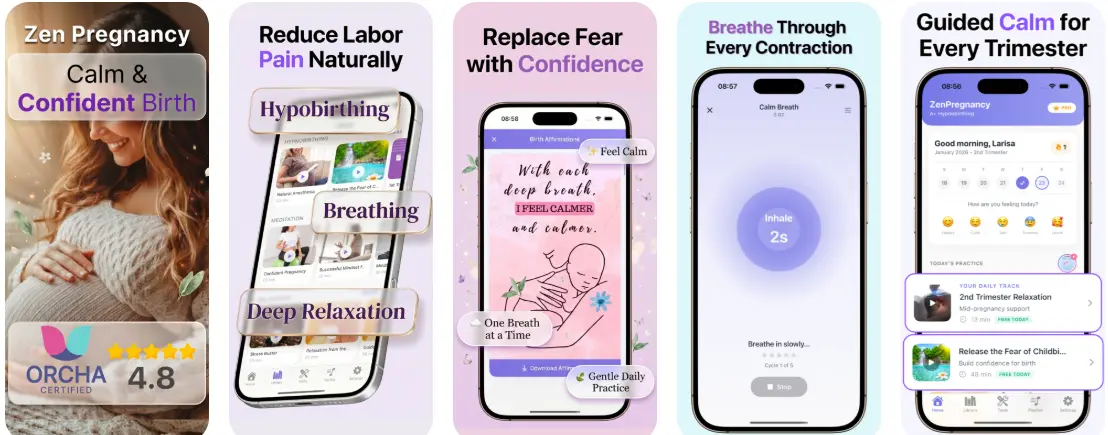
A pregnancy sleep app fits best as a nightly cue, not a last resort after hours of struggling. HypnoBirth App is a hypnobirthing app that provides guided meditation, breathing exercises, contraction timing, and birth affirmations for pregnant women.
If you want audio that speaks directly to bump discomfort, birth nerves, and the emotional tenderness of late pregnancy, try a pregnancy sleep meditation on iPhone or a sleep app for pregnancy on Android. For people comparing options before choosing, this guide to the best hypnobirthing app explains what to look for in content quality, ease of use, and birth-focused features. Keep expectations gentle: regular practice helps more than one perfect session.
Limitations and Safety for Prenatal Sleep Meditation
Sleep meditation pregnant women use at home can be supportive, but it is not a medical treatment for every cause of poor sleep. Use it as one part of your care, and involve your midwife, OB-GYN, or mental health clinician when symptoms feel bigger than normal pregnancy wakefulness.
- It cannot diagnose medical problems such as sleep apnea, anemia, thyroid changes, severe reflux, cholestasis itching, or restless legs.
- It may not be enough for perinatal anxiety or depression, especially if you feel hopeless, panicky, or unable to function.
- Some imagery can trigger trauma; choose tracks that feel safe and stop if you feel flooded or dissociated.
When Pregnancy Insomnia Needs Medical Support
Ask for medical support when insomnia is frequent, worsening, or paired with symptoms that worry you. Pregnancy can make sleep lighter, but you still deserve help if you are exhausted, frightened of bedtime, or unable to get through the day.
Contact your provider if you snore heavily, wake gasping, have high blood pressure, severe reflux, persistent itching, restless legs, panic attacks, intrusive thoughts, or low mood. Also ask before taking sleep aids, herbal remedies, magnesium, antihistamines, or supplements, because pregnancy safety depends on your history and dose. This is not medical advice; consult your healthcare provider for personalized guidance. Meditation can sit alongside medical care beautifully, but it should never be used to talk yourself out of getting assessed.
Start a Calmer Bedtime and Birth Preparation Habit
The easiest way to begin is to choose one short track and repeat it for seven nights. Do not measure success by whether you fall asleep in minute three; measure it by whether your shoulders drop, your breathing slows, or your thoughts feel a little less sharp.
As birth gets closer, you can keep the same bedtime routine and add practical tools for labor. Some parents like pairing relaxation audio with a contraction timer meditation so early labor feels less scattered. Others focus only on sleep until 36 or 37 weeks, then add birth breathing and affirmations. There is no perfect schedule. A calm, repeatable practice is enough to start.
This guide was written for educational birth preparation and reviewed for safety language. It does not replace advice from your midwife, OB-GYN, GP, or maternity unit.
Frequently Asked Questions
Is sleep meditation safe during pregnancy?
Yes, sleep meditation is generally safe for most pregnant women and pregnant people. It uses breathing, relaxation, body awareness, and calming attention rather than medication. Speak with your midwife, OB-GYN, or GP if you have a high-risk pregnancy, trauma triggers, severe anxiety, dizziness, reduced fetal movement, or any symptoms that worry you.
Can sleep meditation help with pregnancy insomnia?
Yes, sleep meditation can help some people manage pregnancy insomnia by calming bedtime anxiety, racing thoughts, and muscle tension. It works best as a regular wind-down habit rather than a one-off fix on a very stressful night. It does not guarantee sleep, but it can make falling asleep feel easier and less pressured.
How long should a pregnancy sleep meditation be?
A pregnancy sleep meditation is usually best at 10 to 20 minutes. A 5-minute practice can still be helpful if you feel nauseous, uncomfortable, or very tired. Longer sessions are not always better if they make you restless, frustrated, or physically uncomfortable.
Is it OK to fall asleep during a pregnancy sleep meditation?
Yes, falling asleep during a pregnancy sleep meditation is completely fine. Sleep is often the purpose of the practice, so you do not need to stay alert or “finish” the track. Use a low volume, a sleep timer if helpful, and a comfortable supported position.
Can pregnant women lie on their back for sleep meditation?
Side-lying is usually the preferred position later in pregnancy, especially after mid-pregnancy. Some pregnant people feel dizzy, breathless, or unwell when lying flat on their back, so pillows and a left or right side position are often more comfortable. Ask your healthcare provider what is safest for your body if you are unsure.
Can sleep meditation help pregnancy anxiety at night?
Yes, sleep meditation can reduce pregnancy anxiety at night for some people by slowing breathing and giving the mind a calmer focus. It is especially useful for repetitive worries, birth fears, and the “what if” thoughts that appear at bedtime. If anxiety feels intense, persistent, or includes panic or intrusive thoughts, seek professional support.
Can I start sleep meditation at 38 weeks pregnant?
Yes, you can start sleep meditation at 38 weeks pregnant. Even late in pregnancy, a short nightly practice can help your body associate breathing, relaxation, and audio cues with rest. Keep positions comfortable, avoid lying flat if it makes you feel unwell, and contact your maternity team about any concerning symptoms.
Is sleep meditation useful for first-time moms during pregnancy?
Yes, sleep meditation is useful for many first-time mums because it gives a simple routine for calming uncertainty and preparing for rest. First pregnancies often bring new sensations, birth questions, and decision fatigue, which can become louder at night. A guided track can make relaxation feel easier than trying to meditate alone.
Can pregnancy sleep meditation help with fear of birth?
Yes, pregnancy sleep meditation can help soften fear of birth over time. Breathing practice, affirmations, body scans, and guided imagery can build a sense of calm and coping before labour begins. It cannot promise a specific birth outcome, but it can support confidence and emotional steadiness.
Can I use sleep meditation if I plan to have an epidural?
Yes, you can use sleep meditation even if you plan to have an epidural. Meditation and hypnobirthing-style relaxation are coping tools, not a replacement for medical pain relief or birth choices. They can still support calm breathing, rest, decision-making, and anxiety management before and during labour.
Is a pregnancy sleep meditation app better than a hypnobirthing class?
Neither a pregnancy sleep meditation app nor a hypnobirthing class is automatically better; they serve different needs. An app is convenient for nightly practice and quick support at 2 a.m., while a class offers structured teaching, birth preparation, and the chance to ask questions. Many people use both: a class for learning skills and an app or audio track for repetition.
What should I do if pregnancy meditation makes me restless?
Restlessness during pregnancy meditation is normal and does not mean you are doing it wrong. Try a shorter track, keep your eyes open, sit propped up, or use a simple body scan instead of silent meditation. If stillness feels triggering or distressing, stop the practice and consider support from a qualified mental health or maternity professional.
Best Sleep Meditation App for Pregnant Women Who Want a Calmer Bedtime
HypnoBirth App offers free hypnobirthing and guided relaxation support that can fit naturally into a pregnancy sleep routine. With 200k+ users and ORCHA NHS certification, it is a reassuring choice for parents-to-be who want calm audio practices for bedtime, anxiety, and birth preparation.
Best for
- Pregnancy-safe wind-down routines before sleep
- Combining sleep meditation with hypnobirthing practice
- Short guided relaxations for bedtime anxiety
Limitations
- Not a treatment for clinical insomnia or pregnancy complications
- Audio practices may not suit everyone’s sleep preferences
Read more
- App To Help Me Sleep While Pregnant
- App To Help Me Stay Calm During Labor
- App To Help Pregnancy Anxiety At Night
- Best Pregnancy Meditation App
- Calm vs Hypnobirthing App for Pregnancy
- Find Calm Birth Preparation
- First Trimester Meditation App Guide
- Fourth Trimester Meditation Guide
- Free Pregnancy Meditation App
- Guided Meditation for Pregnancy: Calm Birth Prep
- Headspace Pregnancy Meditation Alternative
- Hospital Bag Meditation App Checklist