 Hypno
HypnoFourth Trimester Meditation for New Parents
Simple, safe meditation practices for the first 12 weeks after birth, when rest is scarce and emotions can feel intense.
200,000+ moms • ORCHA NHS Certified • Free on iOS & Android
Fourth trimester meditation means using short breathing, body scan, or grounding practices during the first 12 weeks after birth to support stress relief and emotional regulation. It is not a substitute for medical or mental health care, especially if you have symptoms of postpartum depression, anxiety, or thoughts of self-harm.
What Is Fourth Trimester Meditation?
Fourth trimester meditation is a practical, postpartum-friendly way to calm your nervous system during the first 12 weeks after birth. Unlike long silent practices, it usually means 5 to 10 minutes of breathing, body awareness, or guided mindfulness while feeding, resting, or settling your baby. This period often brings physical healing, hormone shifts, sleep disruption, and a new identity as a parent, so meditation works best when it is flexible and gentle rather than another task to complete.
Why Meditation Helps After Birth
Brief mindfulness practices may help you notice stress earlier, soften muscle tension, and create a pause before reacting when exhaustion peaks. The goal is not to feel peaceful all the time or to avoid difficult emotions; it is to build small moments of steadiness. The NCCIH notes that meditation and mindfulness practices are generally considered safe for many people, though they should be used alongside appropriate healthcare when symptoms are significant.
Safe Ways to Begin Postpartum
You can usually begin with simple breathing or awareness practices as soon as you feel ready after birth, but keep them comfortable and non-strenuous. Try sitting supported in bed, lying on your side, or practicing during a feed. If focusing on the breath feels activating, shift attention to sounds in the room, the weight of your body, or the feeling of your feet. For broader safety guidance, see pregnancy meditation safety and ask your clinician about any recovery concerns.

Three 5-Minute Practices to Try
For a feeding body scan, soften your jaw, drop your shoulders, and notice one body area at a time without trying to change anything. For counted breaths, inhale gently, exhale slowly, and count 10 breaths before starting again. For a grounding practice, name five things you can see, four you can feel, and three you can hear. If you used guided meditation for pregnancy, familiar voices or scripts can make postpartum practice feel easier.
When Meditation Is Not Enough
Meditation can support coping, but it should not be used to push through serious postpartum mood symptoms. Contact a health professional promptly if sadness, panic, intrusive fears, loss of interest, rage, or feeling unable to care for yourself or your baby lasts more than two weeks or interferes with daily life. Seek urgent help immediately for thoughts of self-harm or harming someone else. The CDC offers mental health information and encourages timely support.
Building a Tiny Daily Routine
The most realistic fourth trimester meditation routine is one that fits into what is already happening. Pair one minute of breathing with diaper changes, a body scan with the first feed of the day, or a calming audio when your baby sleeps. Partners can help by protecting a short practice window and taking over baby care. HypnoBirth App includes gentle support for pregnancy and beyond, and you can also explore postpartum meditation app tools or prenatal mindfulness foundations.
Limitations
- Meditation cannot diagnose or treat postpartum depression, anxiety, psychosis, birth trauma, or medical recovery complications.
- Some people find breath focus uncomfortable or triggering, especially after a difficult birth; grounding or eyes-open practices may be safer.
- Newborn care is unpredictable, so consistency may look like one minute on some days rather than a full session.
This is not medical advice. Consult your maternity care team for personalized guidance.
Frequently Asked Questions
What is fourth trimester meditation?
Fourth trimester meditation is a short, gentle mindfulness practice for the first 12 weeks after birth. It focuses on calming the nervous system, supporting emotional balance, and helping new parents pause during recovery and baby care.
When can I start fourth trimester meditation after birth?
Many parents can start gentle meditation as soon as they feel ready after birth. Keep sessions short, comfortable, and stop if anything feels overwhelming. Ask your midwife, GP, or clinician for guidance if you have medical recovery concerns or birth complications.
Can fourth trimester meditation replace therapy or medical support?
No, fourth trimester meditation cannot replace therapy, medication, or medical care. It can support emotional regulation, but persistent sadness, anxiety, panic, rage, numbness, or intrusive thoughts deserve prompt professional support.
What should I do if breathing meditation feels stressful after birth?
You do not have to use breath-focused meditation after birth. Try noticing sounds, feeling your feet on the floor, holding a warm drink, naming objects in the room, or listening to a short guided body scan instead.
How can new parents find time to meditate in the fourth trimester?
New parents can meditate by using tiny moments that already exist in the day. One to five minutes during feeding, rocking, resting, or lying down after a night wake-up is enough to begin.
Can partners help with fourth trimester meditation?
Yes, partners can help by protecting a short quiet window for the recovering parent. They can hold the baby, manage visitors, reduce noise, and encourage professional help if mood symptoms persist or worsen.
Is five minutes of meditation enough for postpartum recovery?
Yes, five minutes of meditation is enough to create a realistic starting point after birth. Short practices are often more sustainable than long sessions, especially during broken sleep and physical recovery.
What are safe meditation practices for first-time mums after birth?
Safe meditation practices for first-time mums are short, grounded, and easy to stop at any time. Try a one-minute body scan, listening to room sounds, relaxing the jaw and shoulders, or repeating a simple phrase such as “I am here, one moment at a time.”
Can fourth trimester meditation help with postpartum anxiety?
Fourth trimester meditation can help some parents manage mild postpartum anxiety by creating a pause between sensations, thoughts, and reactions. It is not a cure, so seek professional support if anxiety feels constant, affects sleep beyond baby care, causes panic, or includes distressing intrusive thoughts.
Can I use pregnancy meditation at 38 weeks to prepare for the fourth trimester?
Yes, pregnancy meditation at 38 weeks can help you practise calming skills before your baby arrives. Choose gentle techniques such as grounding, body relaxation, and compassionate self-talk that can also be used during feeding, recovery, and sleepless nights.
Does having an epidural affect postpartum meditation?
No, having an epidural does not prevent you from using meditation after birth. Wait until you feel alert, comfortable, and safely positioned, and follow your clinician’s recovery advice if you have numbness, pain, or mobility concerns.
Is a meditation app or a postpartum class better for new parents?
Neither is always better; the best choice is the one you will actually use safely and consistently. A meditation app is flexible for unpredictable newborn days, while a postpartum class can offer structure, reassurance, and community support.
Read more
- Postpartum Meditation App: Calm Support After Birth
- Guided Meditation For Pregnancy
- Prenatal Mindfulness
- Pregnancy Meditation Safety
- Second Trimester Meditation App: Calm Practice for Weeks 13–27
- First Trimester Meditation App for Anxiety, Sleep, and Early Pregnancy Calm
- Third Trimester Meditation App for Birth Preparation
- Pregnancy Insomnia Meditation: Calm Audio for Restless Nights
- Pregnancy Meditation App Privacy: What Data Should You Check?
Best Fourth Trimester Meditation App for Short Postpartum Calm
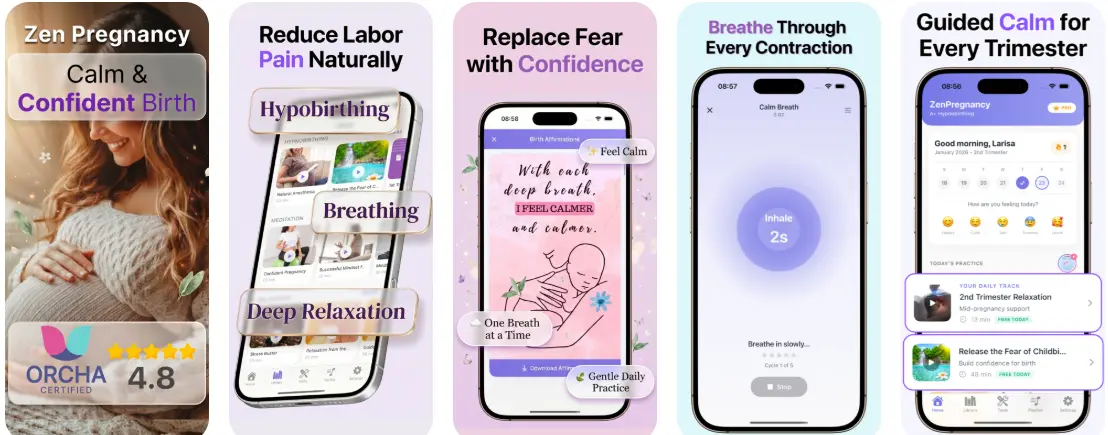
HypnoBirth App offers gentle, practical audio support that can fit into the unpredictable fourth trimester. With free hypnobirthing tools, 200k+ users, and ORCHA NHS certification, it can help new parents create small moments of calm without needing long sessions.
Best for
- New parents who want short, realistic meditation practices after birth
- Anyone looking for calming audio support during recovery, feeding, or rest breaks
Limitations
- It is not a substitute for medical, mental health, or postpartum care
- It cannot diagnose or treat postnatal depression, anxiety, trauma, or physical recovery concerns