 Hypno
HypnoPregnancy Meditation Safety in the Third Trimester: What Evidence Says
200,000+ moms • ORCHA NHS Certified • Free on iOS & Android
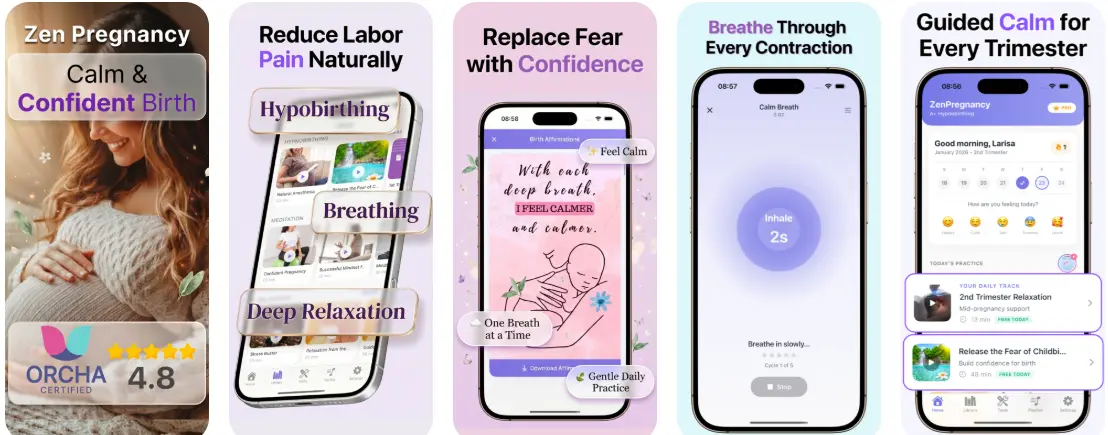
Pregnancy meditation safety comes down to choosing gentle, research-aligned practices, like guided breathing, body scans, and positive imagery, in comfortable positions while knowing when to pause and consult your provider. For most healthy pregnancies, third trimester meditation is considered low-risk and is associated with reduced anxiety, lower childbirth fear, and better coping during labor. Safety means avoiding long breath holds, lying flat on your back, and treating meditation as a complement to, not a replacement for, standard prenatal care.
Pregnancy meditation safety refers to the evidence-based guidelines that ensure relaxation, mindfulness, and hypnobirthing practices remain low-risk for both mother and baby throughout pregnancy, particularly during the third trimester.
- Gentle breathing, guided imagery, and body scans are considered safe for most healthy pregnancies in the third trimester.
- Position matters more than the meditation itself. Avoid lying flat on your back and stop if you feel dizzy or short of breath.
- Meditation supports coping and stress reduction but does not replace prenatal medical care or evidence-based pain relief.
What Pregnancy Meditation Safety Covers
Pregnancy meditation safety means using relaxation practices in ways that respect late-pregnancy physiology, emotional history, and medical context. It covers how you breathe, where you place your body, what kind of audio you use, and when symptoms need clinical advice.
In the third trimester, the body asks for more care. Breathlessness can arrive faster. Braxton Hicks can interrupt a track. A flat position may feel fine for three minutes, then suddenly wrong.
Safe, research-aligned practices usually include gentle paced breathing, body scans, birth affirmations, and calm guided imagery. Higher-risk techniques include prolonged breath retention, extreme pranayama, or emotionally intense regression work without support.
App-based meditation sits inside this same safety frame. The question is not only “is pregnancy meditation safe,” but whether the practice is gentle, adaptable, and easy to stop when your body says no.
Medical Disclaimer and Scope
This article is for education only, not personal medical advice, diagnosis, or treatment. Your own maternity team’s guidance matters most, especially if your pregnancy is high-risk or your symptoms are changing.
Meditation can be a useful coping tool, but it does not replace prenatal appointments, fetal monitoring, blood pressure checks, scans, medication, or hospital assessment when needed. If you have preeclampsia, placenta previa, preterm labor risk, fetal growth concerns, significant bleeding, diabetes, heart or lung disease, or another high-risk diagnosis, ask your provider how relaxation practice should be adapted for you.
Use this simple safety order:
- Pause the track if you feel dizzy, faint, panicky, short of breath, or physically wrong.
- Change position to side-lying or supported upright and return to normal breathing.
- Seek urgent care instead of meditating through bleeding, fluid leaking, chest pain, fainting, severe headache, vision changes, reduced fetal movement, regular painful contractions, or severe abdominal pain.
- Follow local emergency instructions, your hospital’s triage line, or emergency services even if an app or article sounds reassuring.
- Treat meditation as support for steadiness, not a test of whether symptoms are serious.
Five Evidence-Based Facts About Third Trimester Meditation Safety
- In a 2014 randomized controlled trial of 176 pregnant women, an 8-week mindfulness-based childbirth and parenting program significantly reduced pregnancy anxiety and childbirth fear compared with usual care source.
- A 2018 systematic review and meta-analysis of 17 randomized controlled trials found small to moderate reductions in depressive symptoms and anxiety from mindfulness-based interventions in pregnancy.
- In a pilot randomized trial of 47 pregnant women, an 8-week mindful yoga and meditation program was associated with lower perceived stress and improved sleep compared with a wait-list group.
- A 2019 randomized controlled trial of 96 women found that a six-week antenatal mindfulness program reduced fear of childbirth and increased childbirth self-efficacy.
- A Cochrane review of relaxation therapies for labor pain found that breathing and relaxation techniques may reduce pain intensity and increase satisfaction with pain relief, though evidence quality was low to moderate source.
That evidence does not mean meditation controls birth. It means gentle practice can support coping, especially when repeated before labor begins.

How Pregnancy Meditation Works in the Third Trimester
Pregnancy meditation works by shifting the nervous system away from threat mode and toward regulation. Slow breathing can support parasympathetic activation, the “rest and digest” branch that helps soften heart rate, muscle tension, and stress-hormone arousal.
In plain language, the body gets a repeated cue: safe enough for now.
Reduced maternal stress is generally considered supportive for pregnancy well-being, but it should not be framed as a medical treatment. The most common medically supported way to reduce pregnancy stress is gentle relaxation practice combined with regular prenatal care.
Hypnobirthing-style audio adds conditioning. You hear the same phrases, exhale longer than you inhale, and let the jaw release. Over time, the audio becomes familiar and can support short guided sessions, breathing cues, and labor coping, not a promise of painless birth. This is different from intense breath retention or emotionally triggering regression, which can push the body toward distress instead of steadiness.
Safe vs. Unsafe Meditation Practices During Pregnancy
Safe pregnancy meditation practices are gentle, easy to stop, and comfortable enough to repeat daily. Unsafe or poorly matched practices make you feel dizzy, breathless, panicky, nauseated, or emotionally flooded.
Practices Considered Safe
Gentle paced breathing, body scans, positive birth imagery, guided relaxation audio, and simple pregnancy affirmations are commonly used in research-aligned programs. One palm can rest on the bump while the other hand feels the ribs expand. That small contact often helps the mind stay here, not spiral into next week.
For third trimester meditation, short sessions often work better than long ones because comfort changes quickly. For most healthy pregnancies, guided body scans are often easier than silent meditation because the voice gives the mind a place to return.
Techniques to Avoid in Late Pregnancy
Avoid prolonged breath holds, extreme pranayama, emotionally intense regression exercises, and lying flat on your back after about 28 weeks. Stop during dizziness, shortness of breath, nausea, pain, bleeding, reduced fetal movement, or emotional distress.
If Braxton Hicks begin, change position, soften your belly, sip water, and let the track pause. Reset the plan. If contractions become regular, painful, or concerning, follow your provider’s guidance and know when to call hospital during labor.
Third Trimester Meditation Positions and Comfort Guidelines
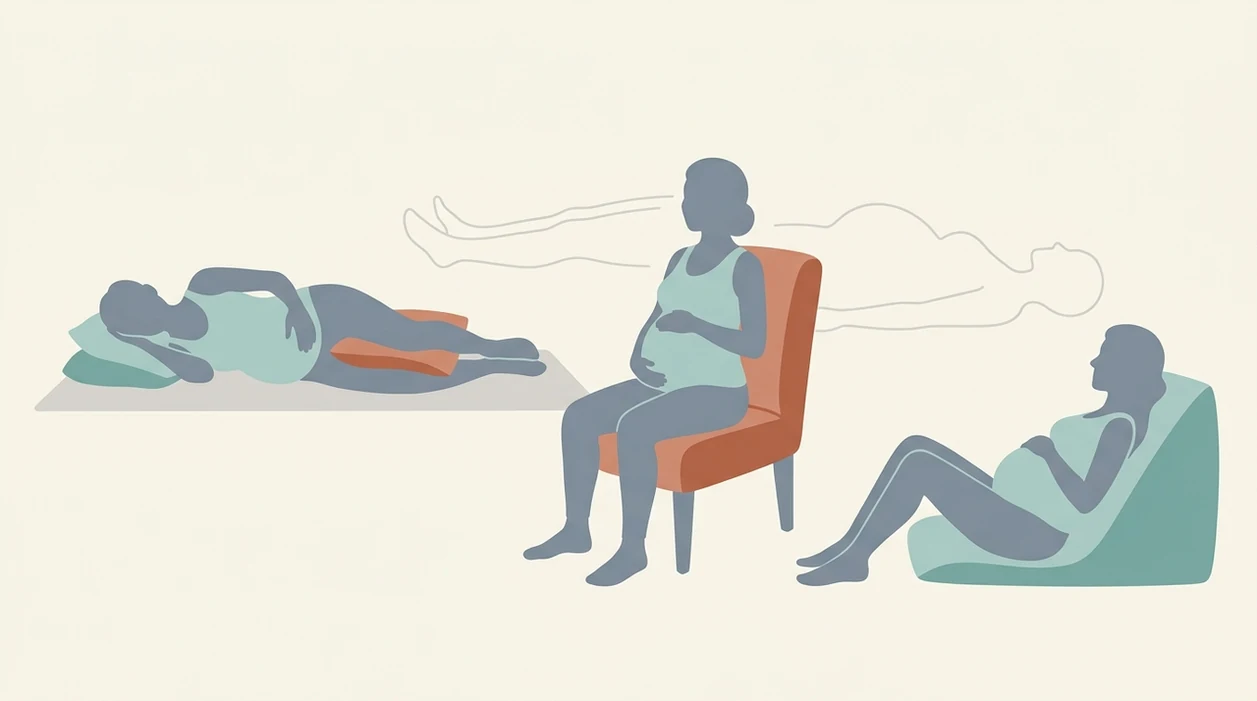
The safest third trimester meditation positions are side-lying with support, seated upright, or reclined around 45 degrees. Position matters because lying flat on your back can compress major blood vessels after mid-pregnancy, which may cause dizziness, nausea, or shortness of breath; ACOG advises avoiding supine exercise positions after the first trimester source.
Left side-lying is often most comfortable. Place a pillow between the knees, another under the bump, and let the sheet touch the ankles without pulling. Some nights, that tiny detail is the thing that lets the body settle.
If you feel lightheaded mid-session, roll to your left side, sit up slowly, pause the audio, and take normal breaths. If symptoms do not ease quickly, stop meditating and contact your provider. Clinicians typically recommend changing position promptly if late-pregnancy dizziness occurs while lying on your back.
Medical Advice Triggers for Pregnancy Meditation
Ask your maternity provider before starting a new meditation or hypnobirthing routine if you have preeclampsia, placenta previa, preterm labor risk, significant bleeding, fetal growth concerns, or another high-risk diagnosis. Meditation may still be possible, but the plan should fit your care.
Mental health history matters too. Trauma, panic disorder, severe depression, dissociation, or intrusive thoughts can make certain visualizations feel unsafe. A trauma-informed practitioner may suggest eyes-open practice, grounding through touch, or shorter audio.
Stop and call your provider if you notice chest pain, fainting, severe headache, vision changes, regular painful contractions, bleeding, fluid leaking, reduced fetal movement, or breathlessness that does not settle.
Meditation and hypnobirthing complement prenatal appointments, monitoring, and evidence-based pain relief. They do not replace them. If you are comparing safety claims more broadly, the related question are hypnobirthing apps safe deserves the same careful lens.
How Hypnobirthing Meditation Integrates with Hospital Care
Hypnobirthing is not all-or-nothing. It can sit beside an epidural, gas-and-air, water immersion, sterile water injections, or other pain relief your hospital offers.
A practical birth plan can say: “I may use guided meditation audio, breathing cues, dim lighting, and affirmations for coping.” That wording helps the midwife understand your preferences without making your plan brittle. I’ve seen curtain rings slide at intake while someone keeps one earbud in and breathes through the blood pressure cuff tightening. Very normal. Very human.
Apps such as HypnoBirth App can be used for guided sessions and a contraction timer during active labor, as long as they do not distract from medical guidance. ZenPregnancy users may approach this similarly. NHS and hospital midwife care generally allow relaxation tools when they fit the clinical situation, but staff instructions come first. If timing contractions raises questions, learn what a timer can and cannot tell you in can contraction timer tell labor.
Four Misconceptions About Pregnancy Meditation Safety
Can pregnancy meditation trigger preterm labor, reduce oxygen, or fail if it does not remove pain? These are common fears, but they often mix gentle meditation with techniques that are not used in typical prenatal mindfulness programs.
First, there is no evidence that gentle relaxation or visualization triggers preterm labor in low-risk pregnancies. If you already have preterm labor risk, ask your provider for individual advice.
Second, comfortable paced breathing does not reduce oxygen to the baby. Long breath holds are different and should be avoided.
Third, you do not need to lie flat to meditate effectively. Side-lying and supported seated practice are often safer in late pregnancy.
Fourth, meditation is still useful if pain remains. The aim is better coping, less fear, and more choice between surges. The cold drink with the bendy straw may still be needed. For a fuller discussion of pain options, read can hypnobirthing replace pain relief.
Limitations
Meditation safety evidence is encouraging, but it has real limits. The studies vary in format, length, teacher training, and outcomes, which makes broad claims harder to prove.
- Many trials have small sample sizes or mixed interventions, such as yoga plus meditation.
- Meditation cannot promise shorter labor, lower cesarean rates, or less medication for every person.
- Hypnobirthing does not prevent or treat preeclampsia, hemorrhage, fetal distress, infection, or placental complications.
- Some people with trauma history, panic disorder, or severe depression may feel worse during body scans or visualizations.
- App-based programs cannot replace personalized guidance from a clinician, therapist, midwife, doula, or trained teacher in complex cases.
- The Cochrane review on relaxation for labor pain found possible benefit, but the evidence quality was low to moderate.
- A phone-based practice also raises practical issues, including notifications, battery life, and pregnancy app privacy.
A subscription reminder on a calendar is not the same as individualized care. Helpful, yes. Not enough for every situation.
See also: Hypnobirthing App Evidence: What Research Supports Digital Birth Preparation?.
See also: First Trimester Meditation App for Anxiety, Sleep, and Early Pregnancy Calm.
See also: Fourth Trimester Meditation: Gentle Audio Support for the First Weeks After Birth.
See also: Pregnancy Panic Attack Meditation: Grounding Steps and When to Get Help.
Read more
- App To Help Me Sleep While Pregnant
- App To Help Me Stay Calm During Labor
- App To Help Pregnancy Anxiety At Night
- Best Pregnancy Meditation App
- Calm vs Hypnobirthing App for Pregnancy
- Find Calm Birth Preparation
- First Trimester Meditation App Guide
- Fourth Trimester Meditation Guide
- Free Pregnancy Meditation App
- Guided Meditation for Pregnancy: Calm Birth Prep
- Headspace Pregnancy Meditation Alternative
- Hospital Bag Meditation App Checklist
Best Pregnancy Meditation Safety App for Calm Third-Trimester Practice
HypnoBirth App supports gentle pregnancy meditation and hypnobirthing practice with calming audio designed for comfort, relaxation, and birth preparation. With 200k+ users and ORCHA NHS certification, it can be a reassuring option when used alongside normal maternity care and medical advice when needed.
Best for
- Third-trimester relaxation and breathing practice
- Gentle hypnobirthing audio for pregnancy and birth preparation
Limitations
- It does not replace advice from a midwife, doctor, or maternity care team
- You should stop and seek medical guidance if symptoms feel unusual, painful, or concerning
Frequently Asked Questions
Is pregnancy meditation safe in the third trimester?
Yes, pregnancy meditation is generally safe in the third trimester when it is gentle, comfortable, and not used as a substitute for medical care. Choose positions that support your bump, avoid lying flat if it makes you dizzy or breathless, and stop if you feel unwell. Speak to your midwife or doctor if you have pain, bleeding, reduced baby movements, severe headaches, or any worrying symptoms.
Can I start pregnancy meditation at 38 weeks?
Yes, you can start pregnancy meditation at 38 weeks if you feel comfortable and have no medical advice against relaxing practices. Short daily sessions can help you practise breathing, focus, and calm before labour. Keep expectations realistic, as meditation supports coping but does not guarantee a specific birth outcome.
What is the safest position for meditation in late pregnancy?
The safest position is usually a supported side-lying, semi-reclined, or upright seated position that lets you breathe easily and feel stable. Many people prefer the left side or a chair with back support in the third trimester. Avoid any position that causes dizziness, numbness, breathlessness, or pressure discomfort.
Is it safe to lie on my back during pregnancy meditation?
No, lying flat on your back is not recommended for many people in the third trimester, especially if it causes dizziness, nausea, or breathlessness. A semi-reclined position with pillows or a side-lying position is usually more comfortable. If you accidentally wake or finish a session on your back, simply roll onto your side and mention concerns to your midwife if symptoms occur.
Can meditation help with pregnancy anxiety before birth?
Yes, meditation can help some people manage pregnancy anxiety by calming breathing, reducing tension, and improving a sense of control. It is best used as one supportive tool alongside sleep, social support, antenatal education, and professional care when needed. If anxiety feels overwhelming, causes panic, or affects daily life, contact your midwife, GP, or mental health professional.
Is hypnobirthing meditation safe for first-time mums?
Yes, hypnobirthing meditation is generally safe for first-time mums when it focuses on relaxation, breathing, and positive coping skills. It can help you become familiar with labour sensations and practise staying calm during contractions. It should not replace birth planning with your midwife or advice about your individual pregnancy risks.
Can pregnancy meditation replace an epidural or other pain relief?
No, pregnancy meditation does not replace an epidural or medical pain relief. It may help you cope with fear, tension, and discomfort, but you can still choose an epidural, gas and air, or other options if you want or need them. Meditation works well as part of a flexible birth plan rather than an all-or-nothing approach.
Is it safe to use a pregnancy meditation app instead of a hypnobirthing class?
Yes, a pregnancy meditation app can be a safe and convenient option if it uses gentle audio, clear guidance, and pregnancy-appropriate content. A class may offer personalised teaching, partner practice, and chances to ask questions, while an app is often easier to use daily at home. Choose the format that fits your needs, and ask your care team if you have specific medical concerns.
How long should pregnancy meditation sessions be in the third trimester?
A safe session length is usually 5 to 20 minutes, depending on your comfort, energy, and position. Shorter sessions are fine, especially if you are tired, restless, or close to your due date. Stop or change position if you feel light-headed, breathless, in pain, or unusually uncomfortable.
Can pregnancy meditation trigger labour or contractions?
No, ordinary pregnancy meditation is not proven to trigger labour in a healthy third-trimester pregnancy. Relaxation may make you more aware of Braxton Hicks contractions or body sensations, but it should not be used to induce labour. Contact your maternity unit if contractions are regular before 37 weeks, if your waters break, or if you notice bleeding or reduced movements.
What symptoms mean I should stop meditating and seek medical advice in pregnancy?
Stop meditating and seek medical advice if you have reduced baby movements, vaginal bleeding, severe abdominal pain, chest pain, fainting, severe headache, vision changes, or sudden swelling. These symptoms need medical assessment and should not be managed with relaxation alone. If something feels wrong, contact your midwife, maternity triage, or emergency services according to local guidance.
What should I look for in safe pregnancy meditation audio?
Safe pregnancy meditation audio should be gentle, non-alarming, and designed for pregnancy or birth preparation. Look for guidance that encourages comfortable positioning, normal breathing, choice, and flexibility rather than promising a pain-free or risk-free birth. Avoid tracks that discourage medical care or make you feel guilty about using interventions.