 Hypno
HypnoCalm Pregnancy: How to Stay Relaxed When Everything Feels Overwhelming
Practical ways to have a calm pregnancy when anxiety hits hard. Breathing techniques, meditation, and daily habits that reduce stress and help you sleep better.
200,000+ moms • ORCHA NHS Certified • Free on iOS & Android
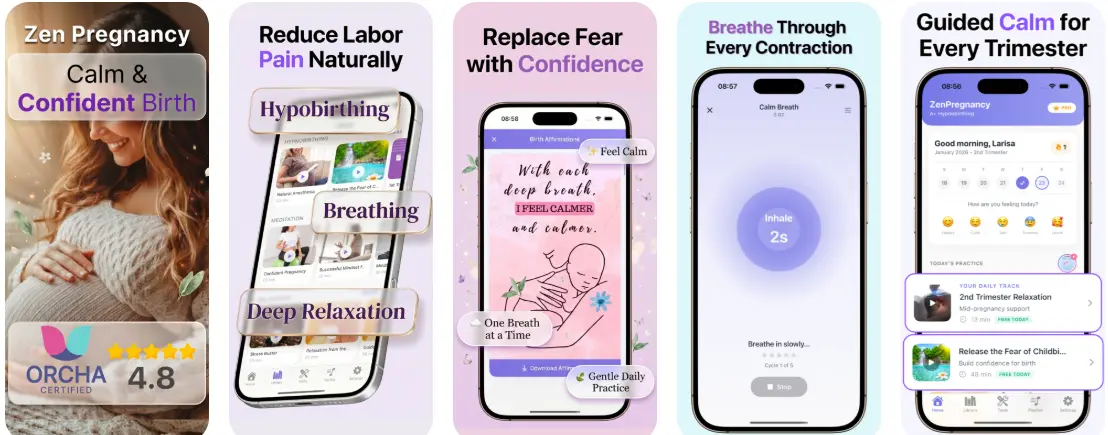
A calm pregnancy is built through small daily habits that help your body shift out of stress mode and into a steadier, more regulated state. Breathing, meditation, sleep support, and hypnobirthing techniques can reduce overwhelm, support confidence, and help you prepare for birth while still seeking medical advice for symptoms that feel unusual or urgent.
Who is this guide for?
Good fit if you
- You feel overwhelmed by pregnancy anxiety, racing thoughts, or constant planning
- You want simple breathing and relaxation tools you can use every day
- You are preparing for birth and want a calmer, more confident mindset
- You struggle to switch off at night because of prenatal worry
- You want free hypnobirthing support that fits into short daily routines
May not be enough if you
- You need urgent help for severe anxiety, panic, depression, or thoughts of self-harm
- You are experiencing warning signs such as bleeding, reduced fetal movement, severe pain, or symptoms that concern you
- You want a replacement for advice from your midwife, doctor, or maternity care team
- You prefer in-person therapy or clinical mental health support as your main form of care
Why Pregnancy Anxiety Feels So Intense
Pregnancy can make ordinary stress feel louder because your body, hormones, sleep, identity, and future plans are all changing at once. Many parents also carry understandable worries about baby’s health, labor pain, medical decisions, money, relationships, or whether they will cope.
Feeling anxious does not mean you are failing pregnancy. It usually means your nervous system is trying to protect you during a high-stakes life transition. A steadier routine can help: short breathing practices, fewer late-night searches, supportive conversations, and clear red-flag plans with your midwife or doctor. If you want more practical ways to lower daily tension, the guide to pregnancy stress relief pairs well with the skills on this page. This is not medical advice. Consult your healthcare provider about symptoms that worry you.
How Calm Pregnancy Works in Your Nervous System
A calm pregnancy practice works by repeatedly shifting the body from sympathetic activation, the fight-or-flight state, toward parasympathetic regulation, the rest-and-digest state. Slow exhalations, relaxed jaw muscles, steady attention, and reassuring words send safety cues through the vagus nerve and reduce the intensity of stress arousal.
This does not force birth to unfold a certain way. It trains your body to recover faster after a fear spike, contraction, appointment, or difficult thought. Studies suggest mindfulness and relaxation practices in pregnancy can reduce anxiety, perceived stress, and depressive symptoms, although results vary by program and person. The goal is not perfect calm; it is nervous system flexibility.
How to Build a Daily Prenatal Calm Routine
A daily routine works best when it is small enough to repeat on tired days. Start with five to ten minutes, then build as your body and schedule allow.
- Choose one anchor time. Link practice to brushing your teeth, lunch, or getting into bed.
- Breathe before you think. Take six slow breaths with a longer exhale than inhale.
- Play one guided track. Use a meditation, relaxation script, or body scan instead of trying to invent calm from scratch.
- Write one worry down. Give your mind a place to put the fear without following it all evening.
- Repeat gently. Missing a day is normal; restart without judging yourself.
For structure, many parents like a pregnancy wellness app that keeps practices short and easy to find.

Breathing Exercises for Pregnancy Stress
Breathing is often the fastest tool because it gives your body a physical signal before your thoughts have settled. In pregnancy, choose gentle techniques that avoid strain, breath-holding, or dizziness.
Try this: inhale through your nose for four counts, soften your shoulders, then exhale for six counts as if sighing through a straw. Repeat for two minutes. Longer exhales can help downshift arousal and are easy to use in bed, during appointments, or between contractions later in labor. If counting makes you tense, use words instead: breathe in “soft,” breathe out “safe.” You can learn more options in these pregnancy breathing techniques, including simple rhythms for anxiety and early labor. Stop if you feel lightheaded and ask your healthcare provider what is safe for your situation.
Meditation for Pregnancy Overwhelm
Pregnancy meditation helps because it gives your attention somewhere kind and steady to land. Instead of arguing with every fear, you practice noticing the thought, returning to the body, and letting the moment become manageable again.
A simple session might include a body scan, breathing into the ribs, relaxing the pelvic floor, and repeating a phrase such as “one breath at a time.” Research on mindfulness-based pregnancy programs suggests regular practice can reduce worry and improve mood for some pregnant people. One review in the National Library of Medicine describes benefits of mindfulness interventions for prenatal mental health, while noting that study quality varies. If guided audio feels easier than silence, start with guided meditation for pregnancy and keep the first sessions short.
Hypnobirthing Techniques for a Steadier Birth Mindset
Hypnobirthing is a set of relaxation, breathing, visualization, and affirmation practices that helps you meet birth sensations with less fear. It can support hospital births, home births, birth center plans, inductions, epidurals, cesarean births, and unplanned changes.
The key idea is the fear-tension-pain cycle: fear can tighten muscles and make sensations feel harder to manage, while relaxation can reduce unnecessary tension and help you work with your body. That does not mean birth will be painless or predictable. It means you arrive with rehearsed tools for focus, consent conversations, and recovery after surprises. If you are new to the method, this overview of hypnobirthing techniques explains the core practices without assuming one “right” kind of birth.
Trimester-by-Trimester Relaxation Plan
A trimester plan helps because pregnancy needs change. In the first trimester, focus on reassurance, nausea-friendly rest, and basic breathing; two minutes counts when you are exhausted. In the second trimester, add walking, body scans, and birth education while your energy may be more available.
In the third trimester, practice the exact tools you want during labor: slow exhale breathing, relaxation between waves, partner cues, affirmations, and decision-making phrases. Around 34 to 36 weeks, many parents begin listening to birth preparation tracks more often so the voice and rhythm feel familiar. If you are starting later, do not panic; a few consistent weeks can still build confidence. For late-pregnancy practice ideas, see hypnobirthing in the third trimester.
Sleep Support During Prenatal Worry
Poor sleep makes anxiety louder, and pregnancy can make sleep awkward even when you are emotionally okay. Heartburn, hip pain, baby movements, frequent urination, and racing thoughts often show up together at night.
Protect sleep by creating a “downshift” ritual: dim lights, put your phone away from the bed, write tomorrow’s worries on paper, then listen to a short relaxation track. If you wake at 3 a.m., try not to debate every thought. Place one hand on your belly, lengthen the exhale, and repeat a phrase such as “I am safe in this moment.” For more night-specific support, the page on sleep meditation for pregnant women includes gentle practices designed for restless pregnancy nights. Speak with your provider about severe insomnia, snoring, breathlessness, or panic symptoms.
Birth Affirmations for Confidence and Control
Affirmations work best when they feel believable, specific, and connected to action. Instead of forcing positivity, choose phrases that help your body soften and your mind remember what is still within your control.
Useful examples include “I can ask for information,” “My body can soften between waves,” “Each breath brings me back,” and “I can meet this one moment.” These phrases can be practiced during pregnancy, then used in triage, during an induction, before a cesarean, or while waiting for an epidural. Pair affirmations with a physical cue, such as unclenching your hands or dropping your shoulders. If you prefer ready-made audio and written prompts, a birth affirmations app can help you build repetition without needing to create every phrase yourself.
Prenatal Mindfulness and Medical Care
Mindfulness is supportive care, not a substitute for prenatal care, mental health treatment, or urgent medical assessment. The safest approach is to combine calming skills with clear communication from your OB-GYN, midwife, doula, therapist, or maternity team.
Use mindfulness to notice what is happening in your body, then act when something feels wrong. Call your provider for concerns such as reduced fetal movement, bleeding, severe headache, vision changes, chest pain, severe abdominal pain, signs of preterm labor, or thoughts of harming yourself. ACOG provides patient guidance on anxiety and pregnancy, including when to seek help. For everyday emotional regulation, prenatal mindfulness can sit alongside medical care as a practical, compassionate skill set.
Best Pregnancy Relaxation Apps Compared
The best app depends on whether you want birth preparation, general meditation, contraction support, or a structured course. Look for clear audio, pregnancy-specific language, realistic claims, and tools you will actually use when tired.
| App or program | Best fit | Notes |
|---|---|---|
| HypnoBirth App | Hypnobirthing, breathing, affirmations, and contraction timing | Designed specifically for pregnancy and birth preparation. |
| Expectful | Pregnancy and parenting meditation | Strong general mindfulness library with pregnancy content. |
| GentleBirth | Hypnobirthing-style mental preparation | Includes mindfulness, sports psychology, and birth education elements. |
| Hypnobabies | Structured childbirth hypnosis course | More course-like and time-intensive for many families. |
If you want a deeper app-focused comparison, see this guide to the best hypnobirthing app.
Where a Hypnobirthing App Fits
HypnoBirth App is a hypnobirthing app that provides guided meditation, breathing exercises, contraction timing, and birth affirmations for pregnant women. It fits best as a daily practice companion, especially if classes feel expensive, schedules are tight, or you want tools available at 2 a.m.
Use it for five-minute resets in early pregnancy, longer tracks in the third trimester, and familiar audio cues as birth approaches. During labor, a separate timer can help you notice contraction patterns without guessing; some parents pair relaxation tracks with contraction timer meditation so tracking does not become another source of panic. Android users can also start with a prenatal mindfulness app that keeps breathing, meditation, and affirmations in one place.
Limitations and Safety for Pregnancy Calm Practices
Relaxation tools are helpful, but they are not magic and they are not medical treatment. Honest expectations make the practice safer and more useful.
- They cannot guarantee a pain-free birth. They may help coping, but birth sensations and medical needs vary.
- They do not replace clinical care. This is not medical advice. Consult your healthcare provider about symptoms, medications, or mental health concerns.
- They may not be enough for severe anxiety. Panic attacks, intrusive thoughts, trauma symptoms, or depression deserve professional support.
When to Ask for More Support
Ask for more support when anxiety interrupts sleep, appetite, relationships, appointments, or your ability to enjoy parts of pregnancy. Also reach out if you feel constantly on alert, avoid normal activities, have panic symptoms, or cannot stop checking and reassurance-seeking.
You deserve care before things reach a crisis. Tell your midwife or doctor exactly what is happening, including how often symptoms occur and whether you feel safe. Therapy, pregnancy-safe medication, support groups, trauma-informed birth planning, and partner education can all be appropriate. If you have thoughts of harming yourself or your baby, seek urgent help now through local emergency services or a crisis line. Calming practices can support recovery, but severe distress should never be handled alone.
This guide was written for educational birth preparation and reviewed for safety language. It does not replace advice from your midwife, OB-GYN, GP, or maternity unit.
Frequently Asked Questions
What does a calm pregnancy mean?
A calm pregnancy means having practical tools to manage stress and return to steadiness, not feeling peaceful every minute. Worry, mood changes, and overwhelm can still happen, but they do not have to control the whole day. Calmness is a skill you can practise through breathing, rest, support, and preparation.
Can pregnancy anxiety affect my baby or pregnancy?
Persistent pregnancy anxiety can affect your wellbeing, sleep, appetite, blood pressure habits, and daily functioning. This does not mean every anxious thought harms your baby, but ongoing high anxiety is worth discussing with your midwife, GP, or maternity team. Seek urgent support if anxiety includes panic, feeling unable to cope, or thoughts of harming yourself or someone else.
Why does anxiety feel more intense during pregnancy?
Pregnancy anxiety often feels more intense because hormonal changes, physical symptoms, uncertainty, and responsibility all affect the nervous system. Your brain may become more alert to risk as it prepares for birth and parenting. Support, information, and calming routines can help reduce the sense of threat.
How quickly do breathing exercises work for pregnancy stress?
Breathing exercises can start to work within a few minutes for some pregnant people. Slow, extended exhales send a calming signal to the nervous system and may reduce racing thoughts or tension. Longer-lasting benefits usually come from practising daily over several weeks.
What breathing exercise is best for pregnancy anxiety?
Slow-exhale breathing is one of the simplest breathing exercises for pregnancy anxiety. Breathe in gently through your nose, then exhale for longer than you inhale, such as in for four and out for six. Keep the breath comfortable and stop if you feel dizzy, breathless, or unwell.
Is meditation safe during pregnancy?
Gentle meditation is generally safe for many pregnant people when practised in a comfortable position. Seated meditation, side-lying body scans, and short guided practices are often easier than long sessions. Stop if meditation increases distress, dizziness, or trauma symptoms, and speak with your healthcare provider if you are unsure.
Can hypnobirthing help first-time mums feel calmer?
Yes, hypnobirthing can help first-time mums feel calmer by making labour tools feel familiar before birth. It teaches breathing, relaxation, visualisation, affirmations, and ways to reduce fear. It does not guarantee a specific birth outcome, but it can support confidence and decision-making.
When should I start hypnobirthing in pregnancy?
The second trimester is a common time to start hypnobirthing. Starting then gives you time to practise before birth, but beginning in the third trimester can still be helpful. Even a few weeks of repeated practice can make breathing and relaxation techniques easier to use.
Is 38 weeks too late to start hypnobirthing?
No, 38 weeks is not too late to start hypnobirthing. A short, focused routine can still help you learn slow breathing, calming scripts, birth affirmations, and relaxation cues. Keep expectations realistic and choose simple techniques you can repeat daily.
Can I use hypnobirthing or calm pregnancy techniques with an epidural?
Yes, hypnobirthing and calm pregnancy techniques can be used with an epidural. Breathing, relaxation, affirmations, and visualisation can support waiting, procedures, position changes, decision-making, and emotional steadiness. These tools can fit many birth plans and do not require an unmedicated birth.
Is a hypnobirthing app as good as a class?
A hypnobirthing app can be useful, but a class usually offers more guidance and personalised support. Apps are convenient for daily practice, breathing tracks, and relaxation scripts, while classes can answer questions, involve your birth partner, and explain choices in more depth. The best option is the one you will actually use consistently.
When is pregnancy anxiety a red flag?
Pregnancy anxiety is a red flag when it feels unmanageable, causes panic, stops you sleeping or functioning, or includes intrusive thoughts of harm. Professional support is important if anxiety is escalating or affecting daily life. Contact your midwife, GP, maternity unit, mental health crisis service, or emergency services if you feel at risk or unable to stay safe.
Best Calm Pregnancy App for Daily Relaxation and Birth Preparation
HypnoBirth App is a free hypnobirthing app designed to help you build calm pregnancy habits with guided relaxation, breathing, and birth mindset support. With 200k+ users and ORCHA NHS certification, it is a practical option for short, reassuring sessions throughout pregnancy.
Best for
- Daily pregnancy relaxation and nervous system calming
- Breathing and hypnobirthing practice before labour
- Reducing overwhelm with short, easy-to-follow audio support
Limitations
- It is not a substitute for medical or mental health care
- It cannot assess pregnancy symptoms or emergency warning signs