 Hypno
HypnoKick Counter App for Pregnancy: A Calm, Safe Guide
Use kick counting as a gentle third-trimester check-in, not a replacement for medical advice or in-person assessment.
200,000+ moms • ORCHA NHS Certified • Free on iOS & Android
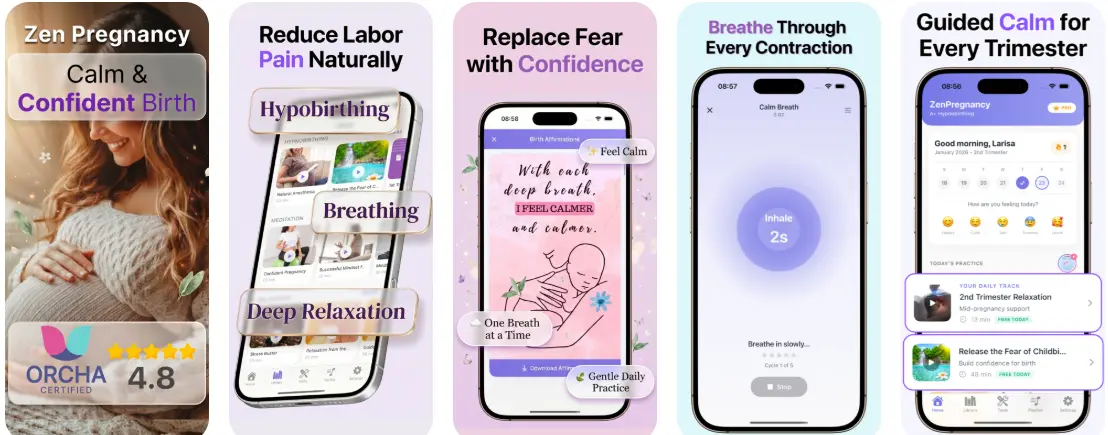
A kick counter app pregnancy tool can help you notice your baby’s usual movement pattern, especially in the third trimester. If movements feel slower, weaker, fewer, or different from normal, contact your midwife, OB, or maternity triage urgently rather than relying on an app result.
What a Kick Counter App Does
A kick counter app helps you time and record your baby’s movements, usually during a quiet period when your baby is often active. Instead of trying to remember vague impressions, you can log movements and begin to recognise your baby’s normal pattern. This can be reassuring for some parents and may support bonding, especially when used as a calm daily routine rather than constant monitoring. It is important to remember that an app is only an aid. It cannot check your baby’s wellbeing, diagnose a problem, or replace antenatal care.
When to Start Counting Kicks
Many parents begin paying closer attention to regular movement patterns in the third trimester, often around 28 weeks, or earlier if advised by their care team. Choose a time of day when your baby is usually active, sit or lie on your side, and focus on movements without distractions. Kicks, rolls, swishes, jabs, and stretches can all count as movement. If you have a high-risk pregnancy, an anterior placenta, twins, or anxiety about movement, ask your midwife or OB how they prefer you to monitor changes.
How Many Kicks Are Normal?
A commonly used guide is to look for about 10 movements within 2 hours when you are deliberately counting at an active time. The Cleveland Clinic explains this as a practical way to learn your baby’s pattern, not a strict guarantee that everything is fine. Some babies reach 10 movements quickly, while others take longer depending on sleep cycles and time of day. Your own baby’s usual pattern matters most, so a noticeable change deserves attention even if the number looks acceptable.

When to Call Your Care Team
Stop counting and call your midwife, OB, or maternity triage if movements are clearly reduced, weaker, slower, absent, or unusual for your baby. Do not wait until tomorrow, drink something cold to “test” the baby, or use an app result as reassurance if your instinct says something is different. The NHS advises getting checked promptly for reduced fetal movement. In-person assessment may include listening to the heartbeat or monitoring, which an app cannot provide. If you cannot reach your usual team, seek urgent local maternity care.
Using Kick Counts Without Spiralling
Kick counting is most helpful when it feels like a grounded check-in, not a pressure to monitor every sensation all day. Pick one predictable time, breathe slowly, place a hand on your bump, and record what you notice. If counting increases your anxiety, talk with your care team about a plan that feels safer and more manageable. You may also find it helpful to pair movement awareness with relaxation practices from the calm-pregnancy silo, such as calm pregnancy breathing or guided rest.
Choosing a Pregnancy App
Look for a simple design, clear movement logs, privacy-conscious settings, and easy access to other pregnancy tools without making medical promises. HypnoBirth App includes hypnobirthing and pregnancy meditation support, and you can explore related tools in our pregnancy app with kick counter and contraction timer guide. Before using any app, review how your data is handled in the pregnancy app privacy page. If it feels right for you, you can also download the app and use it alongside, not instead of, your maternity care.
Limitations
- A kick counter app cannot diagnose fetal distress or confirm that your baby is well.
- Normal-looking counts should not override your concern about reduced, weaker, or unusual movement.
- Frequent checking can increase anxiety for some parents, so ask your care team for personalised guidance.
This is not medical advice. Consult your maternity care team for personalized guidance.
Frequently Asked Questions
When should I start using a kick counter app in pregnancy?
Many people start using a kick counter app from around 28 weeks of pregnancy. This is when baby movements often become more recognisable as a pattern, although your midwife or doctor may advise a different approach for your pregnancy.
Is 38 weeks too late to start counting baby kicks?
No, 38 weeks is not too late to start paying close attention to your baby’s movements. If you notice fewer, weaker, slower, or unusual movements at 38 weeks, contact your midwife, maternity triage unit, or doctor straight away rather than waiting to collect more app data.
What does a kick counter app do during pregnancy?
A kick counter app helps you record your baby’s movements over time. It can make it easier to notice your baby’s usual pattern, but it cannot check your baby’s wellbeing or replace advice from your maternity care team.
How many kicks are normal in pregnancy?
There is no single number of kicks that is normal for every pregnancy. Many people are taught to look for around 10 movements within 2 hours, but your baby’s usual pattern and any change from that pattern are more important than a number alone.
What should I do if I feel fewer than 10 movements in 2 hours?
Contact your midwife, doctor, or maternity triage unit if you feel fewer than around 10 movements in 2 hours or notice reduced movement compared with usual. Do not wait until the next day, drink something cold, or rely on an app to reassure you.
Do baby hiccups count as kicks in a kick counter app?
Baby hiccups are usually not counted in the same way as kicks, rolls, or stretches. Hiccups often feel rhythmic and repetitive, while kick counting usually focuses on distinct movements, so follow the method recommended by your midwife or doctor.
Can a kick counter app help with pregnancy anxiety?
A kick counter app can help some people feel calmer by giving them a simple routine. For others, repeated checking can increase pregnancy anxiety, so it is best used with clear guidance from your care team and a plan for when to call for help.
When should I call my midwife or doctor about reduced baby movements?
Call your midwife, doctor, or maternity triage unit straight away if your baby’s movements are fewer, weaker, slower, absent, or unusual for you. An app cannot tell you that your baby is safe, and reduced movements should be assessed by a qualified professional.
Should first-time mums use a kick counter app?
Yes, first-time mums can use a kick counter app if it helps them learn their baby’s movement pattern. It is still important to ask your midwife or doctor when to start, how to count, and what changes should prompt an urgent call.
Does having an epidural affect kick counting in labour?
An epidural is not a reason to use a kick counter app as a safety check in labour. Once you are in labour or receiving maternity care, your team will advise how your baby should be monitored, which may include clinical monitoring rather than app-based counting.
Is a kick counter app better than a pregnancy or hypnobirthing class?
No, a kick counter app and a pregnancy or hypnobirthing class do different things. An app records movements, while a class can teach preparation, relaxation, decision-making, and when to seek help; neither replaces medical assessment if movements change.
When should I stop using a kick counter app and get checked instead?
Stop counting and seek urgent advice if your baby’s movements feel reduced, absent, weaker, slower, or different from normal. Your maternity team can assess you and your baby in person, which a kick counter app cannot do.
Best Kick Counter App Companion for Staying Calm in Pregnancy
HypnoBirth App is not a medical kick counter, but it can support the emotional side of monitoring your baby’s movements. With free hypnobirthing tools, calming tracks, and ORCHA NHS certification, it can help you stay grounded while following your midwife or doctor’s advice.
Best for
- Staying calm while tracking baby movements
- Reducing anxiety around pregnancy checks
- Pairing kick counting with relaxation and breathing practice
Limitations
- It does not replace medical advice or assessment
- It is not designed to diagnose changes in fetal movement