 Hypno
HypnoPregnancy App With Kick Counter and Contraction Timer
Track fetal movement and contractions in one simple routine while staying guided by your maternity team.
200,000+ moms • ORCHA NHS Certified • Free on iOS & Android
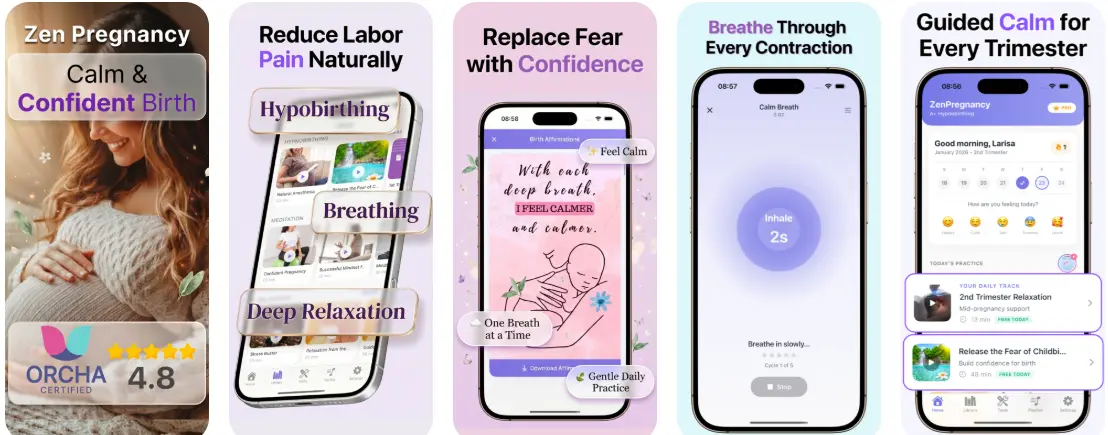
A pregnancy app with kick counter and contraction timer helps you record daily baby movements in late pregnancy and time contractions when labor may be starting. It should support awareness and decision-making, but it cannot diagnose problems or replace advice from your midwife, OB, hospital, or birth center.
Why Combine Kick Counting and Contraction Timing?
A combined kick counter and contraction timer can be useful because the final weeks of pregnancy often involve two different types of tracking: your baby’s usual movement pattern and your body’s contraction pattern. Keeping both in one place may make it easier to notice changes, share information with your care team, and feel more organized. The goal is not to turn pregnancy into a checklist, but to support calm awareness. If anything feels unusual, worrying, painful, or urgent, contact your maternity unit or clinician rather than waiting for an app trend to confirm it.
How to Use a Kick Counter Safely
Many parents start daily movement awareness around 28 weeks, or earlier or later if advised by their clinician. A common approach is to choose the same time each day, ideally when your baby is usually active, then sit comfortably or rest on your side and record how long it takes to feel around 10 movements. Movements can include kicks, rolls, swishes, or jabs; hiccups are usually counted separately. The NHS advises getting help promptly if your baby’s movements slow down, stop, or change from their normal pattern: NHS fetal movement guidance.
What a Contraction Timer Should Track
A contraction timer should make it simple to log when each contraction starts and stops, how long it lasts, how far apart contractions are, and optionally how intense they feel. This can help you describe what is happening when you call your midwife, hospital, or birth center. If you want a focused tool, see our contraction timer app guide and our contraction timer safety notes. Timing is especially important if contractions are regular before 37 weeks, very painful, unusually frequent, or accompanied by bleeding, fluid loss, fever, or reduced movements.

When to Call Your Hospital or Birth Center
Call your maternity unit, OB team, or emergency services immediately if you notice reduced fetal movement, bleeding, waters breaking, severe or continuous abdominal pain, symptoms of preterm labor, or you simply feel that something is wrong. For contractions, your care team may give you a timing pattern to watch for, but advice varies based on pregnancy history, distance from hospital, Group B strep status, previous births, and other factors. For a practical overview, read when to call hospital during labor, then follow your local plan.
Where Hypnobirthing Fits In
Hypnobirthing can pair well with tracking because it encourages slow breathing, relaxation, body awareness, and a calmer response to uncertainty. During early labor, you might time a few contractions, then return your attention to breathing, rest, hydration, and comfort measures rather than watching the screen constantly. The HypnoBirth App includes free hypnobirthing and pregnancy meditation support, so it can sit alongside practical tools in a wider labor and delivery app routine. Hypnobirthing may reduce stress for some people, but it should not promise a pain-free birth or replace medical care.
Choosing the Right Pregnancy Tracking Setup
Look for a setup that is quick to open, easy to read while tired, and simple enough to use during real life. Helpful features include clear kick count sessions, contraction start-stop timing, notes for intensity or symptoms, exportable logs, privacy controls, and reminders that do not create anxiety. You can download a supportive app as part of your birth preparation, but keep your care team’s phone number and triage instructions close too. The CDC also emphasizes regular prenatal care as a key part of healthy pregnancy: CDC pregnancy information.
Limitations
- A kick counter cannot confirm that a baby is well if movements feel reduced or different.
- A contraction timer cannot diagnose true labor, preterm labor, or complications.
- App logs may be incomplete if you are sleeping, distracted, in pain, or unable to record consistently.
This is not medical advice. Consult your maternity care team for personalized guidance.
Frequently Asked Questions
When should I start using a kick counter in pregnancy?
Many people start daily kick counting or movement awareness from around 28 weeks of pregnancy. Your midwife or doctor may advise a different plan if you have a higher-risk pregnancy or specific concerns. The aim is to learn your baby’s normal pattern and act quickly if that pattern changes.
How often should I count baby kicks during pregnancy?
A common approach is to check baby movements once a day at a time when your baby is usually active. You do not need to count constantly unless your maternity team has told you to follow a specific routine. If you notice reduced, weaker, or unusual movements, contact your maternity unit or clinician straight away.
What counts as reduced baby movement in pregnancy?
Reduced baby movement means fewer movements, weaker movements, no movements, or a clear change from your baby’s usual pattern. This should be treated as urgent, even if you have felt some movement that day. Call your maternity unit, midwife, or doctor immediately for advice and assessment.
When should I start timing contractions?
Start timing contractions when they become regular, stronger, closer together, or feel different from Braxton Hicks contractions. Record how long each contraction lasts and how far apart they are from the start of one contraction to the start of the next. Follow your hospital, birth centre, or midwife’s guidance about when to call or go in.
What should a contraction timer track?
A contraction timer should track contraction start time, duration, frequency, and pattern over time. Helpful apps also let you add notes about intensity, waters breaking, bleeding, or changes in baby movements. A timer supports decision-making, but your maternity team’s advice should always come first.
Should I call the hospital when contractions are every 5 minutes?
Call your hospital or birth centre when contractions meet the guidance you were given, which may include a regular pattern such as every 5 minutes. Advice can vary depending on whether this is your first baby, your pregnancy history, your distance from hospital, and any risk factors. Call sooner if your waters break, you have bleeding, reduced baby movements, severe pain, fever, or you feel something is wrong.
Is it normal to start timing contractions at 38 weeks?
Yes, it is normal to start timing contractions at 38 weeks if they feel regular or stronger than usual. At 38 weeks, contractions may be early labour, Braxton Hicks, or another pattern your maternity team can help interpret. Seek advice promptly if you have reduced baby movements, bleeding, waters breaking, or any concern.
Can a pregnancy app with a kick counter and contraction timer reduce pregnancy anxiety?
A pregnancy app can help some people feel more organised and reassured by recording movements and contraction patterns. It should not be used to dismiss anxiety, reduced movements, or symptoms that worry you. If pregnancy anxiety feels constant, overwhelming, or affects sleep or daily life, speak with your midwife, GP, or mental health support team.
Can I use a contraction timer if I plan to have an epidural?
Yes, you can use a contraction timer even if you plan to have an epidural. Timing contractions before hospital admission can help you explain your labour pattern to your care team. Once you are in hospital, your midwives or doctors will guide monitoring, pain relief timing, and next steps.
Is a kick counter and contraction timer useful for first-time mums?
Yes, a kick counter and contraction timer can be useful for first-time mums because they provide a simple way to record patterns. First-time parents may find it helpful to see movement routines and contraction spacing written down. The app should be used alongside antenatal education and direct advice from your midwife or doctor.
Is a pregnancy app better than a hypnobirthing class?
No, a pregnancy app is not a replacement for a hypnobirthing class. An app helps you track kicks, contractions, appointments, or notes, while a class teaches breathing, relaxation, birth confidence, and practical coping tools. Many people use both: the app for records and the class for preparation.
Can a pregnancy app replace medical advice during pregnancy or labour?
No, a pregnancy app cannot replace medical advice from a midwife, doctor, hospital, or birth centre. It cannot assess your baby, diagnose labour, confirm safety, or rule out complications. If you feel worried, notice reduced movements, have bleeding, severe pain, waters breaking, or unusual symptoms, seek medical advice immediately.
Best Pregnancy App With Kick Counter and Contraction Timer Support for Calm Birth Prep
HypnoBirth App is a helpful companion if you want your pregnancy tracking setup to include calm, guided preparation alongside tools like kick counting and contraction timing. With free hypnobirthing tracks, 200k+ users, and ORCHA NHS certification, it supports relaxation, breathing, and confidence as you monitor patterns and prepare for labor.
Best for
- Parents who want contraction timing and movement tracking to sit alongside calm birth preparation
- Anyone using kick counts and labor pattern tracking while also practicing hypnobirthing techniques
Limitations
- HypnoBirth App does not replace medical advice or assessment from your maternity team
- Kick counts and contraction patterns should always be discussed with your hospital, midwife, or birth center if you are concerned