 Hypno
HypnoHypnobirthing App Reviews: What Real Users Say in 2026
Honest hypnobirthing app reviews from real users in 2026. Comparing features, audio quality, pricing, and actual birth outcomes across the top apps.
200,000+ moms • ORCHA NHS Certified • Free on iOS & Android
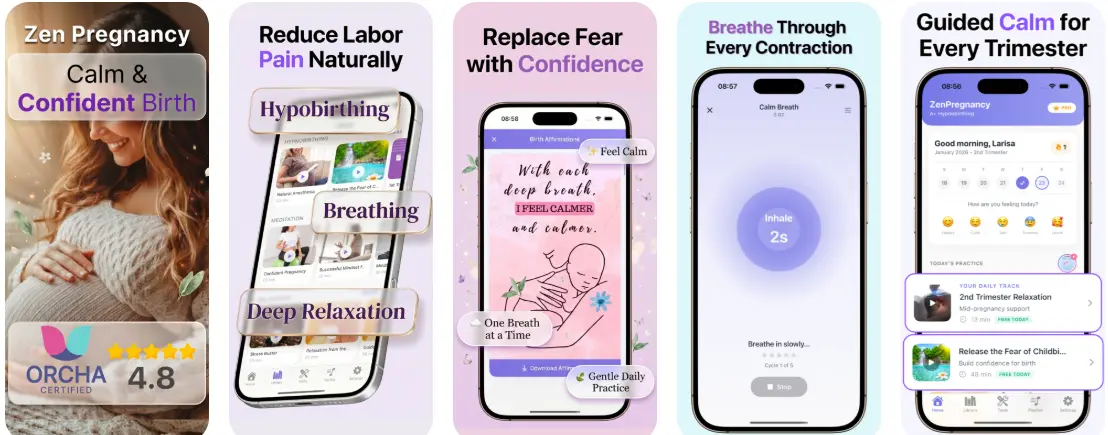
Hypnobirthing app reviews in 2026 should look beyond star ratings and compare evidence, pricing, audio quality, and practical labor tools. The best choice is usually an app that helps you practise calmly during pregnancy and gives you simple breathing, relaxation, and affirmation support when labor begins.
Who is this guide for?
Good fit if you
- Pregnant users who want calm, structured hypnobirthing practice at home
- Birth partners who want simple audio tools to support breathing and relaxation
- Anyone comparing hypnobirthing app reviews for price, credibility, and ease of use
- People who prefer guided audio, affirmations, and practical labor support in one app
May not be enough if you
- Anyone needing urgent medical guidance or clinical decision-making support
- Users who prefer in-person hypnobirthing classes only
- People looking for a guaranteed pain-free birth outcome
- Anyone who does not enjoy audio-based relaxation or guided breathing practice
Why Hypnobirthing App Reviews Matter During Pregnancy Anxiety
Reviews matter because pregnancy anxiety often affects what people actually practice, not just what they intend to practice. The most helpful feedback tells you whether an app feels calming at 2 a.m., during third-trimester insomnia, or when contractions first begin.
Fear can activate the sympathetic nervous system, which is the body’s fight-or-flight state. Hypnobirthing practice aims to pair breathing, relaxation, and reassuring language with safety cues so the body can soften instead of brace. That does not mean every birth becomes easy or intervention-free. It means you may have more tools when decisions feel big. If anxiety is your main concern, combine app practice with grounded support such as pregnancy stress relief techniques and regular conversations with your midwife, OB-GYN, or birth team.
How Hypnobirthing Apps Work During Labor
Hypnobirthing apps work by teaching repeatable nervous-system skills before labor begins: guided relaxation, breath regulation, visualization, affirmations, and focused attention. With repetition, the brain starts linking a voice, phrase, or breathing rhythm with a calmer body response.
That mechanism matters because labor is intense, changing, and often unpredictable. If you have practiced for several weeks, a short audio cue or breathing prompt can become familiar enough to use between surges, during monitoring, in triage, or while waiting for an epidural. Apps do not control baby position, cervical change, induction response, or medical complications. They are preparation tools, not medical treatment. For a skill-by-skill breakdown, see these hypnobirthing techniques for labor.
What Real Users Praise in Birth Preparation Apps
Real users tend to praise the same practical details: a soothing narrator, short sessions, clear structure, and tools that still help when labor becomes intense. Audio quality is not a luxury feature; if the voice feels rushed, harsh, or artificial, many pregnant users stop listening.
Short sessions of about 8 to 20 minutes often get the most repeat use, while longer tracks are especially helpful for bedtime. People also value trimester guidance because the emotional work of week 18 is different from week 38. In-labor features—breathing prompts, affirmations, and contraction timing—usually get the strongest partner feedback because they give the support person something concrete to do. If sleep is your sticking point, a dedicated sleep meditation for pregnant women may help you build the habit gently.

What Research Says About Hypnobirthing and Digital Support
Research suggests hypnosis-based and relaxation-based birth preparation may reduce fear and improve coping for some people, but it does not guarantee a specific delivery outcome. The strongest evidence is usually around anxiety, perceived control, relaxation, and pain-coping skills rather than promises like “no epidural” or “shorter labor.”
A Cochrane review on hypnosis for childbirth found mixed results and emphasized the need for better-quality trials, while still acknowledging that some women report benefits in pain and fear coping. You can review the evidence in the Cochrane Library review on hypnosis for pain management in labour. Digital apps make practice easier to access, but the app format itself is not magic; consistency is the active ingredient. This is not medical advice. Consult your healthcare provider about what is appropriate for your pregnancy.
How to Use a Hypnobirthing App Before Labor
- Start early enough. Begin around the second trimester if you can, or as soon as you find the app in the third trimester. Even two weeks of daily repetition is better than saving it for labor day.
- Practice one core track daily. Choose a short relaxation or breathing session and repeat it until it feels familiar.
- Add birth affirmations. Use phrases that feel believable, not forced, and adjust them for hospital, home, birth center, induction, VBAC, or planned cesarean birth.
- Rehearse with your partner. Let them learn where the labor tools are before contractions start.
- Use it alongside care. Keep attending appointments and ask your clinician about symptoms, risks, or changes in movement.
Hypnobirthing App Comparison: Features, Pricing, and Fit
The best app depends on your learning style, budget, and whether you want pregnancy calm, a full course, or in-labor tools. Here is a practical comparison of well-known options without assuming one app is right for every birth plan.
| App | Best for | Watch for |
|---|---|---|
| HypnoBirth App | Guided meditation, breathing, affirmations, and contraction timing in one pregnancy-focused app | Best if you prefer app-based practice over a long class |
| Expectful | Pregnancy meditation, fertility, postpartum, and general mindfulness content | Less focused on hypnobirthing-specific labor rehearsal |
| Hypnobabies | Structured hypnosis course style with deeper training | May feel more intensive than some users want from an app |
| GentleBirth | Mindfulness, sports psychology, and birth preparation | Interface and content depth may take time to explore |
Best Features to Check Before You Subscribe
Before subscribing, check whether the app supports daily pregnancy practice and real labor moments. A beautiful library is less useful if you cannot quickly find the track you need when contractions are close together.
Look for offline access, short and long audio options, breathing exercises, birth affirmations, partner-friendly tools, and a contraction timer. Check whether the content names different birth paths, including induction, epidural, cesarean birth, home birth, birth center birth, and hospital birth. Inclusive language matters when your plan changes. If you want a deeper ranking by features and use case, compare this guide with our best hypnobirthing app overview and the 2026 update on the best hypnobirthing app for 2026.
Audio Quality, Birth Affirmations, and Labor Breathing
Audio quality is one of the biggest predictors of whether people keep using a birth app. A steady voice, gentle pacing, and non-distracting music can help the body associate listening with safety and release.
Affirmations work best when they are specific and believable. “My body can soften one breath at a time” often lands better than a phrase that feels unrealistic. Breathing guidance should include more than one pattern because early labor, transition, pushing, and surgery prep may call for different rhythms. Many users like combining birth affirmations in an app with a dedicated labor breathing app so the words and breath cues reinforce each other.
Contraction Tracking and In-Labor Support Tools
In-labor tools matter because your brain may not want to navigate a complicated menu during contractions. A useful app should make it easy to start a calming track, follow a breathing cue, or time contractions with minimal tapping.
Contraction timing helps you notice frequency, duration, and pattern, which can support conversations with your birth team. It should not replace medical guidance, especially if your waters break, bleeding occurs, fetal movement changes, or you have risk factors. The NHS offers clear guidance on signs of labour and when to contact your maternity unit. For a calmer approach to timing surges, see how a contraction timer with meditation can support both the birthing person and partner.
Best Use Cases: First Birth, VBAC, and Cesarean Prep
Hypnobirthing apps can support many birth plans when the language is flexible and realistic. First-time parents often use them to reduce fear of the unknown, while experienced parents may use them to process a previous birth and prepare differently this time.
For VBAC, the value is often emotional steadiness: practicing questions, boundaries, and calm decision-making if monitoring or transfer becomes part of the day. For planned cesarean birth, hypnobirthing can support breathing, operating-room anxiety, partner connection, and recovery visualization. It is not only for unmedicated birth. If you are starting from zero, this guide on how to start hypnobirthing pairs well with app practice and birth-team conversations.
Pricing, Free Trials, and Subscription Red Flags
Pricing should be clear before you put in payment details. The most trustworthy apps explain what is free, what requires a subscription, and whether recordings, timers, or courses are locked behind a paywall.
Free content can be enough for daily calm if it includes quality guided audio and basic breathing practice. Paid content may be worth it if you want a full course, partner scripts, postpartum tracks, or more specialized sessions for induction, cesarean birth, or fear release. Red flags include vague medical promises, hard-to-cancel trials, no privacy information, and reviews that sound copied. A good app should make practice easier, not make you feel pressured or inadequate.
Honest Limitations and Safety of Pregnancy Hypnosis Apps
Pregnancy hypnosis apps can be supportive, but they are not a substitute for clinical care, emergency advice, or individualized mental health support. This is not medical advice. Consult your healthcare provider about symptoms, complications, medication, trauma history, or birth-plan decisions.
- They cannot guarantee a pain-free birth, vaginal birth, shorter labor, or avoidance of interventions.
- They may not be enough for severe tokophobia, panic attacks, birth trauma, depression, or PTSD without professional support.
- They cannot assess fetal movement, bleeding, blood pressure, preeclampsia symptoms, ruptured membranes, or infection signs.
Where HypnoBirth App Fits for Calm Birth Practice
HypnoBirth App fits best for someone who wants simple, repeatable hypnobirthing practice without piecing together separate tools. The app focuses on guided meditation, breathing exercises, birth affirmations, and contraction timing, which are the features users most often look for when preparing for labor at home.
It is especially useful if you want one place for pregnancy calm and labor-day support rather than a large library that feels overwhelming. You can start with a hypnobirthing app on iPhone or use the hypnobirthing practice app on Android. Like any birth preparation tool, it works best when practiced consistently and discussed alongside your care plan.
Start Your First Pregnancy Relaxation Session Tonight
The easiest way to begin is to choose one short track and repeat it for the next seven nights. Do not try to master every breathing pattern or affirmation at once; familiarity is more important than perfection.
Put your phone on do not disturb, lie on your left side or sit upright with pillows, relax your jaw, and follow the audio without judging whether you are “doing it right.” If your mind wanders, that is normal. Return to the next breath. Over time, this small ritual can become a reliable cue for calm. Many parents notice the biggest shift after two to three weeks of steady practice, especially when a partner listens too.
This guide was written for educational birth preparation and reviewed for safety language. It does not replace advice from your midwife, OB-GYN, GP, or maternity unit.
Frequently Asked Questions
What is the best hypnobirthing app for pregnancy in 2026?
The best hypnobirthing app is the one you will use consistently and can navigate easily during labour. Look for high-quality calming audio, breathing exercises, affirmations, birth education, contraction timing, offline access, and language that feels realistic rather than promising a perfect birth.
Do hypnobirthing apps really work for labour?
Yes, hypnobirthing apps can help some people feel calmer, more prepared, and more able to cope during labour. They do not guarantee a pain-free birth, a shorter labour, or avoidance of medical interventions, but regular practice may support relaxation, breathing, and confidence.
Can a hypnobirthing app help with pregnancy anxiety?
Yes, a hypnobirthing app can help with pregnancy anxiety by offering guided relaxation, breathing practice, affirmations, and a familiar routine. It should not replace support from a midwife, doctor, therapist, or crisis service if anxiety feels overwhelming, persistent, or linked to trauma.
When should I start using a hypnobirthing app during pregnancy?
The ideal time to start using a hypnobirthing app is often the second trimester, because repeated practice helps the techniques feel familiar. Starting in the third trimester is still useful, especially if you practise short sessions most days rather than relying on one long session.
Is 38 weeks too late to start hypnobirthing?
No, 38 weeks is not too late to start hypnobirthing. Focus on simple breathing, one or two favourite audio tracks, positive birth prompts, and practical labour tools rather than trying to complete a full course before your due date.
Can I use a hypnobirthing app if I plan to have an epidural?
Yes, you can use a hypnobirthing app with an epidural. Breathing, relaxation, decision-making prompts, and calming audio can support you before the epidural, during placement, while resting, and if your birth plan changes.
Are hypnobirthing apps safe during pregnancy?
Yes, hypnobirthing apps are generally low risk when they focus on breathing, relaxation, education, and guided meditation. They are not medical care, so speak with your midwife or doctor if you have pregnancy complications, reduced fetal movements, severe anxiety, depression, panic symptoms, or a trauma history.
Can a hypnobirthing app help with fear of a caesarean birth?
Yes, a hypnobirthing app can help with fear of a planned or unplanned caesarean by supporting calm breathing, visualisation, and emotional preparation. Use it alongside advice from your maternity or surgical team, because clinical decisions and safety planning need personalised medical guidance.
How often should I listen to hypnobirthing tracks?
A useful routine is one short hypnobirthing session on most days. Consistent practice helps your body associate the audio, breathing, and words with relaxation, which can make the tools easier to access during contractions or moments of anxiety.
Should my birth partner use the hypnobirthing app too?
Yes, your birth partner should use the hypnobirthing app too if they are willing. Knowing the tracks, breathing cues, affirmations, and contraction timer can help them offer steadier support when you are focused on labour.
Are free hypnobirthing apps good enough?
Yes, a free hypnobirthing app can be good enough if it has clear audio, practical breathing tools, and content you trust. A paid app may be worth it if you want a structured course, more tracks, offline downloads, partner guidance, or specific support for induction, caesarean birth, sleep, or anxiety.
Is a hypnobirthing app better than a hypnobirthing class for first-time mums?
No, a hypnobirthing app is not automatically better than a class for first-time mums. An app is flexible, private, and usually cheaper, while a class may offer live teaching, personalised questions, partner practice, and more accountability; many people benefit from using both if budget and time allow.
Best Hypnobirthing App for Calm Pregnancy Practice and Labor Support
HypnoBirth App is a strong fit for parents comparing hypnobirthing app reviews because it offers free hypnobirthing support, guided audio, birth affirmations, and practical preparation tools. With 200k+ users and ORCHA NHS certification, it is designed to help you practise relaxation and breathing techniques calmly before and during labor.
Best for
- Free hypnobirthing practice during pregnancy
- Guided audio, affirmations, and breathing support
- Parents who want an accessible app with trusted certification
Limitations
- It does not replace medical advice from your midwife, doctor, or care team
- Audio-based practice works best when used regularly before labor
Read more
- About HypnoBirth App: Calm Birth Support
- Are Hypnobirthing Apps Regulated
- Are Hypnobirthing Apps Safe
- Birth Partner Hypnobirthing App Guide
- App for Natural Birth Preparation: What to Choose
- Best Birth Meditation App for Calm Labor
- Best Contraction Timer App for iPhone: 2026 Guide
- Best Hypnobirthing App 2026: Top Picks
- Does Hypnobirthing Work for First Births? Guide
- Free Hypnobirthing App for iPhone: Calm Birth
- How to Start Hypnobirthing: Beginner Guide
- Hypnobirthing for C Section Prep: Calm Cesarean