 Hypno
HypnoHow a Birth Partner Can Use a Hypnobirthing App
A practical guide to helping your partner feel calmer, informed, and supported before and during labour.
200,000+ moms • ORCHA NHS Certified • Free on iOS & Android
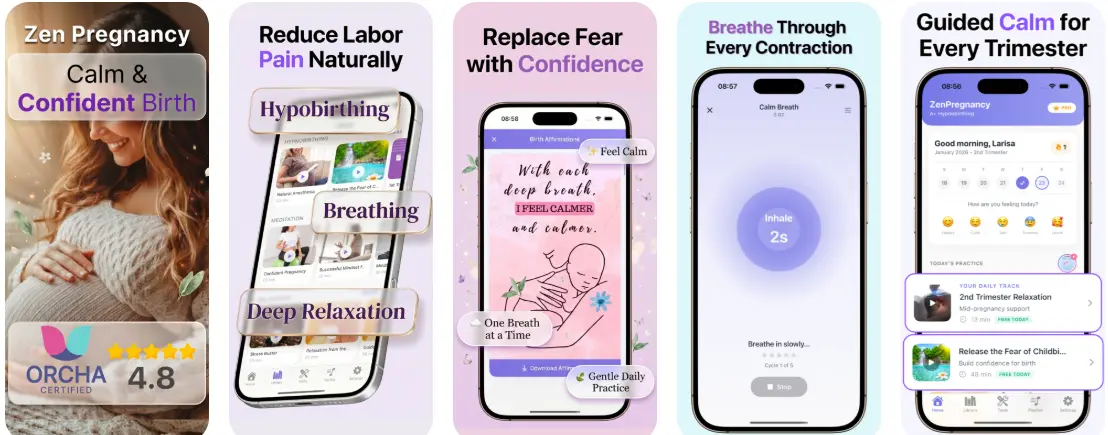
A hypnobirthing app for birth partner support gives simple prompts for breathing, relaxation, affirmations, and contraction timing so the partner can stay calm and useful. It should complement midwife or obstetric care, not replace clinical advice or promise a pain-free birth.
What a Birth Partner Actually Does
A birth partner’s role is not to manage labour medically, but to help protect calm, communication, and continuity. With hypnobirthing, that often means noticing tension, cueing slower breathing, lowering the volume in the room, offering water, and reminding the birthing person of preferences from the birth plan. A good hypnobirthing guide for birth partners keeps these actions simple. The partner can also ask clarifying questions and support informed consent while always deferring clinical decisions to the midwife, doctor, or obstetric team.
How an App Helps During Contractions
During contractions, many partners forget what to say or do. An app can reduce that pressure by showing clear cues: start the timer, soften the shoulders, breathe in for 4, breathe out for 6 to 8, then rest. This rhythm can help reduce anxiety and support a sense of control, although it cannot guarantee less pain. The NHS notes that breathing and staying calm can help people cope in labour, especially with steady support from another person: NHS labour and birth guidance.
Practice Together Before Labour
Hypnobirthing is usually most helpful when it feels familiar before labour begins. Many couples practise for 4 to 6 weeks with short daily sessions, so breathing patterns, relaxation cues, and touch signals become automatic. Your partner can sit beside you, listen to the same track, and agree on phrases that feel supportive rather than distracting. The HypnoBirth App can be used as part of this routine, combining calm audio, breathing practice, and affirmations in one place. Keep practice gentle, and speak with your midwife or doctor if meditation triggers anxiety or difficult memories.

Use Breathing Prompts Without Interrupting Staff
The best partner support is quiet, responsive, and easy to pause when clinicians need attention. If a midwife is checking progress, monitoring the baby, or explaining options, the partner can lower the audio, stop speaking, and simply breathe visibly beside the birthing person. Between clinical conversations, they can restart a labour breathing app cue or whisper the chosen rhythm. This prevents the app from becoming a barrier in the room. The goal is to make support smoother, not to compete with professional guidance.
Affirmations and Advocacy Scripts
Birth affirmations work best when they sound like the birthing person, not generic slogans. Before labour, choose a few phrases together, such as “One wave at a time,” “You are safe,” or “Your body is working hard.” A birth affirmations app can help your partner remember them when emotions run high. Advocacy scripts can also be simple: “Can we have a moment to discuss this?” or “What are the benefits, risks, and alternatives?” These phrases support informed consent without the partner giving medical advice.
Timers, Tracks, and When to Stop
A combined setup can be useful: hypnobirthing audio for relaxation, a contraction timer with meditation for tracking surges, and affirmations for reassurance. But the partner should watch the person, not just the screen. If the app becomes annoying, overwhelming, or impractical, stop using it. Complementary tools such as relaxation and mindfulness are generally low risk, but the NCCIH advises discussing complementary health approaches with a healthcare professional when relevant: NCCIH mindfulness safety guidance. To get started, visit download the app.
Limitations
- A hypnobirthing app cannot predict complications or replace advice from a midwife, doctor, or obstetric team.
- Breathing, meditation, and affirmations may help coping, but they do not guarantee a pain-free or intervention-free birth.
- People with anxiety, trauma history, or mental health concerns should discuss meditation-based tools with a healthcare professional.
This is not medical advice. Consult your maternity care team for personalized guidance.
Frequently Asked Questions
How should a birth partner use a hypnobirthing app during labour?
A birth partner should use a hypnobirthing app as a quiet support tool, not as the focus of the room. They can start or pause breathing tracks, time contractions, offer agreed affirmations, and help keep the environment calm while staying responsive to the birthing person and clinical staff.
What should a birth partner say during hypnobirthing?
A birth partner should use short, agreed phrases that feel reassuring to the birthing person. Helpful examples include “Breathe with me,” “One wave at a time,” “You are safe,” or “Relax your jaw.” Avoid forced positivity, dismissing pain, or talking too much during contractions.
Can a birth partner advocate in hospital during labour?
Yes, a birth partner can advocate by calmly echoing preferences, asking clarifying questions, and requesting a pause where appropriate. They should not give medical advice, obstruct urgent care, or argue with clinicians in an emergency.
When should a birth partner start practising with a hypnobirthing app?
A birth partner should ideally start practising 4 to 6 weeks before the due date. Short, regular sessions help breathing cues, affirmations, and relaxation tracks feel familiar before labour begins.
Is 38 weeks too late to start hypnobirthing with a birth partner app?
No, 38 weeks is not too late to start using a hypnobirthing app. Focus on simple breathing, a few calming phrases, and practising how the partner will support contractions rather than trying to learn every technique.
Can a hypnobirthing app replace antenatal classes for a birth partner?
No, a hypnobirthing app should not replace antenatal classes or professional maternity care. An app can support daily practice, breathing prompts, and relaxation, but classes and clinicians provide broader education and personalised guidance.
How can a birth partner use a hypnobirthing app for pregnancy anxiety?
A birth partner can use the app to support calm routines, breathing practice, and reassuring repetition when pregnancy anxiety rises. They can play relaxation tracks, breathe alongside the pregnant person, and encourage rest, while seeking professional help if anxiety feels overwhelming or persistent.
Can a birth partner use a hypnobirthing app if the birthing person has an epidural?
Yes, a hypnobirthing app can still be useful with an epidural. Breathing tracks, affirmations, relaxation audio, and calm advocacy can support rest, decision-making, and comfort even when pain relief is being used.
Is a hypnobirthing app useful for first-time mums and their partners?
Yes, a hypnobirthing app can be useful for first-time mums and birth partners. It gives simple prompts for breathing, relaxation, contraction timing, and supportive phrases, which can make labour feel more structured and less unfamiliar.
How should a birth partner use breathing prompts without interrupting midwives or doctors?
A birth partner should keep breathing prompts quiet, brief, and easy to stop. They can lower the app volume, use headphones or visual cues if preferred, and pause tracks whenever staff need to communicate or assess the birthing person.
Should a birth partner time contractions with a hypnobirthing app?
Yes, a birth partner can time contractions if it helps the birthing person feel supported and gives useful information to the care team. They should track frequency, length, and changes, but stop if timing becomes distracting or stressful.
When should a birth partner stop using the hypnobirthing app during labour?
A birth partner should stop using the app whenever it no longer helps. They should pause it if the birthing person asks, if staff need attention, during urgent clinical situations, or if touch, silence, or direct reassurance becomes more useful.
Read more
- Hypnobirthing For Birth Partners
- Labor Breathing App
- Birth Affirmations App
- Contraction Timer Meditation
- Hypnobirthing App Evidence: What Research Supports Digital Birth Preparation?
- Hypnobirthing for Twins: Calm Preparation for Multiple Pregnancy
- Hypnobirthing Birth Plan App: Turning Calm Practice Into Practical Preferences
Best Hypnobirthing App for Birth Partner Support
HypnoBirth App helps birth partners stay calm, useful, and responsive with guided breathing tracks, affirmations, and simple tools to support labour without taking over. It is a free hypnobirthing app used by 200k+ families and ORCHA NHS certified, making it a reassuring choice for practice before birth and calm support on the day.
Best for
- Birth partners who want clear breathing cues and relaxation tracks to use during contractions
- Couples practising hypnobirthing together before labour
- Partners who want affirmations and calm prompts without needing to memorise everything
Limitations
- It does not replace advice from your midwife, doctor, or birth team
- It cannot predict when labour needs medical attention or make decisions for you