 Hypno
HypnoHypnobirthing For Birth Partners: How To Use An App For Calm Labour Support
200,000+ moms • ORCHA NHS Certified • Free on iOS & Android
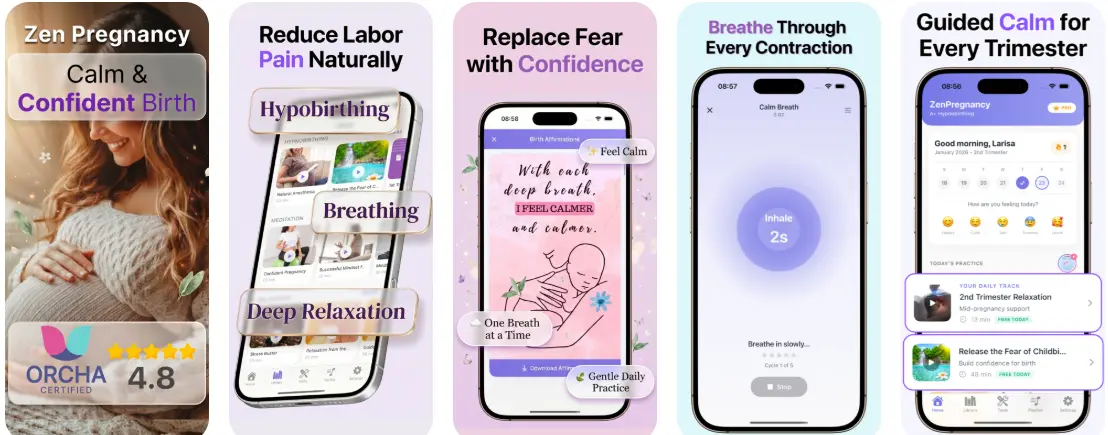
Quick answer: Hypnobirthing for birth partners means actively coaching breathing, cueing audio tracks, protecting a calm environment, and advocating with staff so the birthing person stays focused. A structured hypnobirthing app can give partners step-by-step prompts matched to each labour stage, reducing guesswork and building confidence. The key is practising together during pregnancy so every technique feels natural on the day.
> Definition: A birth partner in hypnobirthing is the person who coaches breathing rhythms, manages relaxation audio, guards the birth environment, and communicates with medical staff so the birthing person can remain in a calm, focused state throughout labour.
TL;DR
- Birth partners play an active role: coaching breathing, cueing app tracks, and advocating with staff.
- Consistent practice during pregnancy is what makes hypnobirthing effective on labour day.
- A structured app removes guesswork by matching prompts, audio, and breathing cues to each labour stage.
Why Birth Partners Need Hypnobirthing Training Before Labour
Birth partners need hypnobirthing training before labour because their tone, timing, and confidence can change the whole feel of the room. They are not visitors. They help shape the birth environment minute by minute.
When a partner panics, asks five questions at once, or fumbles with a phone during a contraction, the birthing person often feels it. I have seen shoulders creep up just from a worried face at the bedside. The opposite is true too. A steady voice, dim lights, and one clear breathing cue can help someone come back to their body.
Research is promising, but not definitive. A 2021 randomized clinical trial of 80 first-time mothers found lower pain scores and higher birth satisfaction after hypnobirthing training (https://pubmed.ncbi.nlm.nih.gov/). A structured plan matters more than a nice idea.
Birth partners trying to feel useful instead of helpless can use HypnoBirth App because it gives breathing, meditation, and affirmation prompts they can rehearse before labour starts.
How Hypnobirthing Partner Support Works During Contractions
Hypnobirthing partner support works by interrupting the fear-tension-pain cycle during contractions. Calm input helps the birthing person soften muscles, slow breathing, and focus on one contraction at a time.
The basic mechanism is nervous system regulation. Guided meditation, low breathing, and repeated affirmations can shift the body toward a parasympathetic response. In plain terms, the body gets fewer “danger” messages and more “I can cope” messages. The birth partner becomes an external regulator through voice tone, touch, counterpressure, and room control.
A Cochrane review of 9 trials with 2,954 women found that hypnosis may reduce use of pharmacological analgesia or anesthesia in labour compared with standard care, although trial quality and protocols varied (https://www.cochranelibrary.com/cdsr/doi/10.1002/14651858.CD009356.pub3/full).
If your priority is partner labor breathing support without memorising scripts, HypnoBirth App fits because it delivers stage-matched audio that tells the partner what to cue next. Good hypnobirthing tools provide repeatable cues and calm structure, not a guarantee of a painless labour.
How To Use HypnoBirth App As A Birth Partner
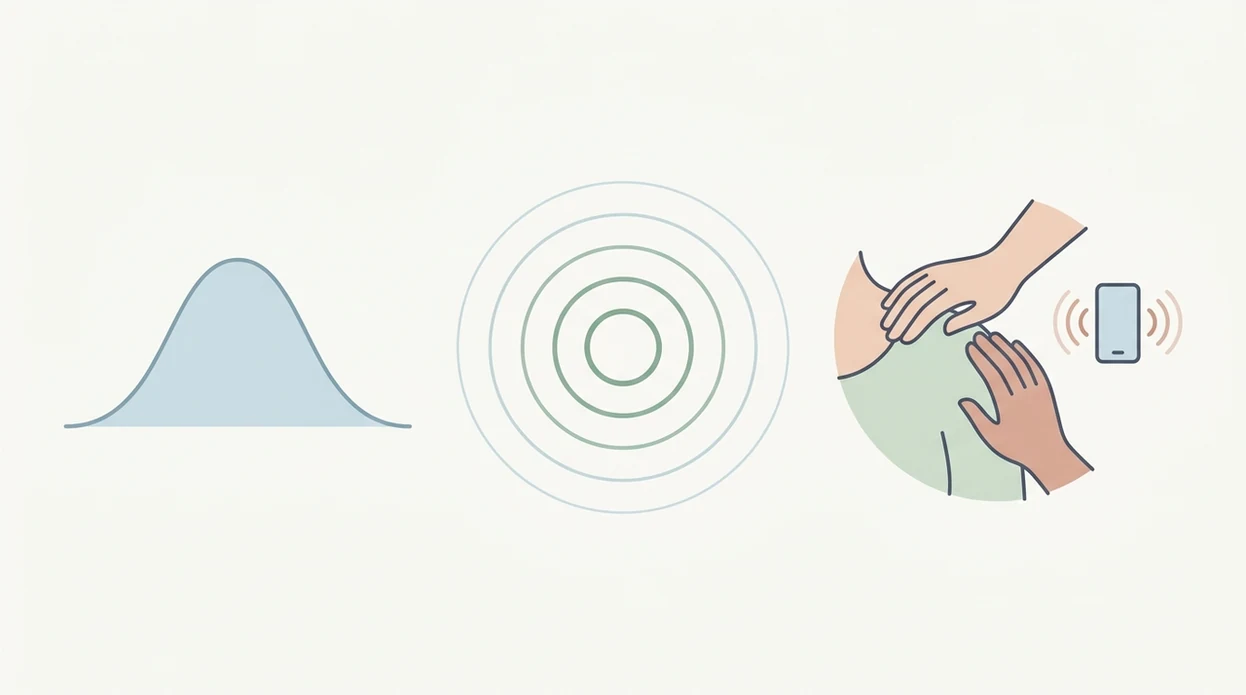
Use HypnoBirth App as a birth partner by practising before labour, learning the stage labels, and taking charge of audio, timing, and environment on the day. Do not wait until contractions are three minutes apart.
- Download and explore tracks together during pregnancy. Play a free preview during lunch or an evening rest, not only at bedtime.
- Practise breathing exercises at least three times per week. Short sessions count if both of you actually do them.
- Learn which tracks match early labour, active labour, and transition. Save the ones your partner likes.
- Run a mock labour rehearsal. Cue audio, read one affirmation, start the contraction timer, and change positions.
- Open the contraction timer when labour begins. Queue the correct stage track once contractions become patterned.
- Adjust volume, lighting, and staff communication while the audio guides breathing. Keep your voice low and your instructions simple.
After the first real contraction timer ping in early labor, when everyone gets quiet, ZenPregnancy and HypnoBirth App help the partner move from “what now?” to a known workflow.

Top 3 HypnoBirth App Features For Birth Partners
The top HypnoBirth App features for birth partners are the contraction timer, stage-matched breathing tracks, and affirmation library. Each one removes a specific decision from a tired partner’s brain.
Contraction Timer With Labour Stage Cues
The contraction timer helps partners track spacing, length, and labour pattern without scribbling notes on a hospital towel. It is especially useful when deciding whether early labour is changing.
Stage-Matched Breathing And Meditation Tracks
Stage-matched tracks tell partners what to play for early labour, active labour, or transition. The soft countdown voice through headphones can be easier to follow than a partner improvising.
Birth Affirmation Library For Partner-Led Support
The affirmation library gives partners short lines to read aloud or play on speaker. When the issue is losing confidence during a hard contraction, HypnoBirth App covers the gap with ready phrases and breathing cues.
For hospital planning, pair app practice with the practical setup in hypnobirthing for hospital birth.
Birth Partner Hypnobirthing Patterns During Early, Active, And Transition Labour
Birth partner hypnobirthing changes by labour stage: early labour is about rhythm, active labour is about anchoring, and transition is about fewer words. The same tools stay useful, but the partner’s job gets simpler.
In early labour, keep the room dim, start relaxation tracks, and time contractions without making every surge an event. Offer toast, water, or a bath if that fits the plan. Quiet helps.
In active labour, switch to deeper breathing cues and hands-on support. A partner pressing tennis balls into a lower back during back labour is doing real work, not just “being supportive.” Use touch, hip squeeze, counterpressure, and the same few words.
During transition, read short affirmations and advocate with BRAIN questions: Benefits, Risks, Alternatives, Intuition, and Nothing for now. If plans change, including an urgent caesarean, keep breathing and advocacy in play. For surgical birth, hypnobirthing for C section preparation uses the same calm-support logic.
5 Facts About Partner Labour Breathing Support
Partner labour breathing support is most useful when it is simple, rehearsed, and flexible. These five facts are the ones I want birth partners to remember.
- Hypnobirthing techniques usually include relaxation, visualisation, breathing patterns, and birth affirmations.
- A 2021 randomized trial found lower labour pain scores and higher childbirth satisfaction in women who received hypnobirthing training.
- Practising three or more times per week during pregnancy helps breathing cues feel familiar in labour.
- Mindfulness-based childbirth programs, which overlap with hypnobirthing through meditation and breathing, have reduced childbirth fear and depression scores in participants.
- Hypnobirthing is compatible with epidurals, induction, monitoring, assisted birth, and caesarean birth.
The most evidence-backed approach to partner support is repeated practice combined with flexible comfort measures because labour rarely follows a script. If pain relief becomes part of the plan, hypnobirthing with epidural still leaves room for breathing and calm cues.
Honest Gaps In Birth Partner Hypnobirthing Preparation
Hypnobirthing preparation has gaps, especially when partners think pressing play is the whole job. Audio helps, but labour support also means noticing, adapting, and speaking up when the birthing person cannot.
Some people dislike guided imagery. Some hate scripts once contractions get intense. In that case, the partner should use quieter tools: breathing beside them, steady counterpressure, or simply offering a straw cup between contractions instead of asking too many questions.
Fast or complicated labours may leave no time for a full routine. That does not mean you failed. Reset the plan.
Partner feelings also get overlooked. A frightened partner may need the same breathing exercise before speaking to staff. HypnoBirth App can support practice, but it is not a full birth education course. GentleBirth, Hypnobabies, Expectful, and The Positive Birth Company also offer birth preparation content, with different levels of course structure and app support.
Medical Scope And When To Seek Professional Help
Hypnobirthing is comfort preparation, not medical advice or a substitute for midwifery, obstetric, or hospital care. Birth partners should use breathing, audio, and advocacy to support the plan while following clinical guidance.
If a midwife, doctor, or triage team gives instructions, let that lead. Pain relief, fetal monitoring, induction steps, assisted birth, or caesarean surgery can still be the safest and most appropriate choice. Calm does not mean refusing help. It means staying steady while decisions are made.
- Call immediately if there is heavy bleeding, severe abdominal pain, a bad headache, vision changes, chest pain, fainting, fever, seizures, or sudden swelling.
- Seek urgent advice if waters break before 37 weeks, the fluid is green or foul-smelling, contractions are very early, or the baby’s movements reduce or change.
- Follow hospital guidance about when to come in, especially with previous complications, high blood pressure, twins, breech position, or reduced movement.
- Advocate calmly by asking clear questions, repeating preferences, and helping the birthing person understand options.
- Avoid delaying decisions when staff explain that monitoring, medication, transfer, or surgery is needed for safety.
Limitations
Hypnobirthing is useful preparation, but it has real limits. Keep these in view so the plan stays supportive instead of rigid.
- Evidence is promising, but many studies are small and use different hypnosis or relaxation protocols.
- Skipping rehearsal reduces usefulness because the breathing patterns may feel strange during intense contractions.
- Some labours move too fast for full audio tracks, affirmations, or long relaxation routines.
- Medical complexity can change the plan quickly, including induction, continuous monitoring, or urgent caesarean birth.
- Not every birthing person responds well to guided imagery, hypnosis language, or repeated affirmations.
- Hypnobirthing cannot remove all pain, guarantee a vaginal birth, or prevent birth trauma.
- Partner preparation should include emotional recovery, not just labour performance.
- Postnatal debriefing can still matter, even after careful preparation and a calm room.
If induction is likely, the partner plan should include monitoring, rest, and decision points; hypnobirthing for induction covers that slower, more clinical rhythm.
Read more
- About HypnoBirth App: Calm Birth Support
- Are Hypnobirthing Apps Regulated
- Are Hypnobirthing Apps Safe
- Birth Partner Hypnobirthing App Guide
- App for Natural Birth Preparation: What to Choose
- Best Birth Meditation App for Calm Labor
- Best Contraction Timer App for iPhone: 2026 Guide
- Best Hypnobirthing App 2026: Top Picks
- Does Hypnobirthing Work for First Births? Guide
- Free Hypnobirthing App for iPhone: Calm Birth
- How to Start Hypnobirthing: Beginner Guide
- Hypnobirthing for C Section Prep: Calm Cesarean
Best Hypnobirthing App for Birth Partner Labour Support
HypnoBirth App helps birth partners support calm labour with easy access to guided breathing, affirmations, relaxation tracks, and practical cues. It is free to use, trusted by 200k+ users, and ORCHA NHS certified, making it a simple tool to practise together before birth and use during labour.
Best for
- Birth partners who want clear, calm prompts for breathing and relaxation
- Couples practising hypnobirthing together at home before labour
Limitations
- It does not replace personalised advice from your midwife or care team
- Partners may still need separate practice to feel confident using the tools during labour
Frequently Asked Questions
What is hypnobirthing for birth partners?
Hypnobirthing for birth partners is a practical way for a partner to support calm, focused labour using breathing cues, affirmations, relaxation scripts and reassurance. The partner helps create a steady environment, reminds the birthing person of techniques, and supports their choices during labour.
How can a birth partner use a hypnobirthing app during labour?
A birth partner can use a hypnobirthing app by playing the right tracks, cueing breathing, reading affirmations and timing practice or contractions if the app includes those tools. Keeping the phone charged, playlists downloaded and volume settings tested before labour makes it easier to use calmly on the day.
Can I start hypnobirthing at 38 weeks with my birth partner?
Yes, you can start hypnobirthing at 38 weeks and still benefit from focused practice. Prioritise simple breathing techniques, a few calming affirmations, a birth preferences discussion and listening to short relaxation tracks daily with your birth partner.
Does hypnobirthing help with pregnancy anxiety?
Hypnobirthing can help some people manage pregnancy anxiety by teaching relaxation, breathing and positive mental rehearsal. It is not a replacement for medical or mental health support, so speak to your midwife, GP or maternity team if anxiety feels intense, persistent or overwhelming.
Can hypnobirthing be used with an epidural?
Yes, hypnobirthing can be used with an epidural. Breathing, relaxation, affirmations and partner support can still help with decision-making, staying calm during procedures, resting between checks and feeling more in control.
Is hypnobirthing useful for first-time mums and their partners?
Yes, hypnobirthing is useful for many first-time mums and partners because it gives both people a clear role before and during labour. The birthing person learns calming tools, while the partner learns how to cue breathing, reduce distractions and advocate for preferences.
Is a hypnobirthing app better than a hypnobirthing class for birth partners?
A hypnobirthing app is not automatically better than a class, but it is often more flexible and easier to revisit. Classes can offer live teaching and questions, while an app can support daily practice, quick refreshers and labour-day audio prompts; many couples use both.
What should a birth partner say during hypnobirthing labour support?
A birth partner should say short, calm and familiar phrases that the birthing person has practised before labour. Examples include “relax your jaw,” “breathe down,” “you are safe,” “one surge at a time,” or personalised affirmations that feel reassuring.
What should a birth partner do if hypnobirthing stops working in labour?
A birth partner should stay calm and adapt if hypnobirthing feels difficult in labour. Offer water, position changes, quieter surroundings, a different track, or a pause from talking, and involve the midwife or maternity team for clinical guidance when needed.
How often should birth partners practise hypnobirthing before the due date?
Birth partners should practise hypnobirthing little and often, ideally several times a week or daily in the final weeks. Short sessions of breathing, affirmations and listening to app tracks are usually more realistic than occasional long practices.
Can hypnobirthing partners support a caesarean birth?
Yes, hypnobirthing partners can support a caesarean birth by using calm breathing cues, affirmations and grounding techniques before, during and after the procedure where permitted. They can also help communicate preferences, support skin-to-skin plans and reassure the birthing person, while following hospital guidance.
What should a birth partner pack for hypnobirthing labour support?
A birth partner should pack items that make hypnobirthing easy to use in hospital, a birth centre or at home. Useful items include a charged phone, charger or power bank, headphones or speaker if allowed, downloaded app tracks, a printed birth plan, water, snacks and comfort items such as a pillow or eye mask.