 Hypno
HypnoBest Hypnobirthing Book: Top Reads for Birth Preparation in 2026
The best hypnobirthing books for 2026. Honest reviews of top titles, what each one covers, and how books compare to app-based hypnobirthing courses.
200,000+ moms • ORCHA NHS Certified • Free on iOS & Android
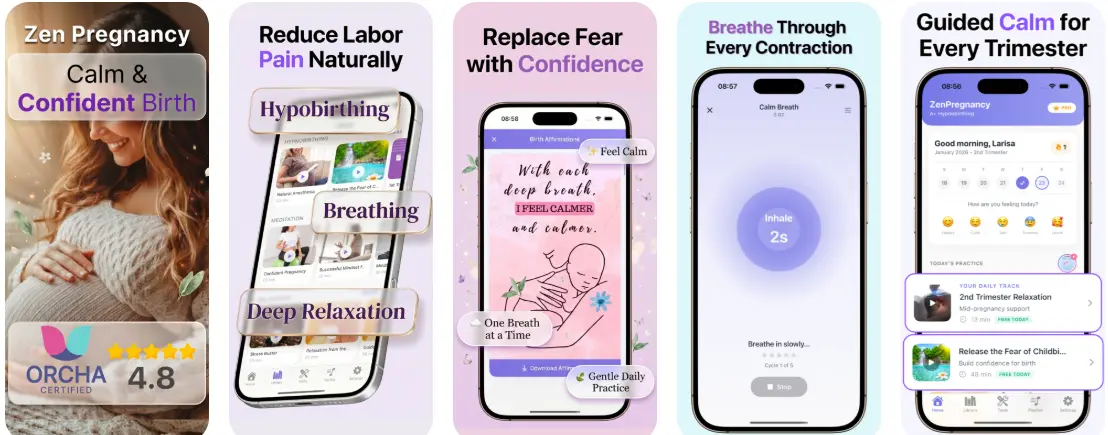
The best hypnobirthing book for 2026 is one that explains the method clearly, gives you practical breathing and relaxation exercises, and helps your birth partner support you with confidence. A hypnobirthing book is a strong starting point, but most parents get better results when they pair reading with regular audio practice.
Who is this guide for?
Good fit if you
- You want a structured introduction to hypnobirthing before choosing a course or app
- You like learning the theory behind birth breathing, relaxation, affirmations, and fear release
- You want your birth partner to understand how to support a calmer birth environment
- You are preparing early in pregnancy and want time to build a regular practice routine
- You prefer low-cost birth preparation resources you can revisit at your own pace
May not be enough if you
- You want personalised medical guidance for your pregnancy or birth plan
- You prefer guided audio sessions instead of reading and self-directing practice
- You are looking for a replacement for antenatal education, midwife advice, or clinical care
- You need urgent support for anxiety, trauma, or birth-related mental health concerns
- You want guaranteed pain relief or a specific birth outcome
Best Hypnobirthing Book for Birth Preparation
A strong hypnobirthing book should make birth feel less mysterious and more workable. The best ones teach how fear, tension, breath, hormones, and decision-making interact during labor without promising one perfect type of birth.
If you are pregnant and feeling both excited and nervous, that is completely normal. Many parents are not afraid of birth itself as much as they are afraid of losing control, being unheard, or not knowing what is happening. A good book gives you language for contractions, practical ways to relax your jaw and shoulders, and questions to ask your midwife or OB-GYN. For a simple starting plan, you can pair your reading with how to start hypnobirthing in pregnancy so the concepts become weekly practice rather than one more unfinished chapter on your nightstand.
How Hypnobirthing Works in Labor
Hypnobirthing works by training the nervous system to respond to contractions with focus, breath, and muscle release instead of panic. It is not stage hypnosis; it is repeated relaxation practice, mental rehearsal, breathing, affirmations, and birth education.
The core mechanism is the fear-tension-pain cycle: when you feel unsafe, adrenaline can rise, muscles may tighten, and sensations can feel more overwhelming. Slow breathing, visual imagery, touch cues, and calm words help shift attention and support parasympathetic activity. Studies suggest hypnosis-based methods may reduce fear and improve coping for some birthing people, though evidence quality varies; a Cochrane review on hypnosis for labor pain notes mixed findings. This is not medical advice. Use hypnobirthing as a coping and preparation tool, not a substitute for clinical care.
Top Hypnobirthing Books to Read in 2026
The top hypnobirthing books for 2026 are still the ones that combine calming philosophy with repeatable practice. Three titles stand out for different learning styles: Katharine Graves for structure, Marie Mongan for the classic method, and Siobhan Miller for practical flexibility.
The Hypnobirthing Book by Katharine Graves is useful if you want clear scripts, partner involvement, and explanations of hormones and relaxation. HypnoBirthing: The Mongan Method by Marie Mongan is the original classic, especially strong on deep relaxation and birth visualization. Hypnobirthing: Practical Ways to Make Your Birth Better by Siobhan Miller is often the easiest to apply in hospital, birth center, home birth, induction, epidural, or planned cesarean contexts. If you want the techniques broken into smaller skills, this guide to hypnobirthing techniques for pregnancy and labor is a helpful companion.

How to Choose a Hypnobirthing Guide
Choose a hypnobirthing guide based on how you actually learn when tired, busy, and pregnant. The right book is not always the longest or most famous; it is the one you can return to three times a week.
- Match the tone: Pick a voice that feels calming, realistic, and non-judgmental about different birth choices.
- Check the practice tools: Look for scripts, breathing cues, affirmations, partner prompts, and birth-plan language.
- Consider your setting: Hospital births, home births, inductions, VBACs, and cesareans all benefit from flexible preparation.
- Plan repetition: Start around weeks 20 to 28 if possible, or use short daily sessions in the third trimester.
- Add support: If this is your first baby, combine reading with hypnobirthing guidance for first-time moms so the ideas feel practical, not abstract.
Practical Birth Breathing and Relaxation by Trimester
Hypnobirthing practice works best when it is built gradually, not saved for the first contraction. Each trimester can have a simple focus: calm association early on, body practice in the second trimester, and labor rehearsal in the third.
In the first trimester, keep it gentle: sleep, reassurance, and short grounding meditations are enough, especially if nausea or fatigue is heavy. In the second trimester, begin slow breathing, jaw release, shoulder softening, and partner scripts two or three times a week. Around weeks 30 to 36, practice positions, birth affirmations, and breathing through a timed wave so your body recognizes the rhythm. If breathwork feels confusing, start with pregnancy breathing techniques for calm and labor. Stop any exercise that causes dizziness, pain, bleeding, or concern, and contact your healthcare provider.
Books vs Hypnobirthing Audio Practice
Books teach the ideas; audio practice helps your body remember them when contractions are intense. Most parents benefit from both because labor is not a reading environment—it is a sensory, emotional, physical experience.
| Option | Best for | Watch-outs |
|---|---|---|
| Katharine Graves book | Structured scripts, partner reading, classic course-style learning | Still requires you to practice outside the book |
| Marie Mongan method | Deep relaxation, visualization, calm birth philosophy | Some readers may want more medical-setting flexibility |
| Siobhan Miller book | Practical hospital-friendly and intervention-aware preparation | Less useful if you never rehearse the exercises |
| Expectful or Hypnobabies | Audio-led pregnancy and birth preparation | Programs vary in tone, cost, and fit |
For many families, hypnobirthing meditation practice is the bridge between understanding a technique and being able to use it during a surge.
Limitations of Hypnobirthing Books and Safety
Hypnobirthing books can improve confidence and coping, but they cannot control every part of birth. Honest preparation means making room for calm, medical support, and flexibility at the same time.
- They cannot guarantee a pain-free birth. Some people feel major relief; others still want epidural, gas and air, water, movement, or other comfort measures.
- They are not medical advice. Consult your healthcare provider about reduced fetal movement, bleeding, high blood pressure symptoms, severe pain, or any urgent concern.
- They may not be enough for trauma history. If birth, medical care, or past experiences feel triggering, trauma-informed therapy or specialist support can matter.
How HypnoBirth App Fits With Birth Books
HypnoBirth App is a hypnobirthing app that provides guided meditation, breathing exercises, contraction timing, and birth affirmations for pregnant women. It works best as a practice layer alongside a book, not as pressure to prepare in one particular way.
A book explains why a soft jaw, slow exhale, and calm self-talk can matter. Guided audio helps you repeat those cues while lying in bed, walking, resting after work, or preparing your hospital bag. If you prefer iOS, you can practice with a hypnobirthing practice app; if you use Android, you can try guided pregnancy meditations. Many parents also like having birth affirmations ready, and a birth affirmations app for labor confidence can make repetition feel easier.
Third Trimester Birth Preparation Plan
In the third trimester, your goal is not to master every method; it is to make a few calming responses feel familiar. A simple plan is more useful than a perfect plan you never practice.
From 28 to 32 weeks, read two or three chapters and choose one breathing pattern, one visualization, and three affirmations. From 33 to 36 weeks, practice a 10-minute audio session most days and ask your birth partner to read one script aloud. From 37 weeks onward, rehearse early labor: dim lights, sip water, move your hips, time practice waves, and rest between them. For more week-by-week support, see hypnobirthing in the third trimester. If contractions begin, a contraction timer with meditation support can help you track patterns while staying grounded.
Evidence on Hypnosis, Anxiety, and Birth Coping
Research on hypnobirthing and hypnosis for childbirth suggests possible benefits for anxiety, relaxation, and coping, but the evidence is not strong enough to promise specific outcomes. The most realistic claim is that these methods may help some people feel calmer and more prepared.
Clinical reviews often find variation in study design, teaching style, and outcome measures, which makes firm conclusions difficult. However, relaxation training, continuous support, and informed decision-making are widely valued in maternity care. The NICE intrapartum care guidance emphasizes respectful care, communication, and supporting personal choices during labor. Hypnobirthing fits best inside that wider approach: one tool among many, alongside medical monitoring, skilled providers, birth support, and your own preferences. This is not medical advice; discuss questions about labor pain relief, risk factors, and birth setting with your healthcare team.
This guide was written for educational birth preparation and reviewed for safety language. It does not replace advice from your midwife, OB-GYN, GP, or maternity unit.
Frequently Asked Questions
What is the best hypnobirthing book to start with in 2026?
The best hypnobirthing book to start with is one that feels calm, practical, and easy for you to practise from. Popular starting points include books by Katharine Graves, Marie Mongan, and Siobhan Miller, because they combine mindset, breathing, scripts, and birth-partner support.
When should I start reading a hypnobirthing book during pregnancy?
A good time to start reading a hypnobirthing book is around 20 to 28 weeks of pregnancy. This gives you time to practise breathing, relaxation, visualisation, and partner cues before labour begins.
Can I start hypnobirthing at 38 weeks pregnant?
Yes, you can start hypnobirthing at 38 weeks pregnant. Focus on short daily practice, simple breathing techniques, listening to guided relaxation, and choosing a few birth preferences rather than trying to master every exercise.
Can I teach myself hypnobirthing with a book?
Yes, you can teach yourself hypnobirthing with a book. Many parents use a book alongside audio tracks and partner practice, although a class or qualified educator may be useful if you want feedback, structure, or trauma-informed support.
Does hypnobirthing work if I have an epidural?
Yes, hypnobirthing can still be useful if you have an epidural. The techniques may help during early labour, while waiting for pain relief, with decision-making, positioning, breathing, and staying calm in a clinical setting.
Is hypnobirthing safe during pregnancy?
Hypnobirthing relaxation and guided hypnosis are generally considered low-risk for many pregnant people. They are not a replacement for medical care, so speak with your midwife, doctor, or mental health professional if you have pregnancy complications, trauma history, severe anxiety, or concerns about using hypnosis.
Can hypnobirthing books help with pregnancy anxiety?
Yes, hypnobirthing books can help some people manage pregnancy anxiety by teaching breathing, relaxation, and calmer ways to think about birth. They should not replace professional mental health support if anxiety is severe, persistent, or affecting sleep, eating, safety, or daily life.
Do I need hypnobirthing audio as well as a book?
No, you do not need hypnobirthing audio as well as a book. Audio can make practice easier because you can listen while resting, and familiar spoken cues may be more useful in labour than trying to remember written instructions.
Which hypnobirthing book is most practical for birth preparation?
Siobhan Miller’s hypnobirthing book is often seen as one of the most practical options for flexible birth preparation. Katharine Graves is also a strong choice if you want structured scripts, practice exercises, and clear guidance for birth partners.
Is a hypnobirthing book good for first-time mums?
Yes, a hypnobirthing book can be a good choice for first-time mums. It can explain labour physiology, common interventions, breathing techniques, partner roles, and ways to prepare for different birth scenarios without promising a perfect birth.
Is a hypnobirthing app better than a class?
A hypnobirthing app is not always better than a class, but it can be more convenient and affordable. A class may be better if you want live teaching, personalised questions, partner coaching, or extra support after a previous difficult birth.
Will a hypnobirthing book make labour pain-free?
No, a hypnobirthing book cannot guarantee a pain-free labour. Hypnobirthing may help you feel calmer, reduce fear, and improve coping skills, but pain levels and pain relief needs vary from person to person and birth to birth.
Best Hypnobirthing App for Practising What You Read
HypnoBirth App is a helpful companion to any hypnobirthing book because it turns the ideas you read about into simple guided audio practice. It is free to use, trusted by 200k+ users, and ORCHA NHS certified, making it a practical option for building a consistent routine before birth.
Best for
- Practising relaxation, breathing, and confidence-building after reading a hypnobirthing book
- Parents who want short, guided sessions they can use during pregnancy and birth preparation
Limitations
- It does not replace medical advice from your midwife, doctor, or maternity team
- It works best with regular practice rather than occasional last-minute use