 Hypno
HypnoPregnancy App Privacy: Protecting Sensitive Birth-Preparation Data
200,000+ moms • ORCHA NHS Certified • Free on iOS & Android
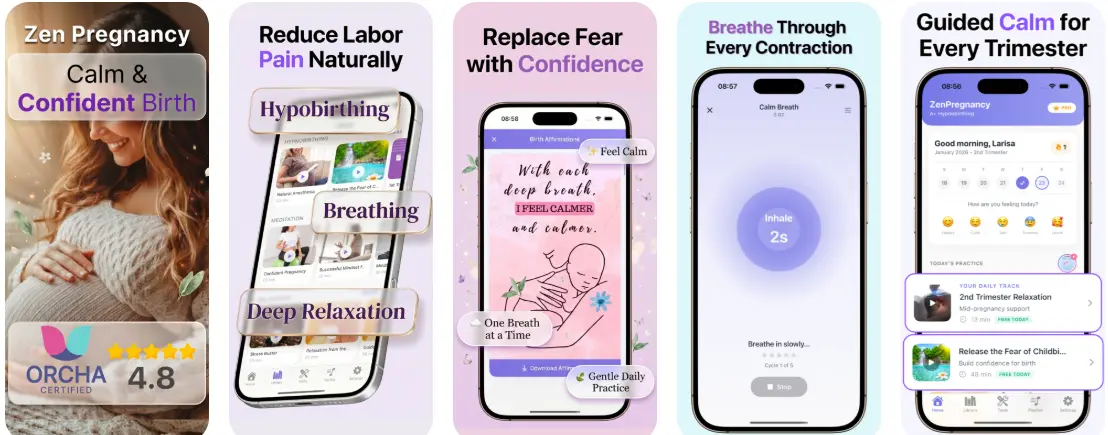
Pregnancy app privacy determines whether your due dates, contraction logs, mood journals, and hypnobirthing session data stay safe or end up with advertisers, data brokers, or insurers. Most pregnancy apps fall outside HIPAA, meaning your birth-preparation data often has fewer legal protections than your doctor's records. Understanding what data is collected, how it flows, and what controls you have is the first step toward using a pregnancy or hypnobirthing app without compromising your most intimate health information.
Pregnancy app privacy is the set of policies, technical safeguards, and user controls that govern how a pregnancy or birth-preparation app collects, stores, shares, and deletes sensitive reproductive health data including due dates, contraction timing, mood logs, meditation history, and personal birth plans.
TL;DR
- Most pregnancy apps are not covered by HIPAA, so your data has weaker legal protection than hospital records.
- 79% of top fertility apps shared user data with third parties in a 2019 systematic review, and 87% of women's mHealth apps requested dangerous permissions unrelated to core features.
- You can reduce risk by adjusting permissions, choosing local-only storage, disabling ad tracking, and reviewing privacy policies before entering sensitive birth-preparation data.
- Hypnobirthing session history, fear-release journals, and affirmation logs contain psychological data that deserves the same scrutiny as medical records.
- No app can guarantee zero breach risk. Privacy is an ongoing practice, not a one-time setting.
What Pregnancy App Privacy Policies Actually Cover
A pregnancy app privacy policy should explain what data the app collects, why it collects it, who receives it, how long it is kept, and how you can delete it. In practice, many policies are hard to find, thin on detail, or written in legal language that does not match how people actually use birth-preparation tools.
A good policy names both the data you type in and the data collected in the background. User-entered data can include due dates, symptoms, mood notes, contraction logs, birth preferences, hypnobirthing session history, and journal entries. Background data can include device IDs, IP addresses, app usage patterns, rough location, crash logs, and analytics events.
That second category is easy to miss.
Research on U.S. mobile health apps found that only 47% had a privacy policy easily accessible from the app listing page according to a JAMA Network Open analysis: https://jamanetwork.com/journals/jamanetworkopen/fullarticle/2786593. A 2022 analysis of fertility and pregnancy apps also found that 35 out of 40 reviewed privacy-policy items were rated poor or very poor https://www.mdpi.com/1660-4601/19/15/9316. If you cannot find the policy before download, treat that as useful information.
Scope and Privacy Disclaimer
This page is general privacy education for people using pregnancy, fertility, or birth-preparation apps. It is not legal advice, medical advice, or a substitute for care from your own clinician.
App privacy choices can reduce exposure, but they do not tell you whether a symptom is urgent, whether a labor pattern is safe, or whether a specific legal risk applies to you. Privacy laws and reproductive-data rules vary by country, by U.S. state, and by the app provider’s own role, contracts, servers, and business model. A setting that feels protective in one place may not carry the same meaning somewhere else.
For personal decisions, use this page as a starting checklist, then bring the question to the right professional:
- Ask your midwife, OB-GYN, or care team about clinical concerns, symptoms, labor timing, or fetal movement.
- Consult a qualified lawyer or privacy professional if legal exposure could affect your safety, work, custody, insurance, or immigration situation.
- Review each app’s current policy and settings before entering details you would not want widely shared.
Five Facts About Pregnancy App Data Every Expecting Parent Needs
- Most pregnancy apps are not HIPAA-protected. HIPAA usually applies to healthcare providers, health plans, and their business associates, not ordinary consumer apps you download yourself.
- Third-party sharing is common. A 2019 systematic assessment of top-ranked fertility apps found that 79% shared user data with third parties, according to the BMJ source.
- Permissions often exceed the core feature. A 2021 review of popular women’s mHealth apps found that 87% requested at least one dangerous permission https://www.mdpi.com/1660-4601/18/14/7438, such as camera or precise location, that was not strictly needed for basic app function.
- Anonymous does not always mean untraceable. De-identified pregnancy app data can sometimes be linked back to a person when combined with location, device, purchase, or browsing datasets.
- Many women are worried for a reason. In a 2023 Kaiser Family Foundation survey, 55% of women ages 18 to 49 were concerned according to KFF: https://www.kff.org/womens-health-policy/poll-finding/kff-health-tracking-poll-may-2023/ about reproductive health data being accessed by people other than their healthcare providers.
The birth plan folded in a purse may feel private. The app version deserves the same care.

How Pregnancy App Data Collection Works Behind the Scenes
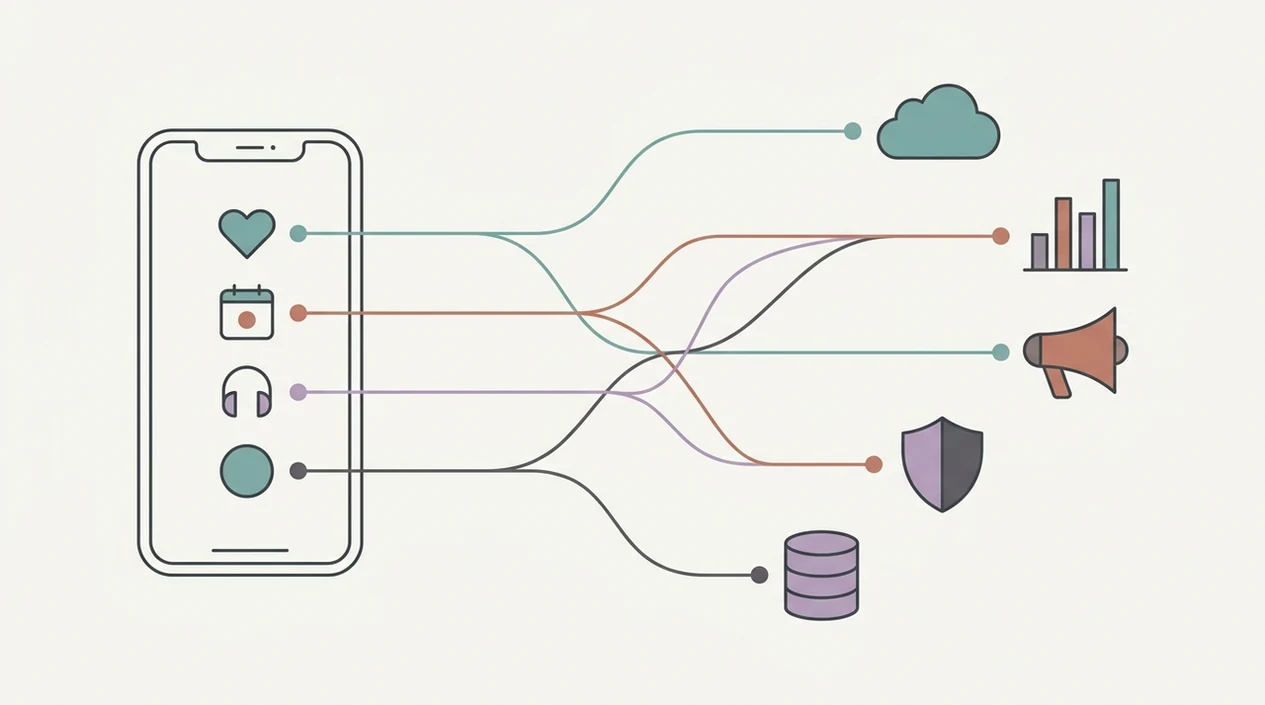
Pregnancy app data collection usually moves through a chain: user input, app server, analytics software development kit, then possible sharing with ad networks or data brokers. The quiet part is often the SDK, which is third-party code built into an app to measure behavior, crashes, ads, subscriptions, or engagement.
Data Flow From Your Phone to Third Parties
You might enter a due date, start a contraction timer, or save a note after a fear-release exercise. The app may store that entry on its own server, sync it to cloud storage, and send behavior events to analytics providers. Device IDs, IP addresses, session length, screen taps, and repeated in-app patterns can identify a user even without a name.
A contraction timer app pinging in early labor feels practical, not like data production. But it is still a timestamped record of reproductive health activity.
Why Hypnobirthing Session Data Is Especially Sensitive
Birth-specific data can reveal readiness, anxiety, sleep struggles, mental-health state, and labor timing. Cloud-synced apps make backup and cross-device use easier. Local-only storage keeps more information on your phone, but you may lose sync, backup, and personalized recommendations.
For birth-preparation data, local-only storage is often safer than cloud sync because fewer systems can access the information.
Specific Privacy Guarantees to Look for in a Health App
An ethical pregnancy or hypnobirthing app should make privacy promises that are specific enough to check. Vague lines like “we care about your privacy” do not tell you what happens to a contraction log at 3 a.m.
- Encryption. Look for encryption at rest and in transit, or end-to-end encryption when the feature allows it.
- No sale of health data. The policy should clearly say personal health data is not sold to brokers, advertisers, or profiling services.
- Easy deletion. Account removal and full data deletion should be described in plain steps.
- Minimal permissions. A breathing app should not need contacts, camera, or precise location unless a feature truly requires them.
- Named processors and consent controls. The app should list sub-processors and make analytics opt-in, not opt-out.
Judge any pregnancy or hypnobirthing app by its permissions, sharing practices, deletion controls, encryption, and consent settings—not by calming colors or gentle audio alone. A good birth-preparation app can support breathing practice, relaxation audio, affirmations, and contraction support, but it does not provide medical privacy guarantees by default.
What Pregnancy App Privacy Does Not Protect Against
A privacy policy is not a shield against every risk. It is a statement of rules, and sometimes a statement of intent, but servers can still be breached and companies can still make poor design choices.
Even strong policies may not stop re-identification if “anonymous” pregnancy data is combined with location, shopping, device, or web-browsing datasets. Aggregated health data can also move through brokers in ways that may interest employers, insurers, advertisers, or political groups.
Shared devices create a smaller, more ordinary risk. A partner, older child, or family member may see screenshots, notifications, screen recordings, or an open app. The pocket check is real.
Laws also change by country and U.S. state. If you are comparing safety claims, regulation, and privacy duties together, the question of are hypnobirthing apps regulated is separate from whether an individual app has a careful policy.
Should You Use a Pregnancy App or Avoid It Entirely?
Use a pregnancy app with safeguards if the features meaningfully help you prepare, track, rest, or communicate. Avoid it entirely if entering reproductive health details into a consumer app would make you feel exposed, unsafe, or unable to sleep.
The benefit side is real. Apps can offer personalized pregnancy guidance, contraction timing, meditation tracking, birth affirmations, and short practices you can repeat without booking a full course. A rolled yoga mat beside the crib box is easier to ignore than a three-minute reminder on your phone.
The privacy cost of avoiding apps is also real. You may lose cloud backup, cross-device sync, saved preferences, personalized content, and shared tools for your birth partner. Middle paths exist: local-only mode, guest accounts, offline audio downloads, limited journaling, and turning off nonessential tracking.
Most people who use pregnancy apps should choose ones with transparent policies, minimal data collection, easy deletion, and privacy settings they can understand. Clinicians typically recommend making medical decisions with your care team, not with app predictions or app-generated reassurance.
When to Seek Professional Help
Seek professional help whenever a pregnancy app raises a worry that touches your body, your safety, or your legal exposure. An app can organize notes and patterns, but it should not decide whether bleeding, pain, labor, or fetal movement is safe.
Use the app as a record you can share, not as the authority. If something feels wrong, step out of the privacy checklist mindset and contact a real person who can assess your situation.
- Call your midwife, OB-GYN, maternity unit, or local clinical advice line for bleeding, severe abdominal pain, fluid concerns, fever, intense headache, or reduced fetal movement.
- Use emergency services right away for urgent labor concerns, heavy bleeding, chest pain, fainting, thoughts of self-harm, violence, or any situation where you or the baby may be in immediate danger.
- Ask a qualified privacy lawyer, reproductive-rights advocate, or domestic-violence advocate before entering highly sensitive data if your location, relationship, immigration status, custody situation, or workplace could increase risk.
- Treat app predictions, due-date estimates, kick counts, contraction patterns, and “all clear” messages as prompts for discussion, not medical decisions.
At-a-Glance Privacy Checklist for Pregnancy and Hypnobirthing Apps
Before downloading a pregnancy or hypnobirthing app, run a quick privacy check. Do it before you enter the due date, not after you have months of notes saved.
- Find the privacy policy before download. If it is missing or buried, be cautious.
- Compare permissions with features. A contraction timer does not usually need contacts or camera access.
- Look for encryption language. Check whether the policy mentions data in transit and data at rest.
- Confirm deletion rights. Make sure account deletion also deletes stored pregnancy app data.
- Read third-party sharing disclosures. Look for analytics, ads, SDKs, and sub-processors.
- Turn off ad tracking and location. Keep only permissions needed for the feature.
- Use strong device authentication. Set a passcode, Face ID, fingerprint lock, or app lock when available.
If labor timing is your main concern, privacy settings matter alongside knowing when to call hospital during labor.
How to Contact HypnoBirth App About Privacy or Data Deletion
For privacy questions, data access, or deletion requests, use the privacy contact listed in the app’s settings or privacy policy. Use a clear subject line such as “Privacy request,” “Data export request,” or “Delete my account and data.”
Ask for a full export if you want a copy of stored account data, session history, or saved birth-preparation entries. To delete data, request account removal and deletion of associated personal data. You may withdraw consent for optional processing at any time.
The app provider should confirm the request and respond within the timeframe stated in its privacy policy. Keep the email thread or support receipt until the request is complete.
Limitations
Pregnancy app privacy has hard limits, even when an app is built with care. Read this part slowly if you are storing anything you would not want repeated in a fluorescent hallway outside labor rooms.
- No app can fully eliminate breach risk, because servers, accounts, and vendors can be compromised.
- Good policies still depend on users changing default settings, and most users never open every privacy menu.
- Legal protections vary by country and U.S. state, and reproductive data laws are still evolving.
- Encryption and anonymization reduce risk, but they do not erase re-identification risk.
- Maximum privacy often means giving up useful features like sync, backups, shared accounts, and personalization.
- Third-party SDKs may update data practices before users understand what changed.
- Free apps often face stronger financial pressure to monetize attention, analytics, or user data.
- A privacy policy does not replace your provider’s advice, especially for labor symptoms, pain relief, bleeding, or reduced fetal movement.
If you are also weighing safety rather than privacy, the fuller question is are hypnobirthing apps safe for your pregnancy and birth plan.
See also: Kick Counter App for Pregnancy: Tracking Baby Movements Safely.
See also: Pregnancy Meditation App Privacy: What Data Should You Check?.
Best Pregnancy App for Private Birth Preparation
HypnoBirth App is designed for calm, focused birth preparation without turning your most personal pregnancy details into the centre of the experience. With free hypnobirthing tools, 200k+ users, and ORCHA NHS certification, it is a strong fit for parents who want supportive content alongside a privacy-conscious approach.
Best for
- Parents who want hypnobirthing tracks and relaxation tools without unnecessary data sharing
- Pregnant users who value clear consent, simple access, and trustworthy app standards
Limitations
- It is not a medical record system or a substitute for clinical advice
- Privacy settings and data handling should still be reviewed by each user before sharing sensitive information
Frequently Asked Questions
What pregnancy app privacy features should I look for before entering my due date?
A good pregnancy app should clearly explain how your due date is stored, used, and shared. Look for a plain-language privacy policy, consent controls, account deletion, data export, encryption, and an option to limit analytics or marketing. Your due date can reveal sensitive information, so the app should treat it as private health-related data.
Is my contraction log private in a pregnancy or hypnobirthing app?
Your contraction log should be private unless you choose to share it. A trustworthy app should state whether contraction timings stay on your device, sync to the cloud, or are used for analytics. If you are in labour or worried about symptoms, contact your midwife, maternity unit, or healthcare provider rather than relying on an app alone.
Can a pregnancy app share my mood or anxiety data with advertisers?
A pregnancy app should not share mood or anxiety data with advertisers without clear consent. Mood notes, anxiety check-ins, and birth-preparation reflections are sensitive and should be handled with extra care. Check whether the app uses third-party analytics, ad tracking, or personalised marketing before adding personal entries.
How should a hypnobirthing app protect pregnancy anxiety notes?
A hypnobirthing app should protect pregnancy anxiety notes with clear privacy controls and secure storage. Notes about fear, stress, sleep, and mental wellbeing can be sensitive, so users should know who can access them and how to delete them. If anxiety feels overwhelming or unsafe, speak to a midwife, GP, or mental health professional.
Can I use a pregnancy app privately if I start hypnobirthing at 38 weeks?
Yes, you can use a pregnancy app privately at 38 weeks if the app has clear privacy settings and does not require unnecessary personal data. Starting late may still help you access breathing, relaxation, and birth-preparation tools, but it should not replace medical advice. Check how the app handles your due date, birth preferences, and usage data before signing up.
Is a pregnancy app private enough for first-time mums?
Yes, a pregnancy app can be private enough for first-time mums if it uses transparent consent, secure data handling, and simple deletion options. First-time mums often enter detailed questions, feelings, and birth preferences, so privacy matters from the first login. Choose an app that explains data use clearly instead of hiding key details in legal wording.
Should I enter my epidural preferences in a pregnancy app?
Yes, you can enter epidural preferences in a pregnancy app if you are comfortable with how the app protects that information. Pain-relief preferences are personal and should be editable, deletable, and not used for advertising without consent. Discuss epidural options with your midwife or doctor, as an app cannot guarantee what will be clinically appropriate during labour.
Is a hypnobirthing app more private than an in-person class?
A hypnobirthing app is not automatically more private than an in-person class. An app may collect device, usage, mood, due date, or payment data, while a class may involve sharing information with an instructor or group. Compare the privacy policy, consent choices, and data retention of an app with the confidentiality practices of a class.
What pregnancy data is most sensitive in a birth-preparation app?
The most sensitive pregnancy data includes due dates, fertility history, mood, anxiety, contraction logs, birth preferences, location, and notes about medical care. This information can reveal health status, family plans, and personal circumstances. A birth-preparation app should collect only what it needs and explain every major use clearly.
Can I delete my data from a pregnancy app after birth?
Yes, a pregnancy app should let you delete your account and personal data after birth. The app should explain what is deleted immediately, what may be retained for legal or security reasons, and how long backups remain. A clear deletion process is especially important for due dates, journal entries, contraction logs, and baby-related details.
Do pregnancy apps need consent for analytics and tracking?
Yes, pregnancy apps should ask for valid consent when analytics or tracking involve personal data or non-essential cookies. Analytics may help improve features, but users should understand what is collected and whether third parties receive it. Privacy-friendly apps offer opt-outs without blocking core birth-preparation content.
How can I choose a safe and private hypnobirthing app?
Choose a safe and private hypnobirthing app by checking its privacy policy, consent options, security measures, and deletion controls before adding personal details. Prefer apps that minimise data collection, avoid unnecessary advertising trackers, and explain how due dates, mood entries, and contraction logs are handled. Use hypnobirthing tools as support, not as a substitute for personalised medical advice.