 Hypno
HypnoPregnancy Affirmations: Daily Mantras for a Stronger Mindset
Daily pregnancy affirmations that build confidence and calm anxiety. Positive mantras for each trimester, labor preparation, and emotional well-being.
200,000+ moms • ORCHA NHS Certified • Free on iOS & Android
Pregnancy affirmations are short, repeatable statements that help you practice a calmer, more confident mindset during pregnancy, birth preparation, and moments of anxiety. The most effective pregnancy affirmations feel believable, are phrased in your own words, and are repeated consistently alongside breathing, relaxation, or hypnobirthing practice.
Who is this guide for?
Good fit if you
- You want simple daily mantras for pregnancy, labor, or birth preparation
- You are looking for calm, confidence-building language that feels realistic
- You want affirmations you can use alongside breathing, relaxation, or hypnobirthing
- You prefer short practices that are easy to repeat in the morning, before sleep, or during anxious moments
May not be enough if you
- You need medical advice about pregnancy symptoms, complications, or mental health concerns
- You want affirmations to replace clinical care, therapy, or support from your midwife or doctor
- You prefer highly clinical birth education without mindset or relaxation tools
- You find positive statements unhelpful unless they are adapted to feel honest and believable
Why Positive Pregnancy Mantras Matter
Positive pregnancy mantras matter because the words you repeat become the mental path your brain reaches for under stress. Pregnancy can be joyful and deeply unsettling at the same time: symptoms change, appointments bring new information, sleep is interrupted, and it is easy to spiral into what-if thinking.
A good affirmation does not pretend everything is perfect. It gives your nervous system a calmer cue, such as I can take this one step at a time or I can ask for help when I need it. For many pregnant people, that small shift makes daily decisions, prenatal visits, and birth preparation feel more manageable. If anxiety is already high, pair affirmations with practical support like pregnancy stress relief techniques and speak with your care provider.
How Pregnancy Affirmations Work in the Brain
Pregnancy affirmations work through repetition, attention, and emotional regulation. When you repeat a believable statement often, your brain has more practice finding that thought when fear or tension rises.
Self-affirmation research suggests that values-based statements can activate brain regions linked with positive valuation and future-focused thinking, including the ventromedial prefrontal cortex. A 2016 study published in Social Cognitive and Affective Neuroscience found that self-affirmation can engage reward and self-processing systems, especially when people imagine future events (PubMed). In pregnancy, that future focus matters: scans, due dates, birth plans, and postpartum worries all ask the brain to picture what comes next. Affirmations help steer that picture toward coping rather than catastrophe.
Choosing Believable Prenatal Affirmations
The best prenatal affirmations are the ones your body does not immediately reject. If a phrase feels fake, your brain may argue with it instead of absorbing it, so start with something honest and reachable.
Instead of my birth will be painless, try I can meet each wave with breath, support, and one small choice. Instead of I am never afraid, try I can feel fear and still be cared for. Aim your words at what you can influence: breathing, asking questions, changing positions, resting, accepting help, or using your birth preferences. If you like a calmer, observation-based approach, prenatal mindfulness practices can help you notice anxious thoughts without letting them run the whole day.

Daily Affirmations by Trimester
Trimester-based affirmations work well because your worries change as pregnancy changes. First trimester phrases often focus on uncertainty, nausea, fatigue, and waiting; second trimester statements usually support body trust and adjustment; third trimester words help with readiness, advocacy, and birth preparation.
In the first trimester, use: Today, I care for what is in front of me and Rest is useful work right now. In the second trimester, try: My body is changing with purpose and I can stay curious instead of critical. In the third trimester, repeat: I can prepare without needing to control everything and My voice matters in the room. Keep them short enough to remember when you are tired, emotional, or getting ready for an appointment.
Labor Affirmations for Birth Preparation
Labor affirmations should be shorter and more physical than everyday mindset phrases. During contractions, your thinking brain may not want long sentences, so choose words that match breath, rhythm, and support.
Helpful options include: soft jaw, soft shoulders, one wave at a time, I breathe down and let go, I can ask for what I need, and my baby and I are working together. These phrases can fit hospital births, home births, birth center births, inductions, epidurals, unmedicated labor, VBAC preparation, or planned cesarean birth. For a deeper set of birth-focused phrases, you can explore hypnobirthing affirmations for labor confidence. This is not medical advice. Consult your healthcare provider about any birth concerns, pain relief questions, or changes in your plan.
How to Use Pregnancy Affirmations Daily
The easiest way to use pregnancy affirmations is to attach them to routines you already have. Consistency matters more than saying them perfectly, and one minute every day is better than twenty minutes once a month.
- Choose three phrases that feel believable for your current week of pregnancy.
- Repeat them during an existing habit, such as brushing your teeth, taking prenatal vitamins, or lying down at night.
- Pair each phrase with a slow exhale so your body learns the calm cue, not just the words.
- Write one phrase on your phone lock screen, mirror, or birth plan notes.
- Practice one labor phrase during Braxton Hicks, pelvic pressure, or a stressful appointment so it feels familiar before birth.
Anxiety and Fear-Release Statements
Fear-release statements are affirmations designed for the moments when your mind says, I am not ready, what if something goes wrong, or I cannot do this. They work best when they acknowledge fear instead of trying to erase it.
Try phrases like: This feeling is intense, and it will pass, I can ask one question at a time, I do not need to solve tomorrow tonight, and support is allowed. If anxiety feels constant, interrupts sleep, causes panic symptoms, or makes daily life hard, tell your midwife, OB-GYN, GP, or mental health professional. ACOG notes that anxiety during pregnancy is common and treatable, and you deserve help beyond self-talk when you need it (ACOG).
Partner and Birth Team Support Phrases
Affirmations are often more powerful when your partner, doula, midwife, nurse, or support person knows the exact words that calm you. In labor, you may not want coaching that sounds generic; you may want one familiar sentence repeated with a steady voice.
Ask your support person to practice phrases such as: you are safe right now, I am here and I am listening, relax your jaw, one breath, then the next, or you can change your mind and ask questions. These statements are especially useful if you fear being dismissed or losing control. You can also combine them with pregnancy breathing techniques so everyone knows what to say and how to help your body settle.
Pairing Birth Affirmations with Breathing and Meditation
Birth affirmations become easier to access when they are paired with breathing, relaxation, and guided meditation. The phrase gives your mind a focus; the breath gives your body a physical signal that it can soften.
A simple practice is to inhale for four counts, exhale for six counts, and repeat one phrase on every exhale. This can be used during pregnancy insomnia, appointment anxiety, early labor, or the car ride to your birth place. For audio support, guided meditation for pregnancy can make the routine feel less lonely, especially if your mind is busy at night. In late pregnancy, many parents also combine affirmations with labor breathing practice so the words and rhythm feel familiar before contractions begin.
Affirmation and Hypnobirthing App Comparison
Choosing an app depends on whether you want simple affirmations, structured hypnobirthing sessions, or a full birth preparation library. Look for audio you will actually repeat, clear breathing guidance, and birth content that respects different plans rather than pushing one ideal birth.
| App | Best fit | Includes affirmations | Notes | |---|---|---:|---| | HypnoBirth App | Hypnobirthing, breathing, meditation, affirmations, contraction timing | Yes | Good for parents who want one calm birth preparation space | | Expectful | Pregnancy meditation and motherhood wellbeing | Some | Strong meditation focus, broader parenting content | | Hypnobabies | Formal hypnosis-based childbirth course | Yes | More course-like and method-specific |If you are comparing tools in more detail, the hypnobirthing app reviews page can help you decide whether you want a lightweight daily practice or a more structured birth course.
Limitations and Safety for Prenatal Self-Talk
Affirmations are supportive tools, not medical treatment or a promise of a specific labor. They can help with confidence and emotional steadiness, but they should sit alongside evidence-based prenatal care.
- They cannot diagnose symptoms, fetal movement concerns, bleeding, severe pain, high blood pressure, or mental health conditions.
- They cannot guarantee a vaginal birth, unmedicated birth, short labor, easy recovery, or pain-free contractions.
- They may feel unhelpful if the phrase is too unrealistic, too polished, or not connected to your real fear.
This is not medical advice. Consult your healthcare provider.
Where a Guided Birth Affirmations Practice Fits
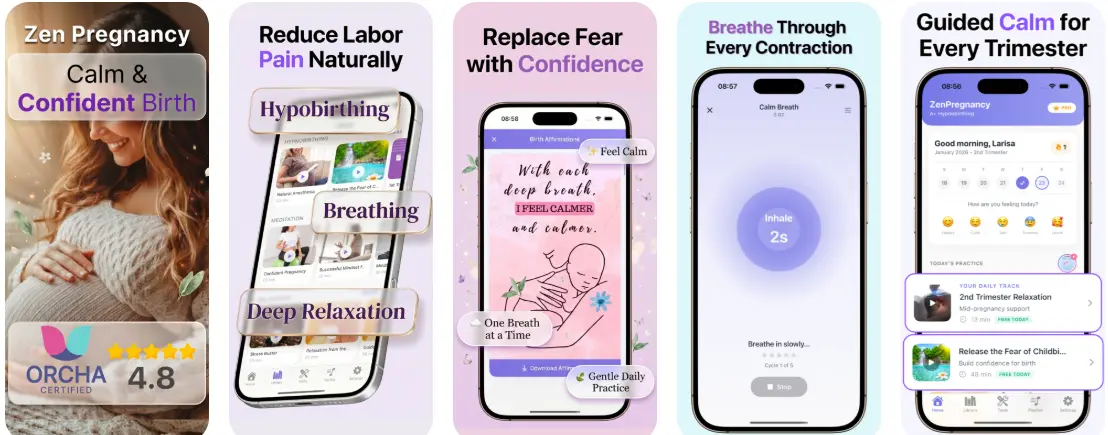
A guided affirmation practice is helpful when you want structure but do not want to overthink what to say each day. HypnoBirth App is a hypnobirthing app that provides guided meditation, breathing exercises, contraction timing, and birth affirmations for pregnant women.
You might use it in the second trimester to build a calm routine, in the third trimester to rehearse labor phrases, or during early labor to stay grounded between contractions. If you want a dedicated audio tool, a birth affirmations app can make it easier to practice when you are tired, busy, or lying awake at 3 a.m. You can also learn how affirmations fit into broader birth prep on the birth affirmations app guide.
Tracking Contractions with a Calm Mindset
Affirmations can also help during early labor, when you may be timing contractions and wondering whether it is time to call your provider. A calm phrase gives you something steady to return to between timing, texting, packing, and deciding what to do next.
Try pairing each recorded contraction with one short exhale phrase: I can do this one, my body gets rest between waves, or we will ask for guidance when it is time. If contraction timing makes you anxious, using a simple contraction timer with meditation support can reduce the feeling that you are staring at numbers alone. Always follow your birth team’s instructions about when to call or go in.
Start Tonight with a Five-Minute Routine
A five-minute routine is enough to begin. You do not need candles, a perfect mindset, or a quiet house; you only need one repeatable cue that tells your nervous system, we are practicing calm now.
Tonight, place one hand on your chest and one on your belly if that feels comfortable. Breathe in gently, exhale longer than you inhale, and repeat three phrases: I can take this one breath at a time, my body deserves kindness, and I can ask for support. If sleep is difficult, follow the practice with a low-stimulation wind-down or a sleep meditation for pregnant women. Small nightly repetition is what turns the words into something your body recognizes.
This guide was written for educational birth preparation and reviewed for safety language. It does not replace advice from your midwife, OB-GYN, GP, or maternity unit.
Frequently Asked Questions
What are pregnancy affirmations?
Pregnancy affirmations are short, supportive statements you repeat to guide your thoughts during pregnancy, birth preparation, and labour. They are designed to encourage calmer self-talk, body trust, confidence, and emotional steadiness.
Do pregnancy affirmations really help with anxiety?
Yes, pregnancy affirmations can help some people manage mild anxiety by reducing rumination and creating a calmer focus. They work best when paired with breathing, relaxation, journalling, or hypnobirthing practice. They are not a replacement for professional support if anxiety feels intense, persistent, or overwhelming.
When should I start using pregnancy affirmations?
You can start using pregnancy affirmations at any point in pregnancy. Starting earlier gives you more time to connect the words with calm breathing and relaxation, but even a short daily practice can feel supportive.
Is 38 weeks too late to start pregnancy affirmations?
No, 38 weeks is not too late to start pregnancy affirmations. Choose a few simple phrases and practise them daily with slow breathing, then use the same words during rest, appointments, early labour, or contractions.
Can pregnancy affirmations help during labour?
Yes, pregnancy affirmations can help you stay focused, soften tension, and remember your coping tools during labour. They do not guarantee pain relief or a specific birth outcome, but they can support a calmer mindset and clearer communication.
What are good labour affirmations for birth preparation?
Good labour affirmations are short, believable, and easy to remember under pressure. Examples include “One breath at a time,” “My body knows how to work with this wave,” and “I can ask for what I need.”
What if pregnancy affirmations feel fake or unrealistic?
Choose softer, more believable pregnancy affirmations if the words feel fake. For example, replace “I am fearless” with “I can feel fear and still take the next breath” or “I am learning how to trust myself.”
Are pregnancy affirmations safe?
Yes, pregnancy affirmations are generally safe because they are simply supportive words and thought patterns. They should not be used to ignore medical symptoms, trauma responses, severe anxiety, or concerns about your baby or birth plan; speak with your midwife, doctor, or mental health professional when you need care.
How often should I repeat pregnancy affirmations?
Repeating pregnancy affirmations once a day is a realistic starting point. You can link them to an existing routine such as taking prenatal vitamins, showering, walking, bedtime, or practising breathing.
Can partners use pregnancy affirmations during labour?
Yes, partners and birth supporters can say your chosen affirmations during pregnancy, appointments, early labour, and contractions. Practise together before birth so the words feel familiar, supportive, and not surprising in the moment.
Can I use pregnancy affirmations if I want an epidural?
Yes, pregnancy affirmations are useful whether you want an epidural, are unsure, or prefer an unmedicated birth. Affirmations can support confidence, decision-making, breathing, and communication, but they do not require any one type of birth plan.
Are pregnancy affirmation apps enough, or should I take a birth class?
Pregnancy affirmation apps can be helpful, but they are not the same as a birth class. An app may support daily mindset practice, while a class can teach labour stages, comfort measures, interventions, recovery, partner support, and informed decision-making, which is especially useful for first-time mums.
Best Pregnancy Affirmations App for Daily Birth Confidence
HypnoBirth App is a free hypnobirthing app that helps you practice calming affirmations, relaxation, and birth mindset tools throughout pregnancy. With 200k+ users and ORCHA NHS certification, it is a supportive option if you want guided, easy-to-repeat practices that fit naturally into your day.
Best for
- Daily pregnancy affirmations and relaxation practice
- Building confidence for labor with gentle hypnobirthing tools
Limitations
- It is not a substitute for medical advice or mental health support
- Some users may need to personalize affirmations so they feel fully believable