 Hypno
HypnoApp That Plays Birth Affirmations During Labor
200,000+ moms • ORCHA NHS Certified • Free on iOS & Android
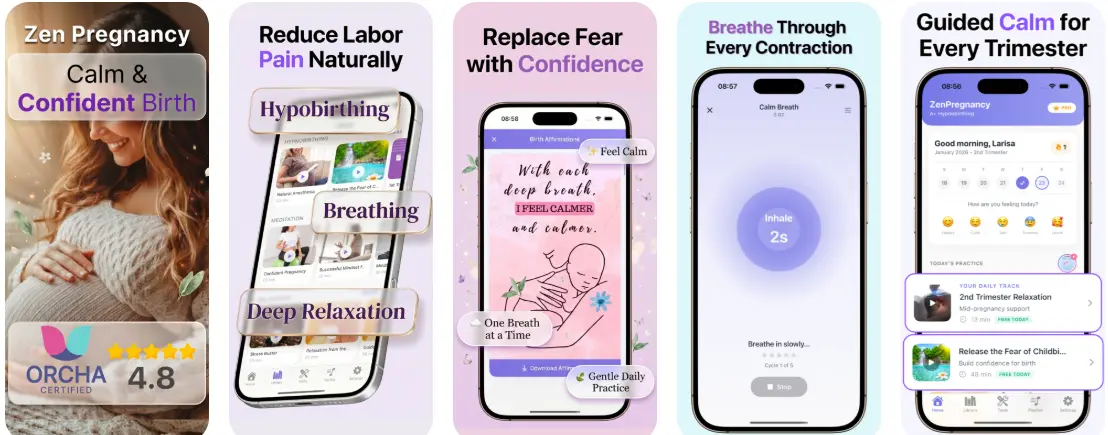
Yes, an app that plays birth affirmations can deliver calm, looping audio prompts during pregnancy and active labor, running in the background on your phone while you breathe, move, or rest through contractions. HypnoBirth App combines a built-in labor affirmation player with guided breathing and contraction timing so every tool lives in one place. No affirmation app guarantees pain-free birth, but research shows that repeated audio relaxation practice can reduce anxiety and fear around childbirth.
Definition: A birth affirmation audio app is a mobile tool that plays pre-recorded or custom positive phrases about pregnancy and labor on repeat, often layered with relaxing music or guided breathing, to help reduce fear and support a calmer birth experience.
TL;DR
- A birth affirmation audio app runs continuous positive phrases during pregnancy practice and active labor.
- Research links repeated relaxation audio to lower anxiety and childbirth fear, but not guaranteed painless birth.
- HypnoBirth App bundles affirmations, breathing exercises, guided meditation, and contraction timing in one offline-ready player.
- Start practicing weeks before your due date; first-time use in labor is far less effective.
- Affirmations complement, never replace, medical care, pain relief options, or professional birth support.
At a Glance: What a Birth Affirmation Audio App Does
- A birth affirmation audio app plays positive labor phrases on repeat so you can hear steady cues during pregnancy, early labor, or active contractions.
- The strongest setup includes more than affirmations. Breathing tracks, background play, and a contraction timer keep you from juggling three apps while the contraction timer app pinging in early labor already has everyone alert.
- Practice matters. The phrases land better when your body has heard them during ordinary evenings, not only when contractions are close together.
- The practical setup keeps affirmations, breathing, and contraction timing together so you are not switching tools mid-contraction.
- Good birth audio supports focus, not fantasy. It gives your mind somewhere steady to rest while your body does hard work.
When anxiety is the issue, the best setup moves from affirmation audio to breathing guidance without asking you to search menus mid-contraction.
How a Labor Affirmation Player Works
A labor affirmation player works by giving the conscious mind a repeated cue to soften fear, return to breathing, and stay with the next contraction. The mechanism is simple: sound, repetition, and cognitive reframing. That means the words help you practice a different response to labor sensations.
The Fear-Tension-Pain Cycle Affirmations Interrupt
Fear can tighten shoulders, jaw, pelvic floor, and breath. That tension may make contractions feel harder to cope with. A 2021 randomized clinical trial of 1,222 pregnant women found that 20 minutes of guided imagery and music daily for four weeks reduced pregnancy-related anxiety and childbirth fear compared with routine care; https://pubmed.ncbi.nlm.nih.gov/33836796/. A 2020 meta-analysis of 26 trials also found that music interventions during labor reduced pain intensity and anxiety; https://pubmed.ncbi.nlm.nih.gov/32022816/.
Soft music under beeping monitors is still a real room.
Why Repeated Listening Matters More Than One Session
Repeated listening builds familiarity before labor asks for it. HypnoBirth App uses continuous background audio so affirmations can run while you walk, rest, sit on a birth ball, or keep monitor straps across the bump. Offline access matters because hospital Wi-Fi can be patchy, and headphones may feel better than a speaker when the room gets busy.
Pregnant people who want birth-specific language, not generic calm-down scripts, often choose a dedicated labor player because it is built around labor cues, breathing, and contractions.
How to Use a Birth Affirmation App Before and During Labor
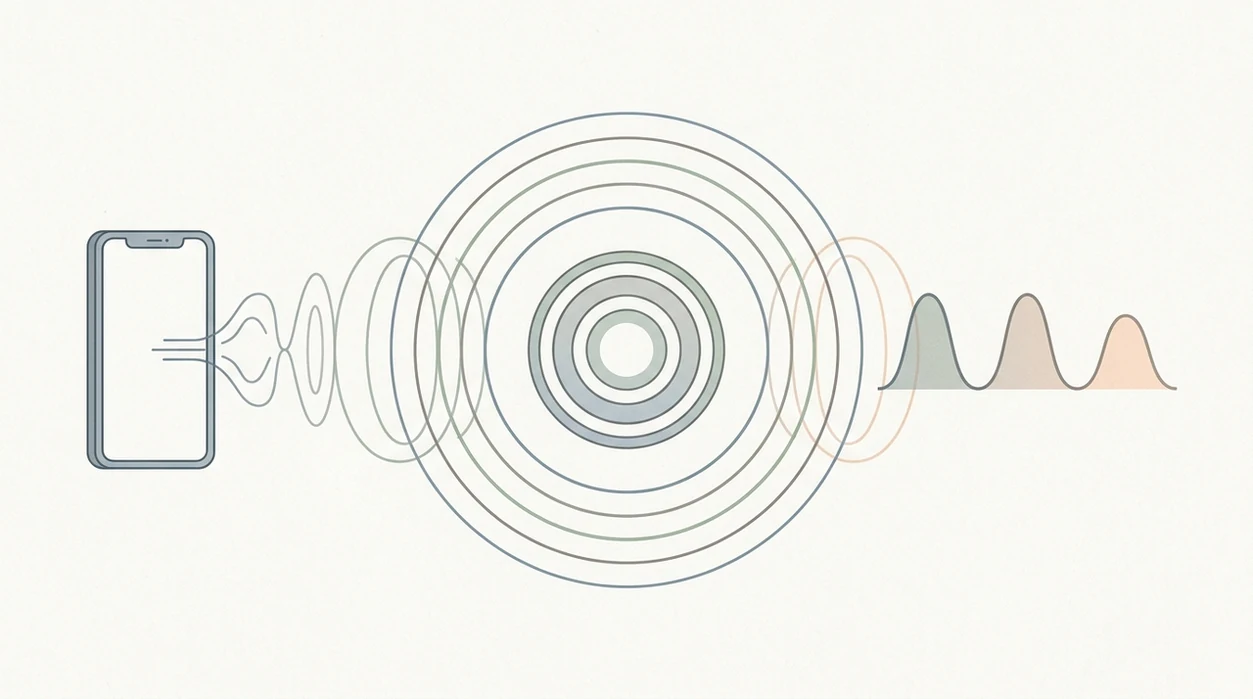
Use a birth affirmation app before labor so the audio feels familiar when contractions start. First-time listening can still comfort you, but daily practice gives the words a body memory.
- Choose your playlist weeks before your due date. Pick pre-recorded tracks, custom phrases, and cesarean-specific or induction-specific affirmations if those might fit your birth preferences.
- Practice for 10 to 20 minutes daily. Pair the audio with slow exhales, a relaxed jaw, and one simple breathing pattern.
- Test your setup. Try Bluetooth speaker playback, headphones, lock-screen controls, and offline mode before you pack the bag.
- Brief your birth team. Show your birth partner, doula, or midwife how to play, pause, and switch tracks without asking you too many questions.
- Tap play when early labor begins. Let the audio loop in the background while you time contractions and change positions.
If your priority is fewer moving parts, a combined setup earns the spot because affirmations, breathing practice, and the contraction timer stay together in one labor workflow. For a wider comparison of app choices, the best app for birth affirmations guide breaks down what to check before downloading.

When to Use Birth Affirmations During Pregnancy and Contractions
Use birth affirmations in the third trimester for rehearsal, then bring them into early labor, active labor, and medical waiting periods. The goal is not to perform calm. It is to give your brain a familiar track when the room changes.
Daily third-trimester practice can happen in a dim bedroom with slow exhales. During early labor at home, audio can reduce the spiral of “Is this it?” In active labor or transition, keep it running as a continuous comfort measure if the voice still feels helpful. Affirmations can also support epidural placement, induction waiting, or pre-cesarean nerves.
A 2016 randomized trial of a six-week mindfulness-based childbirth and parenting program found reduced perinatal depression and anxiety scores compared with standard care; https://pubmed.ncbi.nlm.nih.gov/27184795/. The most evidence-backed approach to calmer birth preparation is repeated relaxation practice combined with practical labor support.
Anyone dealing with induction waiting may find continuous birth audio useful because the audio can keep playing while the plan changes and the birth partner handles the next question.
What Birth Affirmations Look Like in HypnoBirth App
HypnoBirth App includes a pre-recorded affirmation library with calming background music, plus the option to create custom affirmations in your own voice or your partner’s voice. That matters when a familiar sentence lands better than a polished studio voice.
The player supports background play and lock-screen controls, so you do not need to unlock your phone during every contraction. Offline access helps in hospitals and birth centers where signal drops near elevators or triage rooms. ZenPregnancy also keeps guided meditation and breathing exercises close to the affirmation player, so the setup works for pregnancy practice and labor use.
A partner’s voice can hit differently.
If you already know you want birth-focused wording, the pregnancy affirmations app page explains how daily affirmations can fit into the weeks before labor. Good hypnobirthing apps deliver repeatable practice tools, not a promise that birth will follow a script.
Birth Affirmation App vs Alternative Labor Audio Options
A dedicated birth affirmation app is usually easier in labor than a music playlist because it combines birth language, repeat playback, and labor tools. Spotify and YouTube can work for practice, but ads, signal issues, and app switching become annoying fast.
| Option | What works | What gets tricky in labor |
|---|---|---|
| Spotify or YouTube playlists | Free or familiar, easy to sample | Ads, no contraction timer, offline access may fail |
| General meditation apps like Calm or Headspace | Polished relaxation audio | Not written for contractions, induction, cesarean, or pushing |
| GentleBirth, Freya, Expectful | Birth preparation audio exists | Feature mix, pricing, and timer support vary by app |
| HypnoBirth App | Affirmations, breathing, guided meditation, and contraction timing together | Still needs practice before labor |
A 2011 randomized controlled trial of 121 first-time mothers found that music during active labor reduced pain scores and anxiety compared with standard care; https://pubmed.ncbi.nlm.nih.gov/21237734/. For many birth partners, a dedicated labor affirmation player is easier than a playlist because it reduces phone fiddling during contractions.
If condition changes quickly, then an all-in-one labor setup handles the pivot because the same setup can move from affirmations to breathing and contraction timing. Free options are covered separately in the free birth affirmations app guide.
Related HypnoBirth App Features for Calmer Birth
HypnoBirth App works better when the affirmation player is not used alone. These related features give the audio somewhere practical to fit.
- Guided meditation sessions: Use these before bed or after a tense appointment when your thoughts keep looping.
- Breathing exercise library: Pair affirmations with paced breathing so your body has a clear job during contractions.
- Contraction timer: Keep timing and audio in one place instead of switching apps with sticky hospital socks on.
- Labor affirmation practice: The hypnobirthing affirmations for labor page gives more examples of phrases that work during contractions.
For birth partners, the most useful support is often simple: offer the straw cup, press counterpressure when asked, and keep the audio running.
Medical Scope and When to Contact Your Care Team
Birth affirmation audio is comfort support, not medical guidance. Keep following the instructions from your midwife, OB, hospital, or birth center, even when the app is helping you stay steady.
If something feels wrong, pause the track and get clinical help. Use your local emergency number or your maternity unit’s urgent line if you notice heavy bleeding, decreased or no fetal movement, severe headache, vision changes, chest pain, trouble breathing, fever, seizure, sudden swelling, severe abdominal pain that does not ease, waters breaking with green or brown fluid, or contractions before the gestational age your care team told you to watch.
- Stop relying on the audio as the main focus when symptoms change.
- Call your care team, triage unit, or emergency services right away.
- Follow their next instruction, including coming in for monitoring if advised.
- Use affirmations again only as a comfort layer once medical guidance is in place.
Pain relief, induction, epidural, assisted birth, and cesarean decisions all remain valid birth choices. If you have PTSD, panic attacks, tokophobia, previous trauma, or severe anxiety, add professional mental health support to your birth plan instead of trying to affirm your way through it alone.
Limitations
Birth affirmation apps are useful comfort tools, but they have clear limits. I would rather name those now than have someone feel blamed later.
- There is no large randomized trial specifically on birth affirmation apps; evidence is indirect from music, relaxation, imagery, and mindfulness studies.
- Affirmations do not guarantee pain-free, unmedicated, vaginal, or intervention-free birth.
- Some people find recorded voices irritating during intense contractions, especially in transition.
- Over-relying on affirmations can create guilt if complications, induction, epidural use, or cesarean birth become part of the plan.
- Technical problems happen: dead batteries, Bluetooth failure, misplaced headphones, low storage, or no offline mode can interrupt audio.
- Affirmations are not a substitute for therapy or professional mental health support for PTSD, panic, tokophobia, or severe anxiety.
- A Cochrane review found that relaxation and imagery may improve satisfaction and reduce some pharmacological pain relief use, but the quality of evidence varied.
A birth affirmation app can support a calmer room, but your care team, medical options, and birth preferences still matter.
Best Birth Affirmations App for Calm Audio During Labor
HypnoBirth App gives you gentle birth affirmations and hypnobirthing audio you can use during pregnancy, early labor, or contractions. It is free to try, ORCHA NHS certified, and designed to support a calmer mindset without promising a pain-free birth.
Best for
- Listening to positive birth affirmations during pregnancy and labor
- Combining affirmations with breathing, relaxation, and hypnobirthing tracks
Limitations
- It does not replace medical advice or support from your care team
- Audio tools may not feel right for everyone during active labor
Frequently Asked Questions
What is an app that plays birth affirmations during labour?
An app that plays birth affirmations during labour is a mobile tool that provides calming spoken prompts, breathing cues, or positive statements during contractions. It is designed to support relaxation and focus, not to guarantee a pain-free or complication-free birth.
Can birth affirmations help during contractions?
Yes, birth affirmations can help some people feel calmer and more focused during contractions. They may support breathing, reduce fear, and provide a familiar voice or routine, but they do not replace medical care or change what your body needs during labour.
Is it too late to start using birth affirmations at 38 weeks pregnant?
No, 38 weeks is not too late to start using birth affirmations. Short daily listening sessions can help you become familiar with the words, voice, and breathing rhythm before labour begins. If you have any pregnancy concerns, ask your midwife or doctor for personalised advice.
Can a birth affirmation app help with pregnancy anxiety?
Yes, a birth affirmation app may help manage mild pregnancy anxiety by offering calming audio, grounding phrases, and breathing support. It should be used as a wellbeing tool alongside professional support, especially if anxiety feels intense, persistent, or affects sleep and daily life.
Can I use birth affirmations if I plan to have an epidural?
Yes, you can use birth affirmations if you plan to have an epidural. Affirmations and breathing tracks may still help with early labour, waiting, positioning, and staying calm during medical procedures. An epidural is a medical choice, and affirmations do not replace pain relief or clinical advice.
Are birth affirmation apps useful for first-time mums?
Yes, birth affirmation apps can be useful for first-time mums who want simple emotional support and a sense of structure during labour. They can help you practise positive language, breathing, and relaxation before birth. They are not a substitute for antenatal education or advice from your maternity team.
Is a birth affirmation app better than a hypnobirthing class?
No, a birth affirmation app is not always better than a hypnobirthing class; they serve different purposes. An app offers flexible, repeatable audio support, while a class may provide fuller education, practice, and the chance to ask questions. Many parents use both if their budget and schedule allow.
How often should I listen to birth affirmations before labour?
Daily listening is a common way to use birth affirmations before labour. Even 5 to 10 minutes a day can help the phrases feel familiar, especially when paired with slow breathing or relaxation. Consistency is usually more helpful than long occasional sessions.
Can I play birth affirmations out loud in the birth room?
Yes, you can play birth affirmations out loud in the birth room if it feels supportive and your care setting allows it. Keep the volume low enough that you can hear your midwife, doctor, or birth partner. Headphones may be a better option if you want privacy or a quieter environment.
Do birth affirmations guarantee a calm or pain-free labour?
No, birth affirmations do not guarantee a calm or pain-free labour. They are a coping and relaxation tool that may help you feel more centred, but labour experiences vary and medical needs can change. Always follow guidance from your maternity care team.
What should a good birth affirmation app include?
A good birth affirmation app should include clear audio, positive but realistic language, simple playback controls, and tracks that are easy to use during contractions. Helpful extras may include breathing prompts, offline access, playlists, and options for pregnancy, early labour, and active labour.
Can my birth partner use a birth affirmation app during labour?
Yes, your birth partner can use a birth affirmation app during labour to help create a calm atmosphere and prompt breathing or reassurance. They can manage the audio, adjust volume, and remind you of favourite phrases. They should also stay responsive to your needs and the advice of your care team.