 Hypno
HypnoPrenatal Mindfulness: Building Awareness During Pregnancy
Prenatal mindfulness practices that reduce anxiety, improve sleep, and prepare you for labor. How mindful awareness changes your pregnancy experience.
200,000+ moms • ORCHA NHS Certified • Free on iOS & Android
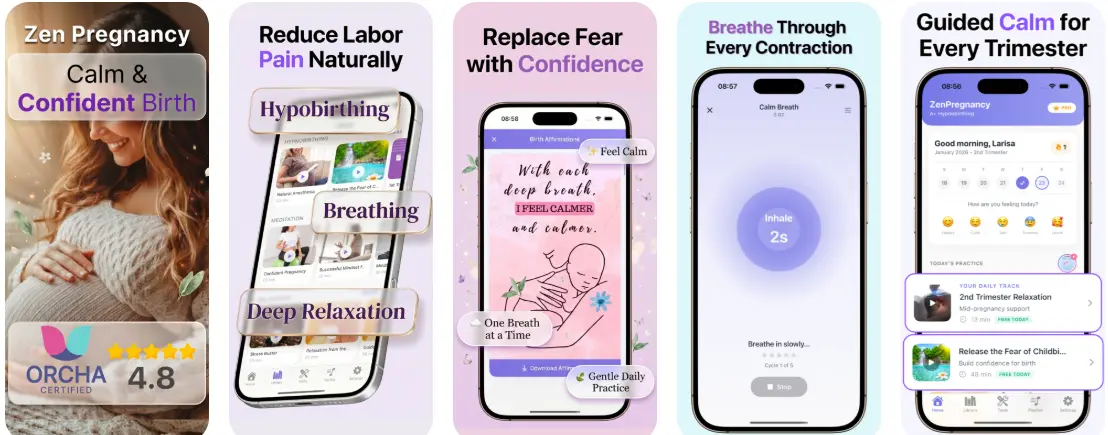
Prenatal mindfulness is the practice of paying attention to your body, breath, thoughts, and baby during pregnancy with gentle, non-judgmental awareness. It can help you manage everyday pregnancy stress, settle your nervous system, improve rest, and feel more prepared for birth.
Who is this guide for?
Good fit if you
- You want simple daily practices to feel calmer during pregnancy
- You are preparing for birth and want tools for contractions, breathing, and focus
- You struggle with racing thoughts, pregnancy worries, or difficulty switching off at night
- You want to bond with your baby through guided relaxation and mindful awareness
- You prefer a gentle, non-clinical approach that can fit around a busy schedule
May not be enough if you
- You need urgent mental health support or medical advice for anxiety, depression, trauma, or sleep problems
- You are looking for mindfulness to replace antenatal care, therapy, or advice from your maternity team
- You prefer highly structured clinical treatment rather than self-guided relaxation and mindset tools
- You find inward-focused practices uncomfortable and would rather use movement, talking support, or practical planning
Why Mindfulness Matters During Pregnancy
Mindfulness matters in pregnancy because it helps you respond to stress instead of being pulled around by it. Pregnancy can bring joy, body changes, identity shifts, appointments, scary searches at 2 a.m., and the very human fear of birth.
A mindful pause creates space between sensation and story. Sensation might be, “My belly feels tight.” Story might be, “Something is wrong.” Sometimes you should call your midwife or doctor; sometimes your nervous system is simply sounding an alarm. Mindfulness helps you notice the difference more clearly. For more support with anxious spirals, see our guide to pregnancy stress relief techniques. This is not medical advice. Consult your healthcare provider if symptoms feel unusual, intense, or concerning.
How Prenatal Mindfulness Works in the Brain and Body
Prenatal mindfulness works by training attention, lowering automatic stress reactivity, and helping the nervous system return toward a steadier state. In simple terms, you practice noticing a thought, breath, contraction, or body sensation, then gently bring attention back without fighting yourself.
This repeated return builds attentional control, which can reduce rumination and catastrophic thinking. Slow breathing and body awareness may support parasympathetic activity, often described as the body’s “rest and digest” response. During pregnancy and labor, that matters because fear can tighten muscles, shorten breathing, and make sensations feel more threatening. Mindfulness does not guarantee an easy birth, but it can help you meet intensity with more steadiness and fewer fear loops.
How to Practice Mindfulness During Pregnancy
The best pregnancy mindfulness practice is short, repeatable, and kind enough that you will actually do it. You do not need a silent house, a perfect cushion, or a 30-minute routine.
- Pause: Sit, stand, or lie on your side and notice one physical point of contact, such as feet on the floor.
- Name: Label what is present: worry, pressure, excitement, nausea, sadness, or tiredness.
- Breathe: Inhale gently through the nose and lengthen the exhale by one or two counts.
- Soften: Release the jaw, shoulders, hands, belly, or pelvic floor without forcing relaxation.
- Choose: Ask, “What is the next caring step?” It may be rest, water, food, movement, or calling your provider.
Mindful Breathing for Pregnancy Stress
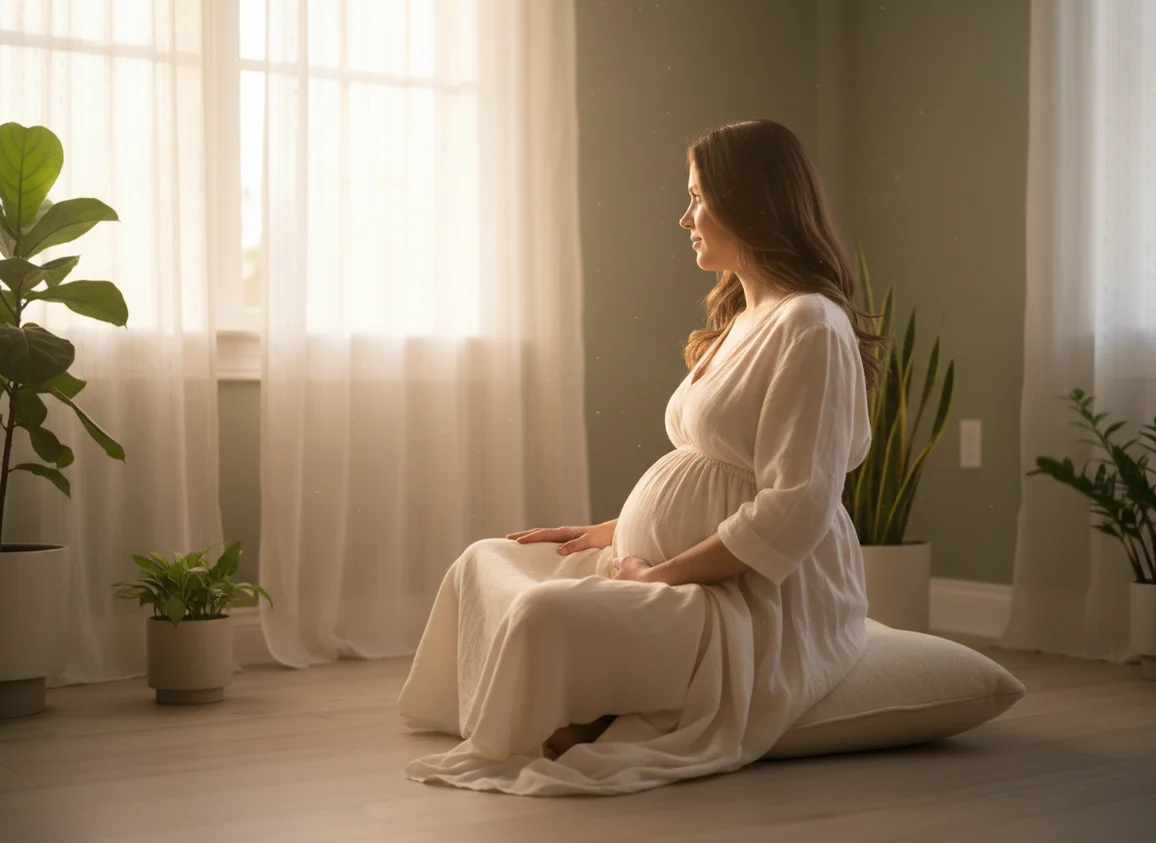
Mindful breathing is one of the quickest ways to calm pregnancy stress because the breath is always available and easy to adjust. A longer exhale can signal safety to the body when your thoughts are racing.
Try breathing in for four counts and out for six counts for three to five rounds. If counting makes you tense, use a phrase instead: “In, I am here. Out, I soften.” Keep the breath comfortable, especially if you feel dizzy, breathless, or nauseated. Many parents pair mindfulness with pregnancy breathing techniques so the same patterns feel familiar before labor begins. Stop any breathing exercise that causes discomfort and speak with your healthcare provider if breathlessness is new or severe.
Guided Meditation for Pregnancy Bonding and Sleep
Guided meditation can make mindfulness easier when your mind feels too busy to sit in silence. A calm voice gives your attention somewhere to rest, which can be especially helpful during the first trimester nausea phase or the third trimester “how will this birth go?” phase.
For bonding, place a hand on your belly and notice movement, warmth, or simple contact without needing to feel sentimental every time. For sleep, choose a body scan, breath practice, or calming birth visualization while lying on your left side or whichever position your provider recommends. Our guided meditation for pregnancy page includes gentle options for rest, reassurance, and daily emotional steadiness.
Mindfulness by Trimester
Mindfulness changes by trimester because your body, worries, and energy change too. In the first trimester, practice may be as simple as one minute of breathing before checking symptoms online or waiting for scan results.
In the second trimester, many parents use mindful movement, body scans, and baby-bonding meditations as energy returns. In the third trimester, focus often shifts toward labor coping, sleep, pelvic pressure, and the unknowns of birth. If you are preparing late in pregnancy, our article on hypnobirthing in the third trimester explains how to build a realistic routine in the final weeks. The goal is not to become perfectly calm. The goal is to keep returning to your body with patience.
Labor Mindfulness for Contractions and Birth
Labor mindfulness means staying with one contraction, one breath, and one decision at a time. This can help reduce the mental overwhelm that happens when the mind jumps ahead to hours of labor, cervical checks, or possible interventions.
A useful phrase is, “This wave has a beginning, a peak, and an end.” During early labor, mindfulness may look like dim lights, slow breathing, and resting between contractions. During active labor, it may become simpler: low sounds, loose jaw, soft hands, and one focal point. If you want to practice this before birth, explore labor mindfulness exercises and combine them with a contraction timer meditation when waves begin. Always contact your care team according to your birth plan and medical guidance.
Birth Preparation for Different Plans
Mindfulness supports many birth plans because it is a coping skill, not a single ideology. It can fit hospital birth, home birth, birth center care, induction, epidural, unmedicated labor, planned cesarean, VBAC preparation, or a plan that changes in the moment.
For an epidural birth, mindfulness may help with early labor, decision-making, and staying present during procedures. For a planned cesarean, it can support calm breathing before surgery and grounding during recovery. For an unmedicated birth, it can pair with movement, touch, water, and vocalization. If you are comparing tools, our hypnobirthing techniques guide explains how relaxation, breathing, visualization, and affirmations work alongside mindful awareness.
Pregnancy Affirmations and Mindful Self-Talk
Pregnancy affirmations work best when they feel believable, specific, and emotionally safe. Mindful self-talk is not about pretending everything is perfect; it is about speaking to yourself in a way that lowers fear and supports wise action.
Instead of “I will have the perfect birth,” try “I can meet one breath at a time,” or “I can ask questions and make informed choices.” If you notice a harsh thought like “I am not strong enough,” pause and name it as a thought, not a fact. Then choose a steadier phrase. For more examples, see our birth affirmations app page, which includes phrases for pregnancy, labor, cesarean birth, and postpartum recovery.
Sleep Meditation for Pregnant Women
Sleep meditation can help pregnant women settle when physical discomfort and mental planning collide at night. It will not remove every hip ache, bathroom trip, or newborn-related worry, but it can reduce the extra layer of tension that keeps the body alert.
A good bedtime practice is simple: one hand on the chest, one on the belly, three longer exhales, then a slow scan from forehead to feet. If you wake at 3 a.m., avoid turning the practice into a performance. Resting with eyes closed still counts. For more nighttime support, try our sleep meditation for pregnant women guidance, especially if your thoughts become louder as birth gets closer.
Best Mindfulness Apps for Pregnancy Compared
The best pregnancy mindfulness app depends on whether you want birth-specific tools, general meditation, or a structured hypnobirthing method. HypnoBirth App is designed specifically for pregnancy and birth, while some competitors focus more broadly on wellness or paid course-style content.
| App or program | Best for | Pregnancy-specific features |
|---|---|---|
| HypnoBirth App | Daily hypnobirthing, calm pregnancy, and labor preparation | Meditations, breathing, affirmations, contraction timing, birth preparation |
| Expectful | Fertility, pregnancy, and motherhood meditation | Stage-based meditations and sleep support |
| Hypnobabies | Structured hypnosis-based childbirth education | Longer course format and hypnosis tracks |
| Calm | General stress, sleep, and meditation | Useful relaxation content, less birth-specific |
Where a Hypnobirthing App Fits Into Your Routine
A hypnobirthing app fits best as a daily cue to practice before birth, not as something you open for the first time in active labor. HypnoBirth App is a hypnobirthing app that provides guided meditation, breathing exercises, contraction timing, and birth affirmations for pregnant women.
Use it for five to ten minutes after brushing your teeth, before a nap, during a commute as a passenger, or while winding down at night. If you prefer mobile support, you can start with a prenatal mindfulness app on iPhone or try guided pregnancy meditations on Android. Keep your practice practical: short, steady, and repeated often enough that your body recognizes the cues.
Evidence for Mindfulness-Based Pregnancy Support
Research suggests mindfulness-based pregnancy programs may reduce anxiety, stress, depressive symptoms, and fear of childbirth for some people, especially when practiced consistently. Results vary by program, study design, mental health history, and how much support a person receives.
A review of mindfulness-based interventions during pregnancy published in the medical literature found promising effects on stress and mood, though researchers note that more high-quality trials are needed (source). Health services also encourage pregnant people to seek help early for mental health concerns; the NHS offers guidance on mental health in pregnancy. Mindfulness can be a helpful support, but it should not replace therapy, medication, emergency care, or medical monitoring when those are needed.
Limitations and Safety for Pregnancy Meditation
Mindfulness is helpful, but it is not enough for every situation. A trustworthy pregnancy practice should be calming without ignoring medical or mental health warning signs.
- It cannot diagnose symptoms. Bleeding, severe pain, fever, reduced fetal movement, or signs of preterm labor need medical guidance.
- It may bring up strong emotions. Trauma, previous loss, infertility, or birth fear can surface during quiet practices.
- It is not a replacement for treatment. Anxiety, depression, OCD, PTSD, or panic may require therapy, medication, or specialist care.
This is not medical advice. Consult your healthcare provider.
When to Get Extra Pregnancy Support
Get extra support when worry interferes with eating, sleeping, bonding, appointments, daily life, or your sense of safety. You deserve help before you reach a crisis point.
Call your maternity unit, OB-GYN, midwife, or local emergency service if you have thoughts of harming yourself, feel unable to stay safe, experience reduced fetal movement, heavy bleeding, severe abdominal pain, severe headache, vision changes, chest pain, or symptoms your care team has told you to watch for. For emotional support, ask about perinatal mental health therapists, support groups, medication options, or trauma-informed birth education. Mindfulness can sit beside care; it should never be used to talk yourself out of seeking care.
Start a Calm Pregnancy Practice Tonight
Start tonight with a practice so small it feels almost too easy. Two minutes done often is better than a perfect 30-minute session you avoid.
- Choose one time: bedtime, after lunch, or right after your prenatal vitamin.
- Set one cue: hand on heart, hand on belly, or feet on the floor.
- Breathe gently: take five slow exhales without forcing deep breaths.
- Say one phrase: “Right now, I can take the next step.”
- Repeat tomorrow: consistency matters more than mood.
If you want more structure, HypnoBirth App can help you build a calm routine with short practices for pregnancy, birth, and the early postpartum transition.
This guide was written for educational birth preparation and reviewed for safety language. It does not replace advice from your midwife, OB-GYN, GP, or maternity unit.
Frequently Asked Questions
What is prenatal mindfulness?
Prenatal mindfulness is the practice of paying attention to pregnancy thoughts, emotions, and body sensations with curiosity rather than judgement. It may include breathing, body scans, guided meditation, mindful movement, and compassionate self-talk.
Can prenatal mindfulness help with pregnancy anxiety?
Yes, prenatal mindfulness can help reduce pregnancy anxiety for some people when practised regularly. It supports calmer breathing, body awareness, and less reactive thinking, but it is not a replacement for medical or mental health care if anxiety feels severe, persistent, or overwhelming.
Can I start prenatal mindfulness at 38 weeks pregnant?
Yes, you can start prenatal mindfulness at 38 weeks pregnant. Even short daily practices may help you feel calmer, sleep better, and prepare to use breathing or grounding during labour, although earlier practice gives more time to build familiarity.
How long should prenatal mindfulness sessions be?
Prenatal mindfulness sessions can be as short as two to five minutes. Consistency matters more than length, so a brief breathing practice, body scan, or mindful pause each day is often more useful than occasional long sessions.
Does mindfulness help during labour and birth?
Yes, mindfulness can help during labour by supporting focus, steadier breathing, and recovery between contractions. It does not guarantee a pain-free birth or a specific outcome, but it can help you meet each sensation one moment at a time alongside appropriate clinical care.
Is meditation safe during pregnancy?
Yes, gentle meditation is generally safe during pregnancy for many people. Choose comfortable positions, avoid breath-holding or anything that causes dizziness, and speak with your midwife or doctor if you have a high-risk pregnancy, panic symptoms, trauma concerns, or medical restrictions.
What should I do if meditation makes me anxious during pregnancy?
Stop or shorten the practice if meditation makes you anxious during pregnancy. Open your eyes, focus on a safe object, use touch-based grounding, try walking meditation, or seek support from a qualified professional if panic, distress, or trauma memories arise.
Can I use mindfulness if I have an epidural during labour?
Yes, you can use mindfulness with an epidural during labour. Mindfulness may support decision-making, calm breathing during procedures, emotional steadiness, and connection with your body even when pain sensations are reduced.
Is prenatal mindfulness the same as hypnobirthing?
No, prenatal mindfulness and hypnobirthing are related but not the same. Mindfulness focuses on present-moment awareness, while hypnobirthing often adds birth-specific relaxation scripts, visualisation, breathing techniques, and affirmations.
Is prenatal mindfulness useful for first-time mums?
Yes, prenatal mindfulness can be especially useful for first-time mums who are learning to manage new sensations, uncertainty, and birth-related fears. Simple practices can build confidence, improve awareness of the body, and create calmer habits before labour begins.
Is a prenatal mindfulness app enough, or should I take a class?
A prenatal mindfulness app may be enough for simple daily practice, especially if you prefer flexibility. A class can offer structure, feedback, birth-specific guidance, and support from a teacher, which may be helpful if you feel anxious, unsure, or want a deeper routine.
What is the best mindfulness exercise for pregnancy stress?
Mindful breathing is one of the simplest mindfulness exercises for pregnancy stress. Try noticing each inhale and exhale for two to five minutes, gently returning attention to the breath whenever the mind wanders, and stopping if the practice feels uncomfortable or dizzying.
Best Prenatal Mindfulness App for Calm Pregnancy and Birth Preparation
HypnoBirth App combines free hypnobirthing, guided relaxation, breathing, and mindset tools to support prenatal mindfulness throughout pregnancy. With 200k+ users and ORCHA NHS certification, it is a practical option for building calm awareness, bonding with your baby, and preparing for labor in a gentle, self-paced way.
Best for
- Daily pregnancy relaxation and mindful breathing
- Preparing for contractions with calm focus and confidence
- Bedtime listening to support rest and baby bonding
- Parents wanting free hypnobirthing tools in one simple app
Limitations
- It is not a substitute for medical advice, therapy, or care from your midwife or doctor
- Some mindfulness and hypnobirthing techniques work best with regular practice over time
Read more
- App To Help Me Sleep While Pregnant
- App To Help Me Stay Calm During Labor
- App To Help Pregnancy Anxiety At Night
- Best Pregnancy Meditation App
- Calm vs Hypnobirthing App for Pregnancy
- Find Calm Birth Preparation
- First Trimester Meditation App Guide
- Fourth Trimester Meditation Guide
- Free Pregnancy Meditation App
- Guided Meditation for Pregnancy: Calm Birth Prep
- Headspace Pregnancy Meditation Alternative
- Hospital Bag Meditation App Checklist