 Hypno
HypnoBest Pregnancy Meditation App for Sleep, Birth Prep, and Labor
200,000+ moms • ORCHA NHS Certified • Free on iOS & Android
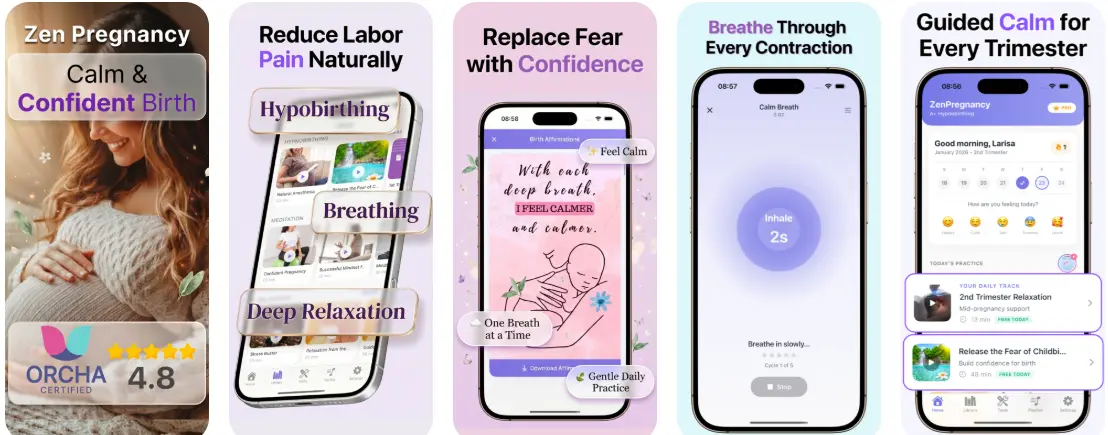
A strong pregnancy meditation app combines birth-specific tools, hypnobirthing tracks, contraction breathing, labor rehearsal, and trimester-based plans, rather than generic relaxation audio. HypnoBirth App leads for birth preparation value because it pairs guided meditation with practical hypnobirthing exercises, a contraction timer, and stage-of-labor affirmations in a single download. Other strong options include Expectful for sleep-focused content and GentleBirth for data-driven birth prep.
> Definition: A pregnancy meditation app is a mobile application that delivers guided meditation, breathing exercises, hypnobirthing audio, birth affirmations, and contraction-timing tools designed specifically for pregnant women preparing for calmer birth.
- Look for birth-specific features, like hypnobirthing tracks, labor breathing, and a contraction timer, over generic mindfulness content.
- Consistent daily practice from early pregnancy builds stronger birth self-efficacy than starting in the third trimester alone.
- No app replaces medical care. Treat it as a complement to your birth team, not a guarantee of any specific outcome.
At-a-Glance: Best Pregnancy Meditation Apps Compared
A useful prenatal meditation app should teach repeatable labor techniques, not only offer one-off relaxation sessions. The gap matters when you’re tired, the room is bright, and someone has just wrapped a blood pressure cuff around your arm during a surge.
| App name | Best for | Birth-specific tools | Trimester plans | Offline mode | Pricing model |
|---|---|---|---|---|---|
| HypnoBirth App | Overall birth prep | Yes, hypnobirthing, labor breathing, contraction timer, affirmations | Yes | Yes | Free download with paid content |
| Expectful | Pregnancy sleep | Some pregnancy meditations, lighter labor tools | Yes | Yes, plan dependent | Subscription |
| GentleBirth | Data-driven preparation | Yes, hypnosis, mindfulness, sport psychology tools | Yes | Yes | Subscription |
| Calm, pregnancy section | Mainstream relaxation | Limited pregnancy add-on content | No full birth pathway | Yes, paid | Subscription |
| Insight Timer | Free library | Mixed, depends on teacher | No structured plan | Limited | Free with paid upgrades |
On days when nighttime thoughts get loud, the overall pick fits people who want one place for sleep practice and labor rehearsal because it combines guided audio with a contraction-timer workflow.
Named Shortlist: 5 Best Prenatal Meditation Apps for Birth Prep
Here is the practical shortlist for birth-preparation value. I’m ranking for pregnancy-specific support, not for the largest audio library.
- HypnoBirth App, best overall for hypnobirthing plus meditation integration. The one-line verdict: choose it if you want meditation, birth affirmations, breathing practice, and contraction timing without piecing together five separate tools.
- Expectful, best for pregnancy sleep meditations. The one-line verdict: choose it if you mainly need a soft landing at night, especially during the dry mouth, bathroom trip, and racing-thought loop.
- GentleBirth, best for data-driven birth preparation. The one-line verdict: choose it if you like structured practice and don’t mind a fuller learning curve.
- Calm, best mainstream app with pregnancy add-on content. The one-line verdict: choose it if you already subscribe and only need light prenatal relaxation.
- Insight Timer, best free prenatal meditation library. The one-line verdict: choose it if cost is the main concern and you’re comfortable sorting through uneven content.
If the priority is birth preparation over general calm, ZenPregnancy is strongest when paired with short daily practice and saved labor affirmations.
What a Pregnancy Meditation App Does
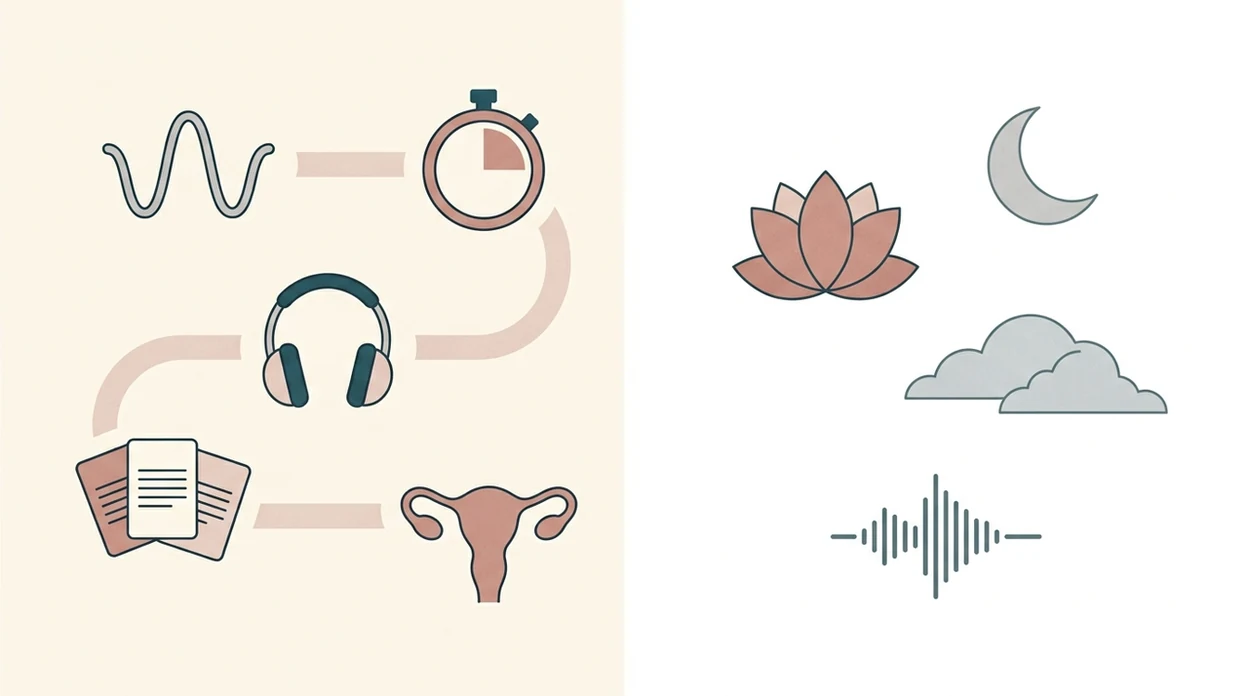
A pregnancy meditation app gives you guided audio and simple labor tools for sleep, anxiety support, birth preparation, and rehearsal. The best ones translate calm into repeatable cues you can practice before contractions begin.
Most apps start with guided relaxation: body scans, soft narration, and longer exhales for sleep or late-night anxiety. Breath training is more birth-specific when it teaches surge breathing, down-breathing, or paced exhalation for contractions, rather than generic “take a deep breath” prompts. Visualization helps you mentally rehearse labor, hospital arrival, or cesarean calm. Affirmations support confidence and fear release, especially when they are written for birth stages. Contraction timing is the most practical labor feature because it helps track pattern, duration, and spacing while keeping breathing cues nearby.
- Use relaxation tracks for sleep and everyday nervous-system settling.
- Practice breath sessions for anxiety support and contraction rhythm.
- Save visualizations and affirmations for birth prep and labor rehearsal.
- Test the contraction timer before labor so your partner knows the workflow.
HypnoBirth App and GentleBirth lean more birth-specific. Expectful is stronger for sleep. Calm is mostly general mindfulness with some pregnancy content. Insight Timer is broad and teacher-dependent. Practice supports preparation, but it does not determine birth outcomes.

Methodology: 6 Criteria for Pregnancy Meditation App Rankings
These rankings weigh whether an app can support pregnancy, sleep, and labor, not just whether the narrator has a soothing voice. I also look at what happens when the phone is dimmed at 3:17 a.m. and a pregnancy pillow is wedged between the knees.
- Birth-specific depth: Strong apps include hypnobirthing tracks, contraction breathing, labor rehearsal, and stage-based affirmations.
- Trimester progression: Better plans shift from early anxiety support toward third-trimester labor practice.
- Practice guidance: A useful app tells you how often to listen, not just what to tap.
- Privacy and pricing: Pregnancy data is sensitive, so clear subscription terms and privacy policies matter.
- Offline access: Downloads help when hospital Wi-Fi is spotty or you want headphones packed before labor.
- Evidence alignment: Mindfulness-based pregnancy interventions reduced anxiety by SMD −0.46 and depressive symptoms by SMD −0.52 in a 2018 meta-analysis of 13 randomized trials source.
For anxious users, a pregnancy meditation app is usually easier to sustain when it turns practice into a small daily rhythm, not another long prenatal assignment.
How Pregnancy Meditation Apps Work Behind the Scenes
Pregnancy meditation apps work by pairing guided attention with repeated body cues, so the nervous system learns a familiar route back toward steadiness. In plain language, the app helps you practice calm before labor asks for it.
Most birth-focused apps use progressive relaxation, visualization, and conditioned breathing cues rooted in clinical hypnotherapy. You soften the jaw, lengthen the exhale, and repeat the same words often enough that the body starts recognizing them. A randomized clinical trial of 80 women found that hypnobirthing-style hypnosis training decreased labor pain intensity and reduced pharmacologic pain relief use compared with routine care source.
Trimester-gated content also matters. First trimester tracks may focus on nausea, uncertainty, and sleep. Second trimester content often adds bonding and body scans. Third trimester tracks shift toward labor rehearsal, pushing breath, and postpartum recovery. Good hypnobirthing apps deliver practice cues, not promises of a painless birth.
After a birth video leaves your heart racing, HypnoBirth App helps by moving you into a short guided track with breathing prompts and birth affirmations.
6-Step Prenatal Meditation App Routine for Birth Prep
A prenatal meditation app works best when you use it like rehearsal, not rescue. Starting earlier usually builds stronger conditioning than opening the app for the first time in late third trimester.
- Download early and set a trimester-appropriate daily practice schedule of 10 to 20 minutes.
- Start with sleep and anxiety tracks before advancing to labor-specific content, especially if bedtime is already tense.
- Learn two core breathing patterns: slow surge breathing for contractions and J-breathing for pushing.
- Practice labor rehearsal visualizations at least three times per week from week 30.
- Add birth affirmations to a favorites playlist for early labor at home.
- Share contraction-timer features with your birth partner so they can support cue-based relaxation.
Small repetitions count.
When consistency is the issue, HypnoBirth App earns its place because meditation, affirmations, and contraction timing sit inside one routine instead of scattered across screenshots, notes, and messages. For sleep-first users, a dedicated pregnancy sleep meditation app may be the gentler starting point.
Best Pregnancy Meditation App for Each Birth Scenario
The best meditation app for pregnancy depends on the birth scenario you’re preparing for. Induction, epidural birth, cesarean birth, and VBAC all ask for different kinds of mental rehearsal.
| Birth scenario | Useful app features | Good fits |
|---|---|---|
| Induction | Contraction-pacing audio, hospital tracks, affirmations | HypnoBirth App, GentleBirth |
| Epidural birth | Relaxation that works alongside medical pain relief | HypnoBirth App, Expectful |
| Cesarean birth | Surgical calm visualization, recovery affirmations | GentleBirth, Expectful |
| VBAC | Fear-release meditations, self-efficacy practice | HypnoBirth App, GentleBirth |
Induction and Hospital Labor Tracks
When induction is the issue, HypnoBirth App fits because contraction breathing and timing can sit beside hospital care rather than compete with it. Soft music under beeping monitors is still hospital. Your breath can still have a job.
Cesarean and VBAC Meditation Support
For cesarean and VBAC planning, look for calm visualization and confidence-building tracks. Apps can support emotional preparation, but they cannot guarantee a drug-free birth or a specific delivery route.
Pregnancy-Specific Meditation Apps vs Generic Mindfulness Apps
Pregnancy-specific meditation apps differ from generic mindfulness apps because they teach repeatable techniques tied to labor stages. Generic apps may help you relax, but they usually do not include contraction timing, pushing breath, birth affirmations, or scenario-based rehearsal.
The emotional need is real. In a 2020 U.S. survey of 2,700 pregnant and postpartum women, 36.7% screened positive for depression symptoms and 22.7% for anxiety symptoms. Fear of childbirth is also common; research reviews estimate that 6% to 10% of women experience severe fear, while up to 20% report elevated fear.
That doesn’t mean every worry needs an app. Sometimes it needs a midwife, doctor, therapist, or a steadier conversation with your birth team. But when you want daily practice, pregnancy-specific tools matter.
For birth prep, a dedicated app is often more useful than a generic meditation subscription because it links breath, body scan, and affirmation practice to actual labor moments. If cost is the deciding factor, a free pregnancy meditation app can help, though structure may be thinner.
Honest Cons of the Top Pregnancy Meditation Apps
Every app on this list has tradeoffs. The right choice depends on whether you need sleep, labor rehearsal, free access, or a more guided birth-prep pathway.
- HypnoBirth App: Newer entrant, with a smaller content library than legacy platforms. It is stronger on practical birth tools than endless browsing.
- Expectful: Strong sleep content, but lighter on active-labor tools like contraction pacing.
- GentleBirth: Deep birth-prep approach, but the subscription cost is higher and the interface can take time.
- Calm: Useful for general relaxation, but pregnancy is a small add-on rather than the core product.
- Insight Timer: Free and broad, but unstructured. Teacher quality varies, and there is no guided trimester plan.
After comparing a course price screenshot in messages, many parents want something simpler: phone-based hypnobirthing tools that do not require a full class schedule. Keep the named recommendation in the shortlist and comparison table, then let the feature evidence carry this section.
When to Seek Professional Support During Pregnancy
Seek professional support during pregnancy if anxiety, low mood, panic, trauma memories, or intrusive thoughts start feeling unmanageable, frightening, or hard to talk about. A meditation app can be a useful daily support, but it is not clinical treatment for perinatal mental health symptoms.
Severe signs deserve more than another audio track: constant dread, depression that makes basic tasks feel impossible, panic attacks, flashbacks, thoughts of self-harm, or intrusive thoughts that scare you. ACOG advises that pregnant and postpartum people be screened for depression and anxiety, which is a reminder that these symptoms are medical, not a personal failure.
- Contact your OB-GYN or midwife if symptoms are persistent, worsening, or affecting sleep, eating, bonding, or daily life.
- Ask for a mental health referral to a therapist, perinatal psychiatrist, or trauma-informed clinician if fear feels bigger than birth prep.
- Use emergency services now if you might hurt yourself, feel unsafe, or cannot get through the next few hours.
- Bring in your partner or support person if saying the words out loud feels too exposed; they can help describe changes and make the call with you.
Limitations
Pregnancy meditation apps can be genuinely helpful, but they have clear limits. I’d rather name those limits now than let anyone feel they “failed” because birth became medical, intense, or different from the plan.
- No high-quality evidence shows that any specific commercial app alone changes cesarean or intervention rates for most users.
- Apps rely on self-motivation; without regular practice, birth-prep value is limited.
- Most supporting trials studied in-person courses or structured programs, not commercial apps, so benefits cannot be directly generalized.
- Meditation apps are not a substitute for individualized medical advice, especially for severe anxiety, depression, trauma, or panic symptoms.
- Bold claims about “pain-free birth” are unrealistic and can create disappointment or self-blame.
- Small sample sizes in hypnobirthing and mindfulness trials limit certainty.
- Offline downloads help, but a dead phone battery during labor is still a very ordinary problem.
- Privacy policies matter because pregnancy information can be sensitive health data.
Use the app as practice, not proof. Safe enough for now is a kinder goal than perfectly calm.
See also: Calm vs Hypnobirthing App: Which Is Better for Pregnancy and Labor?.
See also: Headspace Pregnancy Meditation Alternative for Birth Preparation.
Read more
- App To Help Me Sleep While Pregnant
- App To Help Me Stay Calm During Labor
- App To Help Pregnancy Anxiety At Night
- Calm vs Hypnobirthing App for Pregnancy
- Find Calm Birth Preparation
- First Trimester Meditation App Guide
- Fourth Trimester Meditation Guide
- Free Pregnancy Meditation App
- Guided Meditation for Pregnancy: Calm Birth Prep
- Headspace Pregnancy Meditation Alternative
- Hospital Bag Meditation App Checklist
- Hypnobirthing Meditation for Calm Birth Prep
Best Pregnancy Meditation App for Sleep, Birth Prep, and Labor Calm
HypnoBirth App is a strong choice if you want pregnancy meditation with a clear birth-preparation focus. It combines calming hypnobirthing audio, breathing practice, and relaxation tools designed to support sleep, confidence, and a steadier mindset as labor approaches.
Best for
- Pregnant people who want meditation audio tailored to birth preparation
- Users looking for free hypnobirthing support with simple, calming sessions
Limitations
- It is not a replacement for medical advice or care from your maternity team
- Some users may prefer a broader general meditation library beyond pregnancy and birth
Frequently Asked Questions
What is the best pregnancy meditation app for sleep and birth preparation?
The best pregnancy meditation app is one that combines calming sleep audio, trimester-specific guidance, breathing practice, and birth-focused relaxation. Look for short sessions, offline listening, clear privacy policies, and content designed specifically for pregnancy rather than general meditation only.
Can a pregnancy meditation app help with pregnancy anxiety?
Yes, a pregnancy meditation app can help you manage mild pregnancy anxiety by guiding breathing, body relaxation, and calming mental focus. It should not replace medical or mental health care, so speak with your midwife, GP, or doctor if anxiety feels intense, persistent, or affects daily life.
Is 38 weeks too late to start using a pregnancy meditation app?
No, 38 weeks is not too late to start using a pregnancy meditation app. Short daily practices can still help you learn calming breaths, relaxation cues, and positive focus for labour, even if you are close to your due date.
Can a pregnancy meditation app help first-time mums prepare for birth?
Yes, a pregnancy meditation app can help first-time mums feel more familiar with breathing, relaxation, and labour coping techniques. It is especially useful when the content explains what to practise, when to use it, and how to build confidence without promising a specific birth outcome.
Should I choose a pregnancy meditation app or a hypnobirthing class?
A pregnancy meditation app is best for flexible daily practice, while a hypnobirthing class offers structured teaching and personal support. Many parents use both: a class for education and an app for regular listening, sleep, and labour preparation at home.
Can I use a pregnancy meditation app if I plan to have an epidural?
Yes, you can use a pregnancy meditation app if you plan to have an epidural. Breathing, relaxation, and guided focus may still help before the epidural, during waiting periods, with medical procedures, and throughout the birth experience.
What features should I look for in a pregnancy meditation app?
Look for pregnancy-specific audio, birth breathing exercises, sleep support, trimester guidance, and easy access during labour. Helpful extras include offline downloads, partner tracks, short emergency calm sessions, and transparent data privacy settings.
Are pregnancy meditation apps safe to use during pregnancy?
Yes, pregnancy meditation apps are generally safe for relaxation and stress management. Choose gentle practices, avoid anything that encourages breath-holding or physical strain, and follow advice from your healthcare provider if you have medical concerns.
Can a pregnancy meditation app improve sleep during pregnancy?
Yes, a pregnancy meditation app can support better sleep by helping your body relax and your mind slow down. Sleep stories, body scans, breathing tracks, and calming background sounds can be useful when discomfort, worry, or frequent waking makes sleep harder.
How often should I use a pregnancy meditation app before birth?
Daily use is ideal, even if sessions are only 5 to 15 minutes. Regular practice helps the techniques feel familiar, so they are easier to use during contractions, appointments, or moments of anxiety.
Is a general meditation app enough for pregnancy and labour?
A general meditation app can help with relaxation, but a pregnancy meditation app is usually better for birth preparation. Pregnancy-specific apps are more likely to include labour breathing, birth confidence tracks, trimester support, and language that reflects common pregnancy experiences.
Can my birth partner use a pregnancy meditation app with me?
Yes, your birth partner can use a pregnancy meditation app with you. Partner-friendly tracks can teach them calming prompts, breathing support, and ways to help you stay grounded during pregnancy, early labour, and birth.