 Hypno
HypnoFirst Trimester Meditation App: What to Look For
Gentle, short pregnancy meditations can help you feel steadier through early symptoms, uncertainty, and changing emotions.
200,000+ moms • ORCHA NHS Certified • Free on iOS & Android
A good first trimester meditation app offers short, flexible, pregnancy-specific audio for nausea, fatigue, sleep, stress, and scan anxiety. It should use gentle breathing, comfortable positions, and clear safety guidance without promising a pain-free or risk-free pregnancy.
Why Early Pregnancy Needs Gentle Meditation
The first trimester can feel emotionally big and physically draining, even when everything is progressing normally. Nausea, tiredness, breast tenderness, hormonal shifts, and waiting for scans can make long meditation sessions unrealistic. A helpful first trimester meditation app should meet you where you are: lying down, resting, commuting, or taking five quiet minutes before sleep. The goal is not to force calm or ignore symptoms, but to give your mind a simple anchor when pregnancy feels uncertain. For a broader foundation, see meditation for pregnancy.
Best Session Length for Nausea and Fatigue
In early pregnancy, shorter is usually better. Five to ten minutes of audio-only guidance can feel much more manageable than a long seated practice, especially if you feel sick, dizzy, or exhausted. Look for tracks you can use with eyes closed, in bed, on the sofa, or sitting supported with water nearby. Gentle body scans, grounding cues, and slow breathing are often easier than intense visualization. If anxiety is the main issue, a dedicated option such as pregnancy anxiety meditation can help you practise small, repeatable coping skills.
Support for Scan Anxiety and Waiting
Many people feel a mix of hope, worry, and protectiveness before a first scan or appointment. Meditation can help by bringing attention back to what is true right now, instead of rehearsing every possible outcome. Useful app tracks may include phrases such as, "I can take this one breath at a time," or "uncertainty is hard, and I can be kind to myself." This is supportive self-regulation, not medical reassurance. For pregnancy information and when to seek help, resources such as the NHS pregnancy guide can sit alongside your clinician's advice.

Sleep Meditations for the First Trimester
First trimester sleep can be disrupted by nausea, frequent urination, vivid dreams, worry, or simply needing much more rest than usual. A meditation app can support bedtime by offering low-stimulation audio, slower pacing, and permission to drift in and out rather than concentrate perfectly. Choose tracks that do not require you to sit upright or complete a long exercise. If sleep is your biggest challenge, explore a focused pregnancy sleep meditation app approach with wind-down practices, night waking support, and calming breathwork.
Safety Features to Expect
Meditation is generally considered low risk for many healthy pregnancies, but a responsible app should still include sensible cautions. It should advise you to stop if you feel dizzy, short of breath, faint, panicky, or unwell, and to ask your midwife or doctor for personal advice if you have complications or a high-risk pregnancy. Avoid intense breath holds, overheating, or any position that feels uncomfortable. For a practical safety overview, read pregnancy meditation safety, and see the NCCIH meditation safety summary.
Choosing a Pregnancy-Specific App
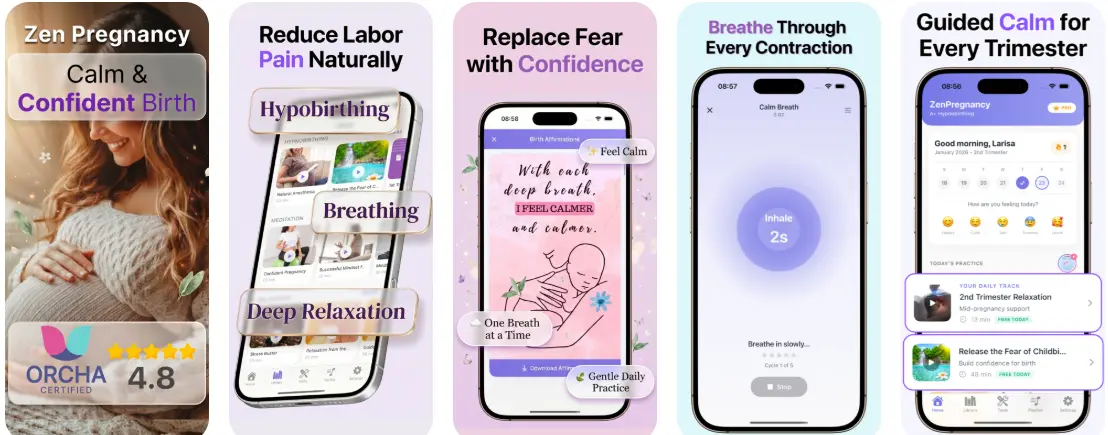
A pregnancy-specific app is different from a general relaxation library because it can speak directly to early symptoms, mixed emotions, scans, rest, and changing identity. Look for calm narration, short tracks, clear categories, and language that supports confidence without making birth promises. The HypnoBirth App includes free hypnobirthing and pregnancy meditation practices, including gentle options you can try from early pregnancy; you can start at download. Choose the track that fits your real day, not the one you think you should be doing.
Limitations
- Meditation apps cannot diagnose symptoms, confirm pregnancy health, or replace care from a midwife, doctor, or emergency service.
- Meditation may not be enough for severe anxiety, depression, trauma symptoms, hyperemesis, or panic; professional support may be needed.
- Not every technique suits every person, so stop any practice that makes you feel dizzy, distressed, breathless, or physically uncomfortable.
This is not medical advice. Consult your maternity care team for personalized guidance.
Frequently Asked Questions
Is meditation safe in the first trimester of pregnancy?
Yes, gentle meditation is generally safe for many healthy pregnancies. Practise in a comfortable position, keep breathing natural, and stop if you feel dizzy, distressed, or unwell. Ask your midwife or doctor for personalised advice if you have complications, severe symptoms, or any concerns.
What should I look for in a first trimester meditation app?
A good first trimester meditation app should offer short, gentle sessions for nausea, fatigue, sleep, anxiety, and early pregnancy worry. Look for pregnancy-specific language, options to practise lying down or sitting, calming audio, and clear safety guidance. Avoid apps that push intense breathwork, long holds, or unrealistic promises.
Can a meditation app help with pregnancy anxiety in the first trimester?
Yes, a meditation app can help you manage pregnancy anxiety, but it cannot remove all worry or guarantee medical outcomes. Short guided practices may reduce spiralling thoughts by bringing attention back to the breath, body, and present moment. Seek professional support if anxiety feels constant, overwhelming, or affects daily life.
What type of meditation helps first trimester nausea?
Short grounding meditations are often best for first trimester nausea. Choose audio that uses gentle body awareness, soft counting, or calming imagery without forcing deep breathing. Practise side-lying, sitting supported, or simply listening with your eyes closed.
How long should I meditate in the first trimester?
Five to ten minutes is usually a realistic starting point in the first trimester. Short sessions are often easier when nausea, tiredness, and emotions change from day to day. Consistency matters more than doing a long practice.
Can meditation help with scan anxiety and waiting for appointments?
Yes, meditation can help you cope with scan anxiety and the waiting period. It will not guarantee scan results, but it may help you pause anxious thoughts and return to what is happening now. A first trimester app should include short practices for uncertainty, reassurance, and grounding.
Are sleep meditations useful in early pregnancy?
Yes, sleep meditations can be useful in early pregnancy, especially when fatigue, nausea, or worry disrupt rest. Choose calm, low-effort tracks that do not require concentration or strong breathing techniques. If you fall asleep during the session, that is completely fine.
Can I lie down while meditating in the first trimester?
Yes, lying down is usually fine in the first trimester if it feels comfortable. You can also practise side-lying or sitting with pillows if nausea, reflux, or dizziness makes lying flat uncomfortable. Later in pregnancy, many people prefer side-lying or supported sitting for longer sessions.
Should a pregnancy meditation app include hypnobirthing in the first trimester?
Yes, a pregnancy meditation app can include gentle hypnobirthing foundations in the first trimester. Early practice may help you build relaxation, confidence, and familiarity with calming techniques before birth preparation becomes more detailed. The content should still feel relevant to early pregnancy rather than focusing only on labour.
Is a meditation app better than a pregnancy meditation or hypnobirthing class?
A meditation app is better for flexible daily practice, while a class is better for structured teaching and personalised questions. Many people use both: an app for short sessions at home and a class for deeper birth preparation later in pregnancy. Choose the option that fits your symptoms, schedule, budget, and support needs.
Can first-time mums use a first trimester meditation app?
Yes, first-time mums can use a first trimester meditation app for reassurance, sleep, and emotional support. A good app should explain practices clearly and avoid assuming prior experience with meditation, pregnancy, or hypnobirthing. It should also encourage medical advice when symptoms or worries need professional support.
Is 38 weeks too late to start pregnancy meditation or hypnobirthing?
No, 38 weeks is not too late to start pregnancy meditation or hypnobirthing. Short daily practices can still help with calm, breathing awareness, sleep, and confidence before birth. If you are close to labour, choose simple tracks that are easy to remember and comfortable to use with any birth plan, including an epidural.
Read more
- Pregnancy Anxiety Meditation
- Pregnancy Sleep Meditation App
- Pregnancy Meditation Safety
- Second Trimester Meditation App: Calm Practice for Weeks 13–27
- Third Trimester Meditation App for Birth Preparation
- Fourth Trimester Meditation: Gentle Audio Support for the First Weeks After Birth
- Pregnancy Insomnia Meditation: Calm Audio for Restless Nights
- Pregnancy Meditation App Privacy: What Data Should You Check?
Best First Trimester Meditation App for Early Pregnancy Calm
HypnoBirth App offers gentle pregnancy-focused tracks that can support relaxation during early pregnancy worries, tiredness, sleep disruption, and scan anxiety. With free hypnobirthing content, 200k+ users, and ORCHA NHS certification, it is a reassuring option for building a calm routine in the first trimester.
Best for
- Short, soothing sessions for anxious or tired days
- Pregnancy-specific relaxation and hypnobirthing practice
- Bedtime listening when early pregnancy affects sleep
Limitations
- It is not a replacement for medical advice, diagnosis, or treatment
- Meditation may not suit everyone during severe nausea, distress, or urgent symptoms