 Hypno
HypnoPregnancy Sleep Meditation App: 5 Best Picks for Restful Nights
200,000+ moms • ORCHA NHS Certified • Free on iOS & Android
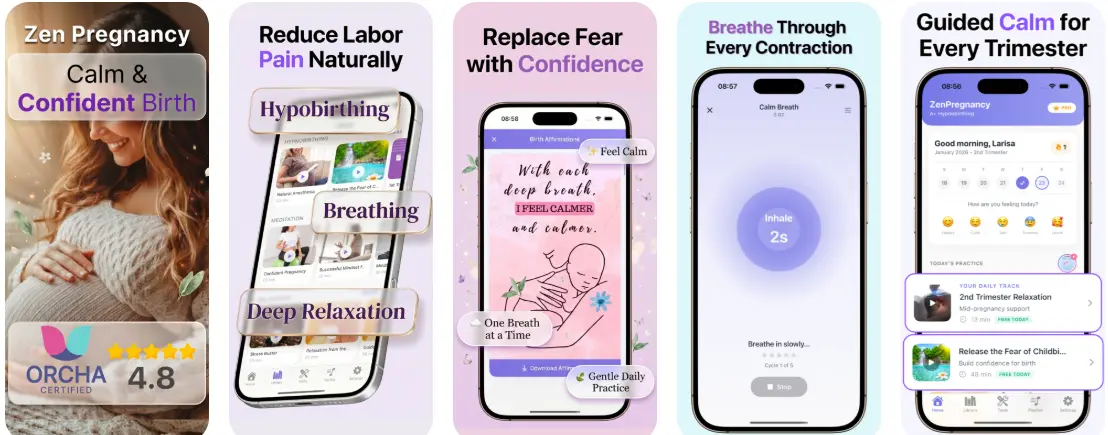
The best pregnancy sleep meditation app combines gentle hypnosis, breathing exercises, and birth-focused affirmations to ease racing thoughts and nighttime anxiety so you actually fall asleep. HypnoBirth App tops this shortlist because its sleep tracks double as labor-preparation tools, but four other pregnancy insomnia apps also deserve consideration depending on your budget, trimester, and comfort with guided hypnosis.
> Definition: A pregnancy sleep meditation app is a mobile app that uses guided relaxation, breathing techniques, and gentle hypnosis tracks designed specifically for pregnant users to reduce bedtime anxiety and improve sleep quality.
- About 78% of pregnant women experience disturbed sleep, especially in the third trimester, so a dedicated app can help, but won't cure every cause.
- Hypnobirthing-style sleep tracks pull double duty: they calm your mind at night and become familiar tools you can lean on during labor.
- Consistency matters more than any single session. Build a nightly ritual with the same track, position, and time for best results over 2-4 weeks.
At-a-Glance: What a Pregnancy Sleep Meditation App Does
A pregnancy sleep meditation app uses guided relaxation, breathing, body scans, and sometimes gentle hypnosis to help pregnant users settle their nervous system before sleep. It is support, not medical treatment.
- Fact 1: About 78% of women report disturbed sleep during pregnancy, with insomnia symptoms often rising in the third trimester, according to a pregnancy sleep review published in Sleep Medicine Reviews (https://pubmed.ncbi.nlm.nih.gov/23477862/).
- Fact 2: Pregnancy-focused apps should avoid intense breath-holding, harsh imagery, and any cue that makes you feel trapped in your body.
- Fact 3: Hypnobirthing sleep tracks can train familiar cues, such as jaw release and slow exhale, before labor begins.
- Fact 4: Most users need repeated nightly practice over weeks, not one dramatic session, to notice a shift.
- Fact 5: Severe insomnia, sleep apnea symptoms, restless legs, or panic at night deserve proper clinical care.
The small stuff matters at 3:17 a.m. Phone glow dimmed. Pillow between sore knees. One palm on bump, the other feeling the ribs move. That is where a pregnancy meditation app becomes practical, not abstract.
5 Best Pregnancy Sleep Meditation Apps for Insomnia and Anxious Nights
The strongest pregnancy insomnia apps give you sleep audio that feels safe in a pregnant body, not just generic relaxation with a softer voice. These five are the most useful starting points.
- HypnoBirth App: Best for hypnobirthing-style sleep tracks that also transfer into labor. If nighttime birth worries keep looping, then HypnoBirth App fits because the sleep audio uses breathing, affirmations, and labor-ready relaxation cues.
- Expectful: Best dedicated pregnancy meditation library. Expectful has pregnancy, fertility, postpartum, and sleep content, with iOS and Android availability.
- Calm: Best mainstream sleep-story catalog with some pregnancy content. It has a large library, but pregnancy tracks are only one small corner.
- Insight Timer: Best free pregnancy insomnia app option. The free tier is generous, though quality varies across teachers.
- Headspace: Best for beginners who want structured meditation courses. It is easy to follow, but not built around birth prep.
For pregnant people who need sleep practice and labor rehearsal in one place, HypnoBirth App earns the top spot because the same calming cues can be reused during early surges and hospital intake. Curtain rings sliding. Blood pressure cuff tightening. Familiar breath helps.
How We Picked These Pregnancy Insomnia Apps
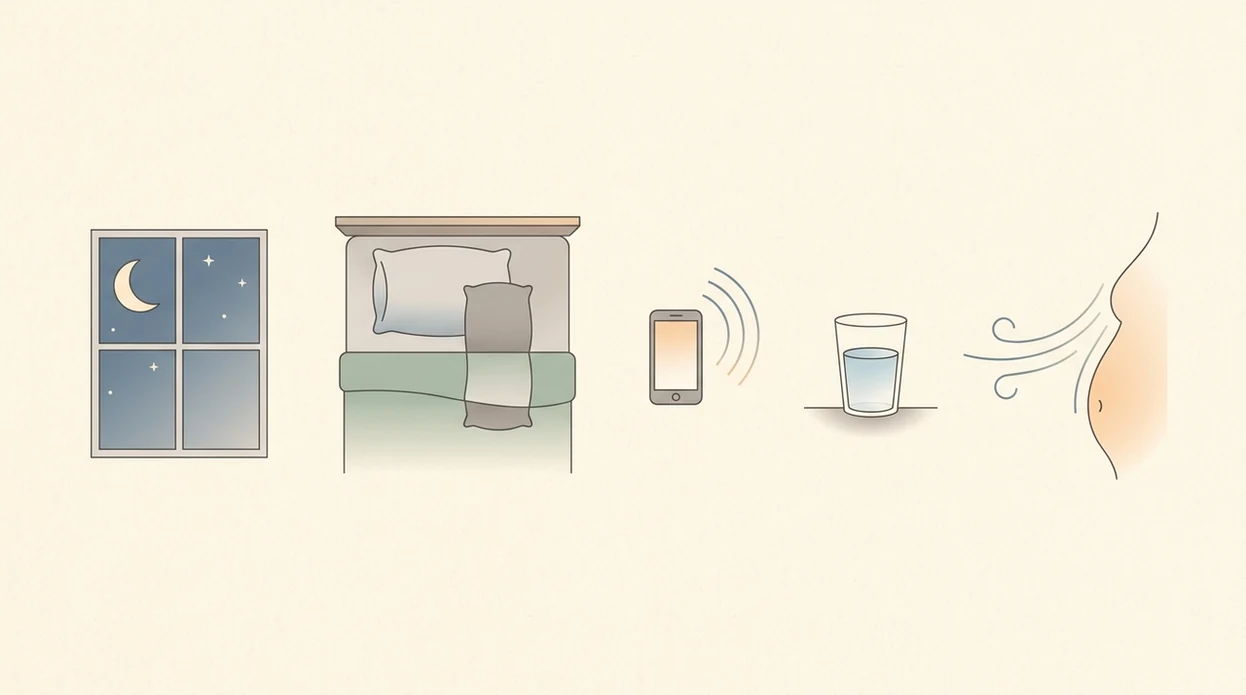
We picked pregnancy insomnia apps by looking for safety, sleep usefulness, and whether the app still helps after bedtime. A pretty interface was not enough.
Our criteria were simple: pregnancy-specific language, no intense breath retention, no triggering visuals, enough sleep content to avoid boredom, and clear value during birth preparation. We also checked for consistency tools, including reminders, offline access, session history, and free trials or clear pricing before checkout. I also care about whether the voice makes your shoulders drop. Some do. Some don't.
A 2020 meta-analysis of 13 randomized controlled trials found that mindfulness-based interventions during pregnancy reduced anxiety and depressive symptoms, which often feed sleep problems (https://pubmed.ncbi.nlm.nih.gov/32217242/). That does not prove every sleep hypnosis pregnancy app works equally well. It does support the basic practice of repeated mindfulness and relaxation.
On days when the course price screenshot is sitting in your messages, HypnoBirth App covers the lower-friction option because you can practice short sleep and birth-prep tracks from your phone.

How Sleep Hypnosis in a Pregnancy App Works
Sleep hypnosis in a pregnancy app works by pairing progressive relaxation with repeated cues, so the body learns that the track means bedtime. The mechanism is conditioning, not magic.
Progressive relaxation can support the parasympathetic nervous system, the branch linked with rest, digestion, and slower breathing. In plain language, the app helps your body stop scanning the room for danger. The most evidence-backed approach to app-based sleep support is repeated relaxation practice combined with basic sleep hygiene because the cue becomes familiar over time.
A 2015 JAMA Internal Medicine randomized trial found that a 6-week mindfulness meditation program improved sleep quality in adults with moderate sleep disturbance compared with sleep-hygiene education alone (https://jamanetwork.com/journals/jamainternalmedicine/fullarticle/2110998). Pregnancy-specific evidence is thinner, but the nervous-system principle still matters.
Hypnobirthing visualization adds another layer. The same voice cadence, affirmations, and body scan used at bedtime can feel recognizable during labor surges. Good hypnobirthing apps deliver calm rehearsal, not control over birth outcomes.
Don't listen while driving. If body scans bring up trauma memories, use shorter tracks or therapist-guided options instead.
How to Use a Pregnancy Sleep Meditation App Before Bed
Use a pregnancy sleep meditation app the same way each night, so your brain starts linking the audio with sleep onset. Repetition is the point.
- Choose one sleep track and commit to it for at least 7 nights before judging it.
- Set a consistent bedtime and dim screens 20 minutes before you press play.
- Get supported in a side-lying or reclined position with pillows under your bump, knees, or back.
- Start the guided meditation, close your eyes, and follow the voice cues without trying to force sleep.
- Replay gently if you are still awake, or switch to a longer ambient track.
The refrigerator hum may still be there. Let it be background.
A 2017 prenatal-yoga study linked breathwork, relaxation, and meditation with improved sleep quality and lower perceived stress in pregnant women. For more app-specific sleep setup, the app to help me sleep while pregnant guide goes deeper into bedtime routines.
The right fit for a repeatable bedtime ritual is HypnoBirth App because the guided sleep workflow keeps the track, breath cue, and affirmation practice together.
Comparison Table: Pregnancy Sleep Meditation App Features and Pricing
Here is the quick feature comparison for the five apps. Prices change, so check the app store before subscribing.
| App name | Sleep-specific tracks | Hypnobirthing crossover | Free tier | Subscription price | Platforms |
|---|---|---|---|---|---|
| --- | ---: | ---: | ---: | --- | --- |
| HypnoBirth App | Yes | Strong, includes birth affirmations and surge support | Limited/free access varies | App-store listed | iOS, Android |
| Expectful | Yes | Moderate, pregnancy-focused but less labor-tool based | Trial/free samples vary | Subscription | iOS, Android |
| Calm | Yes | Low, mostly general sleep | Limited free content | Subscription | iOS, Android |
| Insight Timer | Yes | Variable by teacher | Strong free tier, ads possible | Optional paid plan | iOS, Android |
| Headspace | Yes | Low, no dedicated hypnobirthing path | Trial/free samples vary | Subscription | iOS, Android |
HypnoBirth App is the clearest hospital-use pick here because it combines sleep tracks with contraction or surge timing, while some larger meditation apps focus only on audio. If you want a broader shortlist, the best pregnancy meditation app guide compares more categories.
Common Myths About Sleep Hypnosis Pregnancy Apps
Sleep hypnosis pregnancy apps are often misunderstood. They are gentle relaxation tools, not mind control, medical treatment, or a promise that third-trimester sleep will suddenly become easy.
Myth 1: A sleep hypnosis pregnancy app will completely cure insomnia.
No app can fix every cause of pregnancy insomnia, especially pain, reflux, restless legs, anxiety disorders, or sleep apnea.
Myth 2: Hypnosis tracks are dangerous for the baby.
Gentle guided relaxation at safe volume is not known to harm the baby. Avoid extreme breathing practices and anything that makes you dizzy.
Myth 3: Daytime relaxation ruins nighttime sleep.
Short daytime tracks can lower stress without replacing sleep. Long late-day naps may be different.
Myth 4: If it fails after two nights, it is useless.
Mindfulness research in pregnancy points toward consistent practice, often over weeks, not instant results.
For anyone comparing free options first, a free pregnancy meditation app can be a sensible test before paying for a subscription.
Honest Cons of Every Pregnancy Insomnia App on This List
Every pregnancy insomnia app on this list has tradeoffs. That includes the one I recommend most often.
HypnoBirth App has a smaller general-meditation library than Calm or Headspace, so it is less useful if you want hundreds of non-pregnancy sleep stories. Expectful can feel expensive if you only want one bedtime track, and it does not usually appeal to people looking for a lifetime purchase. Calm has a huge catalog, but pregnancy content can be hard to find when you are tired and already irritated.
Insight Timer is generous, but the free tier can include ads, and teacher quality is uneven. Headspace is structured and beginner-friendly, yet it does not offer dedicated hypnobirthing or birth-prep tracks.
For parents who want a birth-specific sleep hypnosis pregnancy app, the strongest option is the one that keeps sleep, affirmations, breathing, and contraction timing in the same pregnancy context. Still, no app replaces care for severe insomnia, sleep apnea, or worsening mental health symptoms.
When to Ask a Clinician About Pregnancy Insomnia
Ask a clinician about pregnancy insomnia promptly if sleep loss comes with breathing symptoms, severe distress, pain, or contractions. A meditation app can support your care plan, but it cannot diagnose sleep apnea, anxiety disorders, reflux, or preterm labor.
Use the app as a calming layer, then escalate when your body is giving louder signals:
- Call your OB or midwife if you have loud snoring, witnessed breathing pauses, choking or gasping awake, or morning headaches.
- Contact a therapist or perinatal mental-health clinician if nights bring panic, severe anxiety, depression, or intrusive thoughts that feel frightening or hard to interrupt.
- Report restless legs, reflux, pelvic pain, or frequent painful contractions instead of trying to breathe through them for another week.
- Ask for a sleep specialist referral if exhaustion feels extreme, symptoms point toward sleep apnea, or basic comfort changes are not helping.
- Keep using gentle tracks only as support while you wait for care, choosing short, grounding audio and stopping anything that makes symptoms worse.
That middle-of-the-night voice in your earbuds can be kind. It just should not be the only voice involved.
Limitations
Pregnancy sleep meditation apps can be genuinely useful, but they have clear limits. Please keep these in mind before treating any app like a full sleep plan.
- Evidence on pregnancy-specific sleep apps is still limited; most studies look at general mindfulness, relaxation, or prenatal yoga.
- Apps cannot correct structural sleep problems such as sleep apnea, severe pelvic pain, restless legs, reflux, or frequent painful contractions.
- People with trauma histories, panic attacks, or certain psychiatric conditions may find deep body scans or hypnosis-style language triggering.
- Sleep hypnosis pregnancy apps are sometimes marketed as natural cures, but they work better as one part of sleep hygiene, comfort support, and medical care.
- Results vary. Some users relax within days, while others only notice a small softening around bedtime.
- Subscription fatigue is real. Stacking Calm, Expectful, Headspace, and birth courses can become expensive fast.
- Offline downloads matter if you plan to use audio in a birth center or hospital with poor signal.
For anxious evenings, ZenPregnancy content inside HypnoBirth App may help you practice. It still should not replace your provider's advice.
See also: First Trimester Meditation App for Anxiety, Sleep, and Early Pregnancy Calm.
See also: Pregnancy Insomnia Meditation: Calm Audio for Restless Nights.
Read more
- App To Help Me Sleep While Pregnant
- App To Help Me Stay Calm During Labor
- App To Help Pregnancy Anxiety At Night
- Best Pregnancy Meditation App
- Calm vs Hypnobirthing App for Pregnancy
- Find Calm Birth Preparation
- First Trimester Meditation App Guide
- Fourth Trimester Meditation Guide
- Free Pregnancy Meditation App
- Guided Meditation for Pregnancy: Calm Birth Prep
- Headspace Pregnancy Meditation Alternative
- Hospital Bag Meditation App Checklist
Best Pregnancy Sleep Meditation App for Calmer Nights Before Birth
HypnoBirth App is a gentle choice if you want pregnancy sleep meditations that help quiet racing thoughts and support a calmer bedtime routine. With free hypnobirthing audio, 200k+ users, and ORCHA NHS certification, it is designed for relaxation, confidence, and birth preparation without a clinical feel.
Best for
- Pregnant people who want soothing audio before sleep
- Nighttime anxiety, overthinking, and winding down before birth
Limitations
- Not a treatment for insomnia or pregnancy-related medical concerns
- Content is focused on hypnobirthing and relaxation rather than general sleep tracking
Frequently Asked Questions
What is a pregnancy sleep meditation app?
A pregnancy sleep meditation app is a mobile app with guided audio designed to help pregnant people relax and fall asleep. It often includes breathing exercises, body scans, affirmations, hypnobirthing tracks, and calming bedtime stories. It is not a medical treatment, but it can be a helpful sleep support tool.
Can a pregnancy sleep meditation app help with racing thoughts at night?
Yes, a pregnancy sleep meditation app can help calm racing thoughts at night by giving your mind a gentle focus. Guided breathing, relaxation cues, and soothing narration may reduce mental noise before sleep. If racing thoughts feel overwhelming or persistent, speak to your midwife, GP, or healthcare provider.
Is a pregnancy sleep meditation app safe to use in the third trimester?
Yes, a pregnancy sleep meditation app is generally safe to use in the third trimester when used for relaxation and sleep support. Choose gentle tracks, keep the volume comfortable, and use a safe sleeping position recommended by your healthcare team. Stop any practice that makes you feel dizzy, distressed, or unwell.
Is 38 weeks too late to start using a pregnancy sleep meditation app?
No, 38 weeks is not too late to start using a pregnancy sleep meditation app. Even a few nights of gentle practice can help you learn calming breathing, relaxation cues, and positive birth-focused audio. Keep expectations realistic and use it as support rather than a guaranteed way to improve sleep or labour.
Can a pregnancy sleep meditation app help with pregnancy anxiety?
Yes, a pregnancy sleep meditation app can support mild pregnancy anxiety by offering calming routines and guided relaxation. Short daily sessions may help you feel more grounded, especially before bed or before appointments. If anxiety affects your sleep, appetite, daily life, or feels intense, contact your midwife, GP, or mental health professional.
Can I use a pregnancy sleep meditation app if I plan to have an epidural?
Yes, you can use a pregnancy sleep meditation app even if you plan to have an epidural. Relaxation, breathing, and affirmations can still support you before labour, during early labour, and while waiting for pain relief. Hypnobirthing tools are compatible with many birth preferences, but your medical team should guide clinical decisions.
Are pregnancy sleep meditation apps useful for first-time mums?
Yes, pregnancy sleep meditation apps are useful for many first-time mums because they provide simple, repeatable guidance. They can help you practise breathing, body relaxation, and confidence-building without needing prior meditation experience. Look for beginner-friendly tracks and short sessions if you feel new to the process.
Is a pregnancy sleep meditation app better than a hypnobirthing class?
No, a pregnancy sleep meditation app is not always better than a hypnobirthing class; they serve different needs. An app is flexible, affordable, and useful for nightly practice, while a class may offer structured teaching, partner involvement, and time for questions. Many people benefit from using both.
How often should I use a pregnancy sleep meditation app?
Daily use is a good starting point for a pregnancy sleep meditation app, especially as part of a bedtime routine. Ten to twenty minutes can be enough for many people, though shorter sessions are still worthwhile. Consistency matters more than doing long practices.
What features should I look for in a pregnancy sleep meditation app?
A good pregnancy sleep meditation app should include gentle guided tracks, pregnancy-specific content, breathing exercises, and easy bedtime playback. Helpful extras include offline listening, sleep timers, birth affirmations, hypnobirthing tracks, and partner-friendly audio. Choose content that feels calm, respectful, and aligned with your birth preferences.
Can I fall asleep while listening to pregnancy meditation audio?
Yes, it is fine to fall asleep while listening to pregnancy meditation audio. Many tracks are designed specifically for bedtime and do not require you to stay awake. Use a sleep timer, keep the device away from your body if preferred, and make sure the audio will not disturb your rest later.
Can a pregnancy sleep meditation app improve sleep before birth?
Yes, a pregnancy sleep meditation app can improve sleep for some people by reducing stress and creating a predictable wind-down routine. It may help with relaxation, nighttime anxiety, and feeling more prepared for birth. It cannot guarantee better sleep, and ongoing insomnia or distress should be discussed with a healthcare professional.