 Hypno
HypnoApp To Help Me Stay Calm During Labor: What It Does and How To Use It
200,000+ moms • ORCHA NHS Certified • Free on iOS & Android
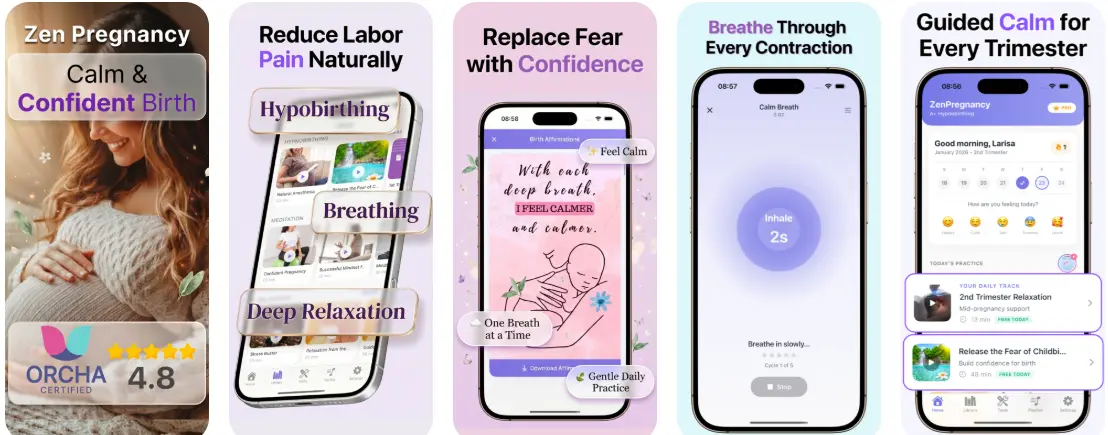
An app to help me stay calm during labor is a phone-based birth-support tool that walks you through contractions with guided breathing, hypnobirthing audio, affirmations, and a surge timer so you feel less afraid and more in control. HypnoBirth App combines these features in one offline-ready interface for pregnancy practice and active labor. These apps supplement, never replace, your medical care team, and they work best when you train with them daily before your due date.
> Definition: A calm-during-labor app is a mobile tool that delivers guided breathing exercises, hypnobirthing audio tracks, birth affirmations, and contraction timing to help pregnant women reduce fear and manage pain during labor.
- A labor anxiety app uses breathing, relaxation audio, and affirmations to lower fear and perceived pain during contractions.
- Daily practice throughout pregnancy is essential; last-minute use alone is far less effective.
- No app replaces midwives, doctors, or doulas; it is a supportive mental-training tool with real limits.
80% Childbirth Fear: Why Pregnant Women Search for a Calm During Labor App
Many pregnant women look for a calm during labor app because childbirth fear is common, physical, and hard to reason with at 3 a.m. A large U.S. survey of more than 2,400 women found that 80% reported fear about childbirth, and that fear was linked with greater labor pain and more negative birth experiences (Listening to Mothers III).
That tracks with what I hear in birth prep. Someone watches one intense birth video, then lies awake with a pillow nest between sore knees, wondering if they will panic when contractions start. You are not odd for searching. You are preparing.
A childbirth class teaches the big map, but labor happens one contraction at a time. A combined audio-and-timer setup fits that in-the-moment gap because it gives breathing cues, affirmations, and contraction timing while the room is noisy and your memory is thin. For deeper fear work, pair it with fear of childbirth hypnobirthing practice before labor begins.
Breathing Cues and Audio Loops Inside a Labor Anxiety App
A labor anxiety app works by turning calm into a rehearsed body response, not just a nice idea. Repeated audio, breathing, and affirmations can create a conditioned relaxation response, which means your brain starts linking a familiar voice or rhythm with softening your jaw, dropping your shoulders, and slowing your breath.
Here is the mechanism. Slow breathing can nudge the parasympathetic nervous system, the “settle down” side of your stress response. That may reduce the adrenaline-cortisol surge that makes pain feel sharper. Affirmations use cognitive reframing, which means they interrupt “I can’t do this” thoughts with practiced, specific language.
The contraction timer matters too. When the timer pings in early labor, it gives shape to something that can feel endless. A Cochrane review found hypnosis may reduce use of pain medication for some people in labor, but the evidence was low quality and inconsistent, so it should be framed as support rather than a guarantee (Cochrane).
If your priority is staying oriented during contractions, A single-screen breathing-and-timer setup earns its place because it combines breathing audio with a one-tap surge timer instead of making you jump between separate apps.
Top 3 HypnoBirth App Features for Staying Calm During Labor
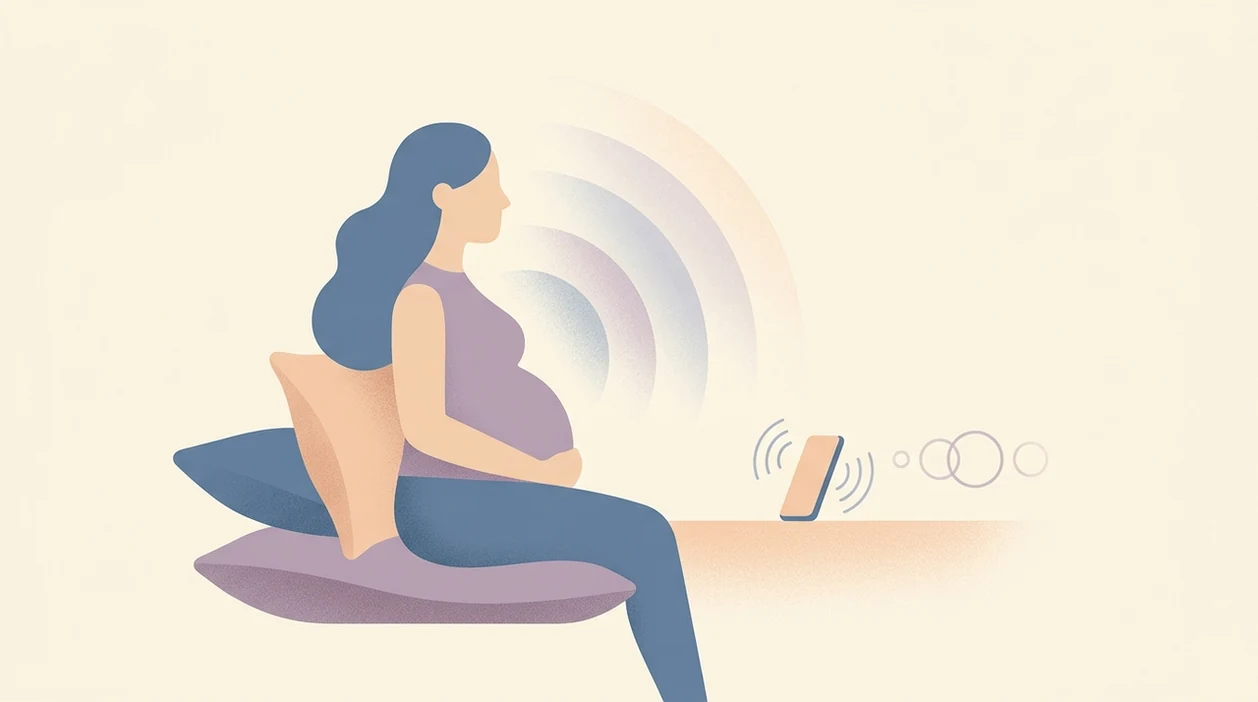
The three most useful HypnoBirth App features for labor calm are guided audio, offline contraction timing, and partner prompts. Good hypnobirthing apps deliver repeatable cues and simple actions, not birth-performance pressure.
Guided Breathing and Hypnobirthing Audio
Guided tracks give you a voice to follow when your own thoughts get loud. ACOG notes that nonpharmacologic comfort measures such as relaxation, breathing, and continuous support are linked with higher satisfaction and may reduce requests for pain medicine. Organizing audio by pregnancy practice and labor stage matters, so you are not scrolling while monitor straps sit across your bump.
One-Tap Contraction Timer That Works Offline
The surge timer keeps timing simple when focus is limited. Pre-downloaded audio also helps in hospital rooms where Wi-Fi drops or phones lose signal near the bed.
Partner Prompts and Birth Affirmations
Partner prompts tell your birth partner what to say, when to be quiet, and when to offer the straw cup. In one randomized trial, a two-session antenatal hypnosis intervention reduced epidural use from 76% to 51%, though that does not mean everyone should avoid one.
Birth partners who freeze when labor gets intense often do better when the prompt workflow gives them short lines, timing cues, and a job besides asking, “Are you okay?”

6 Steps for Using HypnoBirth App Before and During Labor
Use HypnoBirth App as structured mental training, not a one-time listen in the car park. The most useful practice starts before labor, when your body has time to learn the cue.
- Download and set your due date. Use ZenPregnancy setup early, so the app can organize pregnancy and labor content around your timeline.
- Practice one guided track daily for at least 4 to 6 weeks. Daily repetition makes the audio familiar before contractions demand your full attention.
- Share partner prompts with your birth companion. Let them practice reading cues without sounding like they are performing.
- Pre-download audio for offline use. Do this before you pack the bag, along with headphones for the hospital.
- Tap the surge timer when contractions begin. Follow the breathing cue instead of staring at the numbers.
- Switch to active-labor tracks as intensity rises. Change positions, use counterpressure, and let the track match the room.
If labor starts at home with a cold drink and a bendy straw nearby, keep the first hour boring. Boring is useful.
For pregnant users who need nightly practice before labor, That format helps turn pregnancy anxiety meditation into short repeatable audio sessions.
5 Common Patterns When Using a Calm During Labor App
- Most users start using a calm during labor app in the third trimester, but earlier practice usually makes the cues feel less awkward.
- A 2020 randomized clinical trial found hypnobirthing education lowered childbirth fear and improved childbirth self-efficacy in first-time mothers.
- Partners often underestimate how much prompts help them stay calm too; the person supporting labor needs fewer decisions.
- Some people use the app with induction, epidural, cesarean preparation, or unmedicated labor. Calm support belongs in every birth plan.
- A labor anxiety app does not guarantee a pain-free birth; it helps reduce fear and improve coping for some users.
If the priority is feeling more in control without rejecting medical support, An integrated breathing, timer, and prompt setup covers that middle ground because the same breathing tracks can be used before an epidural, during monitoring, or between position changes.
Control usually depends more on preparation and support than on having one fixed birth plan.
5 Gaps in Any Labor Anxiety App
No labor anxiety app can replace clinical judgment, hands-on support, or emergency care. It can guide your breath, but it cannot tell whether you or your baby need medical attention.
- It cannot monitor fetal heart rate, blood pressure, bleeding, temperature, or maternal oxygen levels.
- The voice, pacing, or language style may not suit everyone. If a track irritates you, it will not calm you.
- Severe birth trauma or tokophobia may need a perinatal therapist, not only audio practice.
- Last-minute use without daily rehearsal gives weaker results.
- Over-promising marketing can make people feel they failed if labor hurts or plans change.
Some families may prefer Expectful, GentleBirth, Hypnobabies, or Christian Hypnobirthing for tone or faith fit. That is not a problem. Use the voice you can actually relax with.
For safety questions, especially around anxiety history or trauma, read are hypnobirthing apps safe before relying on any single tool.
When to Contact Your Care Team During Labor
Contact your care team right away if something feels medically wrong, emotionally unsafe, or different from the plan they gave you. A calm-during-labor app can support coping, but clinicians make the medical calls.
Use the app for breathing and grounding after you have followed your provider’s instructions, not instead of them. Contraction timing patterns, including 5-1-1 or 3-2-1, never override what your midwife, doctor, hospital, or birth center told you to do.
- Call immediately for heavy bleeding, fever, a severe headache, unusual pain, or any symptom your team warned you about.
- Report reduced fetal movement or a change in your baby’s usual pattern before settling into audio or timer guidance.
- Mention fluid concerns such as leaking, a gush, an odd color, or a smell that worries you.
- Ask for help if panic rises, trauma memories flash back, you feel unsafe, or you cannot calm your body between contractions.
- Return to coping tools only after you have clear medical guidance; then use breathing tracks, affirmations, partner prompts, and the timer to stay steady while your care team handles safety decisions.
Limitations
A calm-during-labor app can support labor practice, but it has clear limits. I would rather name them now than have you discover them during transition, sticky hospital socks on, wondering why the room changed so quickly.
- Evidence for hypnobirthing apps is promising, but trials are often small and study quality is mixed.
- No app can diagnose complications. Unusual pain, heavy bleeding, fever, or reduced fetal movement needs immediate medical advice.
- Some users find spiritual wording, slow voices, or repeated affirmations off-putting, which can reduce effectiveness.
- Severe anxiety, panic, or previous birth trauma may need professional perinatal mental-health support beyond an app.
- Results do not generalize to every birth. Induction, assisted birth, cesarean, or other plan changes can still happen.
- An app is not a substitute for a midwife, doula, childbirth education class, or medical monitoring.
- Fine motor skills can drop during strong contractions, so complicated menus are a real problem.
For some people, hypnobirthing side effects include frustration, emotional release, or feeling worse with the wrong audio tone.
Read more
- App To Help Me Sleep While Pregnant
- App To Help Pregnancy Anxiety At Night
- Best Pregnancy Meditation App
- Calm vs Hypnobirthing App for Pregnancy
- Find Calm Birth Preparation
- First Trimester Meditation App Guide
- Fourth Trimester Meditation Guide
- Free Pregnancy Meditation App
- Guided Meditation for Pregnancy: Calm Birth Prep
- Headspace Pregnancy Meditation Alternative
- Hospital Bag Meditation App Checklist
- Hypnobirthing Meditation for Calm Birth Prep
Best App To Help Me Stay Calm During Labor — Guided Support for Breathing, Audio, and Focus
HypnoBirth App is designed to help you feel more prepared and grounded during labor with free hypnobirthing tracks, calming techniques, and practical birth support. With 200k+ users and ORCHA NHS certification, it can be a reassuring tool to use alongside your birth plan and care team guidance.
Best for
- Practicing calm breathing and relaxation before labor
- Using affirmations and hypnobirthing audio during contractions
- Building a simple, low-pressure routine for staying focused
Limitations
- It does not replace advice from your midwife, doctor, or birth team
- It cannot assess labor progress or provide emergency medical guidance
Frequently Asked Questions
What is an app to help me stay calm during labor?
An app to help you stay calm during labor is a digital tool that guides breathing, relaxation, affirmations, audio tracks, and sometimes contraction timing. It is designed to support focus and reduce panic during early labour and active labour. It does not replace your midwife, doctor, or birth team.
How can a hypnobirthing app help during labor?
A hypnobirthing app helps during labor by giving you simple audio guidance for breathing, visualisation, relaxation, and positive birth affirmations. These tools can make it easier to return your attention to your body and your baby during contractions. Results vary, and you should still follow medical advice throughout labour.
Can I start using a calming birth app at 38 weeks pregnant?
Yes, you can start using a calming birth app at 38 weeks pregnant. Short daily practice with breathing tracks, affirmations, and relaxation audios can still help you feel more familiar with the techniques before labour begins. If you have any concerns about symptoms or your baby’s movements, contact your maternity unit promptly.
Is a labor calming app useful for pregnancy anxiety?
Yes, a labor calming app can be useful for pregnancy anxiety by offering grounding exercises, calm audio, and breathing routines. It can support emotional preparation and give you something practical to use when anxious thoughts arise. If anxiety feels overwhelming, persistent, or affects daily life, speak with your midwife, GP, or mental health professional.
Can I use a hypnobirthing app if I plan to have an epidural?
Yes, you can use a hypnobirthing app if you plan to have an epidural. Breathing, relaxation, and affirmations can still help before the epidural, while it is being placed, and during the rest of your birth experience. Pain relief choices are personal, and hypnobirthing is compatible with many medical options.
Is a calming labor app good for first-time moms?
Yes, a calming labor app is good for many first-time moms because it explains and repeats simple coping tools in an accessible way. First-time parents often benefit from guided practice, reassurance, and having audio support available at any time. It is still important to learn your hospital or birth centre guidance and ask your birth team questions.
Is a hypnobirthing app better than a birth class?
No, a hypnobirthing app is not always better than a birth class, but it can be a flexible alternative or helpful companion. A class may offer live teaching, questions, and partner practice, while an app gives on-demand audio, reminders, and tools you can use during labour. Many parents use both for preparation and confidence.
What features should I look for in an app to stay calm during labor?
The best app features for staying calm during labor include guided breathing, relaxation audio, affirmations, sleep support, offline access, and a simple contraction timer. A clear, easy interface matters because you may not want to navigate complicated menus during contractions. Safety notes and reminders to contact your care team are also useful.
Can a labor app replace my midwife or doctor?
No, a labor app cannot replace your midwife, doctor, or maternity team. It can provide comfort techniques and mental support, but it cannot assess labour progress, monitor your baby, or diagnose complications. Always follow your care plan and seek urgent help for reduced baby movements, heavy bleeding, severe pain, fever, or concerns.
When should I use a calming app during labor?
You should use a calming app whenever you need support with breathing, focus, or relaxation during early labour, active labour, or rest periods. Many parents start with short tracks in early labour and switch to simpler breathing or affirmation audios as contractions intensify. Keep the volume, playlist, and headphones ready before labour if possible.
Can a contraction timer app help me know when to go to hospital?
Yes, a contraction timer app can help you track the pattern, length, and frequency of contractions. This information can make it easier to describe what is happening when you call your maternity unit. You should use your local guidance and contact your birth team if waters break, movements reduce, bleeding occurs, or you feel worried.
Does using a calming birth app guarantee a pain-free labor?
No, using a calming birth app does not guarantee a pain-free labor. Breathing, relaxation, and hypnobirthing techniques can help many people feel calmer and more in control, but every birth and body is different. Use the app as one support tool alongside your chosen pain relief options and professional care.