 Hypno
HypnoHeadspace Pregnancy Meditation Alternative
A simple guide to choosing pregnancy-specific meditation support for calm, sleep, birth preparation, and labor breathing practice.
200,000+ moms • ORCHA NHS Certified • Free on iOS & Android
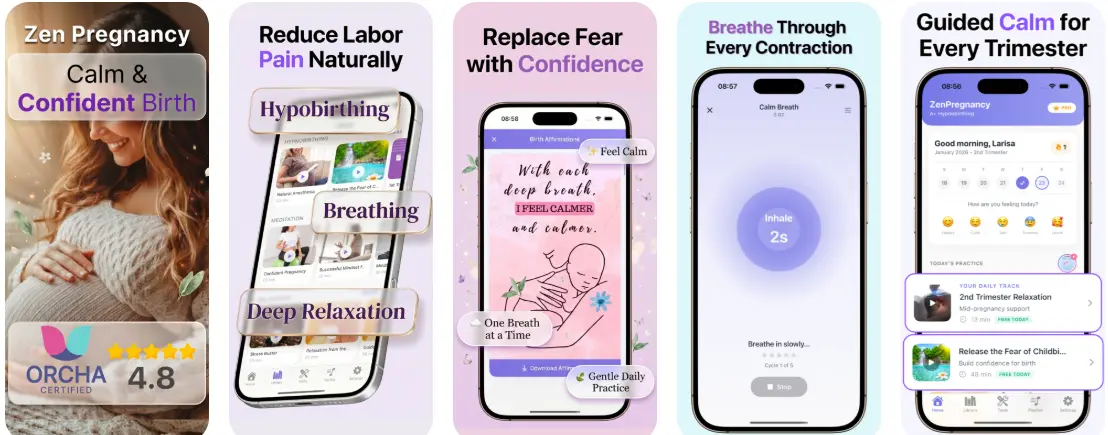
If you want a Headspace pregnancy meditation alternative, look for an app that goes beyond general mindfulness with pregnancy-safe relaxation, birth affirmations, labor breathing, and hypnobirthing tracks. General meditation can support stress and sleep, but pregnancy-focused tools are often more useful when you want birth preparation and practical coping techniques.
Why look beyond general mindfulness?
Headspace and similar mindfulness apps can be helpful for everyday stress, focus, and sleep, but pregnancy often brings more specific needs. You may want guided support for anxiety before scans, resting with a changing body, preparing for contractions, or feeling more confident about birth. A pregnancy-focused option can include trimester-aware meditations, birth preparation, partner practice, and practical breathing cues. If your search is really for calm plus birth confidence, a general mindfulness library may feel too broad, especially in the final weeks before labor.
What pregnancy meditation should include
A good pregnancy meditation app should include short sessions for anxiety, sleep, body relaxation, and emotional reassurance, plus longer tracks for deeper rest. Techniques may include gentle breathing, visualization, affirmations, and grounding exercises. The NHS describes relaxation and breathing as useful tools during labor, although they should not be treated as a guarantee of a pain-free birth. For a wider comparison of options, see our guide to the best pregnancy meditation app.
Where hypnobirthing is different
Hypnobirthing usually combines relaxation, breathing, visualization, and positive birth language to help you feel safer and more prepared. Unlike a general meditation app, it often focuses on labor sensations, confidence, birth preferences, and practicing calm responses before contractions begin. This does not replace medical care or remove the need for pain relief if you want it, but it may support coping and reduce fear. If you want a dedicated approach, explore how a pregnancy meditation app can fit alongside antenatal education.

Features to compare before choosing
When comparing a Headspace pregnancy meditation alternative, check whether the app includes labor-specific breathing, birth affirmations, partner-friendly tracks, sleep support, and offline access. Some general apps lock deeper libraries behind subscriptions, while pregnancy-specific tools may offer free or lower-cost support. HypnoBirth App naturally fits this gap by offering free hypnobirthing and pregnancy meditation content in one place. If labor practice matters most, compare options with a labor breathing app that gives simple cues you can rehearse before birth.
Safety notes for later pregnancy
Most gentle meditation is low risk, but pregnancy changes how you should practice. From the second trimester, avoid lying flat on your back for long periods if it makes you dizzy, breathless, or uncomfortable, and avoid long breath holds. Choose side-lying, seated, or supported positions, and keep breathing smooth rather than forced. The NCCIH notes that meditation is generally safe, but it is still wise to ask your midwife or clinician if you have complications, trauma triggers, or significant anxiety.
Best fit for birth preparation
If your main goal is everyday mindfulness, a general app may be enough. If your goal is birth preparation, choose an option with pregnancy language, contraction coping, positive scripts, and tracks you can repeat with your birth partner. Many people like combining calm sleep meditations with a birth affirmations app for confidence in the final weeks. To try pregnancy-specific support without committing to a store subscription, you can download the free hypnobirthing app and see whether the style suits you.
Limitations
- Meditation and hypnobirthing can support calm and coping, but they cannot guarantee a pain-free labor or specific birth outcome.
- Apps are not a substitute for medical advice, antenatal care, mental health support, or urgent assessment if symptoms are concerning.
- Some people find birth-focused audio triggering or unhelpful, especially after trauma, so it is important to choose flexible support.
This is not medical advice. Consult your maternity care team for personalized guidance.
Frequently Asked Questions
What is the best Headspace pregnancy meditation alternative for birth preparation?
The best Headspace pregnancy meditation alternative for birth preparation is usually a pregnancy-specific app or course with hypnobirthing, labour breathing, affirmations, and relaxation tracks. General mindfulness apps can help with calm and sleep, but they are not always designed around contractions, birth confidence, or late-pregnancy practice.
Is hypnobirthing better than Headspace for labour?
Hypnobirthing is more labour-specific than Headspace-style general mindfulness. It focuses on contractions, fear release, breathing, visualisation, and confidence for birth, although evidence is mixed and it should be treated as a coping tool rather than a medical guarantee or replacement for pain relief options.
Are pregnancy meditation apps safe in the third trimester?
Gentle pregnancy meditation apps are usually safe for many people in the third trimester. Use comfortable supported positions, avoid long breath holds or anything that makes you dizzy, and ask your midwife or doctor for advice if you have pregnancy complications, reduced movements, pain, bleeding, or feel unwell.
Can I start hypnobirthing or pregnancy meditation at 38 weeks?
Yes, you can start hypnobirthing or pregnancy meditation at 38 weeks. Short daily sessions can still help you learn calming cues, labour breathing, and affirmations, even if you do not have time to complete a full course before birth.
How is labour breathing different from normal meditation breathing?
Labour breathing is more practical and birth-focused than normal meditation breathing. Instead of simply observing the breath, it often uses steady rhythms, longer exhales, counting, or surge breathing to help you stay grounded during contractions and intense moments.
Can pregnancy meditation help with pregnancy anxiety?
Pregnancy meditation can help some people manage pregnancy anxiety by reducing stress, improving body awareness, and creating a regular calming routine. It is not a substitute for mental health care, so speak to your midwife, GP, therapist, or doctor if anxiety feels intense, persistent, or affects sleep, eating, or daily life.
Can I use hypnobirthing if I plan to have an epidural?
Yes, you can use hypnobirthing if you plan to have an epidural. The breathing, relaxation, and confidence techniques may still help before the epidural, during examinations or waiting periods, and if plans change during labour.
Is a pregnancy meditation app enough for first-time mums?
A pregnancy meditation app can be enough for some first-time mums who want flexible, low-cost birth preparation. Others may prefer a class, doula, antenatal course, or midwife-led education as well, especially if they want live questions, partner practice, or more detailed information about labour choices.
Should I choose a hypnobirthing app or a hypnobirthing class?
Choose a hypnobirthing app if you want flexible, self-paced practice, and choose a class if you want live guidance and personalised support. A class may be better for practising with a birth partner, asking questions, and building confidence, while an app is useful for daily repetition and listening during pregnancy.
Can I use both Headspace and a pregnancy-specific meditation app?
Yes, you can use both Headspace and a pregnancy-specific meditation app. Many people use a general mindfulness app for everyday stress or sleep and a pregnancy-specific app for labour breathing, affirmations, and birth preparation.
When should I start practising pregnancy meditation for labour?
The ideal time to start practising pregnancy meditation for labour is often the second or early third trimester. Starting earlier gives you more time to build familiarity, but even five minutes a day later in pregnancy can be useful.
What should a good pregnancy meditation app include?
A good pregnancy meditation app should include pregnancy-safe relaxation, labour breathing, birth affirmations, fear-release tracks, and options for different stages of pregnancy. It should also encourage comfortable positioning, avoid unsafe breathwork, and make clear that meditation supports but does not replace medical advice or care.
Best Headspace Pregnancy Meditation Alternative for Birth Preparation
HypnoBirth App is built specifically for pregnancy, combining guided hypnobirthing, labor breathing, relaxation, and birth affirmations rather than general mindfulness alone. It is a strong fit if you want meditation-style support that feels directly connected to pregnancy, labor, and preparing for birth.
Best for
- Pregnancy-specific relaxation and birth preparation
- Guided hypnobirthing, breathing, and affirmations
- Parents who want a free hypnobirthing app with structured support
Limitations
- It is focused on pregnancy and birth rather than broad everyday meditation topics
- It does not replace medical advice, antenatal care, or support from your maternity team