 Hypno
HypnoFind Calm Birth Preparation With Hypnobirthing Tools That Work
200,000+ moms • ORCHA NHS Certified • Free on iOS & Android
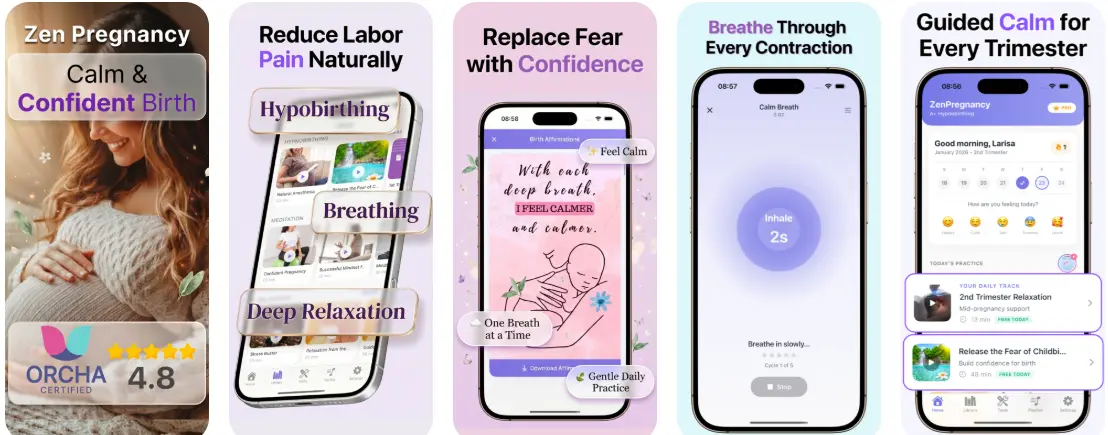
To find calm birth preparation that actually works, you need guided breathing, relaxation audio, birth affirmations, and consistent daily practice, ideally bundled in one accessible calm birth app. Research on hypnobirthing-style techniques suggests they may reduce pain intensity, lower epidural use for some groups, and decrease pregnancy-related anxiety when practiced regularly.
> Definition: Calm birth preparation is a structured approach to labor readiness that uses hypnobirthing techniques, including breathing exercises, guided meditation, visualization, and affirmations, to reduce fear, manage pain, and build confidence for any type of birth.
This page is educational and is not medical advice. Use calm birth preparation alongside prenatal care, and ask your midwife, OB-GYN, or maternity team before relying on any technique during labor.
TL;DR
- Calm birth preparation combines breathing, meditation, and affirmations to reduce labor anxiety and improve coping.
- A calm birth app can put guided audio, breathing tools, affirmations, and contraction timing in one place.
- Regular practice throughout pregnancy is the single biggest predictor of success, not the technique alone.
- These methods work alongside epidurals, cesareans, and medical care, not instead of them.
- One self-hypnosis trial found epidural use was 36.5% in the hypnosis group versus 53.2% with standard care (BJOG randomized trial, PubMed).
At a Glance: 5 Calm Birth Preparation Tools for Labor
Calm birth preparation uses five practical tools: breathing, guided audio, affirmations, visualization, and contraction timing. These tools can support vaginal birth, planned cesarean birth, induced labor, and medicated labor.
- Breathing: Slow, patterned breathing gives your body something steady to do during early labor.
- Guided audio: Meditation or pregnancy hypnosis tracks help you rehearse calm before contractions begin.
- Affirmations: Short phrases can interrupt fear loops when your brain starts racing.
- Visualization: Mental rehearsal helps you picture coping, changing positions, or meeting your baby.
- Contraction timing: A timer helps your birth partner notice patterns without hovering over you.
A national survey found that 59% of women wanted to avoid interventions as much as possible (Listening to Mothers III), yet many still experienced them. That is why flexibility matters. Tools like HypnoBirth App bundle these pillars in one place, so preparation stays practical instead of scattered across notes, playlists, and screenshots.
The bag gets packed. The plan still bends.
Evidence: 3 Ways Calm Birth Preparation Reduces Labor Anxiety
Calm birth preparation may reduce labor anxiety by lowering fear, improving pain coping, and giving the brain rehearsed responses under stress. Clinicians typically recommend using comfort measures alongside medical guidance, not instead of it.
- Self-hypnosis may reduce epidural use for some people: One randomized trial found epidural use was 36.5% in the hypnosis group versus 53.2% with standard care (BJOG randomized trial, PubMed).
- Relaxation techniques may reduce pain intensity: A 2016 systematic review found breathing, guided imagery, and relaxation were associated with lower pain intensity and less pharmacologic pain relief (Cochrane Review).
- Mindfulness-based childbirth programs may lower anxiety: Randomized trials have found significant reductions in pregnancy-related anxiety and fear of childbirth.
- The fear-tension-pain cycle is real in the room: Fear can tighten the jaw, shoulders, pelvic floor, and breath; calm practice gives the body a different route.
- Medication use is common: Per the CDC, about 80% of vaginal births in the U.S. involve pharmacologic pain relief (CDC/NCHS birth data).
The most common medically supported way to reduce birth fear is repeated relaxation practice combined with skilled clinical support. A deeper look at hypnobirthing benefits can help you separate useful claims from overpromises.
How Calm Birth Preparation Works
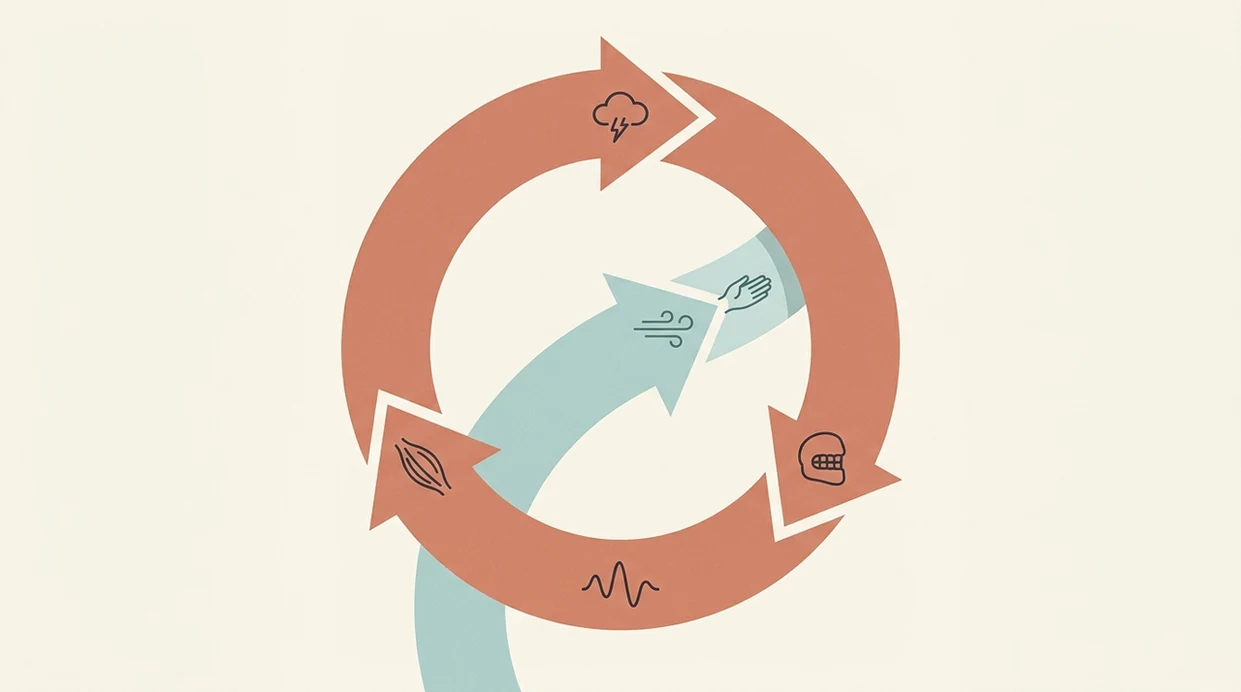
Calm birth preparation works by training a conditioned relaxation response before labor begins. In plain terms, your body learns, “when I hear this cue, I soften, breathe, and come back to now.”
Repeated audio cues can pair a voice, rhythm, or phrase with a calmer state. Breathing exercises support the parasympathetic nervous system, the body system linked with rest and recovery, and may help lower stress hormones like cortisol. Affirmations use cognitive repetition. That means you rehearse a thought often enough that it becomes easier to reach when fear rises.
In an app-based calm birth program, guided audio, breathing exercises, birth affirmations, and a contraction timer sit together. During labor, the timer can track surges while breathing prompts keep your attention on the next breath. Good calm birth apps deliver practice cues, not a promise that labor will stay quiet or controlled.
Daily micro-practice builds automaticity. That matters when the contraction timer app pings in early labor and your birth partner is tying their shoes by the door.

How to Use a Calm Birth App for 5-Minute Daily Practice
A calm birth app works best when you use it briefly and often. Five minutes a day is easier to repeat than one long session you keep postponing.
- Download your calm birth app and set your due date. Use the due date to organize practice by stage of pregnancy.
- Start with a 5-minute guided breathing session daily. Pick the same time each day so the habit sticks.
- Add a sleep meditation or visualization track each evening. Let the track run while rain sounds or a fan settles the room.
- Practice birth affirmations during routine moments. Say one phrase while brushing teeth, walking, or packing snacks.
- Involve your birth partner with shared scripts and prompts. Ask them to offer a straw cup between contractions instead of asking five questions.
- Use the contraction timer with integrated breathing cues during labor. Keep the screen simple when early labor shifts into active labor.
For most parents, short frequent sessions are easier than occasional long sessions because repetition builds a familiar response. If you want timing expectations, the hypnobirthing benefits timeline gives a realistic view.
Real Calm Birth Preparation Stories: Three Paths, One App
Calm birth preparation adapts to different birth paths because the core skill is coping, not controlling the outcome. These three examples show how steady practice can support unmedicated birth, epidural birth, and cesarean birth.
Sarah's Unmedicated Birth With Daily Breathing Practice
Sarah feared contractions most. She practiced five minutes of breathing each morning and repeated two affirmations during Braxton Hicks. In labor, her partner pressed tennis balls into her lower back during back labor while she counted her exhale. One contraction at a time.
Jess's Epidural Birth With Calm Coping Tools
Jess planned an unmedicated birth, then chose an epidural after a long induction. Her breathing practice still mattered. It helped during cervical checks, the epidural placement, and the waiting.
Maria's Planned Cesarean With Visualization
Maria used visualization before a planned cesarean. She pictured the operating room, gown snaps at her shoulder, and her baby’s first cry. The preparation did not change the surgery, but it changed how alone she felt inside it.
Consistent practice was the common thread.
5 Practice Patterns Among People Who Find Calm Birth Preparation Effective
People who find calm birth preparation useful usually practice in small, repeatable ways before labor starts. The technique matters, but the pattern matters more.
- They practice 5 to 10 minutes daily. Daily micro-practice beats one long audio every few weeks.
- They often start in the second trimester. That gives the brain time to build a conditioned response.
- They include a birth partner. Shared cues help a partner know when to dim lights, offer water, or stop talking.
- They prepare for more than one birth path. Flexible birth preferences protect you better than one rigid script.
- They use bedtime practice as sleep support. A calming track can help when pregnancy sleep gets thin.
Calm birth preparation usually works best when it becomes a familiar habit, while last-minute practice fits people who only need light reassurance. For longer-term changes, compare patterns in hypnobirthing results after 90 days.
Labor Outcomes Calm Birth Preparation Cannot Guarantee
Calm birth preparation cannot guarantee a pain-free labor, an intervention-free birth, or a specific delivery route. Birth is affected by the baby’s position, your health, labor progress, hospital policies, and urgent clinical decisions.
Results vary widely. Some people feel less afraid but still request an epidural. Some need induction, assisted birth, or cesarean delivery. Some feel proud of their coping and disappointed by how the day unfolded. Both can be true.
Self-reported satisfaction is also subjective. Expectations shape memory. If someone believes calm birth preparation means they “failed” by needing medication, the method has been taught badly.
An app-based practice is not the same as a full childbirth education course. It may not teach hands-on positions, newborn care, informed consent, or how to use your BRAIN questions with a clinician. Preparation should widen your options, not make you emotionally attached to one outcome.
When to Contact Your Maternity Care Team
Contact your maternity care team whenever symptoms feel urgent, unusual, or outside the plan they gave you. Calm breathing and audio can help you stay grounded, but they should never slow down a call, triage visit, or emergency assessment.
- Call promptly for warning signs. Bleeding, reduced fetal movement, severe headache, vision changes, chest pain, or a strong sense that something is wrong deserve quick clinical advice.
- Follow your local triage instructions. Use the phone number and timing guidance your hospital, birth center, midwife, or OB-GYN gave you for contractions, waters breaking, fluid leakage, or early labor questions.
- Ask how calm tools fit your risk profile. Your clinician can help you adapt breathing, visualization, audio tracks, and movement to your birth plan, medications, placenta location, blood pressure, prior births, or planned cesarean.
- Name fear early. If trauma memories, panic, PTSD symptoms, or severe birth fear are showing up, ask for extra support before labor if you can.
- Keep care and coping separate. Use affirmations while you wait on hold, breathe in the car, or listen to audio in triage, but let medical assessment lead when symptoms need attention.
Limitations
Calm birth preparation is useful, but it has clear limits. Please take these seriously.
- It is not a medical treatment and cannot prevent hemorrhage, fetal distress, preeclampsia, stalled labor, or emergency surgery.
- The evidence is promising but mixed. Studies vary by method, setting, teacher, and outcome measured.
- People with severe trauma, PTSD, panic disorder, or intense medical fear may need support from a qualified mental health professional.
- Apps cannot replace hands-on skills like position changes, hip squeeze, counterpressure, or real-time doula and clinician support.
- A “perfectly calm birth” mindset can backfire if labor includes pain, fear, transfer, epidural, induction, or cesarean birth.
- Results depend heavily on repetition. Downloading ZenPregnancy or any other calm birth app changes nothing by itself.
- Audio-based programs may not suit every learning style, hearing need, language preference, or cultural context.
Use calm tools as support. Keep your care team close.
Read more
- App To Help Me Sleep While Pregnant
- App To Help Me Stay Calm During Labor
- App To Help Pregnancy Anxiety At Night
- Best Pregnancy Meditation App
- Calm vs Hypnobirthing App for Pregnancy
- First Trimester Meditation App Guide
- Fourth Trimester Meditation Guide
- Free Pregnancy Meditation App
- Guided Meditation for Pregnancy: Calm Birth Prep
- Headspace Pregnancy Meditation Alternative
- Hospital Bag Meditation App Checklist
- Hypnobirthing Meditation for Calm Birth Prep
Best Calm Birth Preparation App for Building a Steady Daily Practice
HypnoBirth App helps you prepare for birth with simple hypnobirthing tools you can use at home, on the go, or during labour. With guided audio, breathing support, affirmations, and flexible sessions, it is designed to make calm birth preparation feel practical and easy to repeat.
Best for
- Parents who want guided breathing, relaxation, and affirmations in one place
- Anyone looking for flexible birth preparation that fits around real life
Limitations
- It does not replace advice from your midwife, doctor, or care team
- Like any birth preparation tool, it works best with regular practice
Frequently Asked Questions
What is calm birth preparation with hypnobirthing?
Calm birth preparation with hypnobirthing is a practical way to train your mind and body for labour using breathing, relaxation, guided audio, and positive focus. It does not promise a pain-free or complication-free birth, but it can help you feel more informed, steady, and confident as birth approaches.
Can hypnobirthing help with pregnancy anxiety before birth?
Yes, hypnobirthing can help many people manage pregnancy anxiety by giving them simple tools to calm the nervous system. Breathing exercises, guided relaxations, and affirmations can reduce fear-based thinking and support a more settled mindset. If anxiety feels overwhelming or affects daily life, speak to your midwife, GP, or healthcare provider.
Is 38 weeks too late to start hypnobirthing?
No, 38 weeks is not too late to start hypnobirthing. Even a few days of breathing practice, guided audio, and birth affirmations can help you feel calmer and more prepared. Focus on short, repeatable tools you can use during contractions, rest, and hospital or birth centre transitions.
Does hypnobirthing work for first-time mums?
Yes, hypnobirthing can work well for first-time mums because it explains what to expect and gives practical coping tools for labour. It can help you understand contractions, practise relaxation, and prepare your birth partner to support you. Every birth is different, so the goal is confidence and flexibility rather than control over every outcome.
Can I use hypnobirthing if I plan to have an epidural?
Yes, you can use hypnobirthing if you plan to have an epidural. Hypnobirthing tools can support you before the epidural, during examinations, while waiting for anaesthetic support, and if plans change. It is compatible with medical pain relief and should not be seen as an all-or-nothing approach.
Is a hypnobirthing app as good as an in-person class?
A hypnobirthing app can be a good alternative to a class if you want flexible, affordable practice at home. An app is useful for daily guided audio, breathing reminders, and quick tools you can repeat often. An in-person class may offer more personalised teaching, so the best choice depends on your schedule, budget, and support needs.
How often should I practise hypnobirthing before labour?
Daily practice is ideal, even if it is only for 5 to 10 minutes. Short, regular sessions help breathing techniques and relaxation cues feel familiar when labour begins. You can build practice into bedtime, rest breaks, or partner preparation sessions.
What hypnobirthing tools are most useful during labour?
The most useful hypnobirthing tools during labour are breathing techniques, guided relaxation, affirmations, visualisation, and partner prompts. These tools help you soften tension, focus through contractions, and return to calm between surges. They can be used at home, in hospital, in a birth centre, or during an induction.
Can hypnobirthing help during an induction or caesarean birth?
Yes, hypnobirthing can support an induction or caesarean birth by helping you stay calm, informed, and focused. Breathing, guided audio, and affirmations can be used during waiting periods, procedures, theatre preparation, and recovery. Always follow medical advice and use hypnobirthing as a support tool alongside your care plan.
Do birth affirmations really help in labour?
Yes, birth affirmations can help by replacing fear-based thoughts with steady, supportive phrases. They work best when practised before labour so the words feel familiar and believable. Affirmations do not guarantee a specific birth outcome, but they can support confidence and emotional resilience.
What should a birth partner do when using hypnobirthing?
A birth partner should help protect a calm environment, remind you of breathing tools, offer reassurance, and support your preferences. They can play guided audio, read affirmations, suggest position changes, and communicate with staff when needed. Practising together before labour makes their support feel more natural on the day.
Is hypnobirthing safe for pregnancy and labour?
Yes, hypnobirthing is generally safe because it uses relaxation, breathing, education, and positive mental rehearsal. It is not a replacement for medical care, monitoring, or professional advice during pregnancy or birth. Speak to your midwife or doctor if you have complications, trauma concerns, or specific questions about your birth plan.