 Hypno
HypnoHow to Choose a Second Trimester Meditation App
A practical guide to using pregnancy meditation safely and consistently during weeks 13 to 27.
200,000+ moms • ORCHA NHS Certified • Free on iOS & Android
A second trimester meditation app can help you build a short daily routine for stress, sleep, body awareness, and bonding with your baby. Choose pregnancy-specific guidance, use side-lying or well-supported sitting positions, and stop any practice that makes you dizzy, breathless, or uncomfortable.
Why Meditation Changes in the Second Trimester
The second trimester often brings more energy, a growing bump, changing sleep needs, and new emotions around birth and parenthood. A good meditation for pregnancy routine should reflect those changes rather than using generic relaxation tracks. This stage is a helpful time to practise calming the nervous system, noticing body signals, and creating a repeatable habit before the third trimester. Meditation is not a medical treatment or a guarantee of an easy birth, but it can be a supportive self-care tool alongside your usual antenatal care.
Safer Positions for Mid-Pregnancy Practice
From the second trimester, many clinical sources advise avoiding long periods lying flat on your back because the uterus may press on major blood vessels and affect blood flow. The NHS recommends side sleeping later in pregnancy, and the same principle can guide meditation comfort. Try left side-lying with pillows, an inclined recliner, or upright sitting with back and hip support. If you feel faint, nauseous, short of breath, or uncomfortable, change position or stop and speak with your midwife or clinician.
Best Track Length and Routine
For most people, a realistic second trimester meditation routine is short and repeatable: 5 to 20 minutes, once or twice a day. You might listen after breakfast, during a lunch break, or before sleep so the habit attaches to something you already do. A guided meditation for pregnancy can be easier than silent practice because it gives you cues, pacing, and reassurance. Avoid long breath holds, intense breathwork, or anything that encourages pushing through discomfort. Gentle breathing, body scans, and soothing visualization are usually better fits.

Features to Look for in an App
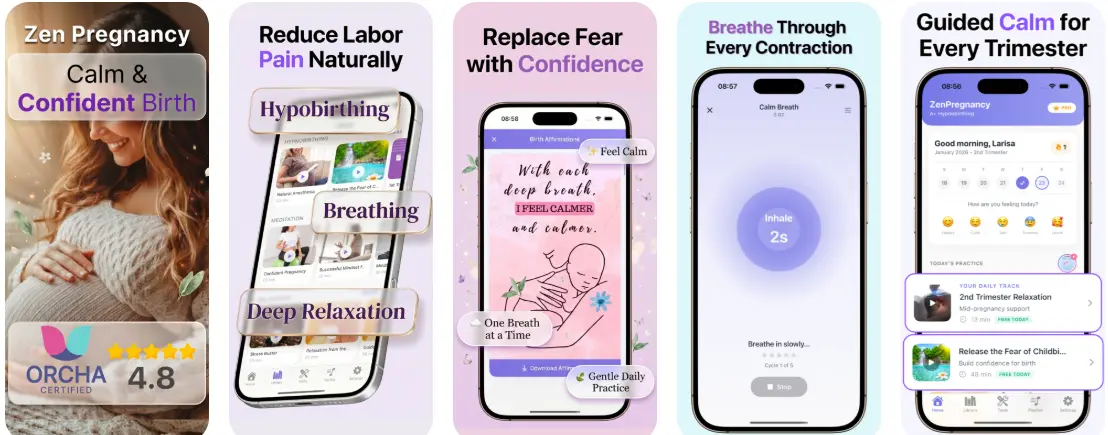
When comparing options, look for trimester-specific content, clear position guidance, adjustable session lengths, sleep tracks, anxiety support, and simple bookmarking. A pregnancy relaxation app should feel easy to use when you are tired, not like another task to manage. Pregnancy-specific language matters because your needs are different from a general wellness user’s needs. Research on digital mindfulness in pregnancy suggests app-based practice can reduce stress and anxiety for some users, although results vary and studies are still developing.
Meditations for Bonding and Body Confidence
Second-trimester meditations can support bonding by inviting you to place a hand on your bump, notice movement if present, or imagine sending calm to your baby. They can also help you meet body changes with more patience, especially if you feel stretched, emotional, or uncertain. A prenatal mindfulness app may include gratitude, loving-kindness, body scans, or gentle birth visualization. These practices are not about forcing positive feelings. They simply create a quiet space to notice what is happening and respond with kindness.
Where HypnoBirth App Fits
HypnoBirth App offers free hypnobirthing and pregnancy meditation tracks that can support a calm, regular routine through the second trimester and beyond; you can download it here. Use it as a companion to antenatal education, birth planning, and advice from your own care team. For a broader evidence overview on complementary mind-body approaches, the NCCIH notes that mindfulness is generally considered low risk but should be adapted to individual health needs. If you have complications, trauma concerns, or severe anxiety, ask for professional support.
Limitations
- Meditation apps cannot diagnose, treat, or replace care from a midwife, doctor, or mental health professional.
- Evidence for pregnancy meditation apps is promising but still limited, with small studies and varied app designs.
- Not every track will suit every pregnancy, especially if you have complications, dizziness, pelvic pain, or trauma triggers.
This is not medical advice. Consult your maternity care team for personalized guidance.
Frequently Asked Questions
Is a meditation app safe to use in the second trimester of pregnancy?
Yes, a gentle meditation app is usually safe in the second trimester when you use comfortable positions and breathe normally. Avoid long sessions lying flat on your back, stop if you feel dizzy, breathless, or unwell, and ask your midwife or doctor for guidance if you have pregnancy complications.
Which meditation positions are safest in the second trimester?
Side-lying, supported sitting, and inclined reclining are usually the safest and most comfortable meditation positions in the second trimester. Avoid staying flat on your back for long periods unless your clinician has advised it is safe for you.
How long should second trimester meditation sessions be?
A good second trimester meditation session is usually 5 to 20 minutes. Short, regular practice is often easier to maintain than occasional long sessions, especially if you are tired, uncomfortable, or fitting practice around work and family life.
How often should I use a pregnancy meditation app in the second trimester?
Daily use is a practical goal, even if you only meditate for a few minutes. Once a day before sleep or after waking can build a calm routine, while a second short session can help during anxious or physically uncomfortable moments.
Can a second trimester meditation app help with pregnancy anxiety?
Yes, meditation can help manage mild pregnancy anxiety by calming racing thoughts, easing tension, and giving you a simple breathing routine. It is not a replacement for mental health care, so speak to your midwife, GP, or therapist if anxiety feels intense, constant, or difficult to control.
Can meditation improve sleep during the second trimester?
Yes, meditation can support better sleep by helping your body relax and your mind slow down before bed. Choose tracks with gentle breathing, body scans, or sleep-focused prompts, and speak to your care team if insomnia, pain, snoring, or breathing problems persist.
What features should I look for in a second trimester meditation app?
A good second trimester meditation app should include pregnancy-specific tracks, safe position guidance, short and long session options, sleep support, anxiety tools, and bonding practices. Look for calm narration, easy offline access, and content that avoids breath-holding or intense physical instructions.
What meditation tracks help bonding with my baby in the second trimester?
Bonding tracks should focus on gentle awareness of your bump, calm breathing, visualisation, gratitude, and positive connection with your baby. The best options feel reassuring and unforced rather than overly sentimental or generic.
Is a meditation app better than a hypnobirthing class during pregnancy?
A meditation app is better for flexible daily practice, while a hypnobirthing class is better for structured teaching and personalised support. Many parents use both: the class explains techniques in depth, and the app helps you practise between sessions and at bedtime.
Is a pregnancy meditation app useful for first-time mums?
Yes, a pregnancy meditation app is especially useful for first-time mums who want simple guidance, reassurance, and a repeatable calm routine. It can introduce breathing, body awareness, sleep relaxation, and confidence-building practices without requiring prior meditation experience.
Can I use a meditation or hypnobirthing app if I plan to have an epidural?
Yes, you can use a meditation or hypnobirthing app even if you plan to have an epidural. Relaxation, breathing, and focus techniques can still support early labour, decision-making, rest, and feeling calmer during medical care.
Is 38 weeks too late to start a pregnancy meditation app?
No, 38 weeks is not too late to start a pregnancy meditation app. Choose short, simple tracks for sleep, anxiety relief, birth confidence, and breathing practice, and avoid putting pressure on yourself to master every technique before labour.
Read more
- Guided Meditation For Pregnancy
- Pregnancy Relaxation App
- Prenatal Mindfulness App
- First Trimester Meditation App for Anxiety, Sleep, and Early Pregnancy Calm
- Third Trimester Meditation App for Birth Preparation
- Fourth Trimester Meditation: Gentle Audio Support for the First Weeks After Birth
- Pregnancy Insomnia Meditation: Calm Audio for Restless Nights
- Pregnancy Meditation App Privacy: What Data Should You Check?
Best Second Trimester Meditation App for Calm Sleep, Bonding, and Mid-Pregnancy Confidence
HypnoBirth App offers free hypnobirthing and pregnancy relaxation tracks that can fit naturally into a second trimester routine. With guided breathing, calming audio, and birth-preparation support, it is a practical option for parents who want meditation that feels relevant to pregnancy without a clinical or overwhelming tone.
Best for
- Building a simple second trimester meditation routine
- Using calm audio for sleep, anxiety support, and pregnancy bonding
Limitations
- It does not replace advice from your midwife, doctor, or pregnancy care team
- It is focused on hypnobirthing and pregnancy relaxation rather than general mindfulness courses