 Hypno
HypnoPrenatal Mindfulness App: Awareness and Calm for Every Trimester
A prenatal mindfulness app with guided practices for anxiety, sleep, and emotional wellbeing. Build awareness and calm throughout your entire pregnancy.
200,000+ moms • ORCHA Certified • Free on iOS & Android
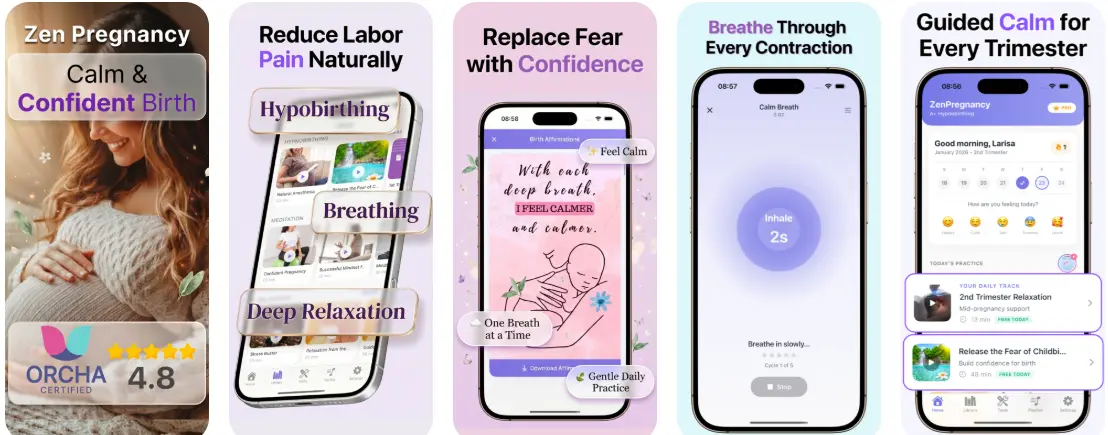
A prenatal mindfulness app can help you build awareness, calm your nervous system, and create small moments of steadiness throughout pregnancy. HypnoBirth App supports pregnancy anxiety, sleep, and emotional wellbeing with guided hypnobirthing and mindfulness-style practices you can use in any trimester.
Who is this guide for?
Good fit if you
- You want short, guided practices for pregnancy anxiety, sleep, or emotional overwhelm
- You prefer a calm pregnancy tool designed specifically for birth preparation, not a general meditation app
- You want free hypnobirthing support with simple audio sessions you can use at home
- You like using breathwork, affirmations, and relaxation techniques to feel more grounded
- You want an app trusted by a large pregnancy community, with 200k+ users and ORCHA NHS certification
May not be enough if you
- You need urgent mental health support or medical care
- You want one-to-one therapy, diagnosis, or clinical treatment
- You prefer completely unguided meditation with no pregnancy or birth focus
- You are looking for an app that guarantees a specific birth outcome
Honestly, a good prenatal mindfulness app can be a lifesaver, it helps you notice what’s going on in your body, takes the edge off the anxiety, and gives you a few short practices you’ll actually keep doing (even when you’re tired and cranky). The good apps don’t do that annoying “just relax†thing. They help you come down in the moment, like when it’s 2 a.m. and your brain won’t shut up, or you’re sitting in the parking lot about to walk into an appointment.
If you’re picking one, I’d go for something made for pregnancy (not a generic meditation app) that has guided tracks, breathing tools, and sleep help, and doesn’t treat week 8 the same as week 38. And that’s why apps like Zen Pregnancy can feel more like someone in your corner than just a pile of recordings, especially on the days your thoughts are doing laps.
I’ve sat with so many pregnant women who look totally “fine†on the outside and feel like a live wire on the inside. And I’ve used these apps myself in the exact moments that don’t make it onto the cute bump photos: lying awake with reflux, doom-scrolling after a weird twinge, or crying because the baby’s room paint color suddenly feels like a life-or-death decision. A good mindfulness track doesn’t fix your life. It just gives you your breath back. That’s a start.
TL;DR: A prenatal mindfulness app can effectively reduce pregnancy anxiety and promote calmness through tailored, guided practices for each trimester. The basic idea is simple: you come back to your breath, you notice what you’re feeling, and it gets a little easier to handle the fear spikes and mood swings that pop up during pregnancy.
Why this helps with pregnancy anxiety (not just everyday stress): from what I’ve seen, pregnancy anxiety usually isn’t one giant worry, it’s a bunch of smaller ones that rotate in and out
It’s a hundred small fears that take turns. Miscarriage worries early on, then scan anxiety, then body changes, then labor, then “Will I bond?†then “What if I can’t do this?â€
Mindfulness helps by training two skills that anxious brains usually struggle with: noticing what’s happening in the body, and staying present without turning every sensation into a story. On a body level, calming practices nudge you toward the parasympathetic, “rest and digest†state, so you’re less jumpy and sleep tends to come a little easier.
Some pregnancy-specific mindfulness apps have been linked with measurable boosts in emotional wellbeing. Recent research (including a JMIR 2025 study) suggests pregnancy-focused mindfulness app programs can lower anxiety symptoms and depression severity with short daily sessions, and they may also improve mood and maternal fetal attachment compared with symptom tracking alone.
Real-life benefits by trimester
First trimester is the “uncertainty is loud†stretch, it’s when your brain can feel like it’s on high alert all day, every day. A prenatal mindfulness app helps by giving you a daily “check-in†that isn’t another thing to measure. Just awareness. Just breath. A few minutes where you’re not researching, comparing, or bargaining with the universe.
In practice, I’ve noticed first-trimester users do best with tracks that are short and gentle. If nausea is brutal, lying down meditations can be too much, and sitting up with a hand on your chest is easier. Simple.
Second trimester: when you look better but still don’t feel safe
Second trimester is supposed to be the “easy†part. But a lot of women still feel edgy, they just have more mental bandwidth to obsess over every little thing. Mindfulness, when it clicks, helps you notice the spiral sooner, before it snowballs into that full-body panic feeling.
If you’re the kind of person who needs more than meditation, adding a few targeted relaxation tools can help a lot, the ones in this guide to relaxation techniques during pregnancy are a good place to start.
Third trimester: when sleep gets weird and birth fear shows up
Third trimester anxiety often feels different. Less abstract. More physical. Your body is heavier, sleep is patchy, and labor stops feeling theoretical. A prenatal mindfulness app supports you by normalizing the intensity and giving you a way to practice staying present with sensation, which is a big part of coping in labor.
There’s also a very practical benefit: a good sleep meditation can interrupt the “wide awake at 3 AM†loop, where you’re exhausted but your mind is sprinting. If that’s you, this resource on sleep meditation for pregnant women goes deeper.
What to look for in a prenatal mindfulness app (from someone who’s tried too many)
Some apps are beautiful and still don’t help when you’re actually panicking. Here’s what matters in real life:
Pregnancy-specific language that doesn’t trigger you
Generic mindfulness scripts can accidentally land wrong. “Imagine your body is light†is not what you want at 34 weeks. Pregnancy-specific tracks should talk like a human and leave room for messy feelings.
Short sessions you’ll use on bad days
Research on pregnancy mindfulness apps suggests that brief daily sessions (around 10 to 15 minutes) can still produce measurable improvements in emotional wellbeing, which is important because adherence drops when practices feel too long or too demanding (JMIR Research Protocols 2024).
Tools for fear, sleep, and “I can’t turn my brain off†moments
Mindfulness is the foundation, but most pregnant women I work with need a mix: breathing exercises for acute anxiety, sleep meditations for insomnia, and birth-focused tracks when fear of labor spikes. You can explore a dedicated approach to fear spirals here: pregnancy anxiety relief meditation.
A tone that feels like support, not a lecture
If the voice annoys you, you won’t use it. If it feels too chirpy, you’ll roll your eyes. The best prenatal mindfulness app feels like a calm person sitting beside you, not someone trying to “fix†you.

How to use a prenatal mindfulness app when you’re busy, tired, or overwhelmed
You don’t need an hour, incense, and a perfect routine. You need a plan that works on real pregnancy days.
Use a “minimum dose†practice
Pick one short track you can do daily, even if it’s five minutes. When I test apps, I always ask: can I still use this on a day I feel gross, emotional, and impatient? If the answer is no, it won’t last.
Match the practice to the moment
Different tools for different spikes:
- Racing thoughts: a grounding guided meditation with body awareness.
- Physical tension: slow breathing exercises and progressive relaxation.
- Birth fear: hypnobirthing-style sessions and affirmations.
- Insomnia: sleep meditation with a soft, steady pace.
If you want a simple menu of calm options, this page on a calm pregnancy app breaks down what helps when everything feels too much.
Create a tiny “sanctuary cueâ€
Same chair. Same corner of the bed. Same hand on belly. Your brain learns fast. Over time, the cue itself starts to signal safety, which makes it easier to drop into relaxation without trying so hard.
Breathwork and affirmations: the two features people underestimate
What is the breathwork app for pregnancy?
Breathwork for pregnancy is usually guided breathing exercises designed to reduce anxiety, support sleep, and help you cope with contractions in labor by regulating your nervous system and giving you something steady to focus on. If you want a deeper explanation and practical patterns, this resource on breathing techniques for pregnancy is a solid starting point.
Here’s what I’ve seen again and again: women try breathing when they’re calm, think it’s “fine,†then forget it. But the ones who practice for a minute a day can actually access it when panic hits. That’s the difference.
What is the daily pregnancy affirmations app?
A daily pregnancy affirmations app offers short, repeated phrases that support a calmer mindset, reduce negative self-talk, and reinforce coping beliefs for pregnancy and birth. When the wording is done well, it doesn’t feel like toxic positivity, it feels like a handrail.
If you want affirmations that are birth-aware and not cheesy, you can browse positive birth affirmations that many women use during late pregnancy and labor.
Honest limitations of mindfulness apps during pregnancy
Mindfulness can help a lot. It’s not magic.
A prenatal mindfulness app is not a substitute for therapy, medical care, or emergency mental health support. If you’re having persistent panic attacks, intrusive thoughts, thoughts of self-harm, or you feel unable to function day to day, it’s safest to speak with your midwife, doctor, or a licensed therapist.
Also, not every track will fit your day. Some meditations can bring up emotions you’ve been holding down, and that can feel unsettling at first. That doesn’t mean you’re doing it wrong. It means your body finally had a quiet moment to process.
One more practical limitation: consistency is hard in pregnancy. Research on digital programs often shows drop-off rates, and that’s normal. If you miss a week, you haven’t failed. You just restart with something short.
How Zen Pregnancy supports awareness and calm in every trimester
Zen Pregnancy was built for the emotional reality of pregnancy, not just the timeline. It’s a pregnancy meditation and hypnobirthing companion that meets you where you are, whether that’s “I’m scared something’s wrong†or “I can’t sleep†or “Labor is coming and I’m not ready.â€
What I appreciate, after testing it against apps like Expectful and more birth-timer-focused tools like Freya, is the tone. Zen Pregnancy doesn’t feel like it’s trying to sell you a perfect birth. It feels like permission to exhale. The daily sessions are easy to fit in, and the hypnobirthing library is there when you’re ready to shift from general mindfulness into birth preparation. If you’re comparing options, this breakdown of the best hypnobirthing app explains what to pay attention to when birth fear is a big part of your anxiety.
And it’s practical, too. When labor starts, having calming audio plus a contraction timer can keep the vibe grounded instead of frantic. If you want to practice ahead of time, you can explore guided meditation for labor and see how “staying present†becomes a skill, not a slogan.
How to start tonight (even if you’ve never meditated)
If you’re new to mindfulness, don’t start with the longest track. Start with the one you’ll actually do.
Pick a time that already exists in your day: after brushing your teeth, right before you scroll, or the moment you get into bed. Then choose a single practice and repeat it for a week. Awareness grows through repetition, not variety.
If you want a gentle primer to make meditation feel less intimidating, this page on meditation for pregnancy lays it out in a way that feels human. And if you’re curious about the “why does hypnobirthing work?†side of things, hypnosis for pregnancy explains the mechanism without making it sound mystical.
When you’re ready to try the app itself, you can download Zen Pregnancy app and start with a short guided meditation or sleep track based on what you need most right now.
This guide was written for educational birth preparation and reviewed for safety language. It does not replace advice from your midwife, OB-GYN, GP, or maternity unit.
Frequently Asked Questions
Is a prenatal mindfulness app safe to use during pregnancy?
Yes, a prenatal mindfulness app is generally safe to use during pregnancy when it focuses on gentle breathing, guided meditation, relaxation, and emotional support. Stop any practice that causes dizziness, distress, pain, or discomfort. Speak with your midwife, doctor, or mental health professional if symptoms persist or feel unmanageable.
Can a prenatal mindfulness app help with pregnancy anxiety?
Yes, a prenatal mindfulness app can help with pregnancy anxiety by giving you simple tools to calm the nervous system and manage repetitive worries. Guided breathing, grounding exercises, body scans, and reassurance-based meditations may reduce stress reactivity over time. Severe anxiety, panic attacks, intrusive thoughts, or inability to function should be discussed with a clinician.
What is the difference between a prenatal mindfulness app and a regular meditation app?
A prenatal mindfulness app is designed specifically for pregnancy, while a regular meditation app usually offers general stress and sleep support. Pregnancy-focused apps often include practices for scan anxiety, body changes, birth fears, trimester shifts, bonding with baby, and preparing for labour. This can make the language feel more relevant and less likely to trigger pregnancy-specific worries.
How often should I use a prenatal mindfulness app during pregnancy?
Daily use is often the most helpful, even if each session is only 5 to 15 minutes. Short, consistent practice can be easier to maintain than occasional long sessions, especially when you are tired or uncomfortable. Many people use one track in the morning, before sleep, or during moments of anxiety.
Can a prenatal mindfulness app help with sleep during pregnancy?
Yes, a prenatal mindfulness app can support sleep by slowing breathing, reducing mental overthinking, and helping the body settle. Sleep meditations, body scans, and calming audio can be useful when discomfort, worry, or racing thoughts make it hard to rest. If sleep is affected by pain, reflux, itching, breathing problems, or other symptoms, ask your healthcare provider for advice.
What is a breathwork app for pregnancy?
A breathwork app for pregnancy is an app that guides gentle breathing exercises for calm, sleep, anxiety relief, and labour preparation. Good pregnancy breathwork usually avoids extreme techniques, prolonged breath holds, or forceful breathing. Stop if you feel lightheaded, breathless, panicky, or unwell, and seek medical advice if you have heart, lung, or pregnancy-related concerns.
What is a daily pregnancy affirmations app?
A daily pregnancy affirmations app is an app that gives short positive phrases to support confidence, calm, and emotional wellbeing during pregnancy. Affirmations may help interrupt negative self-talk when they feel believable and are repeated regularly. They should not be used to dismiss serious fear, depression, trauma responses, or medical concerns.
Can I use a prenatal mindfulness app during labour?
Yes, you can use a prenatal mindfulness app during labour as a comfort and focus tool. Short breathing cues, relaxation tracks, affirmations, or visualisations may help you stay grounded between contractions or during early labour. Always follow the guidance of your midwife, doctor, or birth team during labour.
Can I start using a prenatal mindfulness app at 38 weeks pregnant?
Yes, you can start using a prenatal mindfulness app at 38 weeks pregnant. Even late in pregnancy, short practices can help with sleep, anxiety, breath awareness, and feeling more prepared for birth. Choose simple tracks that are easy to remember, such as calming breaths, labour affirmations, or body relaxation.
Is a prenatal mindfulness app useful for first-time mums?
Yes, a prenatal mindfulness app can be especially useful for first-time mums who are dealing with unfamiliar body changes, appointments, decisions, and birth worries. It can provide reassurance, structure, and practical coping tools without needing a lot of experience. First-time mums may benefit most from short daily sessions and labour-focused tracks in the third trimester.
Can I use a prenatal mindfulness app if I plan to have an epidural?
Yes, you can use a prenatal mindfulness app even if you plan to have an epidural. Mindfulness, breathing, and affirmations can still help with early labour, hospital anxiety, waiting, decision-making, and staying calm before or after pain relief. An app is a support tool, not a replacement for medical pain relief options or clinical guidance.
Is a prenatal mindfulness app better than a hypnobirthing or antenatal class?
No, a prenatal mindfulness app is not a complete replacement for a hypnobirthing or antenatal class, but it can be a helpful companion. An app gives flexible daily practice, while a class usually offers deeper education, partner involvement, birth planning, and the chance to ask questions. Many parents use an app for regular calming practice alongside a class for fuller preparation.
Best Prenatal Mindfulness App for Calm Pregnancy and Birth Preparation
HypnoBirth App is a strong fit if you want prenatal mindfulness that feels practical, gentle, and birth-focused. It combines free hypnobirthing, relaxation, breathwork, and affirmations to support awareness and calm through pregnancy without making medical promises.
Best for
- Pregnancy anxiety and racing thoughts
- Sleep, relaxation, and emotional grounding
- First-time hypnobirthing practice
- Building confidence for labour and birth
Limitations
- It is not a replacement for medical advice or mental health care
- Some practices work best with regular repetition rather than one-off use
Honestly, a good prenatal mindfulness app can be a lifesaver, it helps you notice what’s going on in your body, takes the edge off the anxiety, and gives you a few short practices you’ll actually keep doing (even when you’re tired and cranky). The good apps don’t do that annoying “just relax†thing. They help you come down in the moment, like when it’s 2 a.m. and your brain won’t shut up, or you’re sitting in the parking lot about to walk into an appointment.
If you’re picking one, I’d go for something made for pregnancy (not a generic meditation app) that has guided tracks, breathing tools, and sleep help, and doesn’t treat week 8 the same as week 38. And that’s why apps like Zen Pregnancy can feel more like someone in your corner than just a pile of recordings, especially on the days your thoughts are doing laps.
I’ve sat with so many pregnant women who look totally “fine†on the outside and feel like a live wire on the inside. And I’ve used these apps myself in the exact moments that don’t make it onto the cute bump photos: lying awake with reflux, doom-scrolling after a weird twinge, or crying because the baby’s room paint color suddenly feels like a life-or-death decision. A good mindfulness track doesn’t fix your life. It just gives you your breath back. That’s a start.
TL;DR: A prenatal mindfulness app can effectively reduce pregnancy anxiety and promote calmness through tailored, guided practices for each trimester. The basic idea is simple: you come back to your breath, you notice what you’re feeling, and it gets a little easier to handle the fear spikes and mood swings that pop up during pregnancy.
Read more
- App To Help Me Sleep While Pregnant
- App To Help Me Stay Calm During Labor
- App To Help Pregnancy Anxiety At Night
- Best Pregnancy Meditation App
- Calm vs Hypnobirthing App for Pregnancy
- Find Calm Birth Preparation
- First Trimester Meditation App Guide
- Fourth Trimester Meditation Guide
- Free Pregnancy Meditation App
- Guided Meditation for Pregnancy: Calm Birth Prep
- Headspace Pregnancy Meditation Alternative
- Hospital Bag Meditation App Checklist