 Hypno
HypnoPregnancy Breathing Techniques: From Daily Practice to Labor
Pregnancy breathing techniques you can practice now and use during labor. Step-by-step guide to slow breathing, surge breathing, and birth breathing.
200,000+ moms • ORCHA NHS Certified • Free on iOS & Android
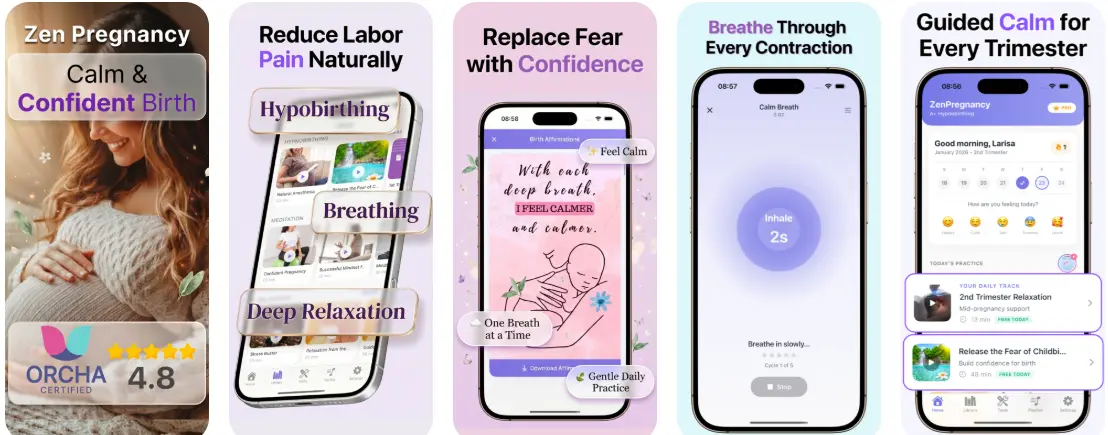
Pregnancy breathing techniques can help you feel calmer, support relaxation, and give you simple coping tools for labor. Daily practice often focuses on slow diaphragmatic breathing, steady rhythm, and techniques you can use with a partner during contractions, pushing, or a planned cesarean birth.
Who is this guide for?
Good fit if you
- You want simple prenatal breathing exercises to practice at home
- You are preparing for early labor, active labor, pushing, or cesarean birth
- You prefer calm, guided techniques that can be repeated daily
- You want your birth partner to learn supportive breathing cues
- You are interested in hypnobirthing-style breathing alongside your birth education
May not be enough if you
- You have been advised by your clinician to avoid specific breathing practices
- You feel dizzy, faint, panicky, or uncomfortable when changing your breathing pattern
- You are looking for medical treatment for pain, anxiety, breathlessness, or pregnancy complications
- You want one guaranteed breathing method for every stage of labor
Why Prenatal Breathing Exercises Matter in Pregnancy
Prenatal breathing exercises matter because pregnancy changes how your body breathes, rests, and responds to stress. As your uterus grows, your diaphragm has less room to move, your ribs widen, and shallow breathing can feel more noticeable, especially in the third trimester.
Slow breathing gives you one practical way to send a safety signal to your body. A longer exhale can reduce the feeling of panic, soften the jaw and shoulders, and make discomfort feel less overwhelming. It is not about being perfectly calm or having a certain kind of birth. It is about having a repeatable tool for anxious nights, Braxton Hicks, early labor, an epidural plan, a planned cesarean, or a home birth plan. If anxiety has been heavy this pregnancy, pair breathing with gentle support like pregnancy stress relief practices and guidance from your midwife or OB-GYN.
How Pregnancy Breathing Techniques Work in the Body
Pregnancy breathing techniques work by changing the rhythm of your nervous system, muscle tension, and attention. Slow nasal inhales and longer exhales can support parasympathetic activity through vagal pathways, which helps counter the fight-or-flight response.
In labor, fear can tighten the jaw, shoulders, belly, and pelvic floor. That tension may make contractions feel harder to meet. Breathing does not remove contractions, and it cannot promise a specific outcome, but it can interrupt the fear-tension-pain cycle before it builds. Research suggests slow breathing and mindfulness-based practices may reduce anxiety and perceived pain for some pregnant and laboring people; for example, studies indexed by the National Library of Medicine describe breathing, relaxation, and mind-body approaches in perinatal care. This is not medical advice. If you feel faint, short of breath at rest, or have chest pain, seek medical care promptly.
How to Practice Safe Pregnancy Breathing Daily
The safest way to practice pregnancy breathing is to keep it gentle, short, and repeatable. Five calm minutes most days is usually more useful than one long session that leaves you lightheaded or frustrated.
- Choose a supported position. Sit upright, recline with pillows, or lie on your left side if that feels best.
- Soften your body first. Drop your shoulders, loosen your jaw, and place one hand on your low ribs.
- Inhale gently for 3 to 4 seconds. Let the ribs widen instead of forcing the belly out.
- Exhale for 5 to 8 seconds. Imagine fogging a mirror or sighing through a straw.
- Repeat 6 to 10 rounds. Stop if you feel dizzy, numb, panicky, or unwell.
If you like guided audio, a can help you follow the timing without counting in your head.

Diaphragmatic Breathing for Pregnancy Calm
Diaphragmatic breathing is a baseline pregnancy breathing skill that encourages the lower ribs to widen and the upper chest to relax. It can be helpful for anxiety spikes, trouble sleeping, mild breathlessness from posture, and general tension.
To practice, sit with your back supported or lie on your side with pillows between your knees. Put one hand on your chest and one hand around your lower ribs. Inhale through your nose for 3 to 4 seconds, feeling the lower ribs move outward. Exhale slowly for 6 to 8 seconds and let the shoulders become heavier. Repeat for about 10 breaths. If your shoulders lift or your face tightens, make the inhale smaller. For people who feel overwhelmed by silence, pairing this with guided meditation for pregnancy can make the practice feel more held and less lonely.
Box Breathing and Pursed-Lip Breathing in Pregnancy
Pursed-lip breathing is usually more pregnancy-friendly than strict box breathing because it keeps the exhale long without asking you to hold your breath. Breath-holding can feel uncomfortable in pregnancy and is not ideal if you are prone to dizziness, high blood pressure, or panic sensations.
For pursed-lip breathing, inhale through your nose for 2 to 3 seconds, then exhale through softly pursed lips for 4 to 6 seconds, as if cooling soup. This is useful on stairs, during anxious moments, and in early labor when sensations start asking for attention. If you enjoy box breathing, make it gentle: inhale 3, pause 1, exhale 4, pause 1. Avoid long holds. This is not medical advice; ask your healthcare provider before practicing structured breathing if you have asthma, heart symptoms, hypertension, or a high-risk pregnancy.
Birth Breathing for Early Labor and Active Labor
Birth breathing works best when it matches the stage of labor rather than forcing one pattern for everything. In early labor, use slow breathing to rest, eat lightly if advised, hydrate, and keep your body loose between contractions.
During a contraction, try an inhale of 3 to 4 seconds and a longer exhale of 6 to 8 seconds. As active labor intensifies, shorten the inhale and keep the exhale soft: in through the nose or mouth, out with a low “haa” sound. Low sounds often help the jaw and pelvic floor soften together. Between contractions, take one cleansing breath and relax your hands. If you are preparing for birth without an epidural, you may also like natural birth preparation with breathing and meditation. If you plan medication or a cesarean, the same breathing can still help you stay steady during decisions and procedures.
Breathing During Pushing and Cesarean Birth
Breathing during pushing should follow your body, your care team’s guidance, and your baby’s wellbeing. Many people do best with open-glottis pushing, where you exhale or make a low sound instead of holding the breath for long counts.
In the pushing stage, try taking a breath in as a contraction rises, then exhale downward with a low sound as if fogging a mirror. Some hospitals still coach breath-holding for certain situations, and there may be medical reasons for directed pushing. Ask questions and follow your provider’s guidance. For a planned or unplanned cesarean, slow breathing can help during spinal placement, monitoring, waiting, and the emotional intensity of the operating room. If that path is possible for you, hypnobirthing for C-section preparation can make the process feel less unknown and more supported.
Trimester Breathing Plan for Prenatal Practice
A trimester breathing plan keeps practice realistic, so you build confidence without turning birth preparation into another chore. The goal is familiarity: your body learns the pattern before contractions, hospital decisions, or late-pregnancy anxiety arrive.
In the first trimester, use 2 to 3 minutes of slow exhales when nausea, fatigue, or worry peaks. In the second trimester, practice diaphragmatic breathing 4 to 5 days a week and add a short relaxation cue, such as “soft jaw, soft hands.” In the third trimester, rehearse birth breathing during mild discomfort, Braxton Hicks, or evening wind-down time. If you are starting late, you have not missed the window. Many parents begin at 34, 36, or even 39 weeks and still find the repetition helpful. For a simple late-pregnancy routine, see hypnobirthing practice in the third trimester.
Partner-Supported Labor Breathing Techniques
Partner-supported labor breathing techniques help the birthing person feel less alone and less rushed. A birth partner does not need to become a coach with perfect scripts; they need to create safety, rhythm, and reassurance.
The most helpful partner cues are short and calm: “Breathe out,” “Drop your shoulders,” “I’m here,” or “One breath at a time.” Partners can breathe audibly beside the laboring person, place a hand gently on the upper back if welcomed, dim lights, reduce extra conversation, and remind staff of preferences when appropriate. During contractions, avoid rapid counting, loud instructions, or telling someone to relax in a frustrated tone. Between contractions, offer water, a cool cloth, and quiet praise. If you are learning together, hypnobirthing techniques for birth partners can give both of you shared language before labor begins.
Pregnancy Breathing Apps Compared
A pregnancy breathing app is most helpful when it gives you guided practice before labor, not just a list of techniques to remember under pressure. Look for calm audio, simple breath pacing, birth-specific sessions, and tools you can use when contractions begin.
| App or program | Best fit | Breathing support | Notes |
|---|---|---|---|
| HypnoBirth App | Pregnancy, hypnobirthing, labor practice | Guided breathing, meditations, affirmations, contraction timing | Good for parents who want one birth preparation app |
| Expectful | General fertility, pregnancy, and parenting meditation | Mindfulness and relaxation audio | Broader wellness focus, less birth-specific for some users |
| Hypnobabies | Structured hypnosis-based childbirth course | Hypnosis scripts and birth training | More course-like and may require a larger time commitment |
If you are comparing options, our guide to the best hypnobirthing app for pregnancy and birth explains what features matter most.
Where a Birth Breathing App Can Help
A birth breathing app can help when you want repetition, voice guidance, and fewer things to remember. HypnoBirth App is a hypnobirthing app that provides guided meditation, breathing exercises, contraction timing, and birth affirmations for pregnant women.
The app is most useful when you practice before labor: during bedtime, after a stressful appointment, or while rehearsing early-labor coping. Audio guidance can be especially comforting if your thoughts race or if counting breaths makes you tense. During labor, you can use familiar tracks between contractions, then switch to tracking when you need clearer timing. If you prefer Android, the version offers the same kind of calm, repeatable support. For contraction timing specifically, see how a contraction timer with meditation can support early labor decisions.
Evidence and Safety for Breathing in Labor
Breathing in labor is generally considered a low-risk comfort measure when it stays gentle and does not involve prolonged breath-holding or forced hyperventilation. It is best understood as a coping tool, not a medical treatment or a guarantee of pain relief.
Studies suggest that relaxation, breathing, and mindfulness practices may improve anxiety, coping, and birth experience for some people, though results vary by study design and the type of support provided. Major maternity guidance also emphasizes individualized care, informed choice, and monitoring during labor; the NICE intrapartum care guideline is one example of evidence-based labor guidance. Breathing should sit alongside medical care, not replace it. Contact your healthcare provider urgently for chest pain, severe shortness of breath, fainting, bleeding, reduced fetal movement, or symptoms that feel wrong to you. This is not medical advice; consult your provider for personal recommendations.
Limitations of Pregnancy Breathing Practice
Breathing practice is helpful, but it has limits. Honest expectations make it easier to use the tool without feeling like you failed if labor becomes intense or medical support is needed.
- It cannot guarantee a pain-free birth. Breathing may change coping and tension, but labor sensations can still be powerful.
- It does not replace medical care. Breathlessness, fainting, chest pain, high blood pressure symptoms, or reduced fetal movement need prompt assessment.
- Some techniques are not pregnancy-friendly. Avoid forceful hyperventilation, long breath holds, and intense breathwork unless your clinician specifically approves it.
Start a Calm Breathing Routine Tonight
Start with one small routine tonight: three minutes of slow exhales, one calming phrase, and no pressure to do it perfectly. Pregnancy is full of unknowns, and it is normal to feel excited one moment and scared the next.
Try this: sit propped up in bed, inhale gently for 4 seconds, exhale for 6 seconds, and repeat 10 times while thinking, “I can meet this one breath.” If your mind wanders, that is not failure; it is practice. Add pregnancy affirmations for birth confidence if words help your body settle. HypnoBirth App can guide the rhythm for you, but the heart of the practice is simple: return to the exhale, soften what you can, and let support in when you need it.
This guide was written for educational birth preparation and reviewed for safety language. It does not replace advice from your midwife, OB-GYN, GP, or maternity unit.
Frequently Asked Questions
What is the best breathing technique during pregnancy?
Gentle diaphragmatic breathing with a slow, longer exhale is often the best starting technique during pregnancy. It encourages relaxation without intense breath control and is easy to practise sitting, lying on your side, or standing. Stop if you feel dizzy, breathless, or unwell, and ask your healthcare provider if you have medical concerns.
When should I start practising birth breathing in pregnancy?
You can start practising birth breathing at any point in pregnancy. Many people begin in the second or third trimester, but even a few minutes a day in the final weeks can help the pattern feel familiar. Short, regular practice is usually more useful than occasional long sessions.
Is 38 weeks too late to start pregnancy breathing techniques?
No, 38 weeks is not too late to start pregnancy breathing techniques. Simple patterns such as slow exhales, relaxed jaw breathing, and breathing out with a soft “haa” sound can be learned quickly. Keep sessions short and gentle, and focus on using the breath to stay calm rather than trying to master a perfect technique.
Can breathing techniques help with pregnancy anxiety?
Yes, slow and gentle breathing can help some people manage pregnancy anxiety. A longer exhale can signal safety to the nervous system and reduce physical tension in the jaw, shoulders, chest, and abdomen. If anxiety feels overwhelming, causes panic symptoms, or affects daily life, speak with your midwife, doctor, or mental health professional.
Can breathing techniques reduce labour pain?
Breathing techniques can help some people cope with labour pain, but they do not guarantee pain relief. Calm breathing may reduce fear, tension, and the feeling of fighting contractions. It works best alongside movement, position changes, continuous support, rest, and medical pain relief if wanted or needed.
Is holding my breath safe during pregnancy?
Long or forceful breath holding is not usually recommended during pregnancy. Breath holds may cause dizziness or strain, especially if you have high blood pressure, respiratory issues, or feel unwell. Ask your healthcare provider before doing any intense breathwork, and stop immediately if you feel faint or uncomfortable.
How should I breathe during contractions in early labour?
In early labour, steady breathing with a relaxed exhale is usually helpful. Try breathing in gently as a contraction builds and breathing out slowly as it peaks and fades. Keeping your jaw soft and shoulders loose can help the rest of your body release tension.
How should I breathe during active labour contractions?
During active labour, use simple breathing that helps you stay present and avoid tensing against the contraction. Many people prefer a calm inhale followed by a longer exhale, or a soft low sound such as “haa” on the out-breath. If a pattern feels too controlled, return to easy breathing and focus on relaxing your face, hands, and pelvic floor.
Can I use pregnancy breathing techniques if I have an epidural?
Yes, breathing techniques can still be useful with an epidural. They may help with anxiety, examinations, position changes, decision-making, pressure sensations, and resting between contractions. Breathing does not replace medical care, but it can support a calmer labour experience.
Are breathing techniques useful for first-time mums?
Yes, breathing techniques can be especially useful for first-time mums. They provide a simple coping tool when labour sensations are new and intense. Practising before birth can also help partners or birth companions know how to support you with reminders, pacing, and reassurance.
Is a pregnancy breathing app as good as a hypnobirthing or antenatal class?
A pregnancy breathing app can be helpful, but it is not the same as a full hypnobirthing or antenatal class. Apps are useful for daily reminders and guided practice, while classes often include birth education, partner support, questions, and personalised guidance. Choose the option that fits your budget, confidence, and need for interaction.
How often should I practise pregnancy breathing exercises?
Practising for 3 to 5 minutes most days is a good goal for many pregnant people. You can attach breathing practice to an existing habit, such as bedtime, after brushing your teeth, or before a relaxation track. Consistency matters more than long sessions, and practice should always feel gentle rather than forced.
Best Pregnancy Breathing Techniques App for Daily Practice and Labor Preparation
HypnoBirth App offers free hypnobirthing tools that support calm daily breathing practice and labor preparation. With guided tracks, relaxation support, and birth-focused techniques, it is a practical companion for learning pregnancy breathing techniques at your own pace.
Best for
- Daily prenatal breathing and relaxation practice
- Preparing calm breathing cues for labor with a birth partner
- Combining breathing techniques with hypnobirthing audio
Limitations
- It does not replace medical advice from your midwife, doctor, or care team
- Breathing preferences can change in labor, so it is best used flexibly