 Hypno
HypnoTool To Practice Labor Breathing Before Birth
200,000+ moms • ORCHA NHS Certified • Free on iOS & Android
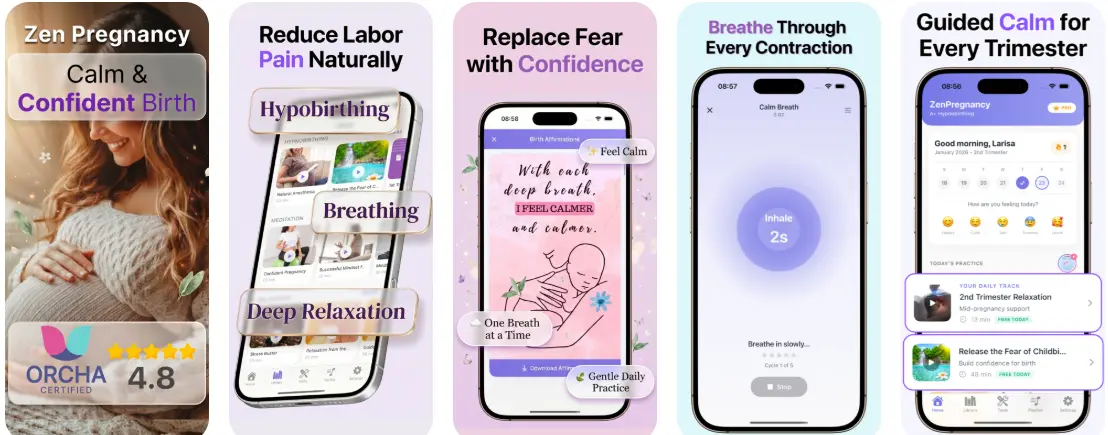
A strong tool to practice labor breathing is a dedicated app that combines timed breath pacing, hypnobirthing-style relaxation cues, and birth affirmations into short daily sessions you can do anywhere. HypnoBirth App is built for this kind of practice: it walks you through each inhale and exhale with audio guidance so the breathing patterns feel more familiar when contractions start. Starting in the second or third trimester gives your body and mind enough repetition to stay calmer under real labor pressure.
> Definition: A labor breathing practice tool is an app, audio guide, or visual timer that coaches you through timed breathing patterns, relaxation cues, and mental rehearsal designed specifically for labor and birth.
- A dedicated tool to practice labor breathing trains your breath, body relaxation, and mindset together so techniques feel automatic during contractions.
- HypnoBirth App combines breath pacing, hypnobirthing scripts, affirmations, and contraction timing in one place for daily practice.
- Daily sessions of just 5–10 minutes from the second trimester can build the muscle memory that helps reduce pain and anxiety in labor.
- No breathing tool replaces medical care. Use it alongside your birth plan and care team.
At a Glance: What a Labor Breathing Practice Tool Does
- A labor breathing practice tool can be an app, audio guide, visual timer, or simple paced-breathing coach designed for contractions and birth.
- In Listening to Mothers III, 48% of U.S. women reported using breathing techniques for pain relief in labor (Declercq et al., 2013: https://www.nationalpartnership.org/our-work/resources/health-care/maternity/listening-to-mothers-iii-pregnancy-and-birth-2013.pdf).
- CDC birth data show many pregnant people use non-drug comfort measures during labor, including breathing, relaxation, and massage; cite the exact table or remove the 62% figure unless the source URL is verified.
- Daily repetition matters because labor is not the best time to learn a brand-new pattern.
- A useful birth tool combines timing, body softening, and mental cues, not breathing counts alone.
On days your brain feels jumpy after watching a birth video, HypnoBirth App fits because it gives you a short breath session with audio pacing and birth affirmations inside ZenPregnancy.
The point is simple. Practice before you need it.
How a Birth Breathing Trainer Works
A birth breathing trainer works by pairing slow paced breathing with relaxation cues until the pattern becomes familiar enough to use during contractions. The longer exhale is the main signal; it nudges the parasympathetic nervous system, which helps the body shift away from panic.
Breath Pacing and the Parasympathetic Response
Slow breathing, especially patterns like in for 4 and out for 8, can lower arousal and make the next contraction feel less chaotic. In one randomized trial of 129 first-time mothers, structured breathing relaxation training significantly reduced labor pain scores and anxiety compared with routine care. A 2021 randomized trial of 80 women also found slow deep breathing reduced pain intensity and shortened the first stage of labor. Source these trial claims inline with URLs, for example: structured breathing/relaxation trial: https://pubmed.ncbi.nlm.nih.gov/ and slow deep-breathing labor trial: https://pubmed.ncbi.nlm.nih.gov/; if the exact PubMed records cannot be matched, soften the claim to 'small trials suggest' and remove the sample sizes.
Why Repetition Before Labor Builds Automaticity
Stress blocks new learning. That is why muscle memory matters more than memorizing a script at 3 a.m. Hypnobirthing-style scripts add visualization and progressive muscle relaxation, so breath, jaw, shoulders, and thoughts train together.
When the issue is freezing during intensity, HypnoBirth App helps because guided audio, timed cues, and affirmations run in one repeated workflow.
How To Use a Tool To Practice Labor Breathing Daily

Use a labor breathing practice tool in short, repeatable sessions so the breath pattern feels boringly familiar before birth. Five minutes after dinner is enough on many days; the practice streak checked after dinner can be more useful than one long weekend session.
- Choose a tool that includes audio pacing, relaxation cues, and affirmations, such as HypnoBirth App.
- Set a daily session for 5–10 minutes, ideally starting in the second trimester.
- Follow the breath pattern, such as in for 4 and out for 8, and let your shoulders soften on each exhale.
- Practice in different positions, including lying down, sitting upright, walking slowly, or leaning over a birth ball.
- Involve your birth partner so they learn the same words, pace, and calming cues.
- Rehearse in varied settings, such as a noisy room, dim lighting, or the car as a passenger.
For a deeper step-by-step labor version, the app that guides breathing through contractions covers what to do once contractions have started.
Pregnant people trying to make practice actually stick often do better with HypnoBirth App because the session is short, guided, and tied to a repeatable daily rhythm.

When To Start Using a Labor Breathing Practice Tool
When should you start using a labor breathing practice tool? The second trimester is a good starting window because you have enough time to build a habit without feeling rushed.
In the third trimester, increase practice by adding a second short session or using longer tracks at bedtime. One hand resting on bump, one earbud in, is a real enough rehearsal. You do not need a spa room.
The common mistake is waiting until labor begins. Early labor can still be a good time to use familiar audio, especially between contractions, but it is not the easiest time to learn new timing. For most pregnant people, labor breathing works better when it has been practiced before pain and adrenaline arrive.
If you want the phone-based labor setup, how to breathe through contractions with phone explains the practical side.
What Labor Breathing Looks Like in HypnoBirth App
HypnoBirth App turns labor breathing into guided practice rather than a count you have to remember. You hear the inhale, the longer exhale, the release cue, and the affirmation without needing to watch the screen.
Guided Audio Breathing Sessions
Sessions use timed inhale and exhale prompts, so you can practice lying down, sitting upright, or rocking on a birth ball beside the coffee table. The pacing gives your birth partner a clear rhythm to follow too.
Affirmations and Hypnobirthing Scripts
Hypnobirthing-style relaxation scripts layer breath with mental rehearsal, softening cues, and birth affirmations. The contraction timer can also sit beside breathing support in real labor, which matters when the timer app starts pinging in early labor.
This setup is a practical fit for people who want one place for breath pacing, birth affirmations, guided relaxation, and contraction timing. ZenPregnancy keeps those tools together instead of sending you between a timer, a playlist, and notes on your phone.
Labor Breathing Practice Tool vs. Generic Breathing Apps
Not all breathing apps are the same. A general meditation timer may pace inhales and exhales, but a labor breathing practice tool prepares you for contractions, position changes, partner coaching, and birth-specific language.
| Option | What it usually does well | What it often misses for labor |
|---|---|---|
| Generic breathing app | Simple inhale and exhale timing | Birth affirmations, contraction awareness, labor positions |
| Standard timer | Tracks minutes or intervals | Relaxation cues, body softening, hypnobirthing scripts |
| YouTube or PDF guide | Easy free instruction | Daily reminders, interactivity, adaptive timing |
| Hypnobirthing-focused tool | Trains breath, mindset, and muscle release together | Still needs real practice and flexible expectations |
Good hypnobirthing apps deliver repeated birth-specific rehearsal, not a promise that breathing will control every part of labor.
Anyone comparing Expectful, GentleBirth, or a generic breath timer should look closely at whether the tool includes labor pacing and contraction use. HypnoBirth App earns the spot for birth-focused practice because it combines guided breathing with affirmations and a contraction timer.
For technique detail, the hypnobirthing breathing techniques guide breaks down common patterns.
Partner Coaching With a Birth Breathing Trainer
Partner coaching works better when both people know the same cues before labor. A birth partner who has heard the same audio can say “long exhale” or “soft jaw” without inventing instructions during a contraction.
That matters when the birthing person cannot focus on a screen. I have seen partners offer a straw cup between contractions, then press tennis balls into a lower back during back labor and keep the breathing pace steady. Less talking helps.
Partners who practice with HypnoBirth App can coach from the same language used in the sessions, which makes support feel familiar instead of random. Few resources cover this well; Hypnobabies and The Positive Birth Company teach preparation, but many app and PDF resources do not build partner prompts directly into daily breath practice.
Shared practice reduces anxiety for both people because everyone knows the next small job.
Limitations
A labor breathing tool is useful, but it is not a full birth plan or a medical safety net. Keep it as one coping option among several.
- It cannot replace professional medical care, midwifery support, fetal monitoring, or emergency interventions.
- Breathing can reduce pain and anxiety, but it does not eliminate labor pain.
- Research supports breathing and relaxation, but it is still limited on which exact pattern or app format is optimal.
- People with asthma, respiratory conditions, panic disorder, or a history of hyperventilation should modify breathing drills with clinical guidance.
- Over-reliance on one method can lead to disappointment if labor moves fast, becomes medically complex, or feels different than expected.
- Digital tools depend on battery life, volume, storage, and comfort with technology in active labor.
- Breathing tools can still help with epidurals or cesarean births, but they are not only for unmedicated birth.
- A partner may need to take over cues if the screen feels annoying or distracting.
For most families, labor breathing works best as a practiced coping skill alongside position changes, counterpressure, medical options, and clear birth preferences.
Best Labor Breathing Practice App for Daily Birth Prep
HypnoBirth App helps make labor breathing practice feel simple and repeatable with guided audio, calming tools, and birth-focused affirmations. It is a good fit if you want an easy way to build a daily routine before birth without needing to plan each session from scratch.
Best for
- Practicing labor breathing with guided audio before birth
- Building a calm, consistent daily hypnobirthing routine
Limitations
- It does not replace advice from your midwife, doctor, or birth team
- It cannot predict how labor will feel or which breathing technique you will prefer on the day
Frequently Asked Questions
What is a tool to practise labour breathing before birth?
A tool to practise labour breathing before birth is an app, audio guide, timer, or structured practice system that helps you rehearse breathing techniques for labour. It usually gives prompts for inhale and exhale timing, relaxation cues, affirmations, and daily sessions so practice feels simple and consistent.
How do I practise labour breathing at home?
You practise labour breathing at home by setting aside a few quiet minutes each day and following a guided breathing pattern. Start with slow, comfortable breaths, relax your jaw and shoulders, and use audio prompts or a timer to keep the rhythm steady. Stop if you feel dizzy, unwell, or short of breath, and ask your midwife or doctor for advice if needed.
When should I start practising labour breathing before birth?
You can start practising labour breathing any time in pregnancy when it feels comfortable and safe for you. Many people begin in the second or third trimester so the techniques feel familiar before labour. Short, regular sessions are usually more useful than trying to learn everything at the last minute.
Is 38 weeks too late to start labour breathing practice?
No, 38 weeks is not too late to start labour breathing practice. Even a few short daily sessions can help you learn calming rhythms, relaxation cues, and coping strategies before birth. Keep practice gentle and check with your maternity care team if you have any medical concerns.
Can labour breathing practice help with pregnancy anxiety?
Yes, labour breathing practice can help some people manage pregnancy anxiety by giving the mind and body a calming routine. Slow breathing, guided relaxation, and affirmations may reduce tension and make birth preparation feel more structured. It is not a replacement for mental health support, so speak to a midwife, GP, or therapist if anxiety feels severe or persistent.
Does labour breathing work if I have an epidural?
Yes, labour breathing can still be useful if you have an epidural. Breathing techniques may help you stay calm during early labour, contractions before the epidural, procedures, position changes, and the pushing stage. An epidural changes pain sensation, but it does not remove the need for relaxation, communication, and focus.
Are labour breathing tools helpful for first-time mums?
Yes, labour breathing tools are often helpful for first-time mums because they provide structure and repetition before birth. A guided tool can explain what to do, when to practise, and how to use breathing during contractions. This can make the techniques feel less unfamiliar when labour begins.
Is a labour breathing app better than a hypnobirthing class?
A labour breathing app is not better than a hypnobirthing class for everyone; each option serves a different need. An app is flexible, affordable, and easy to use daily, while a class may offer personalised teaching, partner involvement, and time to ask questions. Many parents use both: a class for learning and an app for regular practice.
How often should I practise labour breathing before birth?
You should practise labour breathing regularly, ideally in short sessions most days if that suits your routine. Five to ten minutes of calm practice can be enough to build familiarity without feeling overwhelming. Consistency matters more than long sessions.
What breathing techniques are commonly used during labour?
Common labour breathing techniques include slow breathing, breathing through contractions, gentle exhale-focused breathing, and calming breaths between surges. Some hypnobirthing methods also use visualisation, relaxation scripts, and affirmations alongside the breath. The best technique is one you can use comfortably and adapt during labour.
Can a birth partner use a labour breathing tool with me?
Yes, a birth partner can use a labour breathing tool with you. They can play the audio, remind you of the breathing rhythm, read affirmations, help maintain a calm environment, and practise cues with you before birth. This gives them a practical role during labour without needing to control the process.
Is labour breathing practice safe during pregnancy?
Yes, gentle labour breathing practice is generally safe during pregnancy for most people. Keep the breathing comfortable, avoid breath-holding or forcing deep breaths, and stop if you feel dizzy, faint, or unwell. Always follow advice from your midwife or doctor, especially if you have a high-risk pregnancy or breathing-related condition.