 Hypno
HypnoHypnobirthing Breathing Techniques: Beginner Steps for Pregnancy and Labor
200,000+ moms • ORCHA NHS Certified • Free on iOS & Android
Hypnobirthing breathing techniques use slow nasal inhales and longer controlled exhales to activate your body's relaxation response, helping you manage pain, fear, and anxiety during contractions and pushing. The three core patterns, calm breathing, surge breathing, and birth breathing, each match a different stage of labor and work best when practiced regularly during pregnancy.
Definition: Hypnobirthing breathing techniques are structured breathing patterns, typically slow nasal inhales paired with longer, controlled exhales, used during pregnancy and labor to reduce fear, manage pain, and help the body work with contractions more effectively.
TL;DR
- Three main patterns: calm breathing for early labor, surge breathing for active contractions, and down breathing for pushing.
- Practice daily from the second trimester so the patterns feel automatic by birth day.
- Research links these techniques to lower pain scores and reduced epidural requests, though results vary.
- Usable alongside epidurals, inductions, and cesarean births, not just “natural” birth.
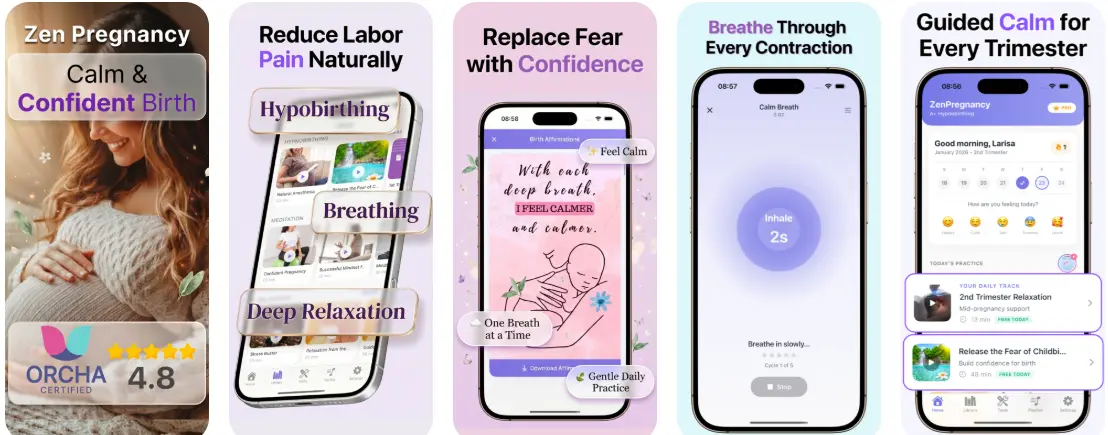
- The HypnoBirth App provides guided audio, visual timers, and contraction counters to support real-time practice.
5 Must-Know Facts About Hypnobirthing Breathing Techniques
- Slow nasal breathing with a longer exhale helps activate the parasympathetic nervous system, the body’s “settle down” pathway.
- Different labor breathing techniques fit different moments: calm breathing for early labor, surge breathing for contractions, and down breathing for pushing.
- Research suggests breathing and relaxation can reduce pain and anxiety for many women, but the effect is not the same for everyone.
- These birth breathing exercises can be used with induction, epidural, planned cesarean, or unmedicated vaginal birth.
- Apps such as HypnoBirth App can guide practice with audio and timers, but they do not replace medical advice.
I usually start people with one small cue: soften your shoulders before counting. If the shoulders stay near the ears, the breath often feels like work.
Physiology of Hypnobirthing Breathing During Labor
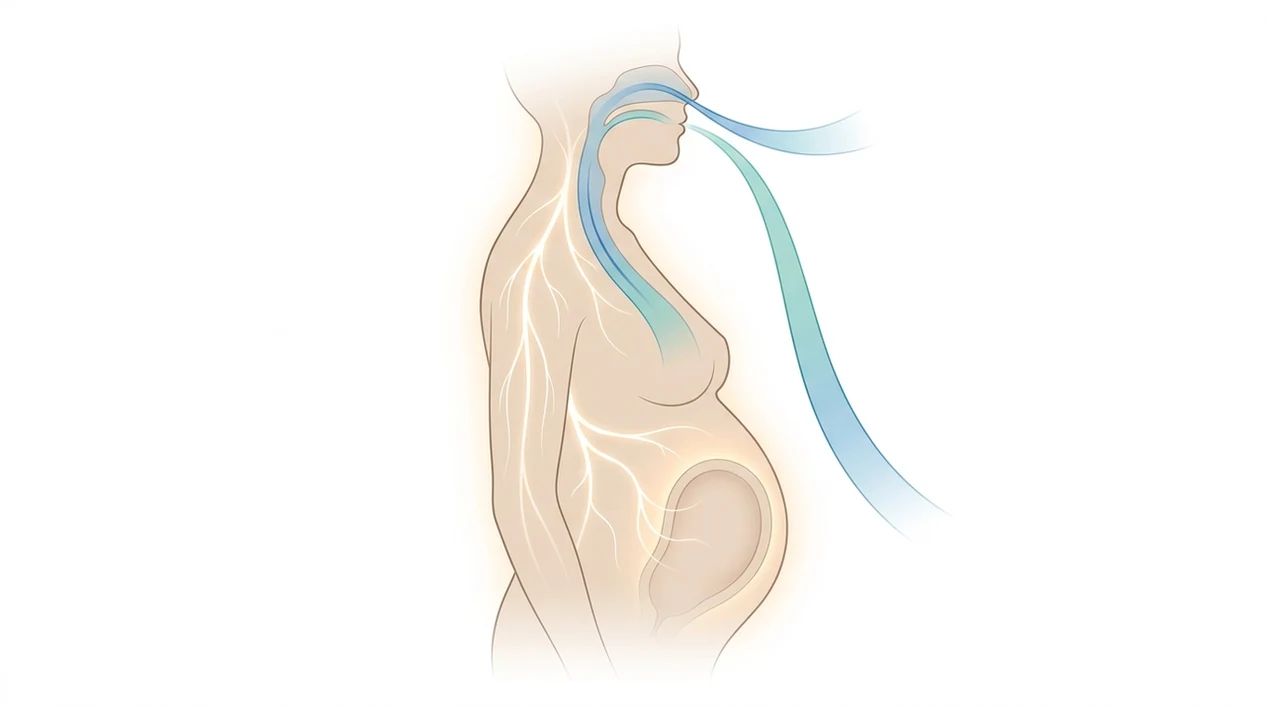
Hypnobirthing breathing works by using slow exhales to nudge the nervous system away from fight-or-flight and toward rest-and-digest. That shift is linked to vagus nerve activity, which is the body’s built-in calming signal.
During fear, adrenaline and cortisol can rise. That may make muscles feel tighter and contractions harder to work with. A longer exhale gives the body a repeated “safe enough” message, helping the uterus receive steady oxygen while you keep rhythm. Clinicians typically recommend steady breathing as a coping tool, not as a replacement for monitoring, pain relief, or emergency care.
Clinical studies of breathing and relaxation during labor suggest possible reductions in anxiety and pain, but effects vary by study design and support setting. In plain terms: the breath gives your body a job before panic takes over. The first time someone says, “I know what to do with my breath now,” it’s usually after a week of short sessions.
Before You Start Hypnobirthing Breathing
Before you start, make sure the breathing pattern fits your body, your pregnancy, and your birth plan. The aim is steady comfort, not pushing through symptoms to “do it right.”
- Check with your midwife, doctor, or clinician first if you have asthma, heart concerns, fainting episodes, high-risk pregnancy factors, or any breathing disorder.
- Choose a supported position where your chest can move easily and your jaw, shoulders, and hands can soften. Sitting upright, side-lying, or leaning over pillows all count.
- Practice when you are calm, before asking your body to use the technique during contractions. Five quiet minutes on an ordinary day teaches more than one panicked rehearsal.
- Tell your partner the exact cue phrase you want repeated, such as “soft shoulders,” “long exhale,” or “breathe with me.” Keep it short enough to hear during a surge.
- Stop long-count breathing if you feel dizzy, tingly, air-hungry, or more anxious. Return to normal breathing, shorten the count, and tell your care team if symptoms continue.
Breath should make the room feel a little safer. If it makes you feel trapped, simplify it.

Pregnancy Setup for Birth Breathing Exercises
Start with a quiet, comfortable space where your body can settle quickly. Sit upright on a chair, lean over pillows, or lie on your left side if that feels better in pregnancy.
Second trimester is a useful time to begin because daily repetition builds muscle memory before labor starts. You do not need special equipment. A guided track, a timer, or a pregnancy app can help, but the core skill is still breath plus attention. Good hypnobirthing apps deliver repeatable audio cues and simple timers, not promises about how birth will unfold.
Tell your support person what you are practicing. Ask them to mirror the rhythm and use one anchor phrase, such as “long exhale.” If you have asthma, breathing disorders, fainting episodes, or cardiac concerns, check with your midwife or clinician before using long-count breathing.
Step 1 — Calm Breathing for Early Labor and Pregnancy Practice
Calm breathing is the foundation pattern for pregnancy practice and early labor. Inhale through your nose for 4 counts, then exhale through your nose or mouth for 7 to 8 counts.
Use it between surges, during mild early contractions, or when anxiety starts building. The goal is not a heroic breath. It is a repeatable one. For pregnancy practice, try 5 minutes after brushing teeth, then stop while it still feels manageable.
Picture a balloon slowly inflating on the exhale. Odd image, useful cue. I often teach this with one earbud in and a 12-minute relaxation track while lying on the left side. For most beginners, calm breathing is easier than complex meditation because the count gives the mind a simple place to land.
Step 2 — Surge (Up) Breathing for Active Contractions
Surge breathing, sometimes called up breathing, is used during active contractions. Take a deep inhale through the nose and imagine the breath rising up and over a wave.
As the contraction peaks, keep the exhale long and steady. Let the breath follow the contraction instead of trying to beat it. If you want a deeper guide to the pattern, the full surge breathing explanation breaks down timing and visual cues.
Small randomized studies of breathing and relaxation training have reported lower labor pain scores and higher coping satisfaction, but the evidence is not strong enough to guarantee the same result for every birth. Partner support matters here. Ask your partner to breathe audibly beside you, not talk constantly. One clear rhythm is easier to follow than five encouraging sentences.
The wave does end.
Step 3 — Down (Birth) Breathing for the Pushing Stage
Down breathing is for the pushing or bearing-down stage. Inhale deeply through the nose, then send a long, slow exhale downward as if breathing the baby out.
This is not forced purple-face pushing. Think gentle pressure with the exhale, guided by your midwife or doctor. Relax the jaw and pelvic floor together; they often copy each other. I sometimes cue, “unclench the tongue from the roof of your mouth,” because it works faster than a lecture.
Down breathing can still help with an epidural. You may not feel every sensation clearly, but you can focus on exhale direction, shoulder release, and listening for clinical guidance. If your birth team asks for directed pushing, follow them. Breath is a tool, not the boss of the room.
How to Use a Breathing App for Labor Practice
Use app-based practice as a rehearsal system, not a last-minute rescue plan. A guided breathing tool can support audio cues, visual timers, and offline tracks, but your body still needs repetition before labor.
- Open the breathing exercises section and select your stage: calm, surge, or down.
- Follow the visual timer and guided audio to match the inhale-exhale counts.
- Practice daily for 5 to 10 minutes during pregnancy.
- Download tracks in advance and use offline mode on birth day.
- Have your partner control the phone so you can focus on breathing.
Charge the phone, bring earbuds, and set do-not-disturb mode before leaving for the hospital. Headphones tucked into a gown pocket are a small thing, until they are not. If you want phone-specific labor setup, this app that guides breathing through contractions covers that use case.
Common Mistakes With Hypnobirthing Breathing Exercises
The most common mistake is breathing too fast while trying to look calm. Fast breathing can cause dizziness, tingling, or more panic.
If that happens, use a rescue breath: inhale for 3, exhale for 5, and skip any hold. Then return to your natural pace. Long counts are optional. Safety is not.
Another mistake is waiting until labor to try the technique. A contraction is a hard classroom. Practice during normal stress first, such as waiting for blood test results or sitting in traffic.
Partners also need rehearsal. A support person practicing quiet prompts can make the difference between “I forgot everything” and “I found the rhythm again.” If you prefer a structured practice tool, a tool to practice labor breathing can help you build the habit before labor starts.
Practice Signals for Effective Birth Breathing
Effective practice has body signals, not just good intentions. Within 2 to 3 breath cycles, your heart rate may feel slower and your chest less tight.
After a 5-minute session, check your jaw, shoulders, and hands. They should feel softer. Phone glowing beside a water bottle, timer finished, shoulders lower than when you started. That counts.
You also want transfer. If you can keep the pattern during a dental visit, a blood draw, or a tense appointment, it is becoming usable. Your partner should be able to cue you back with one phrase when you lose focus.
In a 2012 BMJ randomized trial of 680 women, those using a structured childbirth hypnosis program were less likely to request epidural analgesia than women receiving standard care, 36.5% versus 53.8% source.
Common Myths About Hypnobirthing Breathing Techniques
Myth: hypnobirthing breathing guarantees a pain-free birth.
Correction: it can reduce fear and improve coping, but it cannot promise comfort or control every medical variable.
Myth: it is only useful for unmedicated vaginal birth.
Correction: calm breathing can support induction, epidural, cesarean birth, and recovery room anxiety.
Myth: you need meditation experience or high hypnotizability.
Correction: most people learn through daily repetition, simple counts, and familiar relaxation cues.
Myth: practicing breathing means refusing medical pain relief.
Correction: breathing and medical pain relief can work together. Many women use both.
For people who get overwhelmed by long birth classes, short daily breathing practice is often easier because it turns one skill into a familiar routine.
Limitations
Hypnobirthing breathing is useful, but it has limits. Keep these in mind before building your whole birth plan around breath alone.
- Evidence is promising but not definitive; results vary by person, support team, and birth setting.
- A Cochrane review found relaxation methods, including breathing, may reduce pain and increase satisfaction, but evidence quality was low to moderate source.
- Over-focusing on a calm birth can create guilt if labor includes induction, forceps, cesarean, or medication.
- Structured counting may feel overwhelming in intense labor; simpler instinctive breathing may fit better.
- Breathing cannot replace fetal monitoring, clinical assessment, medication, surgery, or emergency care.
- App-based tools can be limited by battery life, hospital Wi-Fi, room noise, staff interruptions, or device policies.
Reset the plan. A supported birth can still be a good birth when the breathing changes.
Best Hypnobirthing Breathing App for Pregnancy Practice and Labor Calm
HypnoBirth App helps you practise hypnobirthing breathing techniques with calm, guided sessions you can use during pregnancy and revisit when labor begins. It is free to start, used by 200k+ parents, and ORCHA NHS certified.
Best for
- Learning simple breathing rhythms for relaxation and focus
- Building a consistent hypnobirthing practice before labor
Limitations
- It does not replace advice from your midwife, doctor, or birth team
- Breathing techniques may feel more natural with regular practice
Frequently Asked Questions
What are hypnobirthing breathing techniques?
Hypnobirthing breathing techniques are slow, focused breathing patterns used to support relaxation during pregnancy and labour. They usually combine gentle inhales and longer exhales with calm attention, visualisation, or positive cues. They do not guarantee a pain-free birth, but they can help many people feel more settled and in control.
How do I do basic hypnobirthing breathing for labour?
Basic hypnobirthing breathing starts with a slow inhale through the nose and a longer, relaxed exhale through the mouth or nose. Keep your jaw, shoulders, and hands soft, and breathe steadily rather than forcing the breath. Practise when calm first so the technique feels familiar during contractions.
Can I start hypnobirthing breathing at 38 weeks pregnant?
Yes, you can start hypnobirthing breathing at 38 weeks pregnant. Even a short daily practice can help you learn the rhythm, relax your body, and build confidence before labour. Focus on simple techniques you can remember easily rather than trying to master everything at once.
Do hypnobirthing breathing techniques help with pregnancy anxiety?
Yes, hypnobirthing breathing techniques can help reduce pregnancy anxiety by calming the nervous system and giving your mind a practical focus. Slow breathing may ease tension and support a sense of control during stressful moments. If anxiety feels severe, persistent, or overwhelming, speak to your midwife, GP, or mental health professional.
Can I use hypnobirthing breathing with an epidural?
Yes, you can use hypnobirthing breathing with an epidural. Breathing techniques can still help you stay calm during monitoring, examinations, position changes, and the waiting stages of labour. Follow your maternity team’s guidance about movement, pushing, and safety once an epidural is in place.
Are hypnobirthing breathing techniques good for first-time mums?
Yes, hypnobirthing breathing techniques are suitable for many first-time mums. They provide simple tools for managing nerves, understanding contractions, and staying focused during an unfamiliar experience. They work best when practised regularly and used alongside antenatal education and medical support.
What is the difference between up breathing and down breathing in hypnobirthing?
Up breathing is usually used during contractions in the opening stage of labour, while down breathing is often used when the body is ready to birth the baby. Up breathing tends to be slow and expansive, helping you relax through each surge. Down breathing is typically directed lower in the body and should be used only when your midwife or doctor confirms it is appropriate to push or breathe the baby down.
How often should I practise hypnobirthing breathing during pregnancy?
A practical goal is to practise hypnobirthing breathing for 5 to 10 minutes most days. Short, consistent sessions are usually more helpful than occasional long sessions. You can also practise during everyday moments, such as before sleep, after a shower, or when you notice tension.
Can hypnobirthing breathing make labour painless?
No, hypnobirthing breathing cannot guarantee a painless labour. It can help reduce fear, soften tension, and support coping, which may change how contractions feel for some people. Pain relief choices, birth circumstances, and individual bodies vary, so keep an open plan with your maternity team.
Should I choose a hypnobirthing app or a hypnobirthing class?
A hypnobirthing app is best for flexible self-paced practice, while a class is best if you want live teaching, questions, and personalised support. Many people use both: a class for structure and an app for daily breathing practice. Choose the option that fits your budget, schedule, confidence, and learning style.
When should I use hypnobirthing breathing during labour?
Use hypnobirthing breathing as soon as you notice contractions, tension, or anxiety building. Gentle breathing can help in early labour, during the journey to hospital or birth centre, between contractions, and during procedures. If your care team gives specific instructions, follow their guidance first.
Are hypnobirthing breathing techniques safe in pregnancy?
Yes, gentle hypnobirthing breathing techniques are generally safe in pregnancy when practised comfortably and without breath-holding or strain. Stop if you feel dizzy, faint, short of breath, or unwell, and return to normal breathing. Speak to your midwife or doctor if you have a medical condition, pregnancy complication, or concerns about any technique.