 Hypno
HypnoHypnobirthing App Evidence: What Does Research Say?
A balanced guide to what hypnobirthing apps may help with, where evidence is still limited, and how to use them safely in pregnancy.
200,000+ moms • ORCHA NHS Certified • Free on iOS & Android
Hypnobirthing app evidence suggests that hypnosis, relaxation, breathing, and pregnancy meditation may help some people feel calmer, more prepared, and more in control during birth. However, research does not prove that apps reliably reduce labour pain, epidural use, or medical interventions, so they should be used as supportive tools rather than a replacement for clinical care.
What hypnobirthing app evidence actually covers
Most hypnobirthing app evidence is indirect: it comes from studies on childbirth hypnosis, relaxation, breathing, mindfulness, and antenatal education rather than trials of one specific smartphone app. A hypnobirthing app usually combines audio scripts, guided breathing, visualisation, affirmations, and short learning sessions. These elements overlap with established hypnobirthing techniques, but app delivery is newer and less studied. That means the strongest conclusion is cautious: apps may make regular practice easier, but the app format itself has not yet been proven to change birth outcomes.
What studies say about hypnosis for birth
Research on hypnosis for childbirth is mixed but not dismissive. Reviews suggest hypnosis-based preparation may reduce fear, support relaxation, and improve some people’s sense of control or satisfaction with birth. However, results for pain intensity, epidural use, caesarean birth, or assisted birth are inconsistent. A Cochrane review of trials on hypnosis for labour pain found uncertain or small effects across key outcomes. This supports a realistic message: hypnosis may improve coping and experience for some users, but it cannot guarantee a shorter, easier, or intervention-free labour.
Where apps may add practical value
The main strength of an app is convenience. Regular, repeated practice is easier when breathing tracks, relaxation scripts, and confidence-building sessions are available at home, on a commute, or before sleep. The HypnoBirth App can fit this supportive role by helping users build a calm practice habit over time. That matters because many benefits of hypnobirthing are skill-based: learning how to soften tension, focus attention, use rhythmical breathing, and respond to contractions without panic. Apps are not magic, but they can reduce the friction of daily preparation.

Realistic benefits you might expect
The most plausible benefits are psychological and practical rather than guaranteed clinical outcomes. Users may feel more informed, less fearful, and better able to use breathing or relaxation during labour. Some people also report improved sleep, calmer antenatal routines, and more confidence discussing birth preferences with their care team. These possible hypnobirthing benefits are meaningful, even if they do not remove pain or prevent interventions. A balanced approach is to treat hypnobirthing as one coping tool alongside birth education, partner support, movement, comfort measures, and medical pain relief if wanted or needed.
Safety and when to ask your clinician
For most people, gentle breathing, relaxation, and pregnancy meditation are low-risk when used sensibly, but they should not replace medical advice. If you have a high-risk pregnancy, trauma history, severe anxiety, dissociation, or concerns about reduced fetal movement, speak with your midwife, doctor, or mental health professional. The NHS pregnancy guidance is a helpful starting point for general safety information. For more detail, read our guide to pregnancy meditation safety. Always seek urgent care for worrying symptoms rather than trying to relax through them.
How to judge claims about pain-free birth
Be cautious with any app, course, or influencer promising a pain-free birth, no epidural, or no interventions. The evidence does not support those guarantees, and birth is influenced by many factors, including labour length, baby position, medical history, support, environment, and unexpected complications. Hypnobirthing can help some people change how they respond to sensations, but it does not make medical pain relief a failure. For a fuller evidence-based discussion, see does hypnobirthing work and our guide to pain-free birth claims.
Limitations
- There are few high-quality randomized controlled trials specifically testing hypnobirthing smartphone apps.
- Existing hypnosis studies vary in methods, timing, scripts, practitioner involvement, and outcome measures.
- Benefits such as calm, control, and satisfaction are often self-reported and may not predict pain relief or fewer interventions.
This is not medical advice. Consult your maternity care team for personalized guidance.
Frequently Asked Questions
Is there good evidence that hypnobirthing apps work?
The evidence for hypnobirthing apps is promising but limited. Most research looks at hypnosis, relaxation, and antenatal education rather than specific apps, so claims should be viewed cautiously. Apps may still be useful as a convenient way to practise coping skills regularly.
Can a hypnobirthing app reduce labour pain?
A hypnobirthing app cannot guarantee less labour pain. Some people report better coping, calmer breathing, and more confidence, but research is not strong enough to promise reduced pain intensity or no need for pain relief. It is best used as one tool alongside your birth plan and clinical options.
Does hypnobirthing reduce the chance of having an epidural?
No reliable evidence shows that hypnobirthing consistently reduces epidural use. Some people choose fewer interventions, while others still need or want medical pain relief. Preparing with hypnobirthing and staying open to an epidural are both reasonable choices.
Is birth hypnosis safe during pregnancy?
Gentle birth hypnosis and relaxation are generally low-risk for many pregnant people. You should ask your midwife, GP, or obstetrician first if you have a high-risk pregnancy, significant anxiety or trauma symptoms, a history of psychosis, or any worrying physical symptoms. Hypnobirthing should not delay medical advice or urgent care.
How often should I practise hypnobirthing with an app?
Short, regular practice is usually the most practical approach. Many people aim for 10 to 20 minutes on most days, then use shorter breathing or relaxation tracks during labour. Consistency matters more than doing long sessions occasionally.
Can I start hypnobirthing at 38 weeks pregnant?
Yes, you can start hypnobirthing at 38 weeks pregnant. You may not have time to build months of practice, but simple breathing, relaxation, and confidence techniques can still be helpful. Focus on short daily sessions and tools you can remember easily in labour.
Can a hypnobirthing app help with pregnancy anxiety?
A hypnobirthing app may help mild pregnancy anxiety by supporting relaxation, breathing, and a sense of preparation. It is not a replacement for mental health care if anxiety is severe, persistent, or linked to panic, trauma, depression, or intrusive thoughts. Speak to your midwife or GP if anxiety is affecting daily life or sleep.
Is a hypnobirthing app enough for first-time mums?
A hypnobirthing app can be a useful starting point for first-time mums, but it is not the whole of birth preparation. First-time parents often benefit from learning about labour stages, choices, interventions, feeding, recovery, and when to seek help. Use the app alongside antenatal care and evidence-based birth education.
Is a hypnobirthing app better than a hypnobirthing class?
A hypnobirthing app is not automatically better than a class. Apps are usually cheaper, flexible, and easy to repeat, while classes can offer personalised teaching, partner practice, and time for questions. The best choice depends on your budget, schedule, learning style, and need for individual support.
Can hypnobirthing make birth pain-free?
No approach can guarantee a pain-free birth. Some hypnobirthing marketing overstates what hypnosis or relaxation can do, especially for complex or intense labours. A realistic goal is improved coping, calm, confidence, and informed decision-making rather than a promised outcome.
What outcomes have studies on hypnosis for childbirth measured?
Studies on childbirth hypnosis have measured outcomes such as pain, anxiety, satisfaction, use of pain relief, labour interventions, and birth experience. Results vary because studies use different methods, teaching formats, and participant groups. This makes it difficult to apply findings directly to every hypnobirthing app.
Can a hypnobirthing app replace antenatal care?
No, a hypnobirthing app cannot replace antenatal care. It is a supportive preparation and wellbeing tool, not a substitute for midwife appointments, obstetric care, screening, or emergency medical advice. Always seek clinical help for reduced baby movements, bleeding, severe pain, headaches, visual symptoms, or anything that feels worrying.
Read more
- Does Hypnobirthing Work
- Hypnobirthing Benefits
- Pregnancy Meditation Safety
- Pain Free Birth Claims
- Birth Partner Hypnobirthing App Guide: How Partners Can Support Calm Labor
- Hypnobirthing for Twins: Calm Preparation for Multiple Pregnancy
- Hypnobirthing Birth Plan App: Turning Calm Practice Into Practical Preferences
Best Hypnobirthing App for Evidence-Informed Birth Preparation
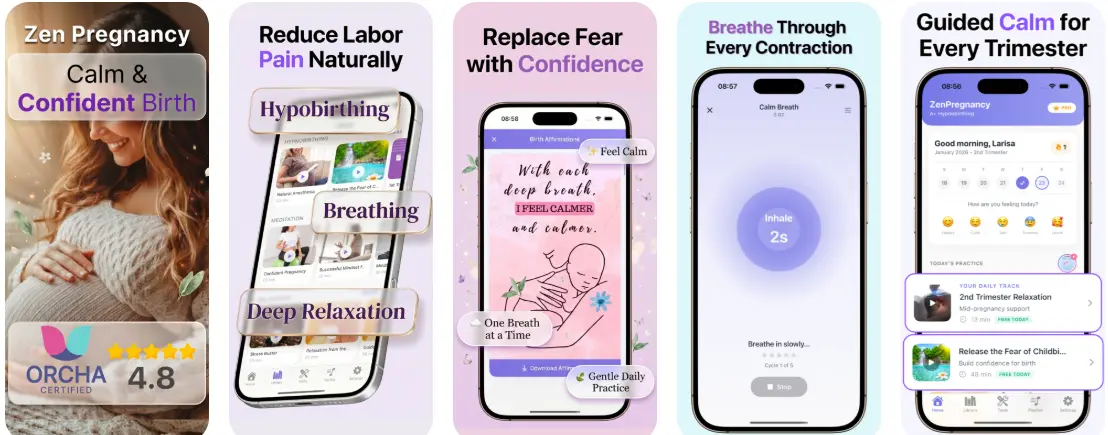
HypnoBirth App offers free hypnobirthing tools designed to support relaxation, breathing practice, and a calmer mindset before birth. While hypnobirthing app evidence is still developing, the app is ORCHA NHS certified and used by 200k+ people, making it a practical option for those who want accessible, low-pressure preparation alongside clinical care.
Best for
- Practising hypnobirthing techniques at home
- Building confidence with relaxation and breathing tools
- Parents who want free, evidence-aware birth preparation
Limitations
- Research on hypnobirthing apps specifically is still limited
- It should support, not replace, advice from your midwife or clinician