 Hypno
HypnoPain Free Birth Claims in Hypnobirthing Apps: What the Evidence Actually Shows
200,000+ moms • ORCHA NHS Certified • Free on iOS & Android
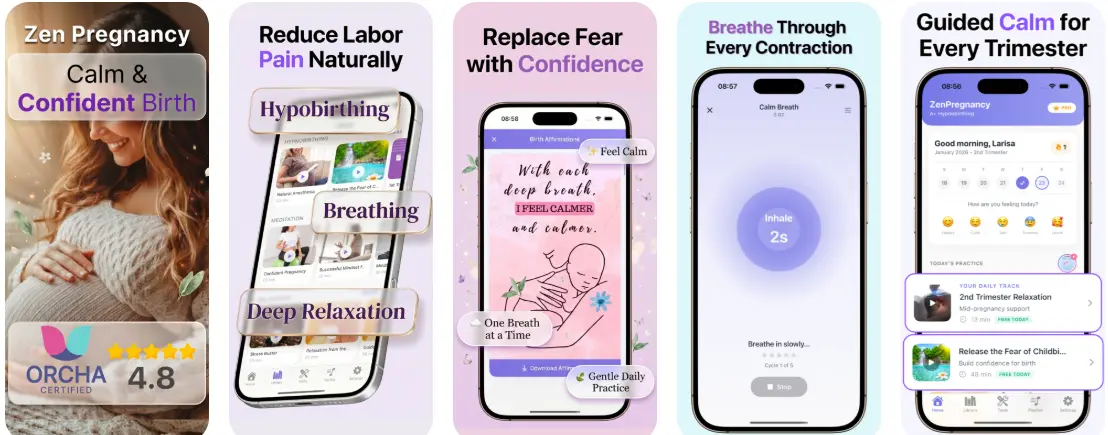
Pain free birth claims found in hypnobirthing apps and courses are not supported by reliable clinical evidence as guaranteed outcomes. Hypnobirthing techniques can meaningfully reduce anxiety and improve coping during labor, but no method has been proven to eliminate pain for all birthing people in all circumstances. A trustworthy app presents itself as one helpful tool alongside medical care, not a promise of painless delivery.
Definition: Pain free birth claims are marketing promises or suggestions, often found in hypnobirthing apps, courses, and social media, that specific relaxation, hypnosis, or mindset techniques can reliably produce a birth experience with little or no pain.
TL;DR
- No scientifically validated method guarantees a completely pain-free birth for everyone.
- Hypnobirthing can reduce fear, improve satisfaction, and sometimes lower perceived pain, but results vary widely between individuals.
- Absolute pain-free promises can cause guilt, shame, and worsened trauma when birth doesn't match expectations.
- A responsible hypnobirthing app integrates with medical pain relief options rather than replacing them.
- Responsible hypnobirthing products position their tools as coping support, not outcome guarantees.
What Pain Free Birth Claims Actually Promise
Pain free birth claims range from reasonable coping goals to unsupported guarantees that labor will not hurt. The safer language is “less fear and more comfort,” not “you will feel no pain.”
You may see these claims in hypnobirthing apps, paid courses, birth coaching pages, social media reels, and faith-based pregnancy groups. Some are gentle: practice relaxation, soften your shoulders, use a release breath, and feel more prepared. Others go further and suggest that enough belief, surrender, hypnosis, or daily repetition can remove pain entirely.
That difference matters.
Many pregnant women look for pain-free options because they feel anxious about epidurals, hospital interventions, previous trauma, or losing control in labor. I understand that search. I have sat with people after a prenatal visit, still in the car, trying to sort out what they want and what scares them. Clear coping tools help. Certainty sells, but birth rarely gives certainty.
How Pain Perception During Birth Actually Works
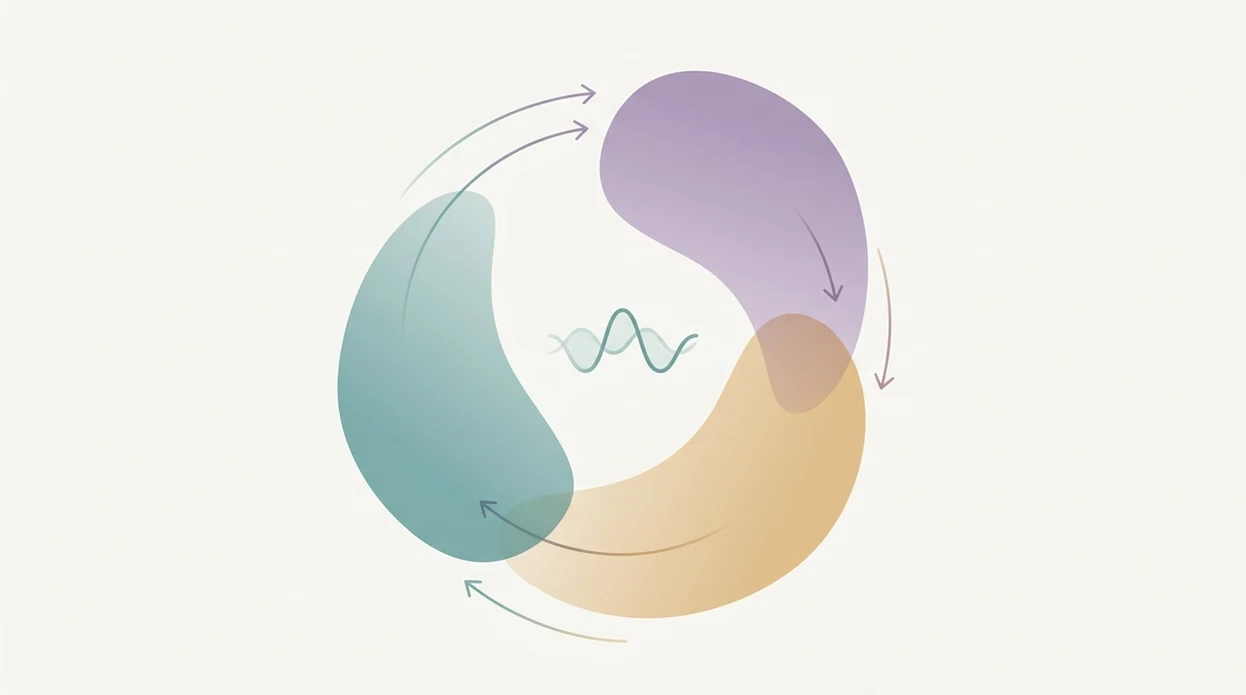
Labor pain is shaped by both body signals and brain interpretation, so relaxation can help without erasing every sensation. The fear-tension-pain cycle is one useful model: fear tightens muscles, tension increases discomfort, and discomfort can feed more fear.
How pain free birth claims work in marketing is simple: they take a real mechanism and stretch it into a guarantee. In actual labor, pain perception is affected by cervical dilation, contraction strength, fetal position, labor length, fatigue, previous trauma, and individual pain thresholds. Hormones matter too. Oxytocin supports contractions and bonding, endorphins can help with coping, and catecholamines rise with stress.
A calmer birth environment can reduce unnecessary alarm. A steady support person can help you unclench your tongue from the roof of your mouth and drop your shoulders away from your ears. But preparation cannot override every pain signal, especially during prolonged labor or malposition.
Clinicians typically recommend combining coping skills with individualized medical guidance, not treating mindset as a replacement for care.
Five Evidence-Based Facts About Hypnobirthing Claims
The research supports hypnobirthing as a coping approach for some people, not as proof of universally painless birth. Review-level evidence is mixed because studies use different methods, outcomes, and participant groups.
- No childbirth method has been shown to guarantee pain-free birth for all people; in one U.S. survey of 2,400 women, 73% reported using labor pain medication and 67% received epidural or spinal analgesia, according to the Listening to Mothers III survey source.
- Hypnobirthing can reduce anxiety and improve satisfaction, but results are not uniform across people, hospitals, or labors.
- A 2018 meta-analysis found hypnosis for childbirth was linked with less pharmacological pain relief, but certainty was rated low to very low because studies were small and varied source.
- Small trials can show promising results, including lower reported pain, but one 80-person trial should not be read as proof of guaranteed painless birth.
- A Cochrane review of 15 trials involving 6,470 women found relaxation techniques may reduce pain and improve satisfaction, but effects on cesarean and assisted birth rates were inconsistent source.
The most defensible reading is reduction and coping, not elimination.

Common Myths Behind Pain-Free Hypnobirthing Promises
Pain-free hypnobirthing promises often rest on four myths that make birth feel like a pass-fail test. They sound encouraging at first, but they can become cruel when labor changes.
Myth one: perfect practice guarantees a pain-free, drug-free birth. Practice helps you build a relaxation cue, but it cannot control fetal position or emergency decisions.
Myth two: labor pain is only caused by fear. Fear can amplify pain, yet contractions, pressure, tissue stretching, exhaustion, and complications are real body events.
Myth three: needing an epidural or cesarean means hypnobirthing failed. It doesn't. A person using a release breath while a nurse adjusts the bed rail is still using their skills.
Myth four: evidence-based medicine and hypnobirthing cannot work together. They can. The fuller discussion of can hypnobirthing replace pain relief is really about integration, not choosing sides.
Shame is not birth preparation. It is a warning sign.
Ethical Harm of Overpromising Pain Free Birth Outcomes
Overpromising pain free birth outcomes is harmful because it can turn a difficult labor into a personal failure story. When birth does not match the promise, some parents blame their mindset instead of recognizing a complex medical and emotional event.
That self-blame can be especially sharp when marketing says, directly or indirectly, that you did not believe hard enough. Faith-based claims can add another layer of pressure, as if pain means spiritual failure. That framing is not clinically validated, and it can deepen postpartum distress.
I have heard the quiet version of this after birth: “I thought I did everything right.” It lands heavily.
Responsible apps and courses protect trust by stating realistic outcomes before labor begins. Hypnobirthing usually works best when it is taught as rehearsed coping, while medical pain relief fits people who want or need stronger analgesia during labor.
Coping Tool or Guaranteed Outcome: A Binary Decision for Hypnobirthing Apps
A hypnobirthing app is either marketed as coping support or as a pain-elimination guarantee. That distinction tells you almost everything about whether the app is trustworthy.
Red flags include absolute phrases, “no pain if you commit,” testimonials presented as proof, and blame-based language after difficult births. Green flags include transparent evidence summaries, reminders to involve clinicians, normalizing epidurals and cesareans, and avoiding certainty about pain level.
How to use pain-free birth claims safely:
- Separate coping language from outcome promises.
- Check whether testimonials are treated as stories, not evidence.
- Ask how the app fits with your hospital or birth center plan.
- Practice one short guided track daily, then rehearse using it during discomfort.
- Keep medical pain relief and emergency care in your plan.
Good hypnobirthing apps deliver repeatable breathing cues, guided relaxation, and birth affirmations, not a contract for painless labor. The safer standard is to frame meditation, breathing, and affirmations as supportive practice, not a substitute for clinical care.
What Responsible Hypnobirthing Apps Cover Instead of Pain Free Birth Guarantees
A responsible hypnobirthing app focuses on skills that can support a calmer birth without claiming to control the whole outcome. Its guided meditation, breathing exercises, contraction timer, and birth affirmations are designed as coping tools.
A five-minute breathing track before breakfast is a practical start. So is a 12-minute relaxation track with one earbud in while lying on your left side. The point is daily repetition, not heroic concentration.
Birth affirmations can also help when they stay realistic. “I can soften my jaw and take the next breath” is very different from “I will feel no pain.” A contraction timer is useful for observing patterns, though questions like can contraction timer tell labor need careful limits.
These tools can sit alongside epidurals, inductions, planned cesareans, and unplanned changes.
Medical Risks Not Covered by Hypnobirthing Preparation
Hypnobirthing preparation cannot replace individualized medical advice, shared decision-making, or emergency obstetric care. It can support emotional steadiness, but it cannot diagnose or manage medical risk.
A guided track cannot tell whether bleeding is normal. A birth affirmation cannot correct fetal malposition. A breathing pattern cannot guarantee delivery mode, pain level, intervention rate, or labor length. High-risk conditions, severe complications, infection concerns, preeclampsia symptoms, fetal distress, and prolonged labor need clinician assessment.
That is not a failure of hypnobirthing. It is the boundary of the tool.
For anxious parents, the safest plan is usually layered: practice relaxation cues, discuss pain relief choices, know when to call hospital during labor, and keep your birth team informed. If you are choosing an app, it is also fair to ask are hypnobirthing apps safe for your specific pregnancy context.
When to Contact a Clinician or Seek Urgent Care
Contact your clinician, maternity unit, or emergency service when symptoms feel concerning; this section is general information, not a substitute for medical advice. Hypnobirthing tracks can support calm, but they should pause the moment you need assessment.
Use your own hospital or birth center’s labor-call instructions first, especially if you have been given a specific number, triage threshold, or high-risk plan. Heavy bleeding, severe headache, vision changes, chest pain, fainting, fever, severe abdominal pain, waters breaking with unusual color or smell, or reduced fetal movement are reasons to seek prompt guidance rather than keep breathing through it at home.
A simple safety sequence helps:
- Stop the breathing track or guided audio if symptoms feel unusual, escalating, or hard to explain.
- Check the written instructions from your maternity unit, midwife, or obstetric team.
- Call the listed labor line, clinician, or emergency number and describe what changed.
- Follow their advice, even if it interrupts your birth plan or relaxation routine.
- Ask before relying on app-based preparation if you have a high-risk pregnancy, previous complications, or a condition needing closer monitoring.
Limitations
The limitations around pain free birth claims are substantial, and they should be stated plainly. Hypnobirthing research supports possible benefit, but not guaranteed painless labor.
- No study has shown that hypnobirthing reliably eliminates pain for all birthing people.
- Existing research often involves small samples, variable protocols, and self-selection bias.
- People who choose hypnobirthing may already differ from those who do not, which can affect results.
- Severe complications, long labors, and malpositioned babies can override strong mental preparation.
- Spiritual or anecdotal pain-free birth promises are not clinically validated.
- A hypnobirthing app is a supportive tool, not a replacement for medical care.
- Systematic reviews report inconsistent effects on cesarean and assisted vaginal birth rates.
- Some meta-analyses rate the certainty of evidence as low to very low.
- Testimonials can be sincere and still fail to predict your labor.
- App reminders after brushing teeth can build routine, but routine is not control over biology.
For most people, the realistic goal is more confidence and better coping, not a guaranteed pain-free birth.
Read more
- About HypnoBirth App: Calm Birth Support
- Are Hypnobirthing Apps Regulated
- Are Hypnobirthing Apps Safe
- Birth Partner Hypnobirthing App Guide
- App for Natural Birth Preparation: What to Choose
- Best Birth Meditation App for Calm Labor
- Best Contraction Timer App for iPhone: 2026 Guide
- Best Hypnobirthing App 2026: Top Picks
- Does Hypnobirthing Work for First Births? Guide
- Free Hypnobirthing App for iPhone: Calm Birth
- How to Start Hypnobirthing: Beginner Guide
- Hypnobirthing for C Section Prep: Calm Cesarean
Best Hypnobirthing App for Understanding Pain Free Birth Claims
HypnoBirth App supports calmer birth preparation with free hypnobirthing tracks, breathing tools, and evidence-informed education without promising a pain-free outcome. It can help you build coping skills and confidence while keeping expectations realistic.
Best for
- Parents who want hypnobirthing support without guaranteed outcome claims
- Anyone comparing pain free birth claims with practical coping tools
Limitations
- It cannot guarantee a pain-free labour or birth
- It is not a substitute for personalised medical advice from your care team
Frequently Asked Questions
Can hypnobirthing guarantee a pain-free birth?
No, hypnobirthing cannot guarantee a pain-free birth. It may help some people feel calmer, more in control, and better able to cope with contractions, but birth sensations and outcomes vary widely. Any app, course, or practitioner promising a guaranteed pain-free labour should be treated with caution.
What does the evidence say about pain-free birth claims in hypnobirthing?
The evidence does not support guaranteed pain-free birth claims. Research suggests hypnobirthing and relaxation techniques may reduce fear, improve coping, and sometimes reduce the need for certain pain relief, but results are mixed. These tools are best understood as support strategies rather than medical guarantees.
Is hypnobirthing the same as pain relief?
No, hypnobirthing is not the same as medical pain relief. It uses breathing, relaxation, self-hypnosis, education, and positive suggestion to support coping during labour. Options such as gas and air, opioids, epidural, or other medical interventions work differently and should be discussed with your maternity team.
Can I use hypnobirthing and still have an epidural?
Yes, you can use hypnobirthing and still choose an epidural. Hypnobirthing does not require you to avoid medical pain relief, and many people use both relaxation techniques and clinical options. Your choices should be based on your preferences, labour progress, and advice from your care team.
Is hypnobirthing useful for first-time mums?
Yes, hypnobirthing can be useful for first-time mums. It can help explain what happens in labour, reduce fear of the unknown, and provide practical coping tools such as breathing, relaxation, and birth partner prompts. It should be presented as preparation and support, not as a promise of a specific birth experience.
Can hypnobirthing help with pregnancy anxiety?
Yes, hypnobirthing may help some people manage pregnancy anxiety. Relaxation practice, calming audio, and education can reduce fear and support a sense of control before birth. If anxiety feels severe, persistent, or affects daily life, you should also speak to your midwife, GP, or mental health professional.
Is 38 weeks too late to start hypnobirthing?
No, 38 weeks is not too late to start hypnobirthing. Even a short period of practice can help you learn breathing, relaxation, and confidence-building techniques for labour. A simple daily routine is more realistic at this stage than trying to complete a long or intensive programme.
Are hypnobirthing apps as good as in-person classes?
Hypnobirthing apps can be helpful, but they are not the same as in-person classes. Apps offer flexible practice, audio tools, and reminders, while classes may provide personalised teaching, discussion, and partner involvement. The best choice depends on your budget, schedule, learning style, and whether you need individual support.
What should I look for in a hypnobirthing app that makes pain-free birth claims?
You should look for balanced language rather than guaranteed pain-free birth promises. A trustworthy app should explain that hypnobirthing supports relaxation, confidence, and coping, while acknowledging that labour is unpredictable. It should also encourage users to follow medical advice and make informed choices about pain relief and birth interventions.
Can fear make labour feel more painful?
Yes, fear and tension can make labour feel harder to cope with for some people. Stress may increase muscle tension and reduce confidence, which can affect how sensations are experienced. Hypnobirthing aims to interrupt this fear-tension cycle through breathing, relaxation, and reassurance, but it cannot remove all pain for everyone.
Does needing pain relief mean hypnobirthing has failed?
No, needing pain relief does not mean hypnobirthing has failed. Birth is unpredictable, and using medication or an epidural can be a valid, informed choice. Hypnobirthing can still help you stay calm, communicate preferences, and feel more supported during medical decisions.
Are pain-free birth claims harmful?
Yes, pain-free birth claims can be harmful if they create unrealistic expectations or make parents feel they have failed. Supportive birth preparation should build confidence without implying that pain, intervention, or a change of plan is caused by poor mindset. Honest hypnobirthing education focuses on coping, choice, and safety rather than guarantees.