 Hypno
HypnoDoes Hypnobirthing Work for Labor Pain and Anxiety?
200,000+ moms • ORCHA NHS Certified • Free on iOS & Android
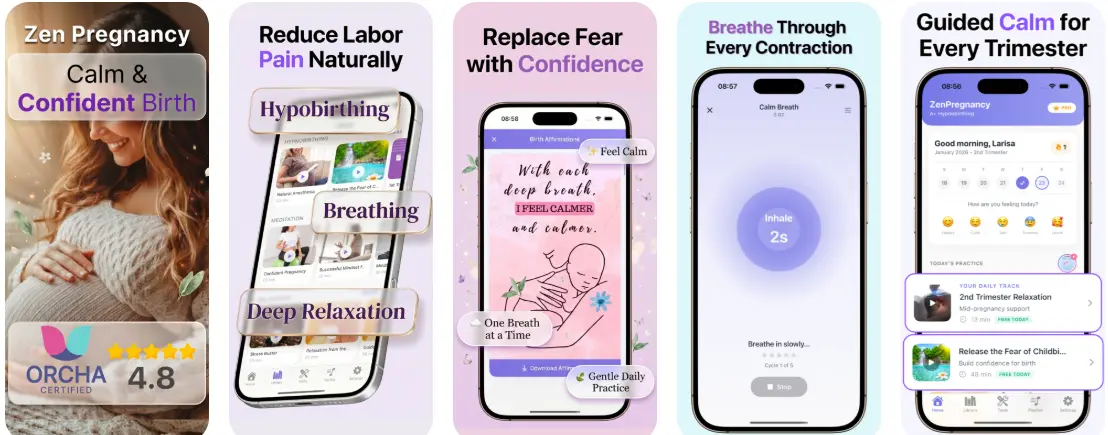
Does hypnobirthing work? Research suggests hypnobirthing techniques can meaningfully reduce fear, anxiety, and perceived pain during labor, but large trials show mixed results for hard outcomes like epidural rates and cesarean sections. It works best as a complementary tool alongside standard maternity care, not as a guarantee of pain-free or intervention-free birth.
Definition: Hypnobirthing is a set of self-hypnosis, breathing, relaxation, and positive-suggestion techniques designed to help pregnant women manage fear and pain perception during labor and delivery.
TL;DR
- Evidence supports hypnobirthing for reducing labor anxiety and fear, but not consistently for lowering epidural or cesarean rates.
- Hypnobirthing is safest and most effective when used alongside, not instead of, standard medical care.
- Regular practice, realistic expectations, and birth-team support matter more than any single session or script.
- Guided audio apps can make daily practice more accessible, but results still depend on consistent use.
- Commercial claims of guaranteed pain-free birth are not supported by current high-quality research.
What Hypnobirthing Evidence Actually Shows
The hypnobirthing evidence is promising for fear, anxiety, pain perception, and birth satisfaction, but it is not conclusive for epidural use, cesarean birth, or labor duration. The honest answer sits between “it’s only placebo” and “it guarantees a calm birth.”
- A 2024 randomized trial of 80 first-time mothers found lower labor pain scores and lower postpartum depression scores after hypnobirthing training. Source: https://pubmed.ncbi.nlm.nih.gov/38305125/
- A 2024 trial of 176 high-risk pregnant women found reduced fear and pain during labor, plus better overall childbirth experience. Source: https://doi.org/10.1016/j.midw.2024.103952
- A 2022 systematic review found hypnosis may reduce fear and anxiety, but effects on labor duration, birth mode, and medication use were inconsistent. Source: https://pubmed.ncbi.nlm.nih.gov/35167646/
- A 2013 UK trial of 680 first-time mothers found no significant reduction in epidural use, 27.9% versus 30.3%. Source: https://pubmed.ncbi.nlm.nih.gov/24283300/
- A 2016 Cochrane review found possible benefits, but graded the evidence as low to very low quality. Source: https://www.cochrane.org/CD009356/PREG_hypnosis-pain-management-during-labour-and-childbirth
That mix matters. I’ve seen a parent practice a 12-minute relaxation track with one earbud in on her left side and feel steadier within days. That is useful. It is not the same as proof that interventions disappear.
5 Facts About Hypnosis for Labor Every Expectant Parent Should Know
Hypnosis for labor evidence is strongest when you treat hypnobirthing as practiced coping, not birth control. It can help you rehearse calm, but it cannot decide how labor unfolds.
- Hypnobirthing is a set of techniques, including breathing, relaxation cues, self-hypnosis, and birth affirmations.
- Research is promising but mixed, and many trials are small or use different methods.
- Large studies have not consistently shown lower epidural, induction, or cesarean rates.
- Hypnobirthing works best beside standard maternity care, not instead of monitoring, medication, or clinical advice.
- App-based practice can improve consistency, but only if you actually use the sessions.
The useful question is not “Will this make birth painless?” It is “Can I train my body to settle when labor feels intense?” For many people, yes, especially when daily repetition starts before labor.
A good hypnobirthing app should deliver repeatable breathing, guided relaxation, affirmations, and labor support, not a promise that birth will follow a script.
How Hypnobirthing Works During Labor

Hypnobirthing works by interrupting the fear-tension-pain cycle and replacing panic cues with practiced relaxation cues. In plain terms, fear can tighten the body, tension can increase pain, and pain can create more fear.
Self-hypnosis uses focused attention and suggestion to shift how sensations are interpreted. You are not unconscious or controlled. This is not stage hypnosis. You remain aware, able to speak, and able to change your mind.
Breathing techniques also support the parasympathetic nervous system, the “settle and conserve” branch of the body’s stress response. A slow release breath, dropped shoulders, and an unclenched tongue can become a conditioned response. The body learns the sequence.
Tiny cue, real effect.
For most pregnant people, daily guided practice is more effective than one long class because conditioned relaxation depends on repetition. If you want the mechanics separated from general mindfulness, the hypnobirthing vs meditation comparison explains that difference clearly.

How to Use Hypnobirthing During Pregnancy and Labor
Use hypnobirthing as a simple, repeatable routine before labor, then as a cue system during contractions, examinations, waiting, and decision points. The goal is not to perform it perfectly; it is to give your body a familiar way back to steadiness.
- Choose one short guided session that feels easy enough to repeat, even on tired days. Ten minutes you actually use is better than an hour you avoid.
- Attach practice to a daily cue, such as after brushing teeth, getting into bed, or opening your pregnancy app. Same cue, same track, less deciding.
- Pair slow breathing with a soft jaw, loose shoulders, and open hands. Those small releases help your body recognize “safe enough” before labor asks more of you.
- Teach your partner one phrase and one touch cue, such as a hand on the shoulder with “release your jaw.” Keep it boringly simple so it works in a bright hospital room too.
- Use the technique alongside fetal monitoring, medication options, position changes, and your clinician’s advice. Calm coping and medical care can belong in the same birth plan.
Where Hypnobirthing Helps Most: Anxiety, Fear, and Birth Experience
Hypnobirthing appears to help most with fear, anxiety, perceived pain, and satisfaction with the birth experience. These outcomes are subjective, but they are not trivial when you are the person in labor.
The 2024 high-risk pregnancy trial is important because it did not only study low-risk, highly motivated birth-class users. It found reduced fear and pain with antenatal hypnotherapy compared with usual care. The Cochrane review also noted possible improvement in maternal satisfaction, although the evidence quality was limited.
Pain perception is different from objective pain measurement. A contraction may still be strong, but the person may feel less overwhelmed by it. That is often the change I hear after a week of short sessions: “I know what to do with my breath now.”
A 2024 trial also suggested lower postpartum depression scores among first-time mothers who had hypnobirthing training. That finding is encouraging, but it needs more replication before anyone treats it as settled.
Common Myths About Hypnobirthing Results
Does hypnobirthing guarantee a pain-free birth with no epidural? No. That claim is not supported by current high-quality research, and it can make parents feel like they failed when labor becomes medically complex.
Another myth is that hypnobirthing automatically prevents induction, assisted birth, or cesarean section. It does not. A calm nervous system is helpful, but it cannot change placenta position, fetal distress, infection risk, or stalled labor by itself.
Hypnobirthing is also not only for unmedicated home births. I have used the same release breath with parents planning hospital birth, epidural use, and planned cesarean birth. The dimmed room with a door sign matters, but so does the midwife checking the monitor.
Most importantly, hypnobirthing is not a reason to decline medical monitoring or ignore clinical advice. It is a coping tool, not a medical intervention. Clinicians typically recommend using comfort techniques alongside routine maternity assessment, not as a substitute for it.
Hypnobirthing vs. Standard Antenatal Preparation
Standard antenatal classes usually focus on birth logistics, hospital routines, stages of labor, medical options, feeding basics, and when to call your care team. Hypnobirthing adds psychological training: focused breathing, guided imagery, anchor phrases, and rehearsed relaxation.
That distinction matters because “relaxation” is not one method. A generic body scan is different from a structured self-hypnosis protocol with repeated suggestions and partner prompts. Study protocols also vary widely, so research on antenatal hypnosis may not match every branded course, book, or app.
For people comparing formats, the hypnobirthing app vs course question is practical rather than ideological. Some people need live teaching and group questions. Others practice better with headphones after brushing teeth, when the reminder appears and the house has finally gone quiet.
Branded programs and generic hypnosis research should not be treated as identical. That is one reason broad claims about “hypnobirthing” can sound more certain than the evidence really is.
Should You Try Hypnobirthing? A Decision Guide
Hypnobirthing is worth trying if you want a coping tool for fear and anxiety, you can practice regularly, and you understand that it does not guarantee a specific birth outcome. It fits hospital, birth center, home, epidural, unmedicated, induction, and cesarean plans.
Pause and seek individualized guidance first if you have a history of psychosis, dissociative disorders, severe trauma triggers, or if hypnosis-style audio feels destabilizing. Your mental health history matters. Truly.
How to use hypnobirthing in pregnancy:
- Choose one guided track and keep it short enough to repeat.
- Set a daily reminder after brushing teeth, not “sometime later.”
- Practice a release breath with dropped shoulders and a loose jaw.
- Write one birth affirmation where you will see it at night.
- Ask your partner to learn one anchor phrase and one touch cue.
- Review your plan with your midwife, doctor, or birth team.
If you use HypnoBirth App, treat it as a practice aid: short guided sessions, reminders, and partner cues can support repetition, but the app should not shape medical decisions or replace your birth team.
Limitations
Hypnobirthing has real limitations, and any trustworthy discussion should name them clearly. The evidence supports cautious optimism, not sweeping promises.
- Many trials have small sample sizes, variable quality, and different protocols, which limits generalizability.
- The 2016 Cochrane review graded evidence for relaxation interventions, including hypnosis, as low to very low quality.
- Hypnobirthing does not replace medical care; complications can still arise during pregnancy or labor.
- You may still need or choose an epidural, induction, assisted birth, or cesarean section.
- People with psychosis, dissociative disorders, or trauma histories may need tailored professional guidance before intensive hypnosis.
- Benefits depend heavily on regular practice, realistic expectations, and a supportive birth environment.
- Commercial claims that hypnobirthing works for everyone or prevents interventions are overhyped.
The hospital bag can be open on the floor, the tracks downloaded, the affirmations ready, and labor can still take another path. That does not mean the practice failed. It means birth is biological, clinical, emotional, and sometimes unpredictable.
If you want a practical routine, how to practice hypnobirthing at home is often the better next step than reading more studies.
Read more
- About HypnoBirth App: Calm Birth Support
- Are Hypnobirthing Apps Regulated
- Are Hypnobirthing Apps Safe
- Birth Partner Hypnobirthing App Guide
- App for Natural Birth Preparation: What to Choose
- Best Birth Meditation App for Calm Labor
- Best Contraction Timer App for iPhone: 2026 Guide
- Best Hypnobirthing App 2026: Top Picks
- Does Hypnobirthing Work for First Births? Guide
- Free Hypnobirthing App for iPhone: Calm Birth
- How to Start Hypnobirthing: Beginner Guide
- Hypnobirthing for C Section Prep: Calm Cesarean
Best Hypnobirthing App for Exploring Labor Pain and Anxiety Support
HypnoBirth App offers free hypnobirthing tracks designed to help you practise relaxation, breathing, and calmer birth preparation. It is a practical companion if you are reviewing whether hypnobirthing works and want evidence-informed tools without relying on pain-free birth promises.
Best for
- Practising relaxation and breathing techniques before labor
- Reducing fear and building confidence around birth
- Using guided hypnobirthing sessions at home or alongside antenatal education
Limitations
- Hypnobirthing cannot guarantee a pain-free birth or a specific birth outcome
- It should complement, not replace, advice from your midwife or healthcare team
Frequently Asked Questions
Does hypnobirthing work for labour pain?
Yes, hypnobirthing can help some people manage labour pain, but it does not guarantee a pain-free birth. It uses breathing, relaxation, visualisation and self-hypnosis to reduce fear and tension, which may make contractions feel more manageable. Pain levels still vary depending on the person, labour, support and medical circumstances.
Does hypnobirthing reduce anxiety during pregnancy and birth?
Yes, hypnobirthing can reduce pregnancy and birth anxiety for many people. Regular practice may help you feel calmer, more informed and more in control by giving you tools to use before and during labour. If anxiety feels severe, persistent or overwhelming, speak to your midwife, GP or a mental health professional.
Is hypnobirthing proven by research?
Yes, some research supports hypnobirthing for reducing fear, anxiety and the need for certain pain relief, but the evidence is mixed. Studies vary in quality, methods and outcomes, so hypnobirthing should be seen as a helpful coping approach rather than a guaranteed medical result. It works best when used alongside good maternity care and informed decision-making.
Can hypnobirthing make birth pain-free?
No, hypnobirthing cannot promise a pain-free birth. Some people report very calm or low-pain births, while others still experience intense sensations and need additional support or pain relief. Claims of guaranteed pain-free labour should be treated with caution.
Can I start hypnobirthing at 38 weeks pregnant?
Yes, you can start hypnobirthing at 38 weeks pregnant. Even a short period of daily breathing, relaxation and positive birth preparation can be useful before labour begins. Starting earlier gives more practice time, but late practice is still worthwhile.
Is hypnobirthing useful for first-time mums?
Yes, hypnobirthing is often useful for first-time mums. It can explain what happens in labour, reduce fear of the unknown and provide practical techniques for contractions, decision-making and staying calm. First-time parents may also benefit from involving a birth partner in the practice.
Can I use hypnobirthing if I plan to have an epidural?
Yes, you can use hypnobirthing if you plan to have an epidural. Hypnobirthing techniques can help during early labour, while waiting for pain relief, during procedures and if plans change. It is not an alternative to medical pain relief unless you choose it to be.
Does hypnobirthing help during a C-section or induction?
Yes, hypnobirthing can help during a C-section or induction by supporting calm breathing, relaxation and a sense of control. It does not remove the need for medical monitoring or clinical decisions, but it can make medicalised birth feel less frightening. Always follow guidance from your maternity team.
Is a hypnobirthing app as good as a hypnobirthing class?
Yes, a hypnobirthing app can be a good option, but it is not always the same as a live class. Apps are flexible, affordable and easy to practise with daily, while classes may offer personalised guidance, questions and partner support. The best choice depends on your budget, schedule, confidence and learning style.
How often should I practise hypnobirthing for it to work?
Daily practice is usually best for hypnobirthing to feel natural in labour. Short sessions of 10 to 20 minutes can help train your body to relax more quickly when you use the techniques. Consistency matters more than doing long sessions occasionally.
Does hypnobirthing replace antenatal classes or medical advice?
No, hypnobirthing does not replace antenatal education or medical advice. It is a coping and preparation tool that works alongside evidence-based maternity care, birth planning and conversations with your midwife or doctor. Seek professional advice about any symptoms, risks or concerns in pregnancy.
Who should avoid hypnobirthing or get advice before using it?
Most pregnant people can use gentle hypnobirthing techniques, but some should get advice first. Speak to a healthcare professional if you have significant trauma, severe anxiety, dissociation, psychosis, complex mental health needs or concerns about using hypnosis-style recordings. Stop any practice that makes you feel unsafe, distressed or unwell.