 Hypno
HypnoPostpartum Meditation App: Calm Support After Birth
Short, gentle meditations can help you steady your nervous system during feeds, night waking, recovery, and the emotional shifts of early parenthood.
200,000+ moms • ORCHA NHS Certified • Free on iOS & Android
A postpartum meditation app can help new parents create brief moments of calm, manage stress, and support rest when sleep is fragmented. It should be used as a supportive tool, not a replacement for medical care, therapy, medication when needed, or urgent help for mental health red flags.
What a Postpartum Meditation App Can Do
A postpartum meditation app gives you short, accessible practices you can use from bed, the sofa, or while resting between feeds. Instead of asking you to find a long quiet window, it can offer two to ten minute sessions for breathing, grounding, body awareness, and emotional reset. Research suggests mindfulness apps may reduce postnatal stress, anxiety, and depressive symptoms for some parents, though results vary and support should be individualized. The goal is not to feel perfectly calm; it is to have a gentle tool you can return to when the day feels intense.
Why the Fourth Trimester Feels So Intense
The weeks after birth can bring physical recovery, bleeding, soreness, feeding challenges, hormonal shifts, identity changes, and very broken sleep. Up to 1 in 7 birthing parents may develop postpartum depression, according to public health information from the National Institute of Mental Health. Even when you are not depressed, constant night waking and responsibility can leave your body on high alert. Meditation cannot remove these pressures, but it can help you pause, notice what is happening, and soften the stress response for a few minutes.
How to Use Meditation During Feeds
Many parents use a postpartum meditation app during breastfeeding, bottle feeding, pumping, or contact naps. Choose sessions that do not require deep concentration, headphones if safe, or closed eyes if you need to stay alert. A simple breathing track can help you relax your shoulders, unclench your jaw, and feel more present. If you are pregnant and preparing ahead, our pregnancy meditation app guide can help you build the habit early, so meditation feels familiar once your baby arrives.

Meditation for Sleep When Sleep Is Broken
Postpartum sleep is often fragmented, so the aim is not a perfect eight hours. Instead, meditation can support quicker settling, less rumination after a wake-up, and more restorative rest when sleep is available. A short body scan or calming audio may help you transition back to sleep after feeding or pumping. If sleep worry began in pregnancy, you may also find useful ideas in our sleep meditation for pregnant women resource. For broader evidence on complementary approaches, the NCCIH summarizes mindfulness safety and effectiveness.
When Anxiety Needs More Than an App
A meditation app can be part of a coping plan, but it should not be your only support if symptoms are persistent or frightening. Speak with a clinician if you have low mood, loss of interest, panic, intrusive thoughts, hopelessness, rage, or thoughts of harming yourself or your baby, especially if symptoms last more than two weeks or affect daily life. Our pregnancy anxiety app guide explains similar warning signs before birth. If you are in immediate danger or may act on harmful thoughts, seek urgent emergency help now.
Choosing a Gentle Postpartum Practice
Look for practices that are short, non-judgmental, trauma-aware, and realistic about newborn life. HypnoBirth App is designed around calm pregnancy and birth preparation, and parents can continue using gentle breathing and relaxation tracks after birth when they need a familiar voice. You can explore our calm pregnancy resources or download the app to try a simple session. Use it alongside real-world support: partner help, rest, food, medical follow-up, lactation care if needed, and professional mental health support when symptoms are more than normal adjustment.
Limitations
- A postpartum meditation app cannot diagnose or treat postpartum depression, anxiety disorders, psychosis, or trauma on its own.
- Meditation may feel difficult or even activating for some parents, especially after a traumatic birth or when intrusive thoughts are present.
- Apps cannot replace urgent care, therapy, medication when indicated, lactation support, or practical help with sleep and recovery.
This is not medical advice. Consult your maternity care team for personalized guidance.
Frequently Asked Questions
Can a postpartum meditation app help with sleep deprivation after birth?
No, a postpartum meditation app cannot replace lost sleep. It can help your body settle when a rest window appears, especially after night feeds or long periods of worry. Short calming sessions may make it easier to switch off, but ongoing severe exhaustion needs practical support as well.
When should I call a doctor about postpartum anxiety or low mood?
Call a doctor or midwife if low mood, anxiety, intrusive thoughts, hopelessness, or loss of interest lasts more than two weeks or affects daily life. Seek urgent help immediately if you have thoughts of harming yourself or your baby. A meditation app can support coping, but it is not a substitute for medical care.
Can I listen to a postpartum meditation app while pumping or feeding?
Yes, you can listen while pumping, breastfeeding, bottle-feeding, or resting near your baby. Choose short audio that helps you stay calm while remaining aware of your baby and surroundings. Avoid anything so deep or sleep-focused that it makes you unsafe while holding or caring for the baby.
How often should I use a postpartum meditation app?
Use a postpartum meditation app as often as feels manageable, even once a day or a few times a week. In the fourth trimester, consistency matters more than session length. Two to five minutes during a feed, nap, or quiet moment can still be useful.
Is a postpartum meditation app only for birthing parents?
No, a postpartum meditation app is not only for birthing parents. Partners, adoptive parents, and other caregivers can also feel anxious, overwhelmed, or sleep deprived after a baby arrives. A short guided practice can offer a calm reset for anyone caring for a newborn.
What can a postpartum meditation app do after birth?
A postpartum meditation app can support calm, grounding, rest, and emotional regulation after birth. It may help with racing thoughts, tense shoulders, night waking, and the mental load of caring for a newborn. It cannot diagnose or treat postpartum depression, anxiety disorders, or trauma on its own.
What can a postpartum meditation app not do?
A postpartum meditation app cannot replace sleep, medical care, therapy, medication, or hands-on support. It is a coping tool, not a cure for postpartum mental health conditions or physical recovery concerns. If symptoms feel intense, persistent, or frightening, contact a qualified healthcare professional.
Can a meditation app help with pregnancy anxiety before the baby is born?
Yes, a meditation app can help some people manage pregnancy anxiety by teaching breathing, grounding, and relaxation skills. It is most useful for mild to moderate worry or as part of a wider support plan. If anxiety feels overwhelming, causes panic, or affects eating, sleeping, or daily functioning, speak with your midwife or doctor.
Can I start using a postpartum meditation app at 38 weeks pregnant?
Yes, you can start using a postpartum meditation app at 38 weeks pregnant if the practices feel gentle and comfortable. Starting before birth can help you learn calming cues that may be useful during feeds, recovery, and broken sleep. Avoid any practice that encourages breath-holding, strain, or ignoring medical advice.
Is a postpartum meditation app useful for first-time mums?
Yes, a postpartum meditation app can be useful for first-time mums who feel overwhelmed by newborn care and changing routines. Short guided sessions can provide reassurance, breathing support, and a simple pause during an unpredictable day. It should sit alongside practical help, rest opportunities, and medical support when needed.
Is a postpartum meditation app better than a hypnobirthing or postnatal class?
No, a postpartum meditation app is not automatically better than a class. An app is flexible, private, and easy to use during feeds or night waking, while a class may offer teaching, structure, and personal support. Many parents use both: a class for learning and an app for daily practice.
Can I use postpartum meditation if I had an epidural or a difficult birth?
Yes, you can use postpartum meditation after an epidural or a difficult birth if it feels emotionally and physically safe. Gentle grounding practices may help you reconnect with your body and calm your nervous system during recovery. If birth memories feel distressing, intrusive, or traumatic, seek support from a trauma-informed clinician or postnatal mental health professional.
Best Postpartum Meditation App for Calm Support After Birth
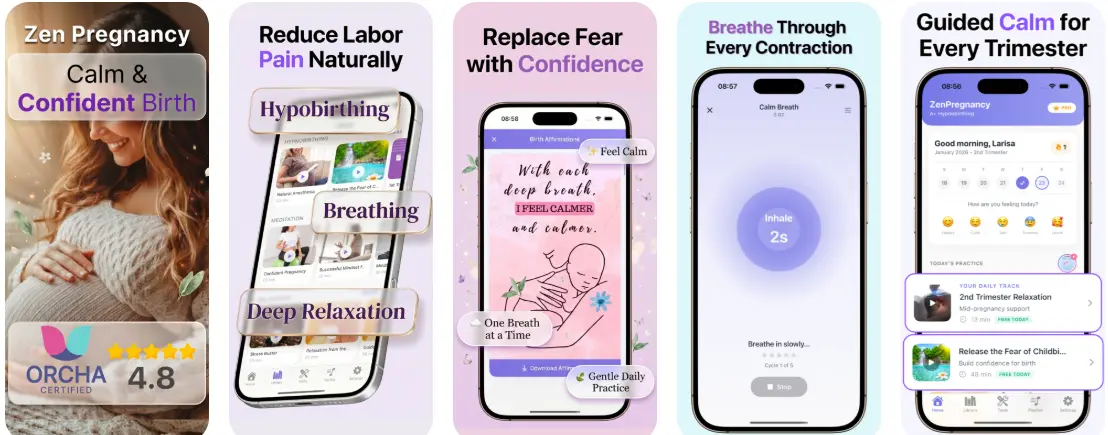
HypnoBirth App offers gentle audio practices that can support calm, breathing, and grounding during the fourth trimester. With free hypnobirthing content, 200k+ users, and ORCHA NHS certification, it can be a reassuring tool for short moments of rest and coping after birth.
Best for
- Short calming practices during feeds, naps, or recovery time
- Breathing and relaxation support when postpartum days feel intense
Limitations
- It is not a replacement for medical, mental health, or postpartum care
- It cannot treat postpartum anxiety, depression, trauma, or sleep disorders