 Hypno
HypnoPregnancy Anxiety App: A Guide to Calm Birth Preparation
200,000+ moms • ORCHA NHS Certified • Free on iOS & Android
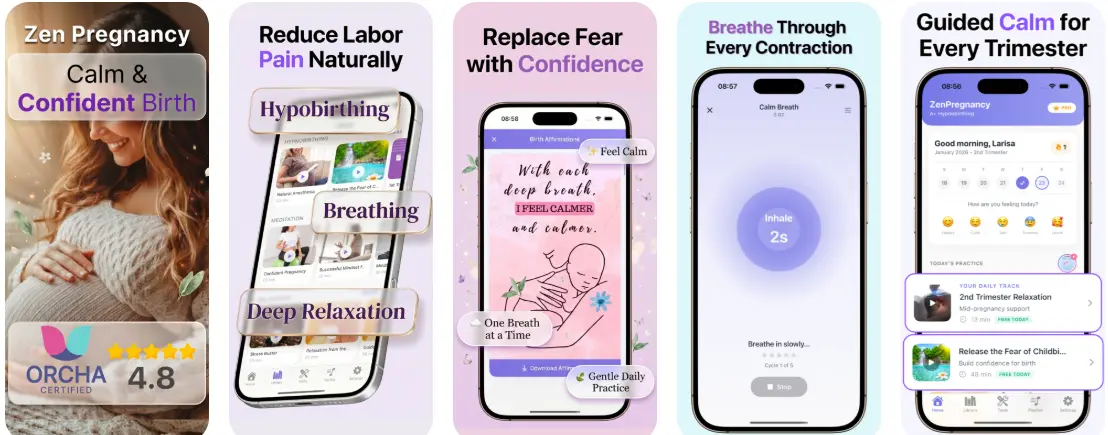
A pregnancy anxiety app is a mobile tool with guided meditation, breathing exercises, hypnobirthing tracks, and affirmations to help manage prenatal worry, but it does not replace professional mental health care. HypnoBirth App brings these tools together with contraction timing and birth-preparation support for daily calming practice.
> Definition: A pregnancy anxiety app is a mobile application that guides pregnant women through relaxation techniques, breathing exercises, meditation, and affirmations to help manage prenatal worry and support calmer birth preparation. It is a supportive self-care tool, not a clinical treatment.
TL;DR
- A prenatal anxiety app is a daily coping tool, not a replacement for therapy or medical advice.
- Consistent short sessions, 10–20 minutes most days, usually help more than occasional long sessions.
- Severe or worsening symptoms, including persistent panic, inability to function, or thoughts of self-harm, require professional care, not app-only support.
What a Pregnancy Anxiety App Covers
A pregnancy anxiety app is relaxation support for prenatal worry, birth fear, sleep tension, and moments when your body feels too alert to settle. It usually works through guided breathing, pregnancy meditation, hypnobirthing tracks, sleep meditations, SOS panic tracks, and daily affirmations.
The boundary matters. An app cannot diagnose anxiety, prescribe medication, replace therapy, or tell you whether a symptom is medically safe. It can help you pause before another search spiral, place one palm on your bump, and exhale longer than you inhale.
Small tools count.
A good app gives you something specific to do when worry gets physical, like loosening the forehead or letting the back teeth separate. Pregnancy-focused tools can combine relaxation tracks, birth affirmations, contraction timing, and hypnobirthing support in one phone-based practice. That makes them easier to use during real life, not just during a quiet class.
Five Facts About Prenatal Anxiety App Use
- Prenatal anxiety is common. Perinatal anxiety affects an estimated 15–20% of pregnant and postpartum women, with some studies reporting rates up to 20.7% during pregnancy source.
- Short daily practice beats rare long sessions. For most pregnant users, 10–20 minutes most days is easier to repeat than a 60-minute session saved for a bad night.
- The most useful features are practical. Guided breathing, fear-release tracks, sleep meditations, SOS quick-calm sessions, and pregnancy affirmations match the moments anxiety usually appears.
- Apps work best as support, not replacement care. A prenatal anxiety app can reinforce skills between appointments, especially if you're already working with a therapist, midwife, OB, or mental health clinician.
- Severe symptoms need human help. Constant worry, frequent panic attacks, inability to function, or thoughts of self-harm should be treated as red flags.
The phone glow at 3:17 a.m. can feel lonely. A track can steady the next ten minutes, but it shouldn't be the only support when symptoms are escalating.
How a Pregnancy Anxiety Meditation App Works
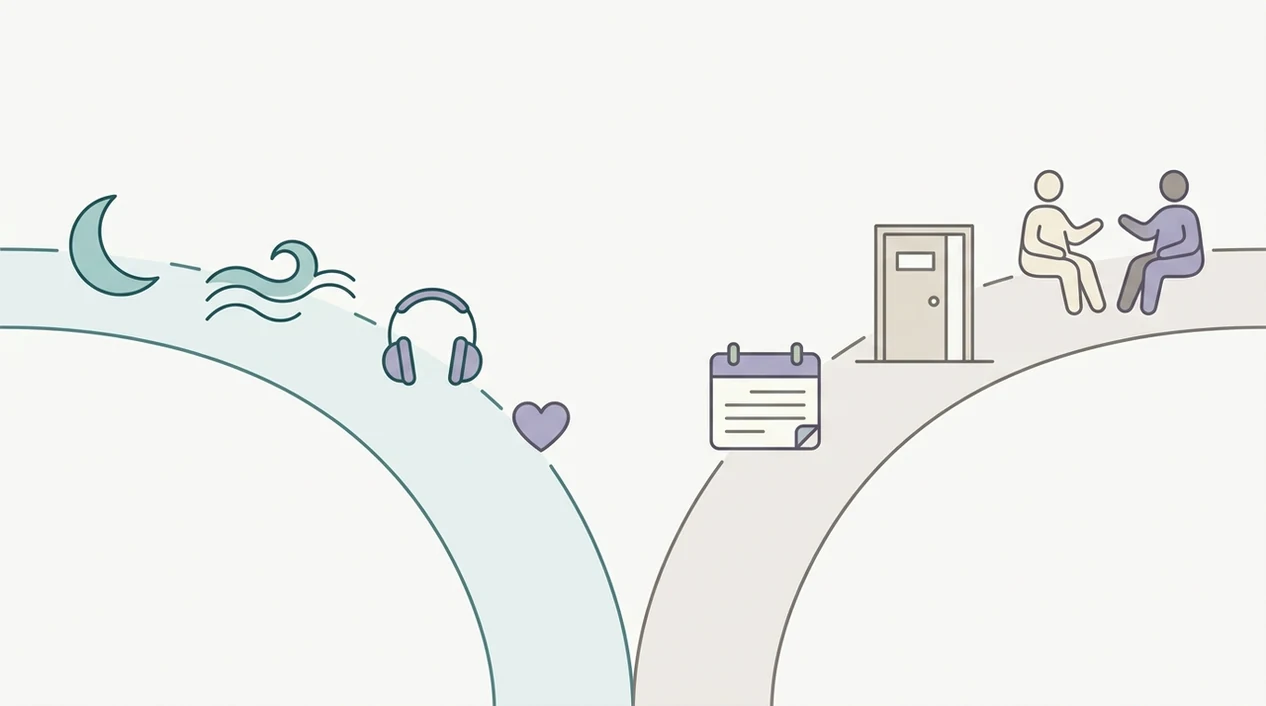
A pregnancy anxiety meditation app works by pairing guided attention with nervous system cues, especially slower breathing, body scanning, and repeated relaxation anchors. These practices can activate the parasympathetic nervous system, which is the “rest and digest” side of your stress response.
The mechanism is simple enough to feel. You hear a cue, soften your jaw, lengthen the exhale, and notice the ribs move under one hand. With repetition, that cue can become a conditioned relaxation response. Your body starts to recognize, “I have practiced this before.”
Affirmations and fear-release tracks add cognitive reframing. They don't make risk disappear, but they can reduce catastrophic thinking. For birth fear, fear of childbirth hypnobirthing often works through this same pairing of physical calm and new mental rehearsal.
An NIH-supported randomized trial found that a mindfulness meditation mobile app reduced stress and anxiety in adults after 8 weeks compared with a control app source. Pregnancy-specific mindfulness studies also show reduced anxiety versus usual care source.

At-a-Glance Pregnancy Anxiety App Features
A pregnancy anxiety app is most useful when each feature matches a real anxiety trigger. The table below shows what to look for before you download one in the app store aisle at the pharmacy, half-reading reviews while your prescription is called.
| Feature | Anxiety trigger it supports | Why it helps |
|---|---|---|
| Guided breathing timer | Pre-appointment nerves, panic moments | Gives your breath a steady count when thoughts feel fast |
| Hypnobirthing tracks | Fear of birth, pain worry | Rehearses coping language and body relaxation |
| Sleep and nap meditations | 3 a.m. worry spirals | Replaces scrolling with a low-effort settling cue |
| SOS quick-calm tracks | Sudden stress or acute panic | Offers a short reset when a full session feels impossible |
| Affirmation library | Daily confidence building | Repeats realistic, calming statements before labor |
| Contraction timer | Labor-day uncertainty | Turns “Is this real?” into something observable |
For nighttime worry, a dedicated app to help pregnancy anxiety at night should include quiet audio, dim-screen use, and tracks that don't ask you to think too much.
How to Use a Pregnancy Anxiety App
Use a pregnancy anxiety app as a small daily practice, not only as a rescue tool when worry is already loud. The goal is to teach your body one familiar way back toward calm, then repeat it until the cue feels easier to trust.
- Start with a short session at a predictable time, such as after breakfast, before bed, or while waiting in the car before an appointment. Five to ten quiet minutes can be enough at first.
- Choose one anxiety trigger to work with for the week. Pick something specific, like sleep worry, scan anxiety, birth fear, or appointment nerves, instead of trying to fix every thought at once.
- Play a breathing, grounding, or body-scan track before moving to affirmation-only content. Physical calming cues usually give the mind a steadier place to land.
- Repeat the same cue for one to two weeks. Use the same phrase, hand position, or longer exhale so your nervous system starts to recognize the pattern.
- Contact a clinician if symptoms worsen, panic becomes frequent, or anxiety starts affecting sleep, eating, work, relationships, safety, or your ability to attend care.
Four Myths About Pregnancy Anxiety Apps
Myth 1: A pregnancy anxiety app replaces therapy.
Reality: it is a supportive self-care tool. If anxiety is persistent, intense, or interfering with life, clinical support matters.
Myth 2: Hypnobirthing apps guarantee a pain-free birth.
Reality: they support coping, breath awareness, and pain perception. They don't guarantee birth outcomes, and they don't remove the need for medical care.
Myth 3: These apps are only for “natural birth” plans.
Reality: relaxation tracks can help during inductions, epidurals, planned cesareans, and unexpected changes. The nurse adjusting the bed rail is still a moment where your breath can give you somewhere to land.
Myth 4: One session should fix anxiety.
Reality: nervous system retraining takes practice over weeks. If you're wondering when does hypnobirthing get easier, the honest answer is usually after repeated small sessions, not one dramatic breakthrough.
Good hypnobirthing apps deliver repeatable calming cues and birth rehearsal, not guaranteed pain-free labor or medical certainty.
Pregnancy Anxiety App or Professional Help: A Decision Guide
A pregnancy anxiety app may be enough for mild, occasional worry, but severe or persistent symptoms need professional evaluation. Clinicians typically recommend seeking help when anxiety affects sleep, eating, daily functioning, safety, or your ability to attend care.
During the COVID-era, one large international survey found that 67% of pregnant and postpartum women reported clinically relevant anxiety symptoms source. That number does not mean every worried person needs emergency care, but it shows why accessible daily tools matter.
When a Prenatal Anxiety App Is Enough
An app-only approach may fit when worry comes and goes, you can still function, and symptoms settle with rest, reassurance, or practice. Examples include trouble sleeping before appointments, general tension about birth, or a racing mind after a class chat about contractions.
For mild daily worry, a pregnancy anxiety meditation app is often easier than a full course because the practice is short, private, and available on the phone you already carry.
When to Contact a Healthcare Professional
Contact a healthcare professional if worry feels constant, panic attacks repeat, you cannot function, or you have thoughts of self-harm. An app can still sit beside therapy or medication, but it should not delay care.
What Competitors Miss About Daily Pregnancy Anxiety Support
Many guides describe app features, but they miss the body anchor that makes practice portable. A track is more useful when it pairs with a physical cue, such as jaw release, a longer exhale, or feeling the sheet against your ankles.
Daily pregnancy-specific practice also matters before labor. Chronic worry rarely waits politely until contractions start. It shows up while you're trying to nap, reading birth stories, or returning from another bathroom trip with a dry mouth and fast thoughts.
A clearer line is needed, too. Supportive self-care is not the same as treatment for a diagnosable perinatal anxiety disorder. Systematic reviews estimate pooled anxiety disorder prevalence during pregnancy around 18%, so daily tools should be accessible, but honest about limits.
If you want the practice side explained step by step, what happens when you practice hypnobirthing covers the repetition piece in more detail.
Limitations
A pregnancy anxiety app can be genuinely helpful, but it has real limits. Please do not use any app as your only plan if your symptoms are severe, worsening, or frightening.
- Evidence for app-only treatment of clinically significant prenatal anxiety is still limited; most research supports apps as adjunct support.
- Not all apps are developed by clinicians or based on validated psychological methods, so quality varies widely.
- Severe symptoms, including persistent panic, inability to function, or thoughts of self-harm, require urgent professional care.
- Relying only on an app during a crisis can delay needed treatment.
- Some users feel discouraged if they are not calm right away. Nervous system retraining usually takes weeks of regular practice.
- Subscription costs, language limits, smartphone access, and internet needs can make apps less accessible.
- Apps cannot diagnose or treat perinatal anxiety disorders.
- Sporadic use often brings little benefit; results depend on repetition.
For safety-focused details, are hypnobirthing apps safe is a better place to look at risks, expectations, and medical boundaries.
See also: Postpartum Meditation App: Calm Support After Birth.
See also: Pregnancy Panic Attack Meditation: Grounding Steps and When to Get Help.
Read more
- App To Help Me Sleep While Pregnant
- App To Help Me Stay Calm During Labor
- App To Help Pregnancy Anxiety At Night
- Best Pregnancy Meditation App
- Calm vs Hypnobirthing App for Pregnancy
- Find Calm Birth Preparation
- First Trimester Meditation App Guide
- Fourth Trimester Meditation Guide
- Free Pregnancy Meditation App
- Guided Meditation for Pregnancy: Calm Birth Prep
- Headspace Pregnancy Meditation Alternative
- Hospital Bag Meditation App Checklist
Best Pregnancy Anxiety App for Calm Birth Preparation
HypnoBirth App supports pregnancy anxiety with free hypnobirthing tracks, guided breathing, relaxation, and sleep-focused sessions designed for expectant parents. With 200k+ users and ORCHA NHS certification, it can be a helpful companion alongside your usual maternity care and any mental health support you may need.
Best for
- Building a calmer daily birth preparation routine
- Practising breathing, relaxation, and sleep support during pregnancy
Limitations
- Not a replacement for professional mental health care if anxiety feels overwhelming
- Does not diagnose, treat, or monitor pregnancy-related medical conditions
Frequently Asked Questions
What is a pregnancy anxiety app?
A pregnancy anxiety app is a mobile tool that offers guided support for calming worry during pregnancy. It may include breathing exercises, relaxation tracks, meditation, sleep support, birth preparation content, and prompts to seek professional help when anxiety feels unmanageable.
Can a pregnancy anxiety app help me feel calmer before birth?
Yes, a pregnancy anxiety app can help you practise calming techniques before birth. Regular use of breathing, relaxation, and guided visualisation may support a steadier mindset, but it should not replace medical or mental health care if symptoms are severe.
Is pregnancy anxiety normal?
Yes, pregnancy anxiety is common, especially when you are preparing for birth, parenting, or medical appointments. Persistent panic, intrusive thoughts, loss of sleep, or feeling unable to cope are signs to speak with a midwife, GP, obstetrician, or mental health professional.
Can I start using a pregnancy anxiety app at 38 weeks?
Yes, you can start using a pregnancy anxiety app at 38 weeks. Short daily sessions can still help you learn breathing, relaxation, and reassurance techniques for labour, even if you are close to your due date.
Is a pregnancy anxiety app useful for first-time mums?
Yes, a pregnancy anxiety app can be especially useful for first-time mums. It can explain common birth worries, guide simple coping techniques, and help you build confidence through repeated practice at home.
Can a pregnancy anxiety app help with fear of labour pain?
Yes, a pregnancy anxiety app can help you manage fear of labour pain by teaching breathing, relaxation, and mindset tools. These techniques may help you feel more prepared, but they do not guarantee a pain-free birth or remove the need for medical pain relief if you want it.
Can I use a pregnancy anxiety app if I plan to have an epidural?
Yes, you can use a pregnancy anxiety app if you plan to have an epidural. Breathing and relaxation tools can still support you before the epidural, during decision-making, while waiting for care, and throughout the birth experience.
Is a pregnancy anxiety app better than a hypnobirthing class?
No, a pregnancy anxiety app is not automatically better than a hypnobirthing class. An app offers flexible, repeatable practice at home, while a class may provide live teaching, questions, partner involvement, and personalised support.
What should I look for in a pregnancy anxiety app?
A good pregnancy anxiety app should offer evidence-informed calming tools, clear pregnancy-safe guidance, and easy sessions you can use regularly. Helpful features include breathing exercises, guided relaxation, sleep tracks, birth education, and advice on when to contact a healthcare professional.
Can a pregnancy anxiety app help me sleep during pregnancy?
Yes, a pregnancy anxiety app can support sleep by helping your body and mind settle before bed. Guided relaxation, breathing exercises, and calming audio may reduce bedtime worry, although ongoing insomnia should be discussed with a healthcare professional.
When should I seek help instead of only using a pregnancy anxiety app?
You should seek professional help if anxiety feels intense, persistent, or interferes with daily life. Contact your midwife, GP, obstetrician, or urgent services if you have panic attacks, intrusive thoughts, thoughts of self-harm, or concerns about your safety or your baby’s safety.
Can my birth partner use a pregnancy anxiety app with me?
Yes, your birth partner can use a pregnancy anxiety app with you. Practising together can help them learn your preferred breathing cues, relaxation prompts, and reassurance techniques for labour and birth.