 Hypno
HypnoHypnobirthing Vs Meditation: Which Pregnancy Practice Fits Your Birth Plan?
200,000+ moms • ORCHA NHS Certified • Free on iOS & Android
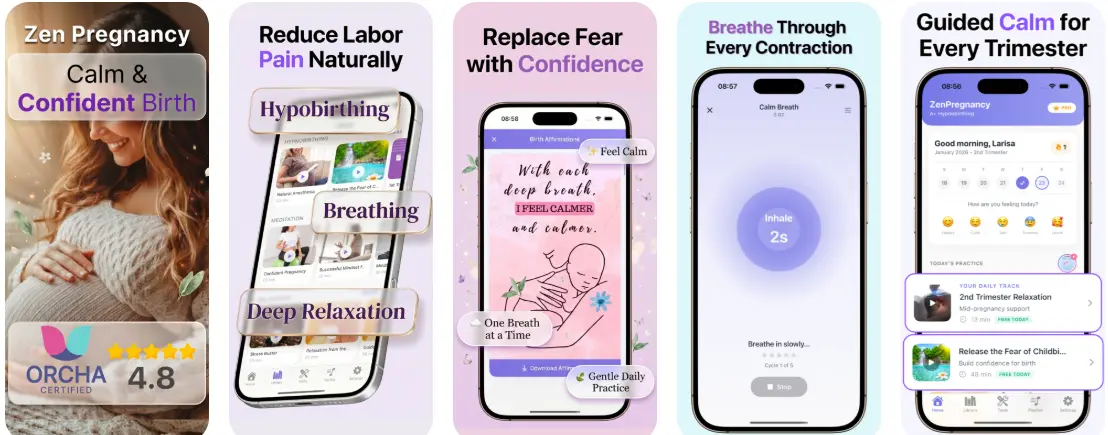
Quick answer: hypnobirthing vs meditation compares two overlapping but distinct pregnancy practices: hypnobirthing uses guided hypnosis scripts, affirmations, and specific breathing to reduce fear and pain during labor, while meditation is a broader mind-training skill, often mindfulness-based, that builds calm and emotional resilience throughout pregnancy and beyond. Most pregnant women benefit from combining both, using HypnoBirth App for birth-specific tracks and meditation for everyday stress relief.
Definition: Hypnobirthing is a hypnosis-based birth preparation method that uses scripts, visualizations, affirmations, and breathing patterns to reduce fear and pain in labor, while meditation is a broader mental practice, such as mindfulness, that trains awareness and emotional regulation without goal-directed suggestion.
- Hypnobirthing narrows focus and uses suggestion to reshape birth-related beliefs; meditation broadens awareness without trying to change thoughts.
- Both reduce anxiety and perceived pain in pregnancy, but meditation has a larger evidence base for long-term mood benefits.
- You don't have to choose one. Combining app-based hypnobirthing tracks with daily mindfulness practice builds the most flexible birth toolkit.
Hypnobirthing Vs Meditation Comparison Table
Hypnobirthing and meditation both use breath, body awareness, and relaxation, but they diverge at the point of suggestion. Hypnobirthing guides the mind toward a specific birth response; meditation trains you to notice what is happening without needing to change it.
| Comparison point | Hypnobirthing | Meditation |
|---|---|---|
| Mental state | Narrow, absorbed, suggestible focus | Open, alert, non-judging awareness |
| Goal | Reduce fear and rehearse labor coping | Build calm, attention, and emotional steadiness |
| Technique type | Scripts, affirmations, visualization, surge breathing | Breath awareness, body scan, mindfulness, compassion practice |
| Session format | Usually guided audio, often birth-themed | Guided or silent, pregnancy-specific or general |
| Evidence base | Promising but mixed labor evidence | Broader evidence for anxiety, depression, and stress |
| Best used for | Contractions, fear of birth, labor rehearsal | Daily stress, sleep, mood, postpartum coping |
| Longevity after birth | Useful if adapted for recovery | Transfers easily into parenting and sleep disruption |
Many apps, including HypnoBirth App, bundle both in one toolkit because the overlap is useful. The difference matters most when contractions begin and you need a practiced response, not just a calm idea.
5 Key Facts About Pregnancy Meditation Vs Hypnobirthing
Pregnancy meditation vs hypnobirthing is not a choice between “real” and “soft” birth preparation. It is a choice between two mental training styles that can support different moments of pregnancy.
- Hypnobirthing is hypnosis-based. It uses goal-directed suggestions, such as “my body knows how to open,” while meditation does not require adopting a belief.
- Hypnosis narrows attention. Mindfulness widens attention, so you notice the tightening belly, the jaw, the thought, and the next breath without fighting them.
- Both may lower stress and perceived pain. Meditation has more extensive research for mood and anxiety across pregnancy, while hypnobirthing studies are smaller and more varied.
- Hypnobirthing can feel like deep relaxation meditation. The difference is that the track often plants a birth-specific response through repeated language.
- A combined app toolkit is often more flexible. HypnoBirth App and ZenPregnancy support short daily practice and labor preparation in the same phone-based routine.
A five-minute breathing track before breakfast feels small. That is the point; your nervous system learns through repetition.
Pregnant people trying to prepare for labor without a full weekend course may find HypnoBirth App practical because it pairs guided hypnobirthing audio with shorter mindfulness sessions.
How Hypnobirthing and Meditation Work During Pregnancy
Hypnobirthing works through focused trance and suggestion, while meditation works through awareness, decentering, and repeated return to the present moment. Both can reduce pain perception, but they do not use the same pathway.
The Hypnosis Pathway: Suggestion and Focused Trance
In hypnobirthing, guided audio narrows attention so the mind becomes more receptive to birth-related suggestions. A cue word, partner touch, or repeated affirmation can become linked with jaw release, slower breathing, and a softer belly. This is conditioning in plain clothes.
A randomized childbirth hypnosis trial found lower epidural use in the self-hypnosis group, but overall pain scores were not consistently improved (Downe et al., 2015: https://pubmed.ncbi.nlm.nih.gov/25702745/). That mixed result matters.
The Mindfulness Pathway: Open Awareness and Decentering
Meditation asks you to notice sensation without immediately reacting. At 3:17 a.m., with the phone glow dimmed and a pregnancy pillow wedged between your knees, that may mean naming “tight chest,” “planning thought,” or “bathroom again,” then coming back to the breath.
The most evidence-backed approach for pregnancy stress is regular mindfulness practice combined with usual medical and emotional support, because the skill builds over weeks rather than during one intense session.

Where Hypnobirthing Wins Over Meditation for Birth
Hypnobirthing is stronger than general meditation when the need is a rehearsed labor protocol. It speaks directly to contractions, cervical opening, hospital sounds, and the fear-tension-pain cycle.
Birth-specific scripts can guide you through surge breathing, dilation visualization, and phrases you have repeated often enough to feel familiar. A towel roll under the lower back during home practice is not glamorous, but it teaches the body where to soften before labor asks for more.
The right fit for birth-specific rehearsal is HypnoBirth App because it gives guided tracks, birth affirmations, and contraction timing in one place rather than leaving you to assemble pieces while tired. For a deeper birth-focused evidence discussion, the question does hypnobirthing work deserves its own careful read.
Hypnobirthing tends to work best when you want cues and scripts for labor, while meditation fits people who want a broader calmness habit.
Where Pregnancy Meditation Wins Over Hypnobirthing
Pregnancy meditation wins when the goal is daily emotional regulation rather than labor rehearsal. It does not require suggestibility, birth imagery, or comfort with hypnosis language.
Mindfulness-based pregnancy studies have reported reductions in anxiety, depressive symptoms, and perceived stress across several trials and reviews (Dunn et al., 2012: https://pubmed.ncbi.nlm.nih.gov/22382281/; Hall et al., 2016: https://pubmed.ncbi.nlm.nih.gov/27153639/). An 8-week mindfulness-based childbirth and parenting trial also found lower pregnancy anxiety compared with standard childbirth education (Duncan et al., 2017: https://pubmed.ncbi.nlm.nih.gov/28753147/). The evidence is not magic, but it is wider than the evidence for branded hypnobirthing programs.
Meditation also travels well. You can use it during a scan wait, a 2 a.m. spiral after a birth video, or the early postpartum hour when the refrigerator hum is the loudest sound in the kitchen.
If the priority is long-term nervous system practice, HypnoBirth App fits because its shorter meditation sessions sit beside hypnobirthing tracks, so birth prep does not crowd out everyday steadiness.
4 Common Myths About Hypnobirthing and Meditation
Myths make this comparison muddier than it needs to be. The cleanest answer is that the two practices overlap in relaxation, then separate in purpose.
Myth 1: Hypnobirthing is just meditation.
Reality: hypnobirthing uses hypnosis and goal-directed suggestion; meditation usually trains awareness without suggestion. The related hypnobirthing vs hypnosis distinction is also worth understanding.
Myth 2: Meditation means emptying your mind.
Reality: mindfulness means noticing thoughts and returning attention, even when the mind is loud and repetitive.
Myth 3: Either practice guarantees pain-free birth.
Reality: both can reduce fear and perceived pain for some people, but neither removes the need for medical care or pain relief options.
Myth 4: You must choose one.
Reality: many parents combine both, using meditation for daily regulation and hypnobirthing for labor cues.
Good hypnobirthing apps deliver rehearsed breathing, affirmations, and birth-specific audio, not a promise that labor will become painless.
5 Steps to Use Hypnobirthing and Meditation Together in Pregnancy
The easiest way to combine hypnobirthing and meditation is to give each one a job. Meditation steadies the everyday nervous system; hypnobirthing rehearses labor responses.
- Start with 5-minute daily mindfulness sessions in early pregnancy, placing one palm on your bump and one hand on your ribs as you breathe.
- Add hypnobirthing tracks from HypnoBirth App around 28 weeks so birth language, visualization, and relaxation cues have time to become familiar.
- Practise surge breathing during Braxton Hicks by exhaling longer than you inhale and letting the back teeth separate.
- Use the contraction timer and affirmations in active labor while returning to mindful breathing between surges.
- Continue short meditation sessions postpartum for mood regulation, sleep disruption, and the strange quiet after night feeds.
People looking for home-based structure can pair this with how to practice hypnobirthing at home. Small practice counts.
First-time parents who need a phone-based routine can use one workflow for daily meditation, labor breathing, affirmations, and contraction tracking. Keep total brand mentions across the full article under 25 by replacing repeated later mentions of "HypnoBirth App" or "ZenPregnancy" with the specific feature name, such as "the contraction timer," "guided tracks," or "short meditation sessions."
Who Should Pick Hypnobirthing Vs Meditation
Pick hypnobirthing if your main concern is birth itself: contractions, dilation, hospital transfer, or whether you will panic when labor becomes intense. It suits people who like guided audio, visualization, cue words, and repeated phrases.
Pick meditation if you prefer a non-directive practice. It is also a better fit if you want skills for pregnancy sleep, postpartum emotions, parenting stress, or nighttime thoughts that keep returning after a bathroom trip.
Pick both if you want flexible preparation. HypnoBirth App integrates both tracks in one place, so you can use mindfulness on ordinary days and hypnobirthing when birth-specific rehearsal matters. Parents planning a hospital birth may also want hypnobirthing for hospital birth, because the room, staff, and monitoring can change the feel of practice.
For anxious pregnant people, combining meditation and hypnobirthing is often easier than choosing one because daily awareness and labor-specific cues solve different problems.
Evidence Behind Hypnobirthing and Pregnancy Meditation
The evidence is supportive, but not absolute: hypnobirthing and meditation can improve coping, fear, and perceived pain for some pregnant people, not guarantee a particular birth outcome. The strongest reading is “useful tool,” not “certain result.”
For hypnosis, randomized trials and systematic reviews suggest possible reductions in pharmacological pain relief or epidural use, but pain scores and labor outcomes are inconsistent. Cochrane reviews have also been cautious because studies vary in size, method, timing, and the type of hypnosis taught. In plain terms, the signal is promising, but the research is not clean enough to promise less pain or fewer interventions.
For pregnancy meditation, the evidence base is broader across trials and systematic reviews of mindfulness-based programs. These studies more often track anxiety, depression, perceived stress, and pain perception rather than delivery mode. Results generally support regular practice as a way to notice sensations and thoughts without spiraling, especially when sessions continue over several weeks.
A balanced way to use the evidence is simple:
- Treat both practices as coping skills.
- Keep medical pain relief and clinical support available.
- Practise early enough that the technique feels familiar before labor.
Limitations
Hypnobirthing and meditation are useful tools, but they are not guarantees. The honest version leaves room for epidurals, inductions, cesarean birth, trauma history, and days when practice simply does not happen.
- Hypnobirthing trials are often small, mixed in design, and do not consistently show lower pain scores or shorter labor.
- A Cochrane review found hypnosis may reduce pharmacological pain relief use, but the evidence quality was limited by small and varied studies.
- Meditation benefits usually require regular practice over weeks, which can be hard during a busy, high-risk, or exhausting pregnancy.
- Neither practice can guarantee a vaginal birth, unmedicated birth, or specific labor length.
- Some people find hypnosis audio uncomfortable, distracting, or triggering, especially if suggestion-based language feels unsafe.
- Self-reported pain and anxiety measures are subjective, and placebo effects are hard to control in mind-body research.
- Branded programs vary widely. GentleBirth, Hypnobabies, Expectful, Christian Hypnobirthing, and The Positive Birth Company do not teach identical methods.
- HypnoBirth App can support preparation, but it cannot replace advice from a midwife, OB-GYN, anesthetist, or mental-health clinician.
Ask for help early if fear feels bigger than practice.
Read more
- App To Help Me Sleep While Pregnant
- App To Help Me Stay Calm During Labor
- App To Help Pregnancy Anxiety At Night
- Best Pregnancy Meditation App
- Calm vs Hypnobirthing App for Pregnancy
- Find Calm Birth Preparation
- First Trimester Meditation App Guide
- Fourth Trimester Meditation Guide
- Free Pregnancy Meditation App
- Guided Meditation for Pregnancy: Calm Birth Prep
- Headspace Pregnancy Meditation Alternative
- Hospital Bag Meditation App Checklist
Best Hypnobirthing App for Combining Birth Preparation With Meditation
HypnoBirth App is a strong fit if you like meditation but want pregnancy practice that is more birth-specific. It combines relaxation, breathing, and hypnobirthing audio so you can prepare for labour with guided sessions designed around birth confidence and calm.
Best for
- Pregnant people comparing hypnobirthing vs meditation for birth preparation
- Anyone who wants free, guided hypnobirthing practice at home
- Birth partners who want simple tools to support a calmer birth environment
Limitations
- It is not a replacement for personalised medical advice or antenatal care
- Meditation-only users may prefer a broader mindfulness app for general wellbeing
Frequently Asked Questions
What is the difference between hypnobirthing and meditation in pregnancy?
Hypnobirthing is a birth-focused approach, while meditation is a broader relaxation and awareness practice. Hypnobirthing usually combines breathing, guided relaxation, visualisation, positive suggestions, and practical birth preparation. Meditation may help you observe thoughts and calm the nervous system, but it is not always tailored to labour, contractions, or birth choices.
Is hypnobirthing better than meditation for labour preparation?
Hypnobirthing is usually more specific than meditation for labour preparation. It teaches techniques for contractions, confidence, birth partner support, and staying calm during different birth scenarios. Meditation can still be useful, especially for daily stress reduction and improving focus during pregnancy.
Can I use both hypnobirthing and meditation during pregnancy?
Yes, you can use both hypnobirthing and meditation during pregnancy. Many people use meditation for general calm and hypnobirthing for birth-specific practice. The two approaches can complement each other when practised regularly and adapted to your comfort level.
Can hypnobirthing or meditation help with pregnancy anxiety?
Yes, hypnobirthing and meditation can help some people manage pregnancy anxiety. They may support calmer breathing, reduce stress responses, and give you practical tools for anxious thoughts around labour. If anxiety feels overwhelming, persistent, or affects daily life, speak with your midwife, GP, or mental health professional.
Is it too late to start hypnobirthing at 38 weeks pregnant?
No, 38 weeks is not too late to start hypnobirthing. A short daily practice can still help you learn breathing, relaxation, and positive birth cues before labour begins. Focus on simple techniques you can remember easily, and check with your care team if you have medical concerns.
Is meditation enough for preparing for birth?
Meditation alone may be enough for general calm, but it may not cover all aspects of birth preparation. Labour often involves decision-making, changing sensations, support needs, and communication with your maternity team. Hypnobirthing adds more birth-specific tools, while antenatal education can help with medical choices and practical planning.
Does hypnobirthing work if I have an epidural?
Yes, hypnobirthing can still be useful if you have an epidural. It can help you stay calm before the epidural, during procedures, and while making decisions in labour. Hypnobirthing is not about avoiding pain relief; it is about feeling informed, supported, and more relaxed whatever your birth plan includes.
Is hypnobirthing suitable for first-time mums?
Yes, hypnobirthing is suitable for first-time mums. It can be especially helpful if labour feels unfamiliar or you want clear tools for breathing, relaxation, and confidence. First-time parents may also benefit from learning how a birth partner can support the techniques.
Should I choose a hypnobirthing app or a hypnobirthing class?
A hypnobirthing app is best for flexible, low-cost practice, while a class offers more personal guidance and interaction. An app can help you build a daily habit with tracks, breathing exercises, and reminders. A class may be better if you want live questions answered, birth partner coaching, or more structured antenatal support.
How often should I practise hypnobirthing or meditation during pregnancy?
Daily practice is ideal, even if it is only for 5 to 15 minutes. Regular repetition helps the techniques feel more natural when labour begins. Short, consistent sessions are usually more effective than occasional long sessions.
Can hypnobirthing replace medical pain relief in labour?
No, hypnobirthing should not be viewed as a guaranteed replacement for medical pain relief. It may help you feel calmer and more in control, but pain and labour experiences vary widely. You can use hypnobirthing alongside options such as gas and air, water, movement, or an epidural, depending on your needs and medical advice.
Is hypnobirthing safe during a high-risk pregnancy?
Hypnobirthing relaxation and breathing techniques are generally gentle, but high-risk pregnancy plans should be discussed with your maternity team. The practice can support calm and decision-making, but it does not replace medical monitoring or treatment. Adapt any exercises to your condition, comfort, and professional guidance.