 Hypno
HypnoHypnobirthing Benefits After 30 Days Of Consistent Practice
200,000+ moms • ORCHA NHS Certified • Free on iOS & Android
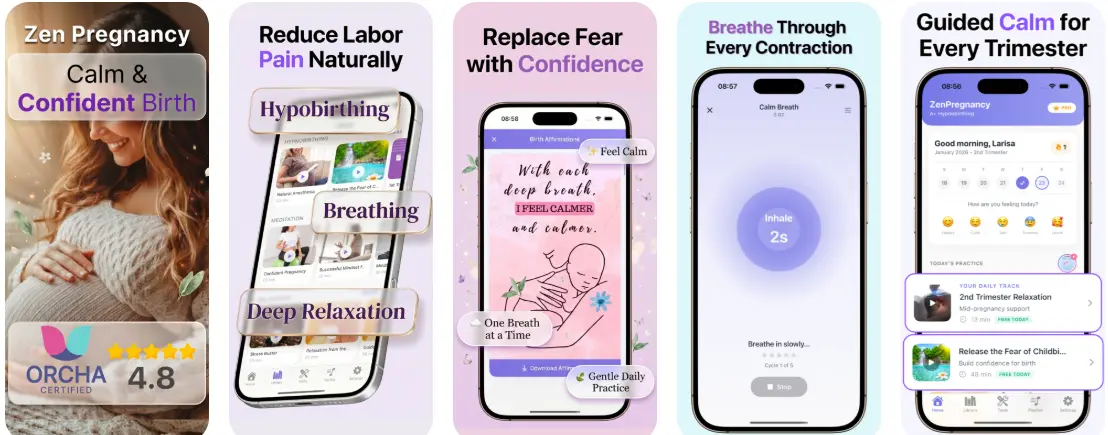
Quick answer: hypnobirthing benefits after 30 days typically include reduced birth anxiety, stronger relaxation routines, improved sleep, and growing confidence that breathing and visualization cues will work during labor. Most practitioners won't experience pain-free birth at this stage, but the first month builds the habit foundation that makes deeper benefits possible later in pregnancy.
Definition: Hypnobirthing is a childbirth preparation method that uses guided meditation, breathing exercises, and positive affirmations to reduce fear and tension during labor.
This article is educational and does not replace advice from your midwife, OB-GYN, or mental health clinician, especially if your pregnancy is high-risk or you have a history of severe anxiety, trauma, psychosis, or depression.
TL;DR
- After 30 days, most women report feeling calmer about labor and sleeping better, not pain-free birth.
- Daily sessions of 10–30 minutes matter more than which app or course you choose.
- A 2016 Cochrane review of 2,954 women found hypnosis users were less likely to need pharmacological pain relief source.
- 30 days is the habit-building phase: scripts and breathing patterns start to feel automatic.
- Hypnobirthing complements medical care, it never replaces it.
At-a-Glance: 5 Hypnobirthing Practice Results After 30 Days
- Labor anxiety usually feels less sharp. After 30 days hypnobirthing practice, many people still feel nervous, but the fear arrives with a plan attached.
- Sleep may improve because the body recognizes the wind-down cue. A familiar guided track can make bedtime feel less like a negotiation with your brain.
- Breathing cues start becoming automatic. By week four, “release breath” can trigger softer shoulders before you consciously think through the steps.
- Preparedness often rises before clinical outcomes change. For many pregnant women, the biggest shift is thinking, “I know what to do with my breath now.”
- Pain levels and interventions are not guaranteed to change. Thirty days is early skill practice, not a promise about epidurals, cesarean birth, or labor intensity.
For a broader view of expected changes, the full hypnobirthing benefits guide explains emotional, practical, and labor-related outcomes.
How 30 Days of Hypnobirthing Practice Affects the Fear-Tension-Pain Cycle
Hypnobirthing works by interrupting the fear-tension-pain cycle: fear can tighten muscles, tension can increase discomfort, and discomfort can feed more fear. Daily repetition teaches your nervous system a different sequence, first notice fear, then soften, breathe, and return to a chosen anchor phrase.
The mechanism is a conditioned relaxation response. In plain language, your brain links the guided voice, breathing rhythm, and body cue with “safe enough to relax.” These repeated neural habit loops can make a release breath feel available faster during stress.
Thirty days is a practical checkpoint, not a magic habit-formation deadline. I often suggest practicing a 12-minute relaxation track with one earbud in while lying on the left side, especially when hips ache and attention wanders.
Subjective benefits can appear before objective birth outcomes change. Feeling calmer about labor is different from changing delivery mode. Clinicians typically recommend using relaxation skills alongside prenatal care, not as a substitute for medical assessment.
5 Steps for Daily Hypnobirthing Practice Over 30 Days
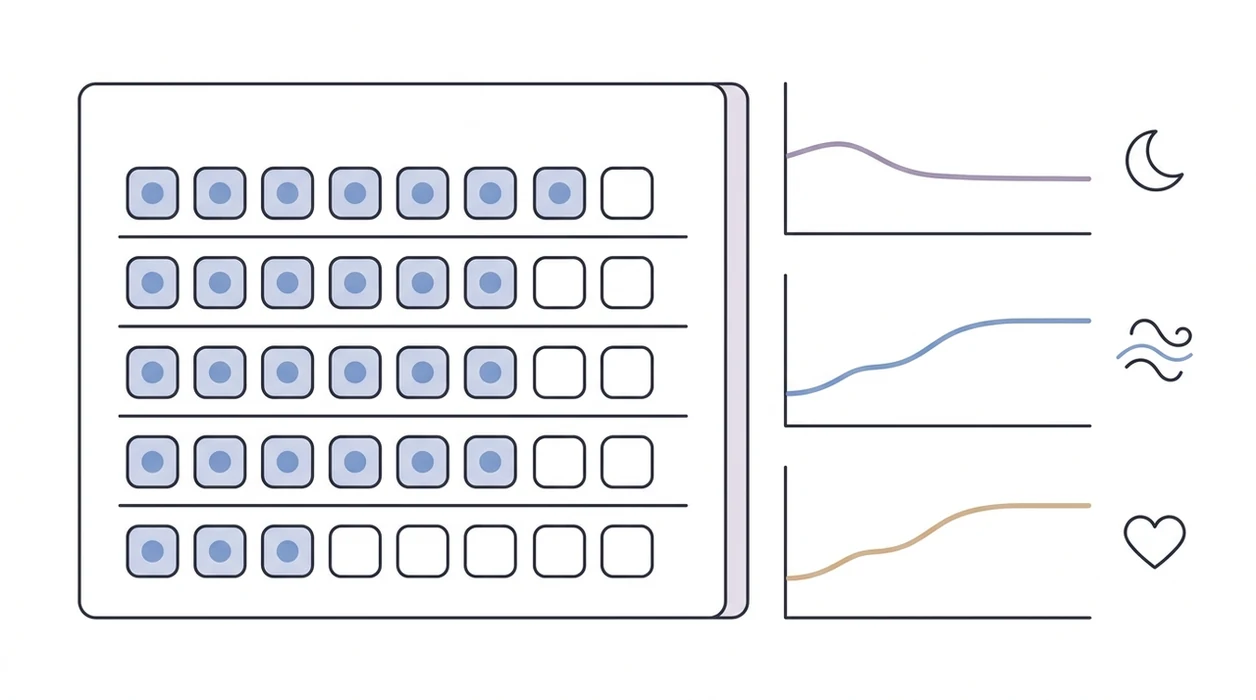
Use a simple routine for 30 days hypnobirthing practice: repeat the same cue often enough that it feels familiar under pressure. Good hypnobirthing apps deliver short guided breathing, affirmations, and labor rehearsal, not a guarantee that birth will follow a script.
- Set a consistent 10–30 minute daily window. Link it to something already fixed, like after brushing teeth.
- Start with a guided breathing track. Let the first minute be only about unclenching your tongue and dropping your shoulders.
- Add a visualization or meditation session. Picture one specific birth environment, such as dim lights and a clear door sign.
- Repeat affirmations during or after each session. A bathroom mirror note works well during the 2 a.m. toilet trip.
- Log progress weekly. Note anxiety, sleep, and which relaxation cue felt easiest.
HypnoBirth App can help structure this routine with guided tracks, breathing exercises, and birth affirmations, but the most useful routine is still the one you can repeat when you are tired.

30-Day Tracking Method for Hypnobirthing Benefits
Thirty-day hypnobirthing practice results are usually tracked through weekly self-reports, app practice logs, and changes in sleep or anxiety patterns. That evidence is useful, but it is not the same as a clinical trial endpoint.
Published studies mostly measure full-program outcomes across pregnancy or during labor. A 2016 Cochrane review examined hypnosis for childbirth across 9 randomized trials and 2,954 women, not a strict first-month practice window source.
So, the 30-day interpretation has to be conservative. I treat it as an early practice checkpoint: can you start the track without resistance, breathe without counting perfectly, and recover faster after a labor worry spiral? For longer comparison points, the hypnobirthing benefits timeline gives a clearer month-by-month frame.
3 Patterns Women Notice After 30 Days of Hypnobirthing Practice
After 30 days, the most common shifts are familiarity, shorter anxiety spikes, and better sleep. These are emotional regulation changes, and they often carry into daily life beyond birth preparation.
Automatic Relaxation Responses to Audio Cues
The guided track stops feeling new. A few opening notes may remind your jaw to loosen before the breathing instruction even starts.
Shorter Anxiety Spikes About Labor
Labor worries still come, often in the car ride after a prenatal visit. But instead of spiraling for an hour, many women use a release breath and return sooner.
Better Sleep Quality During Pregnancy
Pregnancy sleep is still interrupted, especially with a pillow nest between sore knees. Yet a familiar meditation can reduce the time spent replaying birth questions in the dark.
Partners may feel more involved when they practice the same anchor phrase. It gives them something concrete to say, not just “you’re doing great.”
Clinical Evidence on Hypnobirthing Practice Results
Clinical evidence supports some hypnobirthing practice results, especially around anxiety, pain perception, and pain medication use. It does not support strong claims that hypnosis reliably changes cesarean rates or newborn outcomes.
In the 2016 Cochrane review, women using hypnosis were less likely to use pharmacological pain relief than women receiving standard care. The same review found no clear difference in cesarean birth, assisted vaginal birth, or serious maternal and newborn complications.
A 2023 randomized controlled trial of 80 first-time mothers in Iran found that structured hypnobirthing reduced labor pain, death anxiety, and postpartum depression scores compared with routine care source. A smaller 2013 study also reported reduced delivery anxiety, but the sample was limited, so it should be treated as supportive rather than definitive evidence; add the inline study URL before restoring any exact sample-size claim.
Across randomized trials, there is no consistent evidence that hypnosis changes APGAR scores. That matters. Feeling steadier is valuable, but it should not be sold as control over every clinical outcome.
5 Outcomes 30 Days of Hypnobirthing Does Not Guarantee
Thirty days of hypnobirthing does not guarantee a pain-free birth, even with careful daily practice. It can build coping skills, but labor remains physical, variable, and medically unpredictable.
- It will not guarantee pain-free birth. Reduced fear is not the same as no pain.
- It will not reliably prevent an epidural. Many calm, well-prepared people still choose pain relief.
- It will not prevent a C-section. Research does not show a dependable reduction in cesarean rates.
- It cannot control complications. Placental issues, fetal position, bleeding, and blood pressure need clinical care.
- It will not work well if practice is occasional. One long session on Sunday rarely replaces daily repetition.
For many people, 30 days is the “before” stage where confidence starts to build. The deeper contrast is easier to see in a hypnobirthing before and after reflection.
When to Ask a Clinician Before Using Hypnobirthing
Ask your midwife, OB-GYN, or mental health clinician before using hypnobirthing if your pregnancy is high-risk or your mental health history makes deep relaxation feel unsafe. Hypnobirthing can support prenatal care, but it should not replace appointments, monitoring, medication plans, or urgent assessment.
This is especially important with placenta problems, preeclampsia or high blood pressure, gestational diabetes needing close management, growth concerns, reduced fetal movement, bleeding, preterm labor risk, multiples, breech position, or a planned induction or cesarean. Severe anxiety, a trauma history, psychosis, or depression are also reasons to practice only with supervision and a clear support plan.
- Ask your care team whether hypnobirthing fits your pregnancy and birth plan.
- Share any panic symptoms, trauma triggers, intrusive thoughts, low mood, or previous psychosis before starting longer sessions.
- Pause relaxation practice and call for medical advice if you notice bleeding, severe headache, vision changes, chest pain, fever, fluid leakage, contractions before term, or reduced baby movements.
- Use the breathing tools as coping support while still attending every prenatal visit.
- Remind partners to follow the labor plan from the care team, not override it with scripts or preferences.
Limitations
The evidence for hypnobirthing benefits after 30 days is promising but limited. The strongest research usually studies childbirth hypnosis programs as a whole, not exactly one month of practice.
- Very little research focuses specifically on the 30-day mark.
- Claims about first-month benefits are extrapolated from longer studies and user self-reports.
- Benefits depend heavily on consistent daily practice, often 10–30 minutes.
- People with a history of psychosis or severe mental health conditions should use hypnobirthing only with medical supervision.
- Many positive statistics from hypnobirthing organizations come from uncontrolled internal surveys.
- Subjective improvements, such as calm and confidence, do not always translate into measurable birth outcomes.
- App logs can show consistency, but they cannot prove what caused a calmer mood or better sleep.
If you want a gentler starting point before formal practice, find calm birth preparation can help you choose a small first step.
See also: Hypnobirthing Benefits Timeline.
Read more
- About HypnoBirth App: Calm Birth Support
- Are Hypnobirthing Apps Regulated
- Are Hypnobirthing Apps Safe
- Birth Partner Hypnobirthing App Guide
- App for Natural Birth Preparation: What to Choose
- Best Birth Meditation App for Calm Labor
- Best Contraction Timer App for iPhone: 2026 Guide
- Best Hypnobirthing App 2026: Top Picks
- Does Hypnobirthing Work for First Births? Guide
- Free Hypnobirthing App for iPhone: Calm Birth
- How to Start Hypnobirthing: Beginner Guide
- Hypnobirthing for C Section Prep: Calm Cesarean
Best Hypnobirthing App for 30-Day Practice Routines
HypnoBirth App supports consistent hypnobirthing practice with calming audio sessions you can return to daily. After 30 days, many users find their routine feels easier to maintain and their birth preparation feels more familiar, focused, and confidence-building.
Best for
- Building a steady daily hypnobirthing habit
- Practising calm breathing and relaxation with guided audio
Limitations
- Benefits vary from person to person and depend on consistent practice
- The app is not a substitute for medical advice or your maternity care team
Frequently Asked Questions
What are the benefits of hypnobirthing after 30 days of practice?
Hypnobirthing after 30 days can build a calmer, more familiar birth preparation routine. Many parents notice they respond more quickly to breathing cues, relax more easily with audio tracks, and feel more confident discussing birth preferences. It does not guarantee a pain-free or uncomplicated birth.
Can 30 days of hypnobirthing reduce pregnancy anxiety?
Yes, 30 days of hypnobirthing can help some people manage pregnancy anxiety by giving them practical calming tools. Regular breathing, relaxation scripts, and positive birth education may reduce fear and support a steadier mindset. If anxiety feels severe, persistent, or overwhelming, speak to your midwife, GP, or mental health professional.
Is 30 days enough time to learn hypnobirthing before birth?
Yes, 30 days is enough time to learn the core hypnobirthing techniques if you practise consistently. A short daily routine can help you become familiar with breathing, relaxation, visualisation, and birth affirmations. Starting earlier gives more time to build confidence, but a month can still be useful.
Can I start hypnobirthing at 38 weeks pregnant?
Yes, you can start hypnobirthing at 38 weeks pregnant. Focus on simple daily practice, such as calm breathing, short relaxation audios, birth affirmations, and partner prompts. Even late practice can help you feel more prepared, but always follow medical advice for your individual pregnancy.
Does hypnobirthing work for first-time mums?
Yes, hypnobirthing can be helpful for first-time mums. It explains what may happen during labour and gives practical techniques for staying calmer when everything feels new. First-time parents often benefit from practising with a birth partner so both know what to do on the day.
Can I use hypnobirthing if I plan to have an epidural?
Yes, you can use hypnobirthing if you plan to have an epidural. Hypnobirthing is not only for unmedicated birth; it can support calm breathing, decision-making, and relaxation before and after pain relief. Your pain relief choices should be discussed with your midwife or doctor.
Is a hypnobirthing app as good as a hypnobirthing class?
A hypnobirthing app can be a convenient alternative or supplement to a class. Apps are useful for daily audio practice, reminders, and flexible learning, while classes may offer personalised teaching and time for questions. The best choice depends on your budget, schedule, confidence level, and need for individual support.
How often should I practise hypnobirthing for 30 days?
Daily practice is usually the most effective approach for a 30-day hypnobirthing routine. Even 10 to 20 minutes a day can help the techniques feel more automatic during labour. Consistency matters more than long sessions.
What hypnobirthing techniques should I practise for 30 days?
The main hypnobirthing techniques to practise for 30 days are breathing, relaxation, visualisation, affirmations, and calm birth education. You can also rehearse partner cues, positive touch, and a simple birth preferences script. Choose techniques that feel realistic and easy to repeat.
Can hypnobirthing help with fear of labour pain?
Yes, hypnobirthing can help many people feel less fearful about labour pain. It teaches ways to relax the body, reduce tension, and focus attention during contractions or surges. It does not remove all sensations or replace medical pain relief, but it can be part of a wider comfort plan.
Can hypnobirthing help during a planned caesarean birth?
Yes, hypnobirthing can support a planned caesarean birth. Breathing, relaxation audio, visualisation, and affirmations may help you feel calmer before theatre and during recovery preparation. Ask your maternity team what is possible in your hospital setting.
What results should I expect after using a hypnobirthing app for 30 days?
After using a hypnobirthing app for 30 days, you can expect better familiarity with calming tools rather than guaranteed birth outcomes. You may feel more organised, more confident using breathing techniques, and more prepared to involve your birth partner. Results vary, so use the app alongside antenatal care and professional guidance.