 Hypno
HypnoHypnobirthing Benefits Timeline: What to Expect Week by Week Before Birth
200,000+ moms • ORCHA NHS Certified • Free on iOS & Android
A hypnobirthing benefits timeline shows that early practice typically reduces anxiety and builds relaxation habits within the first one to two weeks, while deeper benefits like automatic calm cues and labor confidence develop over four to eight weeks of consistent daily practice. Benefits are gradual and cumulative, not instant, and results vary based on how often you practice.
Definition: A hypnobirthing benefits timeline is a stage-by-stage map of the emotional, physical, and mental changes pregnant women can expect as they practice breathing exercises, guided meditation, visualization, and self-hypnosis techniques in the weeks before birth.
TL;DR
- Hypnobirthing benefits build gradually, most women notice reduced anxiety within 1-2 weeks of daily practice.
- A 2022 study found four weeks of training led to fewer interventions and shorter deliveries.
- Hypnobirthing is a coping tool that works alongside medical care, not a guarantee of pain-free birth.
- Consistency matters more than start date, daily short sessions outperform occasional long ones.
- A structured hypnobirthing program or audio plan can organize practice so breathing, visualization, and affirmations feel more familiar by labor day.
What a Hypnobirthing Benefits Timeline Looks Like
A hypnobirthing benefits timeline is the expected progression from “I’m learning this” to “my body recognizes this cue.” It helps you plan practice before labor, rather than hoping breathing techniques appear when contractions are already intense.
Most structured hypnobirthing programs suggest starting about 8-12 weeks before your due date. That gives enough time for daily repetition, partner practice, and a few imperfect weeks. Life gets busy. Missed sessions happen.
The changes are cumulative and practice-dependent. A five-minute breathing track before breakfast can be more useful than one long session that never gets repeated. Some people notice easier sleep first. Others notice less panic during appointments or stronger confidence after reading their birth preferences aloud. The wider picture of hypnobirthing benefits is useful, but the timeline matters because skills need rehearsal.
Five Must-Know Facts About the Birth Preparation Timeline
The birth preparation timeline matters because hypnobirthing benefits usually begin before labor, not during the first contraction. Here are the five facts I’d want every pregnant woman to know before starting.
- Practice creates the first benefit: Early gains usually come from regular relaxation, slower breathing, and fewer fear spirals during pregnancy.
- Rehearsal makes cues easier to find: Repeated breathing, visualization, and anchor phrases help techniques feel familiar when the body is under pressure.
- Research is promising but mixed: Studies suggest hypnobirthing may reduce pain scores, shorten some labors, or reduce interventions for some women, but results are not consistent across all trials.
- Medical care still matters: Hypnobirthing supports coping, communication, and calm; it does not replace midwives, obstetricians, monitoring, or emergency decisions.
- Earlier consistency amplifies benefits: For most pregnant women, daily 10-20 minute sessions are more effective than occasional long practice blocks.
For daily practice, repetition beats intensity because the nervous system learns through repeated safe signals.
How Hypnobirthing Practice Works Before Birth
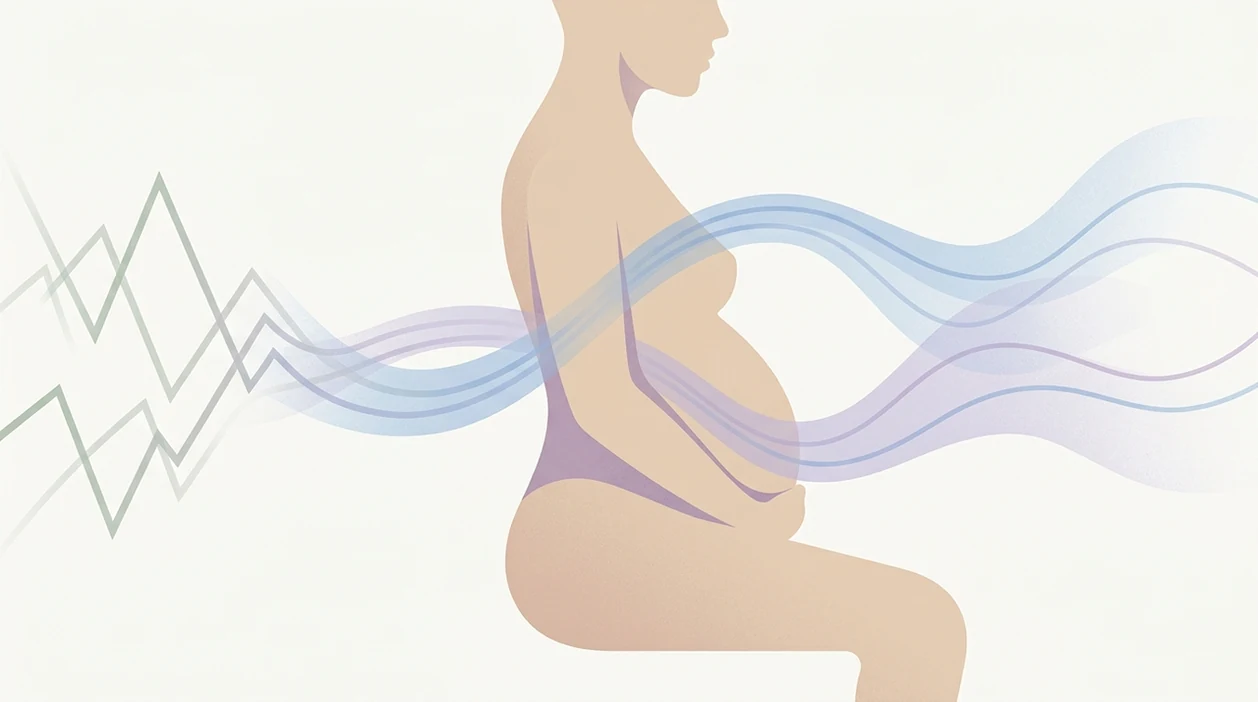
Hypnobirthing practice works by pairing a calm body state with repeated cues, such as a release breath, visualization, or birth affirmation. Over time, that pairing can become a conditioned relaxation response, which means the cue starts helping the body settle faster.
The mechanism is not mystical. You are awake, aware, and focused, not “under” or out of control. The practice aims to interrupt the fear-tension-pain cycle, where fear tightens the body, tension increases discomfort, and discomfort increases fear. When you soften your shoulders, unclench your tongue from the roof of your mouth, and lengthen your exhale, you give the parasympathetic nervous system a clearer job.
That system supports rest, digestion, and recovery. In plain language, it helps turn down stress chemistry like adrenaline and cortisol. Daily short sessions build stronger neural pathways than sporadic long ones because the brain learns through repetition. I often hear the shift after a week: “I know what to do with my breath now.”

Before You Start: Requirements for Your Hypnobirthing Timeline
Start your hypnobirthing timeline around 28-32 weeks if you can, but earlier is fine. Later starts can still help, especially if you keep the routine simple and repeat it daily.
You need 10-20 minutes a day, a quiet enough space, and a comfortable position. Side-lying works well late in pregnancy. I often suggest practicing a 12-minute relaxation track with one earbud in while lying on the left side, because it feels realistic for tired evenings.
A guided audio, class recording, or app can keep the sequence consistent. Tools like HypnoBirth App can help structure breathing, visualization, birth affirmations, and contraction-timer practice without asking you to design the whole plan yourself. Birth partners are helpful, especially for reading prompts and noticing tension, but they are not required.
How to Use Your Hypnobirthing Benefits Timeline
Use your hypnobirthing benefits timeline as a flexible practice plan, not a strict countdown. The goal is to match the time you have left with simple, repeatable cues your body can recognize under pressure.
- Choose your start point by looking at how many weeks remain before your due date. If you have 8-12 weeks, build slowly; if you have less time, keep the plan smaller and more repetitive.
- Assign one main focus to each phase, such as release breathing in weeks 1-2, relaxation and visualization in weeks 3-4, then affirmations or surge breathing later.
- Practice daily for 10-20 minutes using the same cue sequence each time, so your breath, words, and body position start to feel familiar rather than improvised.
- Rehearse partner prompts and room cues after about week three, including phrases, touch, dim lighting, music, or the track you want used in labor.
- Adjust your expectations if you start late, miss sessions, or feel inconsistent. You can still gain useful coping skills, but deeper automatic calm usually needs more repetition.
Week 1-2: First Relaxation and Reduced Anxiety
In weeks 1-2, the most realistic benefit is physical relaxation during and just after practice. Your shoulders may drop sooner, your jaw may soften, and bedtime anxiety may feel less sharp.
Many people also notice sleep onset improves when they use a guided track before bed. Not always. Pregnancy sleep can still be messy, especially after a bathroom trip in the dark when your brain suddenly starts planning the hospital bag.
The breathing may feel mechanical at first. Slow breathing, release breathing, and early surge breathing often feel like skills you are “doing,” not habits you own yet. That is normal. A 2024 study of first-time mothers reported reduced labor pain, death anxiety, and postpartum depression scores after hypnobirthing training, but that does not mean everyone feels dramatic change in week one.
For anxious beginners, short guided breathing is often easier than silent meditation because the next cue is already chosen.
Week 3-4: Calm Cues and Growing Confidence in Birth Preparation
By weeks 3-4, breathing and visualization often begin to feel less forced. This is where your hypnobirthing timeline starts shifting from “practice session” to “I can use this when I’m unsettled.”
Anchor cues become useful here. A word, touch, scent, or phrase can begin triggering calm faster because your body has heard it many times. Some people use a hand on the upper chest. Others use an anchor phrase like “soft jaw, open body.” Simple works.
Birth affirmations also start replacing fear-based thoughts. You may still have worries, but they don’t always take the whole room. A 2022 study reported that four weeks of hypnobirthing training was linked with fewer interventions and shorter deliveries than a control group. For a deeper month-one view, hypnobirthing benefits after 30 days shows what often changes by this stage.
Week 5-8+: Automatic Techniques and Labor-Day Readiness
By weeks 5-8 and beyond, the strongest benefit is automatic access. You still choose the technique, but you do not have to think through every step.
A good test is using your calm cue outside birth practice. If you can use a release breath during a blood pressure check, a traffic jam, or a tense phone call, conditioning is starting to show. That matters because labor is not the first stressful moment your body has met.
Partner practice also becomes more useful now. Your partner can say the anchor phrase, lower the lights, start the guided track, or remind you to drop your shoulders. A 2018 randomized controlled trial of 254 pregnant women found lower labor pain scores in the hypnosis group compared with standard care, though evidence across studies remains mixed. For longer preparation windows, hypnobirthing results after 90 days can help set expectations.
Evidence Behind the Hypnobirthing Benefits Timeline
The evidence behind a hypnobirthing benefits timeline is promising for coping and anxiety, mixed for pain and intervention outcomes, and not strong enough to promise a pain-free birth. The most careful reading is that practice may help some women feel calmer and more prepared, while medical outcomes vary.
Stronger evidence comes from reviews such as the 2020 Cochrane review on hypnosis during childbirth, which found no clear difference for epidural use, caesarean birth, or overall pain relief, although some studies suggested less pharmaceutical pain relief. Smaller studies, including a 2018 randomized trial and a 2022 hypnobirthing training study, are useful but should be read as lower-certainty evidence because methods, class formats, and participant groups differ.
A realistic way to sort the findings is:
- Treat calm, confidence, and fear reduction as the most plausible benefits, especially with repeated practice.
- View pain scores, shorter labor, and fewer interventions as promising but mixed, not guaranteed.
- Avoid claims that hypnobirthing replaces medical pain relief or prevents complications, because that is unsupported.
Individual results vary because conditioned calm depends on repetition. A cue practiced daily has a better chance of showing up in labor than one heard twice.
How to Use a Hypnobirthing App Across Your Practice Timeline
Use a hypnobirthing app as a practice structure, not as a promise about how birth will unfold. Good apps deliver repeatable breathing cues, affirmations, guided relaxation, and labor tracking; they do not guarantee a pain-free or intervention-free birth.
- Set a daily practice reminder at the same time each day, ideally after brushing teeth or another habit you already do.
- Start with guided breathing exercises in the app for the first 1-2 weeks, keeping sessions short enough to repeat.
- Add visualization and birth affirmation tracks in weeks 3-4, especially phrases you can remember without looking at your phone.
- Practice surge breathing with the contraction timer from week 5 onward, so the timer feels familiar before labor.
- Review your progress and adjust session length as techniques become automatic, moving from 10 minutes to 15-20 minutes if it feels useful.
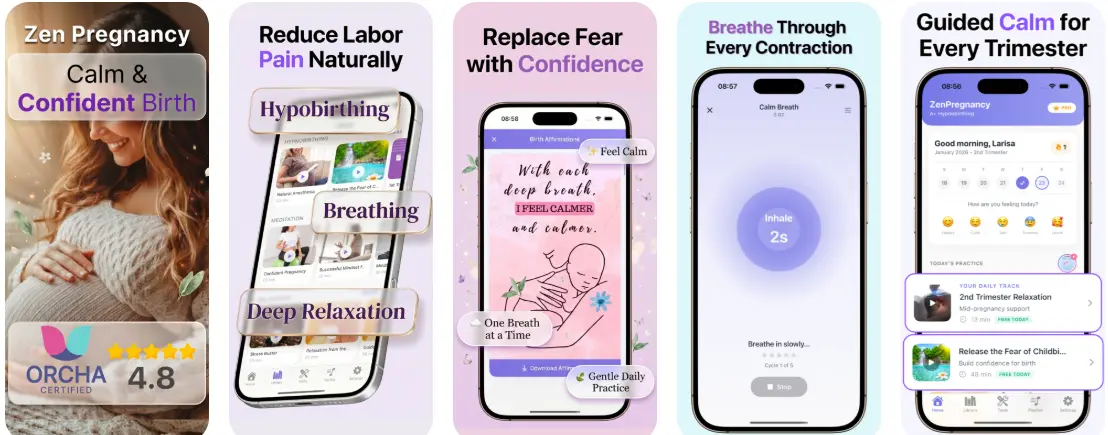
Apps such as HypnoBirth App, GentleBirth, Expectful, and ZenPregnancy can all support practice, but the routine is what creates the timeline.
Common Hypnobirthing Timeline Mistakes to Avoid
The biggest hypnobirthing timeline mistake is starting only days before the due date and expecting conditioned calm. A late start can still help, but the body has had less time to connect breathing with safety.
Another mistake is practicing only when anxious. That teaches hypnobirthing to be an emergency tool, not a daily habit. Set the reminder for after brushing teeth, not “when I remember.” That tiny detail saves many routines.
Some people also expect a pain-free birth and then feel disappointed when labor is still intense. Hypnobirthing can support coping, focus, and confidence, but birth is physical work. It may hurt. That truth does not mean you failed.
Skipping partner practice is another lost opportunity. Even two rehearsals can help your partner read the preference sheet aloud, prompt a release breath, or protect the birth environment. For a real-world comparison, hypnobirthing before and after can show how expectations often change.
Limitations
Hypnobirthing has useful coping benefits, but the evidence does not support every claim made in birth marketing. Clinicians typically recommend using relaxation and breathing techniques alongside standard maternity care, not instead of it.
- A 2020 Cochrane review found no clear difference in epidural use, caesarean birth, or overall pain relief outcomes in the hypnosis and self-hypnosis studies it reviewed.
- The same review reported less pharmaceutical pain relief in some studies, but the overall evidence was limited and inconsistent.
- Study quality varies, and the evidence base is still relatively small.
- The timeline is user-dependent; daily practitioners usually gain benefits faster than occasional users.
- Hypnobirthing does not guarantee a vaginal birth, pain-free birth, shorter labor, or no interventions.
- It is a coping tool, not a substitute for medical labor support when complications arise.
- Marketing claims about “easy” or “pain-free” birth are overhyped; realistic benefits center on calm, confidence, and coping.
If your pregnancy is complex, ask your midwife or doctor how hypnobirthing fits your care plan. Calm is helpful. Safety comes first.
See also: Hypnobirthing For Drug Free Birth.
Read more
- About HypnoBirth App: Calm Birth Support
- Are Hypnobirthing Apps Regulated
- Are Hypnobirthing Apps Safe
- Birth Partner Hypnobirthing App Guide
- App for Natural Birth Preparation: What to Choose
- Best Birth Meditation App for Calm Labor
- Best Contraction Timer App for iPhone: 2026 Guide
- Best Hypnobirthing App 2026: Top Picks
- Does Hypnobirthing Work for First Births? Guide
- Free Hypnobirthing App for iPhone: Calm Birth
- How to Start Hypnobirthing: Beginner Guide
- Hypnobirthing for C Section Prep: Calm Cesarean
Best Hypnobirthing Benefits Timeline App for Week-by-Week Practice
HypnoBirth App helps you turn a hypnobirthing benefits timeline into simple daily practice before birth, with calming audio, breathing support, and familiar cues you can return to throughout pregnancy. It is free to use, ORCHA NHS certified, and trusted by 200k+ users.
Best for
- Building a steady hypnobirthing routine week by week
- Practising relaxation, breathing, and confidence cues before labour
Limitations
- It does not replace personalised advice from your midwife or healthcare provider
- Benefits can vary depending on consistency, preferences, and birth circumstances
Frequently Asked Questions
What is a hypnobirthing benefits timeline in pregnancy?
A hypnobirthing benefits timeline is a week-by-week guide to how regular practice may build calm, confidence, and familiarity before birth. It usually shows when to start breathing techniques, relaxation scripts, affirmations, birth education, and partner practice. The timeline is a planning tool, not a guarantee of a specific birth outcome.
When should I start hypnobirthing for the best benefits before birth?
The best time to start hypnobirthing is usually in the second or early third trimester, around 20 to 30 weeks of pregnancy. Starting earlier gives you more time to repeat breathing, relaxation, and visualisation until they feel familiar. You can still benefit from starting later, especially with short daily practice.
Can I start hypnobirthing at 38 weeks pregnant?
Yes, you can start hypnobirthing at 38 weeks pregnant. Focus on simple techniques you can use quickly, such as slow breathing, relaxation cues, positive birth affirmations, and a short daily audio track. Even a few days of practice can help you feel more prepared, though it is not a substitute for medical advice or birth planning with your care team.
How long does it take for hypnobirthing to work?
Hypnobirthing often starts to feel more natural after one to two weeks of consistent practice. Many people notice that their breathing, relaxation cues, or affirmations become easier to access with repetition. The benefits usually build gradually rather than appearing all at once.
What hypnobirthing benefits might I notice week by week?
Common hypnobirthing benefits may include better understanding of birth, calmer breathing, improved confidence, and stronger relaxation habits over time. In the early weeks, you may mainly learn techniques; later, you may feel more familiar with using them during practice contractions or birth preparation. Results vary from person to person and cannot guarantee a pain-free or intervention-free birth.
How often should I practise hypnobirthing before birth?
Daily hypnobirthing practice is usually recommended, even if it is only 10 to 15 minutes. Short, regular sessions help your mind and body associate specific cues, words, music, or breathing patterns with relaxation. Longer sessions can be useful, but consistency is often more important than duration.
Does hypnobirthing help with pregnancy anxiety?
Yes, hypnobirthing may help some people manage pregnancy anxiety by teaching calming breathing, relaxation, and positive mental rehearsal. It can give you practical tools to use when worries about labour or birth feel overwhelming. If anxiety is severe, persistent, or affecting daily life, speak to your midwife, GP, or mental health professional.
Is hypnobirthing useful for first-time mums?
Yes, hypnobirthing can be useful for first-time mums because it explains birth and provides practical coping tools before labour begins. First-time parents often benefit from learning what to expect, how to communicate preferences, and how to practise relaxation with a birth partner. It does not remove all uncertainty, but it can make birth preparation feel more structured.
Can I use hypnobirthing if I want an epidural?
Yes, you can use hypnobirthing if you want an epidural. Hypnobirthing techniques can support calm breathing, decision-making, and relaxation before, during, or after pain relief is used. It is compatible with many birth preferences, including medicated birth, induction, caesarean birth, and changing plans.
Is a hypnobirthing app as good as a hypnobirthing class?
A hypnobirthing app can be a good option for flexible daily practice, while a class may offer more personal guidance and interaction. Apps are useful for audio tracks, reminders, breathing exercises, and practising at home on your own schedule. Classes may be better if you want live teaching, the chance to ask questions, or partner coaching.
What should I practise each week with hypnobirthing?
A simple weekly hypnobirthing plan should include breathing practice, guided relaxation, positive affirmations, birth education, and partner support. Earlier weeks can focus on learning the basics, while later weeks can focus on rehearsing labour positions, decision-making, and hospital or home birth preferences. Keep the plan realistic so it feels supportive rather than another source of pressure.
Are hypnobirthing benefits guaranteed during labour?
No, hypnobirthing benefits are not guaranteed during labour. Practice may help you feel calmer, more informed, and better able to use coping techniques, but birth can be unpredictable and medical needs can change. Always follow advice from your midwife, doctor, or maternity care team if concerns arise.