 Hypno
HypnoHypnobirthing Before and After: What Actually Changes With Practice
200,000+ moms • ORCHA NHS Certified • Free on iOS & Android
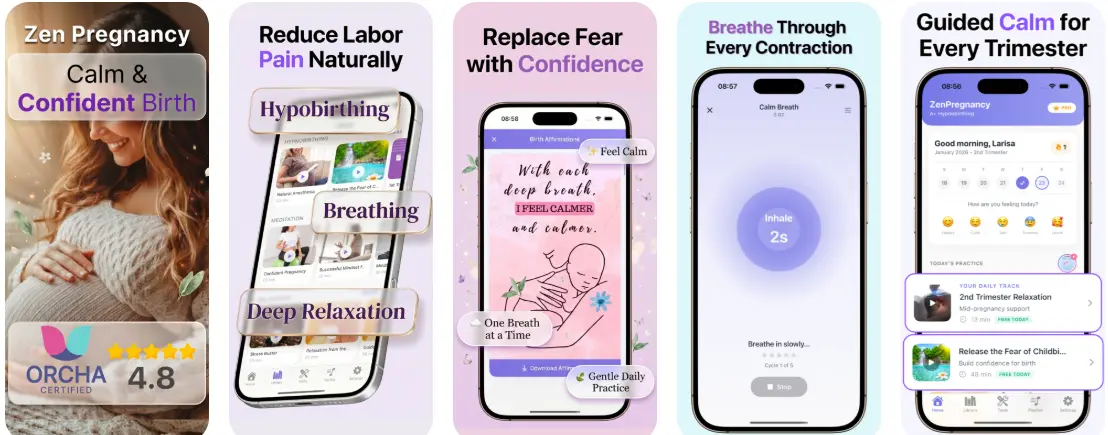
Quick answer: Hypnobirthing before and after practice typically shows a shift from birth anxiety and confusion to greater confidence, clearer coping strategies, and reduced fear, not a guaranteed pain-free delivery. The real transformation is psychological: moving from feeling passive and scared to feeling informed and prepared, with breathing, relaxation, and visualization tools you can use regardless of how birth unfolds.
> Definition: Hypnobirthing is an antenatal education approach combining breathing exercises, self-hypnosis, relaxation techniques, and positive affirmations to reduce fear and improve coping during childbirth.
- The main before-and-after change is psychological: less fear, more confidence and sense of control.
- Benefits depend on consistent daily practice over weeks, not a single session before labor.
- Hypnobirthing works alongside epidurals, inductions, and C-sections. Success is how you coped, not birth type.
- Research supports reduced fear and lower pain scores, but results vary and are not guaranteed.
- Apps like HypnoBirth make daily practice easier with guided audio, reminders, and progress tracking.
What Hypnobirthing Before and After Really Means
Hypnobirthing before and after means comparing your birth mindset and coping skills before practice with how you feel after repeated training. It is not a dramatic physical transformation or proof that birth will unfold one specific way.
Before practice, many people feel stuck in “what if” thoughts. They may fear the unknown, expect panic, or plan to rely only on medical pain relief because they don’t know what else to do. That is understandable. Birth is big, and uncertainty is loud.
After steady practice, the change is usually quieter but more useful. You have a release breath. You know how to soften your shoulders. You have an anchor phrase ready when the room feels too bright or decisions come quickly.
For many pregnant people, hypnobirthing practice before after comparisons are really confidence comparisons: scared and passive before, more prepared and involved after.
Five Facts About Birth Confidence Before and After Hypnobirthing
- Hypnobirthing is antenatal education, not just labor hypnosis. Most programs include breathing, guided relaxation, visualization, affirmations, and birth preparation over several weeks.
- The main shift is self-efficacy. Birth confidence before after practice often changes because you stop asking, “Will I cope?” and start thinking, “I have things to try.”
- Some studies show lower fear and pain scores. Research has found reduced childbirth fear, lower self-reported pain, and less pharmacological pain relief in some hypnosis-based birth programs, though results are mixed.
- Consistency matters more than motivation. Daily repetition is easier when you attach practice to an existing cue. A reminder after brushing teeth works better than a vague plan to ‘practice more.’
- Success is not defined by an unmedicated birth. The most useful measure is how you felt, decided, breathed, recovered, and stayed connected to your support team. For a broader view, compare this with common hypnobirthing benefits.
How Hypnobirthing Practice Before Birth Works
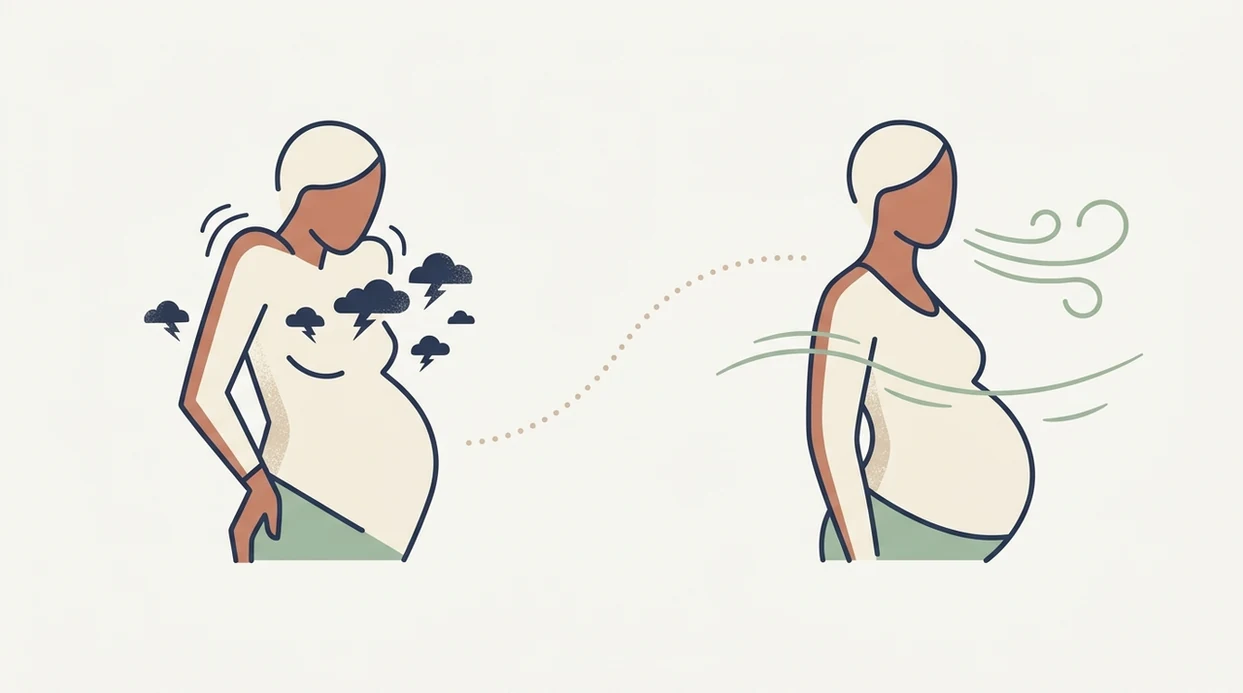
Hypnobirthing works by interrupting the fear-tension-pain cycle. Fear can tighten muscles, speed breathing, and increase pain perception; breathing and relaxation cues help the nervous system shift toward a calmer response.
The technical term I use with students is “conditioned relaxation.” In plain language, your body learns a shortcut. If you practice a guided track often enough, the first few notes, a partner’s hand on your shoulder, or one anchor phrase can become a cue to unclench your tongue from the roof of your mouth and drop your shoulders away from your ears.
Daily repetition matters because labor is not the moment to learn from scratch. A 12-minute relaxation track with one earbud in, lying on your left side, counts. So does practicing slow sways beside the kitchen counter while your playlist runs through a speaker.
Visualization and birth affirmations also reframe birth from threat to manageable event. Not easy. Manageable.

5-Step Hypnobirthing Practice Plan for Before-and-After Results
A simple practice plan helps you see your own before-and-after change instead of guessing. Use numbers, short sessions, and weekly reflection.
- Rate your baseline. Give your current birth anxiety and birth confidence a score from 1 to 10, then write one sentence about what worries you most.
- Set a daily practice time. Use 10 to 15 minutes of guided audio in the HypnoBirth App, ideally tied to something you already do, like brushing your teeth.
- Rotate core techniques. Practice labor breathing one day, visualization the next, then a birth affirmation or pregnancy relaxation track.
- Practice with your birth partner. Ask them to cue your release breath, dim the room, or repeat your anchor phrase during a practice session.
- Review weekly. Re-score anxiety and confidence every seven days, then note what changed. The hypnobirthing benefits timeline can help you compare what is typical.
Research Evidence Behind Hypnobirthing Before and After Changes
Research on hypnobirthing before-and-after changes is promising, but not uniform. Most studies measure fear, pain scores, self-efficacy, medication use, and satisfaction, rather than only clinical outcomes like cesarean rates.
In a 2019 randomized controlled trial of 680 first-time mothers in Iran, women who received hypnobirthing training reported significantly lower fear of childbirth and labor pain scores than controls (trial record: https://pubmed.ncbi.nlm.nih.gov/31142106/). An Australian randomized trial of antenatal group hypnosis found lower childbirth fear and higher childbirth self-efficacy compared with standard care (study record: https://pubmed.ncbi.nlm.nih.gov/24929366/).
A United States randomized trial found reduced use of pharmacologic analgesia among women using self-hypnosis during labor, but cesarean rates were not significantly different (trial record: https://pubmed.ncbi.nlm.nih.gov/14695783/). A Cochrane review reported that hypnosis may reduce pain medication use in labor, while warning that evidence quality and sample sizes were limited (review: https://www.cochranelibrary.com/cdsr/doi/10.1002/14651858.CD009356.pub3/full).
Clinicians typically recommend using these tools as preparation and coping support, not as a substitute for medical care.
Common Patterns in Hypnobirthing Before and After Experiences
Common hypnobirthing before-and-after stories often move from catastrophizing to planning. The person does not stop caring about complications; they stop rehearsing disaster every night.
Before practice, the mind may jump from one birth video to another. Heart racing after a birth video is not rare. After practice, many people can name their options: movement, breath, partner cue, question for the provider, rest, epidural, change of plan.
Sleep can improve when the body has a familiar wind-down cue. I have seen rain sounds under a sleep meditation become the bridge between anxious scrolling and actual rest. Partners often change too. They stop hovering and start helping.
These skills can carry into postpartum moments, such as recovery breathing, early breastfeeding frustration, or settling with a newborn. Still, not everyone gets the same shift. Some people feel a small improvement, not a dramatic one.
Myths About Hypnobirthing Before and After Results
Several myths make hypnobirthing sound either magical or pointless. Neither version is useful.
Myth 1: Hypnobirthing makes birth completely pain-free. Reality: it may change pain perception and coping, but it does not erase sensation for everyone.
Myth 2: You must refuse medical interventions. Reality: breathing, affirmations, and relaxation cues can be used with epidurals, inductions, assisted births, and cesareans.
Myth 3: Only naturally calm people benefit. Reality: anxious people often appreciate having a repeatable script for their body. First this breath, then soften, then ask the next question.
Myth 4: A few tracks right before labor are enough. Reality: the body responds better to familiar cues built over weeks.
Good hypnobirthing apps deliver guided repetition, reminders, and practical birth tools, not a promise that labor will be quiet, unmedicated, or under your control.
4 Blind Spots in Hypnobirthing Before and After Stories
Before-and-after stories can be helpful, but they often leave out the messy middle. That matters.
- Quiet non-results get less attention. People who felt only mild change are less likely to post a detailed story.
- Education effects are hard to separate. Confidence may come from learning birth choices, not hypnosis alone.
- Clinical outcomes are inconsistent. Some studies show less medication use, but cesarean rates are not reliably reduced.
- Calm birth can become another pressure. If plans change, people may blame themselves for not relaxing enough.
That blame is unfair.
For some parents, a realistic goal is not “calm the whole time.” It is “recover my breath faster after each hard moment.” Longer practice windows, such as hypnobirthing results after 90 days, may show steadier habit changes.
When to Seek Professional Support for Birth Anxiety
Seek professional support when birth anxiety is taking over daily life, sleep, safety, or your ability to feel present in pregnancy. Hypnobirthing can sit beside care, but it should not be asked to replace treatment.
Intrusive thoughts, panic attacks, trauma flashbacks, constant checking, or nights of broken sleep are all signs to bring in more help. You do not need to wait until things feel “bad enough.” A midwife, OB-GYN, therapist, or perinatal mental health clinician can help you sort what is normal worry, what needs a care plan, and what support is safest for you.
- Write down what is happening. Note fear scores, sleep changes, triggers, and which practice tracks help or do not help.
- Bring your notes to an appointment. Share them with your prenatal provider instead of trying to summarize everything while anxious.
- Ask for a referral. Request someone experienced in perinatal anxiety, birth trauma, panic, or obsessive intrusive thoughts.
- Use hypnobirthing as support. Keep the breathing and relaxation tools that help, while following clinical advice.
- Get urgent help if safety feels at risk. If you have thoughts of self-harm or feel unable to stay safe, contact emergency services or a crisis line now.
Limitations
Hypnobirthing has real limits, and naming them protects you from disappointment. It is a coping and preparation method, not a medical safety net.
- Research is still relatively small, and study quality varies across trials and reviews.
- Not everyone responds well to hypnosis, guided imagery, or long relaxation audio.
- Hypnobirthing cannot prevent fetal distress, hemorrhage, stalled labor, preeclampsia, or emergency decisions.
- Consistent practice is the hard part, especially with work, childcare, nausea, pelvic pain, or poor sleep.
- Over-idealizing a calm birth can backfire emotionally if labor becomes medical, fast, surgical, or frightening.
- A United States randomized trial found lower pharmacologic analgesia use, but no significant cesarean-rate difference.
- A Cochrane-style review found some evidence for reduced pain medication use, but noted limited overall study quality and sample sizes.
If anxiety feels severe or intrusive, pair birth preparation with clinical support. A short daily track can help, but it should not carry the whole load.
See also: Hypnobirthing Benefits After 30 Days.
Read more
- About HypnoBirth App: Calm Birth Support
- Are Hypnobirthing Apps Regulated
- Are Hypnobirthing Apps Safe
- Birth Partner Hypnobirthing App Guide
- App for Natural Birth Preparation: What to Choose
- Best Birth Meditation App for Calm Labor
- Best Contraction Timer App for iPhone: 2026 Guide
- Best Hypnobirthing App 2026: Top Picks
- Does Hypnobirthing Work for First Births? Guide
- Free Hypnobirthing App for iPhone: Calm Birth
- How to Start Hypnobirthing: Beginner Guide
- Hypnobirthing for C Section Prep: Calm Cesarean
Best Hypnobirthing Before and After App for Building Practice Confidence
HypnoBirth App helps you turn hypnobirthing before and after into a practical routine, with free tracks and tools designed to support calm, confidence, and coping skills over time. It is used by 200k+ people and is ORCHA NHS certified, making it a reassuring option if you want structured practice without expecting guaranteed birth outcomes.
Best for
- Practising hypnobirthing techniques consistently before birth
- Building confidence with relaxation, breathing, and birth preparation routines
Limitations
- It cannot guarantee a specific birth experience or outcome
- It is not a replacement for medical advice from your midwife or doctor
Frequently Asked Questions
What changes before and after practising hypnobirthing?
Hypnobirthing practice usually changes your confidence, routines, and coping skills rather than guaranteeing a specific birth outcome. Before practising, many people feel unsure about labour; after practising, they often have a clearer breathing plan, relaxation cues, and ways to respond to contractions.
Does hypnobirthing guarantee a calm or pain-free birth?
No, hypnobirthing does not guarantee a calm or pain-free birth. It is a set of relaxation, breathing, mindset, and preparation techniques that may help you feel more in control, but labour and medical needs can still be unpredictable.
Can hypnobirthing help with pregnancy anxiety?
Yes, hypnobirthing can help some people manage pregnancy anxiety by giving them practical tools to use daily and during labour. Breathing exercises, guided relaxation, and positive birth preparation may reduce fear, but ongoing or severe anxiety should be discussed with a midwife, GP, or mental health professional.
Is 38 weeks too late to start hypnobirthing?
No, 38 weeks is not too late to start hypnobirthing. You may not have time to complete a long course, but you can still practise simple breathing, relaxation, visualisation, and birth preference exercises before labour begins.
How soon can hypnobirthing start to make a difference?
Hypnobirthing can start to make a difference within a few practice sessions for some people. The biggest changes often come from repetition, because regular practice helps breathing techniques and relaxation cues feel more natural under pressure.
Is hypnobirthing useful for first-time mums?
Yes, hypnobirthing is useful for many first-time mums because it explains what labour may feel like and offers coping strategies. It can help first-time parents feel more prepared, ask informed questions, and make decisions with their care team.
Can I use hypnobirthing if I want an epidural?
Yes, you can use hypnobirthing if you want or need an epidural. Hypnobirthing is not only for unmedicated birth; breathing, relaxation, and communication techniques can support you before an epidural, during procedures, and while making choices in labour.
Does hypnobirthing work for planned caesarean births?
Yes, hypnobirthing techniques can be used for a planned caesarean birth. Relaxation tracks, breathing, visualisation, and preparation may help you feel calmer before theatre, but your medical team’s advice should always guide your care.
What is the difference between a hypnobirthing app and a hypnobirthing class?
A hypnobirthing app gives flexible, self-paced practice, while a class usually provides live teaching and personal interaction. An app may suit short daily routines or late pregnancy, whereas a class may be better if you want structured guidance, partner involvement, and chances to ask questions.
How often should I practise hypnobirthing before labour?
Daily practice is usually the most helpful way to prepare for labour. Short sessions of breathing, relaxation, affirmations, or guided tracks can build familiarity, and even a few minutes a day is better than trying to learn everything during contractions.
What should my birth partner notice before and after hypnobirthing practice?
A birth partner may notice clearer communication, more confidence, and a shared plan after hypnobirthing practice. They can learn prompts, breathing reminders, comfort measures, and ways to support decision-making without trying to control the birth.
What if hypnobirthing does not work during labour?
Hypnobirthing has still been useful if it gives you even one coping tool, even if labour does not go as planned. You can combine it with medical pain relief, monitoring, induction support, or caesarean birth, and you should always follow urgent advice from your midwife or doctor.