 Hypno
HypnoHypnobirthing App for VBAC: Calm Preparation With Medical Boundaries
200,000+ moms • ORCHA NHS Certified • Free on iOS & Android
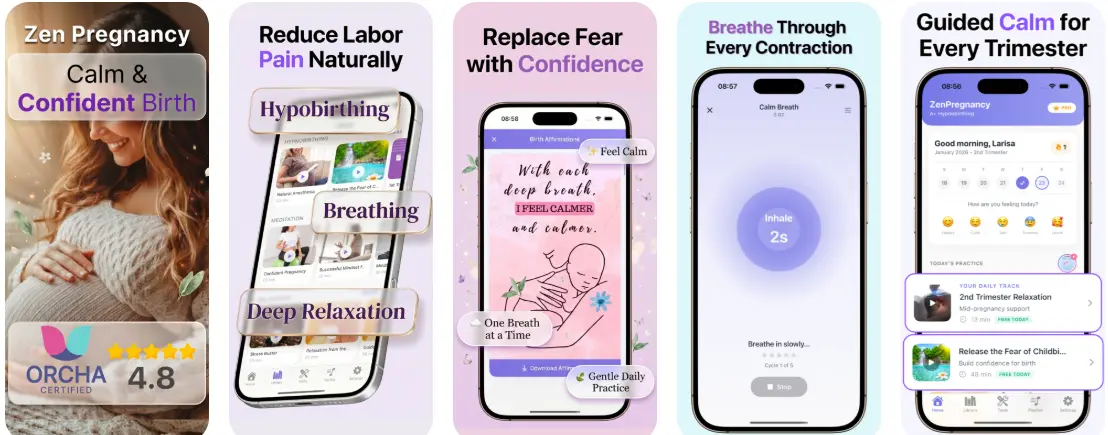
A hypnobirthing app for VBAC can help reduce anxiety, build coping skills, and support mental preparation for a vaginal birth after cesarean, but it must sit alongside clinician-led VBAC counseling, not replace it. ACOG reports that about 60 to 80% of people who attempt TOLAC achieve a successful VBAC, and RCOG describes uterine rupture risk as approximately 0.5% with one prior low-transverse incision source source. Hypnobirthing techniques may lower the need for pharmacological pain relief, though evidence is mixed.
A hypnobirthing app for VBAC is a mobile tool that delivers guided relaxation, affirmations, and hypnosis-style audio tracks to help people planning a vaginal birth after cesarean manage fear, reduce pain perception, and stay mentally focused, always as a supplement to qualified maternity care.
- Hypnobirthing apps support VBAC coping and mindset but cannot change medical eligibility or risk factors.
- 60–80% of TOLAC attempts result in successful VBAC; uterine rupture risk is approximately 0.5% with one prior low-transverse incision.
- The safest approach pairs app-based relaxation with ACOG/RCOG guideline-based care and delivery in a facility equipped for emergency cesarean.
- Look for trauma-sensitive scripts, hospital-realistic scenarios, and prompts to discuss choices with your provider.
- No app can guarantee a pain-free or complication-free VBAC; honest expectations protect mental health.
What a Hypnobirthing App for VBAC Actually Covers
A VBAC-focused hypnobirthing app covers coping, practice, and mindset, not medical clearance. It usually combines guided relaxation, hypnosis-style audio, breathing exercises, affirmations, and a contraction timer for labor.
The better ones speak directly to prior cesarean experience. That matters. A parent who remembers an urgent surgical prep, bright lights, or gown snaps at the shoulder may need different language than someone preparing for a first birth. VBAC content should include calm scripts about scar fear, hospital routines, and changing plans without feeling like you failed.
You may also see short education modules on the VBAC process, birth preferences, and questions to ask your provider. For hospital-specific prep, hypnobirthing for hospital birth can help you picture monitors, triage, and staff conversations without making them feel like surprises.
The app is a practice tool. Your OB or midwife remains the safety lead.
Five Facts About Hypnobirthing for VBAC Preparation
- Hypnobirthing for VBAC can reduce fear by giving your body a repeated calm cue before labor starts. That cue may be a voice track, slow exhale, or hand on your chest when memories rise.
- VBAC eligibility is determined by a qualified maternity provider, not an app. Your surgical history, current pregnancy, placenta location, and prior operative report all matter.
- According to a Cochrane review, hypnosis for childbirth may reduce the need for pharmacological pain relief, including epidurals, but the evidence quality is low and results are mixed.
- The safest use is alongside formal VBAC counseling, guideline-based care, and birth in a setting that can respond quickly if emergency cesarean becomes necessary.
- Choose apps with realistic hospital scenes, trauma-sensitive scripts, and prompts to ask questions. Good hypnobirthing apps deliver coping practice, not scar assessment or permission to decline monitoring.
I like scripts that leave room for reality. Ice chips in a plastic cup, monitor belts, a provider coming in with new information. That is birth too.
How Hypnobirthing for VBAC Works Behind the Scenes
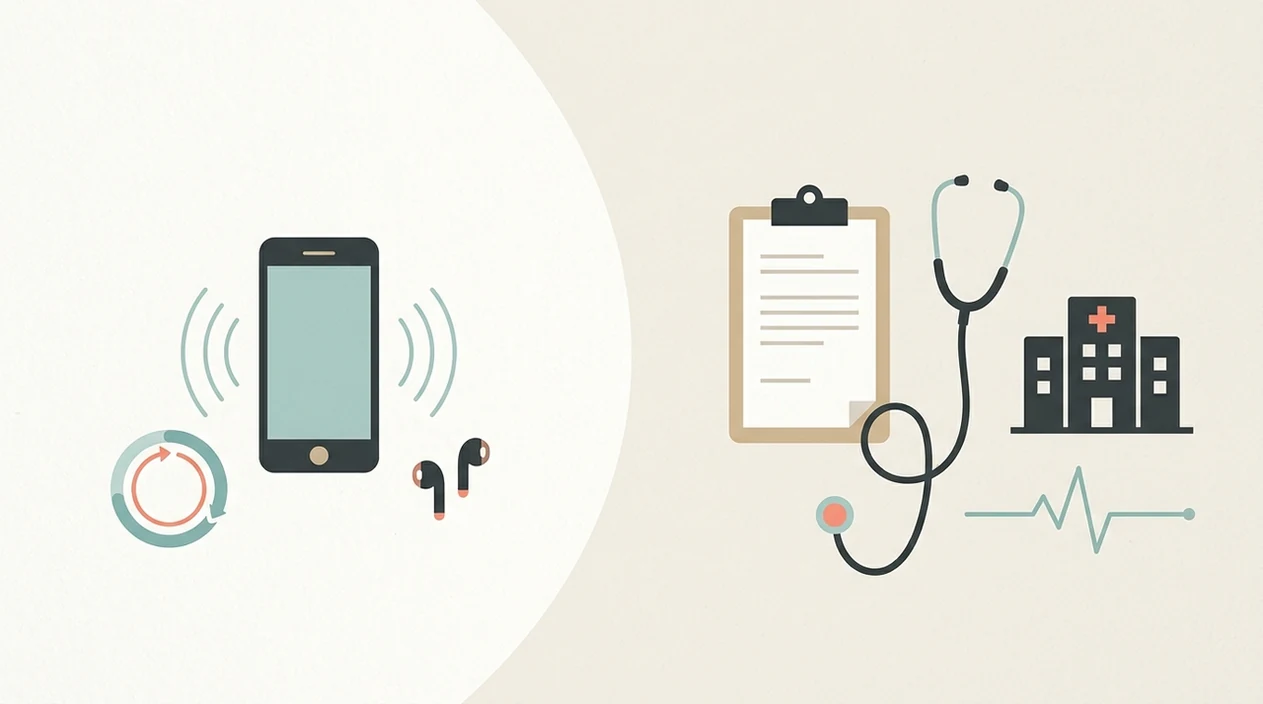
Hypnobirthing for VBAC works by interrupting the fear-tension-pain cycle and building a conditioned relaxation response through repeated practice. In plain language, your body learns, “When I hear this cue, I soften.”
During labor, fear can raise catecholamines, the stress hormones that make muscles tighten and breathing shorten. Slow breathing, visualization, and guided relaxation may support endorphin release, which can make contractions feel more manageable. It doesn't erase pain. It changes how you meet it.
VBAC-specific scripts also have a different job than standard hypnobirthing tracks. They need to speak to scar-related worry, prior surgical trauma, and the possibility of continuous fetal monitoring. A partner pressing tennis balls into a lower back during back labor can still use the same cue words from practice.
For VBAC, continuous fetal monitoring and provider assessment remain the main safety mechanisms. The app supports coping only. One contraction at a time.

VBAC Eligibility and Medical Boundaries No App Can Replace
Clinicians typically recommend VBAC counseling based on surgical history, current pregnancy factors, and delivery setting. ACOG states that most women with one prior low-transverse cesarean should be counseled about and offered TOLAC, or trial of labor after cesarean, when appropriate source.
Ask your provider to review the operative report from your prior cesarean. Not just “I had a C-section.” The incision on the uterus is the important part, and it may not match the skin scar you can see.
Common reasons VBAC may not be advised include a prior classical incision, certain multiple uterine surgeries, placenta previa, or another condition that makes vaginal birth unsafe. RCOG guidance describes the uterine rupture risk as about 0.5% with one prior low-transverse scar source.
The most common medically supported way to plan a VBAC is clinician-led TOLAC counseling combined with birth in a facility equipped for emergency cesarean.
Common Myths About Hypnobirthing and VBAC Birth Preparation
Myth one: a hypnobirthing app guarantees a successful VBAC. Reality: VBAC success depends on obstetric factors, labor progress, fetal wellbeing, and your clinical situation that day.
Myth two: hypnobirthing means ignoring monitoring. Responsible hypnobirthing should help you stay calm while working with evidence-based care. I have dimmed hospital room lights while monitor belts stayed exactly where they needed to be.
Myth three: relaxation is unsafe because you won’t notice complications. You remain awake, responsive, and able to speak. Complications are detected through monitoring and provider assessment, not pain alone.
Myth four: an app can fix a non-eligible scar or high-risk situation. It can’t. No breathing track changes surgical history.
If induction becomes part of your plan, hypnobirthing for induction may help you adapt the same breathing tools to cervical checks, medication timing, and longer waiting periods.
Should You Use a Hypnobirthing App or Skip It for VBAC?
Use a hypnobirthing app if your provider has confirmed you are a reasonable VBAC candidate, you want an anxiety tool, and you’re willing to pair practice with medical guidance. For many VBAC parents, app-based practice is easier than a full course because it fits into short daily windows.
When a VBAC Birth Preparation App Fits
A VBAC birth preparation app fits when you want daily guided meditation, breathing practice, and affirmations you can repeat before labor. Tools like HypnoBirth App can be practical here, especially when your birth partner also learns the cues.
When to Seek Individualized Support Instead
Skip or modify app use if you had a classical incision, have untreated PTSD or a dissociative disorder, or expect the app to make clinical decisions. Severe birth trauma deserves individualized therapeutic support, not just headphones beside the bed.
Feature Boundaries for VBAC App Users
A VBAC birth preparation app can support users with daily guided relaxation, VBAC-relevant affirmations, breathing exercises, and a contraction timer for labor. It is designed for practice, grounding, and birth preparation, not for medical screening.
The content should be used alongside your care plan. Prompts to discuss choices with your maternity provider matter, especially around monitoring, induction, epidural use, and when to come in. If pain relief is part of your plan, hypnobirthing with epidural explains how breathing still helps after medication.
A steady app script can be useful when the contraction timer app pings in early labor and everyone suddenly gets quiet. But it cannot promise a pain-free birth, a specific labor outcome, or a successful VBAC.
What a Hypnobirthing App for VBAC Does Not Cover
A hypnobirthing app for VBAC does not assess uterine scar integrity, fetal status, placenta location, or your full medical history. It cannot tell you whether TOLAC is a yes, no, or “only with specialist input.”
It also cannot replace continuous fetal monitoring during labor when your care team recommends it. The screen in your hand is not the same as the monitor beside the bed.
No app substitutes for professional mental health care if a prior birth left you with PTSD, panic, or dissociation. A pregnancy anxiety app may support mild day-to-day worry, but trauma symptoms need more care.
It also carries no clinical or legal responsibility for birth outcomes. That boundary should be clear before you press play.
When to Seek Professional Help During VBAC Preparation
Seek professional help during VBAC preparation whenever symptoms, scar questions, or trauma responses move beyond ordinary planning nerves. A hypnobirthing app can steady your breathing; it cannot decide whether you or your baby need assessment.
- Contact your maternity provider promptly if you have bleeding, reduced fetal movement, fever, or pain that feels severe, persistent, or different from your usual pregnancy sensations.
- Ask urgently about your cesarean scar history if your operative report is missing or unclear. The uterine incision matters for VBAC planning, and guessing from the skin scar is not enough.
- Seek trauma-informed mental health care if practice brings panic, dissociation, flashbacks, or intrusive memories of a previous birth. Those reactions deserve skilled support, not self-blame.
- Use emergency services if symptoms come on suddenly, feel intense, or seem unlike normal labor. It is better to be checked than to talk yourself out of help because an audio track is playing.
- Clarify hospital arrival timing with your provider before relying on app-based early labor guidance, especially if your VBAC plan includes monitoring, induction considerations, or distance from the hospital.
Limitations
Hypnobirthing apps for VBAC have real limits, and naming them protects you from false confidence.
- Evidence for hypnosis in childbirth is limited and mixed. Many studies are small, and methods vary.
- A randomized trial of antenatal hypnosis found lower pharmacologic analgesia use, but no significant difference in mode of birth.
- An app cannot assess uterine scar type, scar integrity, medical history, fetal status, or labor progress.
- Some apps overpromise pain-free birth or intervention avoidance. That can leave parents feeling blamed if plans change.
- Not everyone responds to hypnosis-style audio. It may feel calming for one person and irritating for another.
- Dissociative disorders, severe PTSD, or panic linked to prior surgery may require a trauma-trained therapist.
- Digital access, subscription cost, hearing needs, and language options may exclude some families.
For VBAC parents, hypnobirthing usually works best when it supports flexible coping, while clinician-led care handles eligibility, monitoring, and emergency decisions.
See also: Hypnobirthing App No Subscription.
Read more
- About HypnoBirth App: Calm Birth Support
- Are Hypnobirthing Apps Regulated
- Are Hypnobirthing Apps Safe
- Birth Partner Hypnobirthing App Guide
- App for Natural Birth Preparation: What to Choose
- Best Birth Meditation App for Calm Labor
- Best Contraction Timer App for iPhone: 2026 Guide
- Best Hypnobirthing App 2026: Top Picks
- Does Hypnobirthing Work for First Births? Guide
- Free Hypnobirthing App for iPhone: Calm Birth
- How to Start Hypnobirthing: Beginner Guide
- Hypnobirthing for C Section Prep: Calm Cesarean
Best Hypnobirthing App for VBAC Preparation — Calm Practice With Clear Boundaries
HypnoBirth App can support VBAC preparation with calming hypnobirthing tracks, breathing practice, and confidence-building tools for pregnancy and labour. It is designed to complement, not replace, clinician guidance around VBAC eligibility, monitoring, and individual risk factors.
Best for
- Parents planning a VBAC who want calmer daily preparation
- Using hypnobirthing alongside consultant or midwife-led VBAC care
Limitations
- Does not assess VBAC suitability or medical risk
- Should not replace advice from your midwife, obstetrician, or care team
Frequently Asked Questions
Can I use a hypnobirthing app to prepare for a VBAC?
Yes, a hypnobirthing app can support calm preparation for a VBAC. It can help you practise breathing, relaxation, visualisation and confidence-building at home. Your VBAC eligibility, monitoring plan and birth options should always be discussed with your midwife or obstetrician.
Is hypnobirthing safe for VBAC after a previous caesarean?
Yes, hypnobirthing techniques are generally safe because they focus on relaxation, breathing and mindset. They do not replace medical assessment of VBAC risks such as uterine scar concerns, induction decisions or the need for continuous monitoring. Always use hypnobirthing alongside your clinician’s advice and birth plan.
Can hypnobirthing increase my chances of a successful VBAC?
No, hypnobirthing cannot guarantee a successful VBAC. It may help you feel calmer, more informed and better able to cope with labour, which can support decision-making during birth. Medical factors such as your previous caesarean reason, current pregnancy, baby’s position and hospital policy still matter.
Is 38 weeks too late to start hypnobirthing for VBAC?
No, 38 weeks is not too late to start hypnobirthing for VBAC. Short daily practice with breathing, relaxation tracks and positive birth preparation can still be useful before labour begins. If you have new symptoms, reduced movements or concerns about your birth plan, contact your maternity team promptly.
Can a hypnobirthing app help with pregnancy anxiety before a VBAC?
Yes, a hypnobirthing app can help with pregnancy anxiety before a VBAC by offering calming tools and structured practice. Breathing exercises, guided relaxations and reassurance-based education may reduce stress in the moment. Severe anxiety, panic symptoms or trauma after a previous birth should also be discussed with a GP, midwife or perinatal mental health professional.
Can I still have an epidural if I use hypnobirthing for VBAC?
Yes, you can still have an epidural if you use hypnobirthing for VBAC. Hypnobirthing is compatible with pain relief choices, including gas and air, opioids or an epidural where clinically appropriate. Your anaesthetic options may depend on your hospital, labour progress and medical circumstances.
Is a hypnobirthing app suitable for first-time moms planning a VBAC?
No, a first-time mother cannot technically be planning a VBAC because VBAC means vaginal birth after caesarean. However, someone planning a vaginal birth after a previous caesarean may still be new to vaginal labour and find app-based preparation helpful. The app should be used alongside VBAC counselling from a qualified maternity professional.
Is a hypnobirthing app better than a VBAC birth class?
No, a hypnobirthing app is not automatically better than a VBAC birth class. An app is flexible, affordable and useful for daily practice, while a class may offer live teaching, questions and personalised discussion. Many people benefit from using both, especially when VBAC-specific medical guidance comes from their care team.
What should a hypnobirthing app for VBAC include?
A hypnobirthing app for VBAC should include breathing exercises, guided relaxations, birth affirmations and clear education about calm decision-making. It should also encourage users to discuss VBAC eligibility, monitoring, induction and emergency caesarean plans with clinicians. The safest apps avoid promising outcomes or discouraging medical care.
Can hypnobirthing help if I am scared of another caesarean?
Yes, hypnobirthing can help you manage fear around another caesarean. It can support emotional preparation, grounding techniques and a calmer response if plans change during labour. If your previous caesarean was traumatic, consider additional support from a trauma-informed midwife, therapist or perinatal mental health service.
Can I use hypnobirthing for VBAC if I need continuous monitoring?
Yes, you can use hypnobirthing for VBAC if continuous monitoring is recommended. Breathing, relaxation, affirmations and upright or supported positions may still be possible depending on the equipment and your hospital’s policy. Ask your midwife how monitoring can be arranged while helping you stay as comfortable and mobile as possible.
Does hypnobirthing replace a VBAC birth plan or hospital advice?
No, hypnobirthing does not replace a VBAC birth plan or hospital advice. It is a preparation tool that can help you stay calm, ask questions and make informed choices during labour. Your birth plan should include medical guidance on VBAC risks, when to seek help and what happens if an assisted birth or repeat caesarean is needed.