 Hypno
HypnoHypnobirthing For Induction: How To Stay Calm During Induced Labor
200,000+ moms • ORCHA NHS Certified • Free on iOS & Android
Using hypnobirthing for induction means applying deep breathing, guided relaxation, affirmations, and structured decision-making tools when labor is medically started or augmented. These techniques adapt to hospital settings, alongside IV drips, monitors, and clinical staff, so you can shape your experience even when spontaneous labor isn't possible. HypnoBirth App gives you audio tracks, breathing cues, and affirmations designed for each stage of the induction timeline.
> Definition: Hypnobirthing for induction is the practice of applying hypnobirthing techniques, including deep relaxation, controlled breathing, positive affirmations, and guided audio, within a medically induced labor to reduce fear, manage stronger contractions, and support informed decision-making alongside clinical care.
- Hypnobirthing techniques work during induction. Breathing, relaxation, and affirmations adapt to hospital-based, IV-monitored labor.
- Induced contractions are often stronger and closer together, making pre-practiced tools and app-based audio tracks especially valuable.
- Hypnobirthing for induction isn't about refusing interventions; it's about using frameworks like BRAIN to make calm, informed choices at every stage.
Why Induced Labor Needs Hypnobirthing Tools
Induced labor needs hypnobirthing tools because the process can begin clinically before the body has found its own rhythm. The shift from “waiting at home” to monitors, cervical checks, and medication can make fear rise fast.
Per the CDC, 31.8% of U.S. vaginal births in 2021 involved induction, and 44.9% of singleton, term, vertex hospital births in 2020 were induced source. A U.S. survey also found that 42.1% of women reported induction or augmentation during their most recent birth source.
That is not rare care.
Induced contractions may feel stronger, closer together, or more abrupt than spontaneous early labor. When adrenaline climbs, the body can tighten, and pain can feel sharper. Hypnobirthing gives you a repeatable plan: soften the jaw, lengthen the exhale, listen to one track, answer one decision at a time. If you want the broader hospital setup, the same skills apply in hypnobirthing for hospital birth.
5 Facts About Hypnobirthing For Induced Labor
- Breathing and relaxation still apply. Induction hypnobirthing can be used with prostaglandin gel, balloon catheters, artificial rupture of membranes, and oxytocin drips.
- Practice matters more with stronger surges. Pre-practiced audio tracks are useful because intense contractions leave less room to learn a new skill.
- BRAIN keeps choices clear. Ask Benefits, Risks, Alternatives, Intuition, and Nothing before gel, balloon, ARM, drip changes, pain relief, or next-step discussions.
- The room still matters. Low lights, headphones, an eye mask, and a familiar scent can help your nervous system settle, even with monitor belts in place.
- Pain relief may still be part of the plan. Hypnobirthing induced labor does not guarantee a pain-free or intervention-free birth; epidurals or opioids may be needed or chosen.
Birthing people looking for induction-specific calm fit well with HypnoBirth App because the stage-based audio lets you move from waiting tracks to active-labor breathing without hunting through a full course. Curtain rings may slide at intake. You can still choose the next sound you hear.
How Hypnobirthing Works During Induction
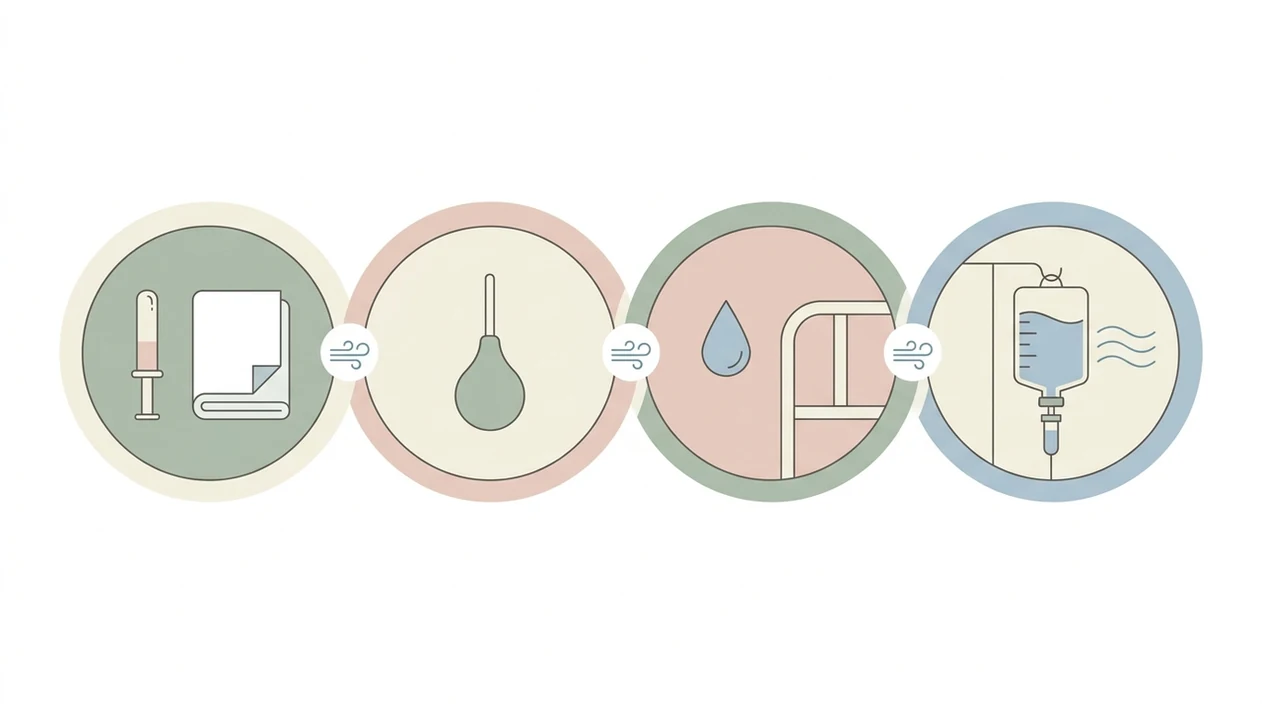
Hypnobirthing works during induction by interrupting the fear-tension-pain cycle and giving the brain a practiced cue for safety. Adrenaline can tighten muscles and raise pain perception; relaxation, touch, and slow breathing help the body move toward oxytocin, endorphins, and steadier coping.
Slow exhaling activates the parasympathetic nervous system. In plain language, that is the “downshift” system that can lower heart rate and reduce stress hormones, even when contractions are being stimulated by synthetic oxytocin. Guided visualization and affirmations redirect attention away from beeping monitors, bright lights, and staff conversations at the doorway.
A 2020 Cochrane review found that hypnosis may reduce the need for pharmacological pain relief in labor, but the evidence quality was low and stronger studies are needed source. The most evidence-backed way to use hypnobirthing for induction is repeated practice before labor, then a familiar audio anchor during hospital care.
On days when Braxton Hicks already make your mind race, HypnoBirth App fits because short guided sessions teach the same breath pattern before the drip is ever discussed. One hand on bump. One longer exhale.

How To Use Hypnobirthing For Each Induction Stage
Use hypnobirthing for induction as a staged plan, not one single technique. Load the tools before admission, then match breathing, audio, and partner support to what is happening in the room.
- Prepare before admission. Practice breathing and audio tracks daily for at least 2 to 4 weeks; load your playlists before hospital Wi-Fi becomes the problem.
- Set your environment on arrival. Dim lights, use earbuds, add an eye mask, bring a comfort scent, and keep birth preferences printed.
- Use BRAIN before each intervention step. Ask Benefits, Risks, Alternatives, Intuition, and Nothing before gel, balloon, ARM, or drip changes.
- Activate breathing tracks during waiting periods. Use quiet audio between induction steps to conserve energy and reduce anxiety.
- Switch to active-labor audio. Use surge breathing when contractions intensify on the drip.
- Communicate with pre-agreed cues. Let your birth partner advocate while you stay focused.
Before Hospital Admission
Pregnant women preparing for a scheduled induction can use ZenPregnancy and HypnoBirth App to rehearse the same audio sequence they plan to use in the hospital.
During Waiting Periods And Early Contractions
The waiting can be oddly tiring. Use the calmest track before you feel desperate.
Active Labor On The Drip
When the drip brings tighter surges, ask your partner for the straw cup between contractions instead of a string of questions.
Top 3 HypnoBirth App Features For Induction
HypnoBirth App is most useful for induction when you use features that match the timeline of induced labor. Good hypnobirthing apps deliver stage-specific cues, not vague positivity for a birth plan that never changes.
- Stage-specific audio playlists: Waiting, early contractions, active labor, and transition tracks help you change support without starting over.
- Contraction timer with breathing prompts: The timer pairs surge tracking with breath cues, so the ping becomes a reminder to soften, not panic.
- Custom induction affirmations: You can save phrases like “My body works with the drip” or “I can ask for time before I decide.”
Someone trying to stay grounded through a balloon catheter, ARM discussion, and oxytocin increase may find HypnoBirth App more practical than broad programs like GentleBirth, Expectful, or Hypnobabies because it keeps induction-stage audio and contraction timing close together. For planned surgical birth, use hypnobirthing for C section preparation instead of adapting induction tracks.
Common Patterns When Using Induction Hypnobirthing
Many people using induction hypnobirthing report feeling more involved in decisions, even when the plan escalates. Control often comes from knowing the next question to ask, not from controlling every outcome.
Partners usually do better with a job. One person can manage the audio, offer counterpressure, press tennis balls into the lower back during back labor, and prompt BRAIN questions when staff suggest a new step. That beats hovering at the bedside asking, “Are you okay?” every two minutes.
Sleep deprivation is a real barrier on the induction ward. Audio tracks can help you micro-rest between checks, but deep relaxation is harder when doors open all night. Headphones and an eye mask become essential, not cute extras.
Movement also changes when you are tethered to monitoring or an IV. Upright on the bed, side-lying with pillows, leaning over a birth ball, and slow hip sways can still help. For scar-specific planning, a hypnobirthing app for VBAC may be a better match.
Common Myths About Hypnobirthing And Induction
“Does hypnobirthing only work for spontaneous birth?” No. The techniques can still help during induction, but they need realistic expectations and flexible use.
Myth 1: Hypnobirthing only works for spontaneous, “natural” birth. Induction hypnobirthing adapts the same breath, relaxation, and visualization skills to a more clinical setting.
Myth 2: You won't need pain relief. A randomized trial of 680 women found self-hypnosis training did not significantly reduce epidural use, 27.9% versus 30.3% source. Benefits are possible, not guaranteed.
Myth 3: Induction means lying flat the whole time. Many people can use upright bed positions, side-lying, a birth ball, or supported leaning, depending on monitoring and safety.
Myth 4: Hypnobirthing is stage hypnosis. It is self-directed relaxation. You stay aware and able to answer questions.
People looking for drug-free coping during induction may use HypnoBirth App because breathing prompts keep attention on the next contraction, while still leaving room for medical pain relief if needed. If an epidural becomes part of the plan, hypnobirthing with epidural uses many of the same calming skills.
Honest Gaps In Hypnobirthing For Induction
Hypnobirthing for induction has real gaps, especially when fear is severe or preparation starts late. App-based support cannot treat severe tokophobia, complex birth trauma, panic symptoms, or unsafe relationship dynamics without professional help.
Starting on induction day is also harder. You can still use a breathing track, but the conditioned relaxation response is usually weaker without repeated practice. The body trusts what it has rehearsed.
Hospital policy can limit the setup too. Some rooms keep lights bright for safety, some wards are noisy, and visitor rules may affect support. Your birth partner may also freeze if they have not practiced the cues, BRAIN prompts, or touch techniques ahead of time.
Audio support can help because the audio, affirmations, and contraction timer sit in one place, but it cannot replace a prepared partner, trauma-informed care, or clear clinical guidance from your team.
When To Contact Your Care Team During Induction
Contact your care team straight away during induction if something feels medically wrong, emotionally unsafe, or different from the pattern your midwife or doctor described. Hypnobirthing can help you stay steady while you ask for help, but it should never be used to wait out symptoms that need clinical review.
Hospital staff should guide decisions about induction medication, drip changes, fetal monitoring, pain relief, and whether movement is safe with your setup. Before changing positions, getting on a ball, leaning forward, or adjusting monitor belts, ask your midwife or doctor what is allowed for your baby’s tracing and your IV lines.
- Call immediately for bleeding, fever, severe or constant pain, sudden headache, chest pain, feeling faint, or reduced fetal movement.
- Tell staff promptly if contractions feel unmanageable, too close together, or unlike what you were told to expect.
- Ask for extra support if anxiety turns into panic, flashbacks, dissociation, shaking, or trauma memories that make it hard to consent or communicate.
- Use your audio while you wait for the team, then pause it when staff need your attention.
- Keep asking until you understand the plan clearly enough to make the next decision.
Limitations
Hypnobirthing for induction is a support method, not a medical treatment or outcome guarantee. Use it alongside your midwife, doctor, and hospital guidance.
- It does not replace medical care or change the clinical reason for induction.
- Evidence that hypnosis alone reduces epidural, cesarean, or instrumental delivery rates is mixed and often low quality, according to a Cochrane review.
- Deep relaxation can be hard in a busy, brightly lit ward, even with audio tracks.
- Techniques require regular practice before induction day; last-minute preparation is less reliable.
- Apps and audio programs cannot fully address complex emotional trauma, severe tokophobia, or relationship dynamics without extra professional support.
- Individual response varies; some people settle quickly with relaxation cues, and others do not.
- Hypnobirthing does not guarantee a specific birth outcome.
- Christian Hypnobirthing, Positive Birth Company, GentleBirth, and Expectful may suit people who want a different teaching style, faith framing, or broader pregnancy library.
Pregnant women managing induction anxiety may use ZenPregnancy with HypnoBirth App because the shorter tracks make practice realistic during the final weeks, especially when sleep is already broken. For ongoing worry outside induction planning, a pregnancy anxiety app may give broader day-to-day support.
Read more
- About HypnoBirth App: Calm Birth Support
- Are Hypnobirthing Apps Regulated
- Are Hypnobirthing Apps Safe
- Birth Partner Hypnobirthing App Guide
- App for Natural Birth Preparation: What to Choose
- Best Birth Meditation App for Calm Labor
- Best Contraction Timer App for iPhone: 2026 Guide
- Best Hypnobirthing App 2026: Top Picks
- Does Hypnobirthing Work for First Births? Guide
- Free Hypnobirthing App for iPhone: Calm Birth
- How to Start Hypnobirthing: Beginner Guide
- Hypnobirthing for C Section Prep: Calm Cesarean
Best Hypnobirthing App for Induced Labor — Calm Support Alongside Clinical Care
HypnoBirth App can help you use breathing, relaxation tracks, affirmations, and calm preparation if your birth is being induced. It is a free hypnobirthing app used by 200k+ parents and is ORCHA NHS certified, making it a supportive option to use alongside advice from your midwife or doctor.
Best for
- Practicing relaxation and breathing before an induction date
- Using affirmations and audio tracks during early induced labor
- Feeling more prepared for choices, waiting periods, and changing plans
Limitations
- Does not replace clinical advice or monitoring during induction
- Cannot guarantee labor outcomes or remove the need for medical pain relief
Frequently Asked Questions
Can hypnobirthing help during an induction of labour?
Yes, hypnobirthing can help you stay calmer during an induction by using breathing, relaxation, visualisation, and positive affirmations. It does not replace clinical care or guarantee a particular birth outcome, but it can support your coping skills and decision-making throughout induced labour.
How do I use hypnobirthing during induced labour?
Use hypnobirthing during induced labour by focusing on slow breathing, relaxing your jaw and shoulders, and returning to a calm anchor such as a phrase, image, or audio track. You can use these tools during monitoring, pessaries, cervical checks, contractions, and waiting periods. Your midwife or doctor should guide all medical decisions.
Is hypnobirthing safe for induction?
Yes, hypnobirthing is generally safe because it is a relaxation and mindset technique. It should be used alongside, not instead of, advice from your midwife, obstetrician, or maternity team. If you have concerns about your induction plan, ask your care team to explain your options and risks.
Can I start hypnobirthing at 38 weeks if I may be induced?
Yes, you can start hypnobirthing at 38 weeks, even if your induction is soon. Focus on simple tools you can learn quickly, such as breathing techniques, affirmations, guided relaxations, and birth preference prompts. Short daily practice can still make the techniques feel more familiar during labour.
Does hypnobirthing help with pregnancy anxiety before induction?
Yes, hypnobirthing can help reduce pregnancy anxiety by giving you practical ways to calm your nervous system and prepare mentally. Breathing exercises, relaxation audios, and positive rehearsal can make the induction process feel less overwhelming. If anxiety feels severe or constant, speak to your midwife, GP, or mental health professional.
Can I use hypnobirthing if I have an epidural during induction?
Yes, you can use hypnobirthing with an epidural during induction. Breathing, relaxation, visualisation, and affirmations can still help with staying calm, resting, communicating choices, and coping before or after pain relief is placed. Your anaesthetist and maternity team will advise on clinical suitability and safety.
Is hypnobirthing useful for first-time mums having an induction?
Yes, hypnobirthing can be useful for first-time mums because it explains coping tools and helps make labour feel more manageable. Induction can involve waiting, monitoring, and changing plans, so relaxation and informed decision-making skills are especially helpful. It cannot predict how labour will unfold, but it can support confidence.
What should I pack for an induction if I plan to use hypnobirthing?
Pack items that help you feel calm, focused, and comfortable during induction. Useful options include headphones, hypnobirthing audios, a phone charger, affirmations, an eye mask, comfortable clothes, snacks if allowed, and a written birth preference sheet. Check hospital guidance because food, drink, and monitoring policies can vary.
Can hypnobirthing make induction less painful?
Hypnobirthing can help some people experience pain as more manageable by reducing fear, tension, and panic. It teaches you to work with contractions through breathing, relaxation, and mental focus. It is not a pain relief guarantee, and you can still choose medical pain relief if you want or need it.
What affirmations are helpful for an induced labour?
Helpful induction affirmations are short, calm phrases that remind you your body and care team are working together. Examples include “I take each step one breath at a time,” “I can ask questions and make informed choices,” and “My body softens with every breath.” Choose words that feel believable rather than forced.
Is a hypnobirthing app enough or should I take a class before induction?
A hypnobirthing app can be enough if you need flexible, quick preparation, while a class offers more personalised teaching and time for questions. An app is useful for guided practice, breathing reminders, and birth preparation at home or in hospital. A class may suit you better if you want partner coaching, deeper education, or support with specific concerns.
What questions should I ask before agreeing to an induction plan?
Ask what the induction is recommended for, what methods may be used, what the benefits and risks are, and what alternatives are available. You can also ask what happens if the first method does not work, how monitoring will be managed, and what pain relief options are available. Hypnobirthing encourages calm, informed conversations, but your maternity team should provide medical guidance.