 Hypno
HypnoHypnobirthing for C-Section Prep: Stay Calm and Confident
200,000+ moms • ORCHA NHS Certified • Free on iOS & Android
C-Section Hypnobirthing Meaning for Planned and Unplanned Birth
C-section hypnobirthing is not about pretending surgery is the same as vaginal birth; it is about preparing your nervous system for the real moments of a cesarean. You practice calm breathing, guided imagery, body softening, and short affirmations so pre-op waiting, spinal anesthesia, bright lights, and pressure sensations feel less unfamiliar.
This approach can support planned cesareans, gentle cesareans, repeat cesareans, breech births, placenta-related surgical births, and unplanned transfers from labor to theatre. Many parents start in the third trimester, though even a week of short daily practice can help. If you want the broader foundations first, start with hypnobirthing techniques for pregnancy and birth. This is not medical advice. Always talk with your obstetrician, midwife, or anesthesiology team about your individual birth plan.
How C-Section Hypnobirthing Works in the Body and Brain
C-section hypnobirthing works by pairing a predictable calming cue with slower breathing and focused attention. Repeating the same audio, phrase, or breathing rhythm trains your brain to recognize that cue as familiar, which can reduce threat scanning when you are in a clinical space.
The mechanism is practical: longer exhales can support parasympathetic activity, relaxed jaw and shoulders reduce guarding, and visualization gives the mind a specific task instead of looping through what-ifs. Studies suggest relaxation and mindfulness-based approaches may reduce pregnancy-related anxiety, although results vary by person and study design; one overview of mindfulness in pregnancy is available through the National Library of Medicine. This is not medical advice, and hypnobirthing should sit alongside—not replace—anesthesia, surgical care, and urgent medical decisions.
How to Use Hypnobirthing Before a Cesarean Birth
Use cesarean hypnobirthing as a short daily rehearsal, not as a last-minute rescue tool. The aim is to make your calm response feel practiced before you arrive at the hospital or birth center.
- Choose one daily track. Practice for 10 to 15 minutes at the same time each day, ideally from 34 weeks or as soon as a cesarean becomes likely.
- Practice one breathing pattern. Try inhale for 4, exhale for 6, and repeat for three minutes; you can learn more options in pregnancy breathing techniques for labor and birth.
- Write three cue words. Examples: “soft jaw,” “heavy shoulders,” and “long exhale.”
- Rehearse the theatre scene. Imagine cool air, monitors, staff voices, and your baby’s first cry while staying steady.
- Coach your partner. Ask them to repeat your cue words quietly in pre-op and recovery.
- Pack headphones early. Test volume, offline access, and battery life before surgery day.

Cesarean Breathing Exercises for Spinal Anesthesia Anxiety
Breathing practice can be especially useful during spinal anesthesia because you are asked to sit still while your adrenaline may rise. A simple longer-exhale pattern gives your body a job and your mind a count to follow.
Try this: breathe in through the nose for 4, unclench your jaw, then breathe out for 6 as if fogging a mirror gently. Repeat for five rounds before your appointment, then again while sitting on the edge of the operating table if your team says it is safe. Some people prefer a 3-in, 5-out pattern if 4 and 6 feel too long. If nausea anxiety is part of your fear, ask your anesthetist what they can offer; do not rely on breathing alone. A labor breathing exercises app can help you rehearse the rhythm until it feels automatic.
Birth Affirmations for Surgical Birth Confidence
Birth affirmations for a cesarean should sound believable, specific, and steady. The most useful phrases do not promise a perfect birth; they remind you that you can meet the next moment with support.
Examples include: “I can breathe through this minute,” “My baby and I are being cared for,” “Pressure is not danger,” “I can ask questions,” and “My job is to soften and exhale.” Write two or three on a card for your hospital bag, and ask your partner to say them slowly rather than cheerfully. If affirmations have ever felt too sugary, choose grounding phrases instead: “feet supported,” “hands open,” or “one breath at a time.” You can also build a short phrase library with a birth affirmations app for pregnancy and labor so the words are ready before the morning of surgery.
Choosing a Cesarean Birth Hypnosis App
A good cesarean birth hypnosis app should include guided relaxation, breathing prompts, affirmations, and practical tools for pregnancy—not just generic calm music. Look for short sessions you can repeat daily, because familiarity matters more than a perfect one-hour track you never finish.
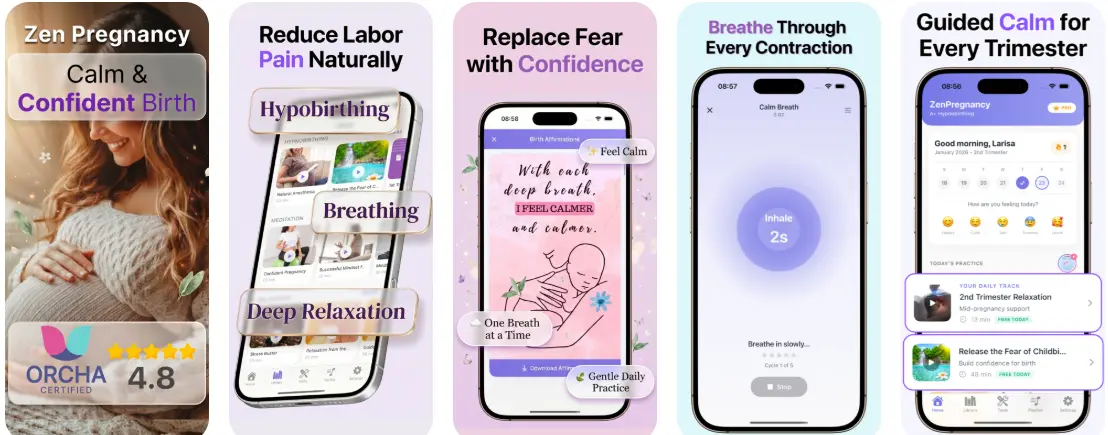
HypnoBirth App fits this need by combining hypnobirthing audio, pregnancy meditations, labor breathing, affirmations, and a contraction timer in one place. If you are preparing for surgery but could still go into labor beforehand, that mix is helpful: you can practice calm for the operating room while also having tools for early contractions. For broader app comparisons, see this guide to the best hypnobirthing app features for pregnancy. You can also start practicing with the iOS or the Android .
Pregnancy Meditation App Comparison for C-Section Prep
For cesarean preparation, the best pregnancy meditation app is the one you will actually use in short, repeated sessions. Compare apps by the type of content they offer for fear, breathing, affirmations, and birth-day practicality.
| App | Best fit | C-section prep strengths | Watch-outs |
|---|---|---|---|
| HypnoBirth App | Hypnobirthing, pregnancy meditation, breathing, and birth tools in one app | Guided hypnobirthing sessions, affirmations, breathing exercises, contraction timing, and calm pregnancy practice | Not a substitute for a full medical birth plan or trauma therapy |
| GentleBirth | Structured hypnobirthing and mindfulness training | Strong focus on mental rehearsal and birth mindset | May feel more course-like for parents wanting quick sessions |
| Expectful | Pregnancy and postpartum emotional support meditations | Helpful for anxiety, sleep, and emotional processing | Less focused on surgical birth tools than hypnobirthing-specific apps |
If you are weighing options, this ZenPregnancy vs Expectful comparison may help clarify which style suits your preparation.
Third Trimester Routine for Calm Cesarean Preparation
A third trimester cesarean routine works best when it is small enough to repeat on tired days. Think 15 minutes, not a full evening ritual.
From 32 to 34 weeks, practice general relaxation and breathing three to five times per week. From 35 to 37 weeks, add a cesarean visualization: arriving at hospital, meeting staff, receiving anesthesia, hearing sounds, feeling pressure, and meeting your baby. From 38 weeks onward, keep sessions short and familiar; this is the time for repetition, not new content. If your surgery is earlier than expected, compress the routine into daily five-minute breathing plus one guided track. Parents preparing late in pregnancy may also like hypnobirthing in the third trimester, especially if the birth plan has changed and emotions feel mixed.
When Labor Starts Before a Scheduled C-Section
If contractions begin before a scheduled cesarean, your first step is to follow your hospital or provider’s call instructions. Hypnobirthing can help you stay calm while you assess the pattern, but it should never delay medical advice.
Use your breathing rhythm during each wave: soften the jaw, drop the shoulders, and lengthen the exhale. Between contractions, note timing, intensity, waters breaking, bleeding, baby’s movements, and any provider-specific warning signs. Many scheduled cesarean parents feel startled when labor starts; that does not mean anything has gone wrong, but it does mean you should contact your care team promptly. If you want a calm way to record patterns, a contraction timer with meditation support can help you track what is happening while still using relaxation skills. This is not medical advice; call emergency services for urgent symptoms.
Limitations of Hypnobirthing for Cesarean Birth
Hypnobirthing can be a supportive coping tool for cesarean birth, but it cannot remove every fear, sensation, or medical uncertainty. Honest expectations protect you from feeling like you “failed” if surgery day is emotional.
- It cannot guarantee calm. You may still cry, shake, panic, or feel overwhelmed, and that is not a personal failure.
- It cannot replace anesthesia planning. Discuss spinal, epidural, general anesthesia, nausea relief, and pain control with your medical team.
- It may not be enough for trauma. Previous birth trauma, medical trauma, or panic disorder may need therapy, specialist midwifery support, or a trauma-informed birth plan.
For clinical information about cesarean birth, review guidance from your own provider and resources such as the American College of Obstetricians and Gynecologists.
Common C-Section Prep Mistakes That Increase Stress
The biggest cesarean preparation mistakes usually come from trying to control too much or practicing too little. Calm preparation is not about scripting every second; it is about having a few reliable anchors when plans shift.
- Waiting until the night before. One track can help, but repeated practice builds stronger familiarity.
- Choosing affirmations you do not believe. Replace “I am fearless” with “I can breathe through this step.”
- Ignoring the medical conversation. Ask about anesthesia, nausea medication, partner presence, drapes, photos, skin-to-skin, and recovery room routines.
- Overpacking coping tools. You probably need headphones, one playlist, cue words, lip balm, and your phone charger—not ten separate plans.
- Forgetting recovery emotions. Some parents feel relieved, proud, disappointed, or shaken after surgery. All can be valid.
If anxiety is high, pair hypnobirthing with pregnancy stress relief strategies and professional support.
Gentle Cesarean Birth Plan Questions to Ask
A gentle cesarean birth plan is a short set of preferences that helps your team understand what matters to you while keeping safety first. It is most useful when written as questions, because hospital policies and clinical needs vary.
Ask whether your partner can stay during spinal placement, whether music or one earbud is allowed, whether the drape can be lowered briefly for birth, and whether delayed cord clamping is possible for your situation. You might also ask about skin-to-skin in theatre, photos, nausea treatment, warming blankets, and when feeding can begin. If a previous birth was difficult, tell your team which words, positions, or sensations are triggering. Hypnobirthing sits well beside many birth plans—hospital, home-to-hospital transfer, birth center transfer, planned repeat cesarean, and medically recommended cesarean—because it focuses on how you are supported moment by moment.
Calm Surgical Birth Preparation Takeaway
The most useful preparation for a cesarean is simple, repeated, and compassionate. Practice one breathing rhythm, one guided audio track, and two or three cue phrases until they feel familiar enough to use when the room is bright and busy.
Hypnobirthing for c section prep is not a promise of a pain-free, fear-free, or complication-free birth. It is a way to meet surgery with more steadiness, more informed choices, and a little less loneliness. If your birth path changed suddenly, give yourself permission to grieve what you hoped for and prepare for the birth you are having. A calm cesarean is not defined by silence or perfection; it is defined by support, safety, breath, and being treated like the central person in the room.
Frequently Asked Questions
Can hypnobirthing help with a planned c-section?
Yes, hypnobirthing can help you feel calmer and more prepared for a planned c-section. It uses breathing, visualisation, affirmations, and cue words for moments such as pre-op waiting, spinal anaesthesia, theatre sounds, and meeting your baby. It does not replace medical care or guarantee a pain-free or anxiety-free birth.
Can I start hypnobirthing for a c-section at 38 weeks pregnant?
Yes, you can start hypnobirthing at 38 weeks, even if your c-section is very soon. Short daily practice with one breathing technique, one calming phrase, and one guided audio can still help your mind recognise familiar tools on the day. Aim for simple repetition rather than trying to learn everything at once.
Does hypnobirthing help pregnancy anxiety before a c-section?
Yes, hypnobirthing can help some people manage pregnancy anxiety before a c-section by giving the mind a calming focus. Breathing exercises, grounding phrases, and guided relaxation may reduce the fear response during waiting, monitoring, or theatre preparation. If anxiety feels intense, persistent, or linked to panic or trauma, speak with your midwife, obstetrician, GP, or mental health professional.
Can hypnobirthing help during spinal anaesthesia or an epidural for a c-section?
Yes, hypnobirthing can support you during spinal anaesthesia or an epidural by helping you stay still, breathe slowly, and focus on a cue phrase. A long exhale, relaxed jaw, and steady support-person voice can be useful while the anaesthetist works. Always tell the anaesthetist immediately if you feel faint, panicky, painful sensations, or anything that worries you.
What should I do if I panic during a c-section spinal or epidural?
Tell the anaesthetist, midwife, or theatre team immediately if you panic during spinal or epidural placement. Medical support comes first, and the team can pause when safe, explain what is happening, reassure you, and assess your symptoms. While they support you, use a longer exhale, soften your jaw, and repeat a short phrase such as “I am safe in this moment.”
Can I use headphones or hypnobirthing audio during a c-section?
Yes, some hospitals allow headphones, music, or hypnobirthing audio during a c-section, but rules vary. Ask your maternity team before surgery day whether you can use one earbud, a speaker, or a playlist in theatre. Keep the volume low enough that you can still hear important instructions from the clinical team.
Does hypnobirthing reduce c-section pain?
No, hypnobirthing does not replace anaesthesia or medical pain relief for a c-section. It may help reduce fear and improve coping with pressure, pulling, waiting, and recovery discomfort, but pain control is a medical matter. Discuss anaesthesia, postnatal pain relief, and recovery medication with your obstetrician, anaesthetist, or midwife.
Is hypnobirthing useful for an emergency c-section?
Yes, hypnobirthing can be useful in an emergency c-section if you have practised simple tools beforehand. A familiar breath, grounding phrase, or partner cue can help you focus during a fast-changing situation. In an emergency, follow your medical team’s instructions first and use hypnobirthing as support, not as a substitute for care.
Is c-section hypnobirthing good for first-time mums?
Yes, c-section hypnobirthing can be helpful for first-time mums who feel unsure about surgery, birth sensations, or the theatre environment. It gives you practical ways to prepare for common moments such as cannula placement, spinal anaesthesia, the screen going up, and hearing your baby arrive. It can also help your birth partner know how to support you.
Is a hypnobirthing app better than a c-section hypnobirthing class?
Neither is always better; the best choice depends on how you like to learn and how much support you need. A hypnobirthing app is convenient for daily practice, guided audio, affirmations, and last-minute preparation, while a class may offer personalised teaching and time for questions. Some parents use both: a class for confidence and an app for repeated practice before surgery day.
Try HypnoBirth App Free
Guided hypnobirthing, pregnancy meditation, breathing, affirmations, and a contraction timer in one free app. ORCHA NHS certified, used by 200k+ mothers on iOS and Android.
Best for
- Daily hypnobirthing and pregnancy meditation practice
- Calm birth preparation before labor
Limitations
- Not a replacement for advice from your midwife, doctor, or care team
- Does not guarantee a specific birth outcome