 Hypno
HypnoHypnobirthing For C Section Preparation: Techniques For A Calmer Cesarean Birth
200,000+ moms • ORCHA NHS Certified • Free on iOS & Android
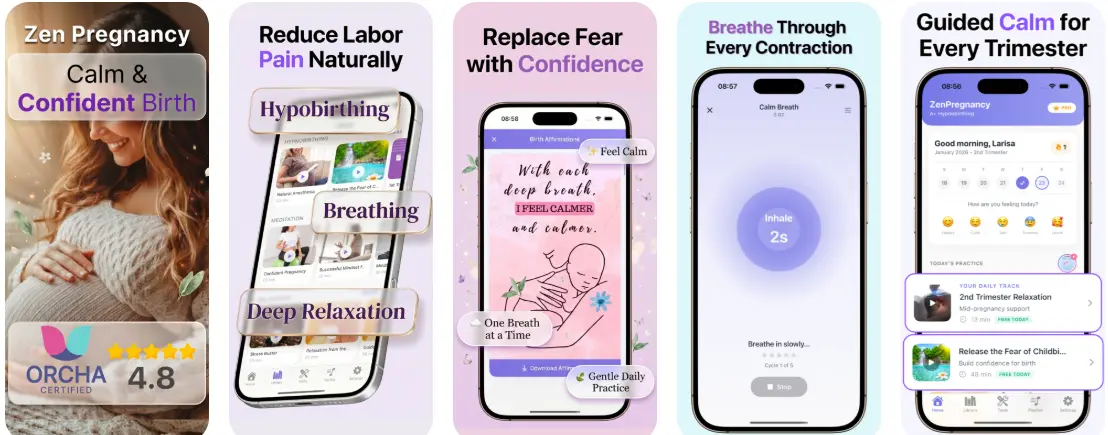
Hypnobirthing for C section preparation uses guided relaxation, breathing exercises, affirmations, and visualization to reduce fear and anxiety before, during, and after cesarean surgery. These techniques complement medical care rather than replace it; structured audio practice can help you rehearse calm cues for pre-op, theatre, and recovery.
> Definition: Hypnobirthing for C section preparation is the practice of using trained relaxation, controlled breathing, positive affirmations, and guided visualization to manage anxiety and promote calm throughout a planned, unplanned, or emergency cesarean birth.
- Hypnobirthing complements anesthesia and clinical care, it does not replace any medical intervention during a cesarean.
- Regular practice with cesarean birth meditation tracks in late pregnancy may reduce pre-operative anxiety, supported by randomized trial evidence.
- Partners can use the same hypnobirthing scripts to manage their own stress and advocate for birth preferences in the operating theatre.
Why Cesarean Birth Parents Need C Section Hypnobirthing
C section hypnobirthing matters because cesarean birth is common, surgical, and emotionally loaded. In the United States, cesarean delivery accounts for about 32.1% of births, roughly 1 in 3 babies, per CDC/NCHS data source.
That number does not make surgery feel simple. Many parents describe the hardest part as the loss of control: the bright lights, the gown snaps at the shoulder, the staff moving quickly around the bed. Preparation gives your mind a job before fear fills the room.
A phone-based practice plan can help if you want short guided relaxation, breathing practice, and birth affirmations available during the hospital wait without carrying a full course workbook.
A cesarean is still a birth. Planned, unplanned, or emergency, it deserves emotional readiness as much as a packed bag and a surgical consent form.
Five Facts About Hypnobirthing For C Section Preparation
- Hypnobirthing supports medical care. It does not replace spinal anesthesia, monitoring, antibiotics, surgical skill, or urgent decision-making.
- Practice changes access. Regular listening in late pregnancy can make breathing cues easier to reach when your name is called from the pre-op chair.
- The operating room may allow audio. Many hospitals may allow headphones or hypnobirthing tracks in theatre, but you need to ask before surgery day.
- Recovery is part of the pathway. Cesarean birth meditation can support sleep, pain coping, emotional processing, and bonding after the baby arrives.
- Evidence is promising, not complete. A randomized trial found guided imagery and relaxation reduced preoperative state anxiety before elective C section, but C section-specific hypnobirthing research is still limited source.
For parents comparing wider hospital options, hypnobirthing for hospital birth can help you plan for monitors, staff changes, and flexible preferences.
Keep the aim modest. Calmer, not controlled.
How Cesarean Birth Meditation And Hypnobirthing Work
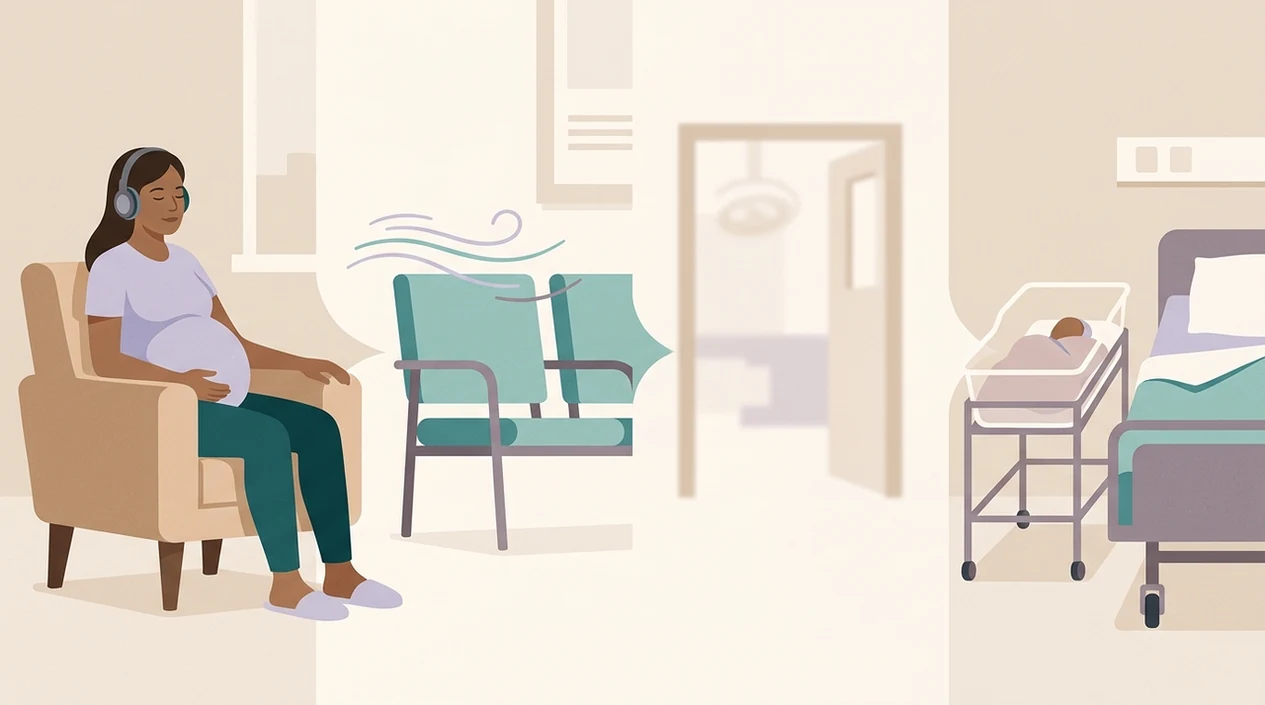
Cesarean birth meditation works by interrupting the fear-tension-pain cycle. Anxiety can raise adrenaline, tighten muscles, narrow attention, and make sensations feel more threatening.
Slow breathing and focused attention support the parasympathetic nervous system, the “settle and soften” side of the body. In plain language, your body gets repeated signals that it does not need to fight the room. Guided imagery adds a mental picture, such as warm light around the baby or steady hands at the shoulders. Affirmations shift the frame from danger to safety.
For broader context, clinical relaxation methods such as breathing, guided imagery, and progressive relaxation are commonly studied for anxiety and pain coping, though effects vary by person and setting source.
The most evidence-backed approach to using hypnobirthing for surgical birth is repeated practice before the date, combined with clinical pain relief and a clear theatre plan.
A good app is useful here because the same track can be practiced at home and replayed during the hospital wait, so the cue feels familiar. Good hypnobirthing apps deliver repeatable calm cues, not promises that surgery will feel easy.

How To Use Hypnobirthing For C Section Preparation Step By Step
Use hypnobirthing for C section preparation as a rehearsal plan, not a last-minute rescue. If you start when the calendar reminder for surgery appears, you can still benefit, but the cues usually land better after repetition.
- Start 4 to 6 weeks before your date. Practice cesarean-specific meditation tracks in HypnoBirth App most days, even for 8 minutes.
- Build your C section birth preferences. Include headphones, dimmed lights, music, narration of baby’s arrival, and delayed cord clamping if clinically appropriate.
- Ask your midwife or OB about theatre logistics. Confirm whether phones, headphones, chargers, and audio are allowed near the surgical field.
- Listen during the pre-op wait if allowed. Use HypnoBirth App before spinal placement, while your birth partner stays close and quiet.
- Breathe through skin closure and recovery. Repeat one affirmation while staff finish surgery and transfer you to the recovery space.
- Continue post-op meditation daily. Use cesarean recovery tracks for sleep, pain coping, and emotional processing.
If anxiety is the main barrier, a pregnancy anxiety app plan may help alongside your birth preparation.
Top Three HypnoBirth App Features For Cesarean Birth Preparation
HypnoBirth App is most useful for cesarean preparation when you match each feature to a real moment in the surgical pathway. The point is not to memorize a script. The point is to know what to press when the room gets busy.
Guided Cesarean Meditation Tracks
For parents who need a calmer pre-op routine, HypnoBirth App covers the waiting-room stretch with guided cesarean birth meditation tracks designed for before surgery and theatre listening.
Breathing Exercise Timer For Theatre
When spinal placement or surgical pressure is the issue, the breathing exercise timer gives your attention a steady count instead of letting it chase every monitor beep.
Cesarean-Specific Birth Affirmations
If your priority is feeling included in the birth, the affirmation library gives short cesarean-specific statements your partner can read when your arms feel heavy or the room feels distant.
ZenPregnancy readers often ask about flexible plans too; hypnobirthing with epidural uses similar calm cues with medical pain relief.
Common C Section Hypnobirthing Patterns For Partners
Partners can feel real anxiety in the operating theatre, even when they look calm. Their job is not to perform confidence. Their job is to stay useful.
Practicing the same tracks together builds shared cues before surgery day. A partner who knows the script can lower their voice, offer a straw cup between contractions or pre-op checks, and stop asking too many questions when the birthing parent needs quiet.
After the prenatal visit, when the car ride turns into a debrief, use that time to choose three birth preferences your partner can say clearly: music, dimmed lights if possible, and narration when the baby is born. The right fit for partner support is a shared practice plan because it gives both people the same breathing rhythm and affirmation language.
This partner angle is often missing. It matters because the support person brings their nervous system into the room too.
Common Myths About Hypnobirthing And Cesarean Birth
Hypnobirthing does not remove all fear or discomfort during a C section. It can make fear more manageable, especially when the plan changes or staff need to move quickly.
Relaxation techniques do not interfere with anesthesia. They sit beside medical care, like dimmed room lights while the monitor belts stay in place during earlier labor checks. You still answer questions. You still tell the team if you feel pain, nausea, panic, or pressure that worries you.
Hypnobirthing is not mind control or unconsciousness. You remain aware and communicative, which is important in theatre.
It is also not only for vaginal or “natural” birth. For someone moving from induction to surgical birth, hypnobirthing for induction can connect the same breathing skills across both pathways.
Cesarean birth is not a backup birth. It is a birth with different tools.
When To Seek Medical Or Mental Health Help
Seek professional help any time symptoms feel urgent, unsafe, or outside ordinary recovery. Hypnobirthing is a support tool for calm and coping; it is not triage, diagnosis, or treatment.
After a cesarean, do not try to breathe through warning signs that need medical care. Heavy bleeding, passing large clots, fever, chills, worsening abdominal or incision pain, redness or discharge from the wound, chest pain, shortness of breath, one-sided leg swelling, severe headache, vision changes, fainting, or pain that feels suddenly wrong should be checked immediately.
Use this simple order when something feels off:
- Pause the track. Stop the meditation or affirmations so you can notice what is happening clearly.
- Tell someone nearby. Ask your partner, nurse, or support person to stay with you and help explain symptoms.
- Contact your OB, midwife, anesthetist, maternity unit, or emergency service. Choose urgent care if symptoms are severe or rapidly changing.
- Escalate mental health signs. Panic that feels unmanageable, trauma flashbacks, feeling detached from reality, or thoughts of self-harm need prompt support from a mental health professional or emergency team.
- Follow staff instructions first. Emergency guidance, monitoring, medication, and safety steps override meditation tracks and birth preferences.
Limitations
Hypnobirthing can help some parents feel steadier, but it has real limits. I would rather you know them before you are in sticky hospital socks waiting for theatre.
Call your maternity unit or emergency service immediately for heavy bleeding, fever, worsening pain, shortness of breath, thoughts of self-harm, or panic that feels unsafe to manage alone.
- C section-specific evidence is still limited compared with general labor hypnosis and general surgery relaxation research.
- An app cannot prevent bleeding, infection, fetal distress, anesthesia complications, or surgical plan changes.
- No meditation can guarantee a trauma-free birth, especially if the situation becomes urgent.
- Some people dislike hypnosis-style audio, particularly with trauma history, claustrophobia, panic, or severe anxiety.
- Hospital noise, staff changes, alarms, and emergencies may interrupt headphones or guided tracks.
- Starting the night before surgery may help a little, but weeks of practice usually build stronger cues.
- Competitors such as Expectful, GentleBirth, and Hypnobabies may offer broader meditation or course libraries, but not every option gives cesarean-specific theatre steps.
- It should not replace therapy, trauma-informed care, medical advice, or a direct conversation with your OB or midwife.
For people planning another surgical birth after a previous cesarean, a hypnobirthing app for VBAC may be more relevant than a planned C section routine.
See also: Hypnobirthing for Twins: Calm Preparation for Multiple Pregnancy.
See also: Hypnobirthing Birth Plan App: Turning Calm Practice Into Practical Preferences.
Read more
- About HypnoBirth App: Calm Birth Support
- Are Hypnobirthing Apps Regulated
- Are Hypnobirthing Apps Safe
- Birth Partner Hypnobirthing App Guide
- App for Natural Birth Preparation: What to Choose
- Best Birth Meditation App for Calm Labor
- Best Contraction Timer App for iPhone: 2026 Guide
- Best Hypnobirthing App 2026: Top Picks
- Does Hypnobirthing Work for First Births? Guide
- Free Hypnobirthing App for iPhone: Calm Birth
- How to Start Hypnobirthing: Beginner Guide
- Hypnobirthing for C Section Prep: Calm Cesarean
Best Hypnobirthing App for C Section Preparation
HypnoBirth App can help you prepare for a calmer cesarean birth with guided breathing, relaxation tracks, and affirmations you can use alongside your clinical birth plan. It is free, ORCHA NHS certified, and designed to support both planned and unplanned C section preparation without replacing medical guidance.
Best for
- Practising calm breathing and relaxation before a planned cesarean
- Building confidence with affirmations and theatre-day preparation
Limitations
- Does not replace advice from your midwife, obstetrician, or anaesthetist
- Cannot predict or control how your C section will unfold
Frequently Asked Questions
Can hypnobirthing help with C section preparation?
Yes, hypnobirthing can help you prepare for a C section by building calm breathing, relaxation, and mindset tools. It does not replace clinical care, but it can support you before, during, and after a planned or unplanned caesarean birth.
How do I use hypnobirthing for a planned C section?
Use hypnobirthing for a planned C section by practising slow breathing, guided relaxation, visualisations, and positive affirmations before your theatre date. You can also discuss preferences such as music, skin-to-skin, a calm atmosphere, and birth partner support with your maternity team.
Can I start hypnobirthing at 38 weeks before a C section?
Yes, you can start hypnobirthing at 38 weeks and still benefit from simple daily practice. Focus on short breathing exercises, relaxation tracks, affirmations, and a clear theatre plan rather than trying to complete a long course quickly.
Does hypnobirthing reduce pregnancy anxiety before a caesarean?
Yes, hypnobirthing may help reduce pregnancy anxiety by giving you practical tools to calm your nervous system. If your anxiety feels overwhelming, persistent, or affects daily life, speak to your midwife, GP, or mental health professional for extra support.
Can hypnobirthing help during an epidural or spinal anaesthetic for a C section?
Yes, hypnobirthing can help you stay calmer while an epidural or spinal anaesthetic is being placed. Breathing, relaxation cues, and a supportive birth partner can help you remain still and focused, while your anaesthetist manages the medical procedure.
Is hypnobirthing useful for first-time mums having a C section?
Yes, hypnobirthing is useful for first-time mums preparing for a C section because it explains what to expect and teaches calming techniques. It can help you feel more informed, confident, and involved in your birth choices.
Is a hypnobirthing app enough for C section preparation or should I take a class?
A hypnobirthing app may be enough if you want flexible, self-paced practice, but a class can offer more personal guidance and time for questions. Many people use both: an app for daily practice and a class or midwife appointment for individual birth planning.
What are the best hypnobirthing breathing techniques for a C section?
The best hypnobirthing breathing techniques for a C section are slow, steady breaths that lengthen the exhale and relax the body. Box breathing, down-regulating breaths, or counting in for four and out for six can be simple options to practise before theatre.
What affirmations are helpful for a caesarean birth?
Helpful caesarean birth affirmations are short, believable statements that make you feel safe and steady. Examples include “I am calm and supported,” “My baby and I are cared for,” and “I can meet each moment one breath at a time.”
Can hypnobirthing support an emergency C section?
Yes, hypnobirthing can support you during an emergency C section by giving you breathing and grounding tools in a fast-changing situation. It cannot control the medical outcome, but it can help you follow instructions, communicate needs, and feel more anchored.
What should I include in a hypnobirthing C section birth plan?
A hypnobirthing C section birth plan should include your preferences for calm communication, music, lighting where possible, birth partner involvement, skin-to-skin, feeding, and recovery support. Discuss every preference with your maternity team because clinical safety will guide what is possible.
Is hypnobirthing safe for a caesarean birth?
Yes, hypnobirthing is generally safe for a caesarean birth because it uses non-invasive relaxation, breathing, and mindset techniques. It should be used alongside medical advice, and any concerns about your pregnancy, anaesthetic, or birth plan should be discussed with your healthcare team.